
Golf Shoes Guide: How to Choose the Right Pair

Quick Answer
The right golf shoes should fit securely, keep your feet comfortable, and provide enough traction for your usual course conditions. Spiked shoes generally suit wet or hilly courses, while spikeless golf footwear offers more versatility on firm, dry ground. The Rules of Equipment covering golf shoes allow traction features that help you maintain a firm stance.
What to Check Before Buying
- Secure heel: Your heel should remain stable without rubbing or lifting excessively.
- Roomy toe box: Your toes need space to spread naturally during walking and swinging.
- Suitable traction: Match the outsole to dry, wet, soft, or hilly course conditions.
- Walking comfort: Cushioning should feel comfortable immediately rather than requiring a painful break-in period.
- Weather protection: Choose waterproof construction if you regularly play through dew, rain, or wet rough.
- Correct width: Test standard, wide, and extra-wide options instead of simply increasing the shoe length.
Best Starting Choice
- Most recreational golfers can start with a comfortable waterproof spikeless shoe, unless they often play wet or steep courses.
This golf shoes guide explains how golf footwear affects traction, comfort, stability, and walking performance. I’ll also show you how to compare spiked and spikeless designs without getting distracted by marketing claims.
A shoe that looks good in the clubhouse can still become uncomfortable after nine holes. Fit and course suitability must come first.
In This Guide
Do You Really Need Golf Shoes?
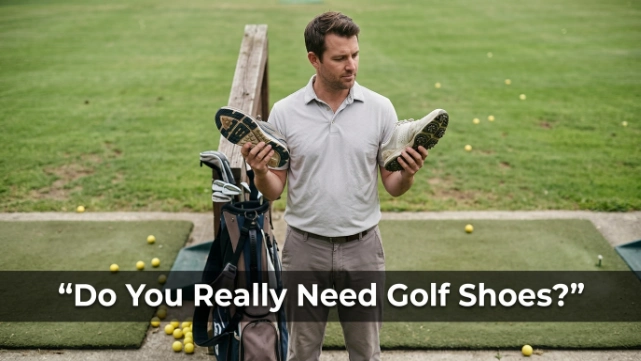
You don’t need golf-specific shoes for your first range session. Stable athletic shoes can work while you decide whether golf will become a regular activity.
Golf shoes become more valuable when you play full rounds. They combine walking comfort with an outsole designed to grip grass during a rotational swing.
Definition: A golf shoe is athletic footwear designed to support walking and create traction on turf during the golf swing. Its main parts include the upper, midsole, outsole, heel counter, toe box, and either molded traction lugs or removable cleats.
Why ordinary running shoes can fall short
Running shoes mainly support forward movement. A golf swing creates sideways and rotational forces as your pressure moves between your feet.
Soft running shoes can feel comfortable but unstable during that movement. Their tread may also lose grip on wet grass or a sloped lie.
Golf footwear addresses those demands through several features:
- Lateral structure: Reinforcement helps control side-to-side movement during the swing.
- Turf traction: Lugs or cleats grip grass without using an ordinary road-running tread.
- Stable heel: A structured heel counter helps keep the rear foot from moving inside the shoe.
- Course-ready upper: Many models use water-resistant or waterproof materials.
- Walking support: The midsole cushions repeated steps across uneven ground.
Can beginners wear sneakers?
Yes. Clean sneakers with stable soles are usually enough for the range, a putting lesson, or a casual first round.
Avoid smooth soles, worn tread, high heels, sandals, and shoes that leave aggressive marks. Always check the club’s dress and footwear rules before arriving.
Upgrade when your sneakers slip, become soaked, or leave your feet tired. Frequent walkers usually notice the value sooner than cart golfers.
Do golf shoes improve your swing?
Golf shoes cannot repair poor technique. They can provide a more secure connection to the ground, which lets you swing without reacting to a slipping foot.
I use a simple test on the practice tee. If I can make a controlled swing without my heel sliding or my foot rolling over the sole, the shoe provides enough stability.
That test matters more than claims about added speed. No honest manufacturer can guarantee that one shoe will create the same performance gain for every golfer.
Section Takeaway: Golf shoes aren’t mandatory for learning, but they become useful when traction, weather protection, and walking comfort start affecting your round.
Are Spiked or Spikeless Golf Shoes Better?
Neither outsole is always better. Spiked shoes favor maximum traction, while spikeless shoes favor versatility and everyday comfort.
Your best choice depends on weather, terrain, walking habits, and how forcefully you swing. Some golfers eventually keep one pair of each.
| Feature | Spiked Golf Shoes | Spikeless Golf Shoes |
|---|---|---|
| Traction system | Removable or fixed cleats beneath the outsole | Molded rubber or TPU lugs integrated into the outsole |
| Best conditions | Wet grass, soft turf, hills, and powerful swings | Dry or moderately damp turf and casual rounds |
| Off-course use | Usually limited | Often suitable for driving and clubhouse use |
| Maintenance | Clean and inspect cleats; replace removable units when worn | Clean molded lugs; replace the shoe after tread wears down |
| Underfoot feel | Can feel firmer or more elevated | Often feels closer to an athletic shoe |
| Main limitation | Less convenient away from the course | Worn lugs cannot usually be replaced separately |
When spiked golf shoes make sense
Choose spikes when you often play early mornings, wet climates, soft courses, or severe slopes. Their cleats penetrate the turf and create defined contact points.
They also suit golfers who place high rotational force through their feet. A secure outsole may provide more confidence during a driver swing.
Traditional metal spikes are different from modern soft cleats. Many facilities prohibit metal or traditionally designed spikes through local rules.
The USGA equipment rules for shoes permit footwear that helps provide a firm stance. Competition committees can still restrict damaging spike designs.
When spikeless golf shoes make sense
Spikeless models suit golfers who value comfort and convenience. You can often wear one pair while driving, practicing, playing, and visiting the clubhouse.
Modern spikeless outsoles use many small traction elements. Quality varies, so inspect lug depth, placement, and stiffness instead of relying on the category name.
These shoes work well on firm parkland courses, summer turf, and range mats. They’re also practical for golfers who ride more often than they walk.
Which design is kinder to putting greens?
Any shoe can mark soft turf when a golfer drags or twists their feet. Outsole design and walking behavior both matter.
A USGA-supported study of golf shoe designs found that surface disruption varied between outsole constructions. Rubber spikeless designs generally created less visible traffic than several cleated designs in the study.
Lift your feet on the green and avoid pivoting sharply. Press down any scuff you accidentally create.
Section Takeaway: Choose spikes for demanding traction and spikeless shoes for convenience. Course conditions should decide the outsole, not fashion alone.
How Do You Choose the Right Golf Shoes?
Start with fit, traction, and weather protection. Style, brand, and color should come after those three requirements.
As of 2026, golfers can choose sneaker-style, traditional leather, minimalist, trail-inspired, and performance-focused designs. The large selection helps only when you know what to inspect.
1. Match traction to your normal conditions
Think about the courses you play most often. A dry, flat course presents different demands from a damp, hilly layout.
- Dry and firm: Moderate spikeless traction is usually sufficient.
- Wet or dewy: Deep lugs or soft cleats improve grip.
- Soft turf: Wider-spaced traction sheds soil better than tightly packed tread.
- Hilly terrain: Look for multidirectional grip beneath the heel and forefoot.
- Range use: A flatter spikeless outsole feels more natural on mats and concrete paths.
2. Understand waterproof labels
Water-resistant shoes handle brief exposure, light dew, and small splashes. They may not stop water during steady rain or repeated walks through wet rough.
Waterproof models use treated materials, sealed construction, or an internal membrane. Read the manufacturer’s definition and warranty because protection standards differ.
Waterproofing can reduce airflow. Golfers in hot, dry climates may prefer a breathable mesh upper and keep a separate rain pair.
3. Inspect the upper and heel structure
The upper covers and supports your foot. Leather and synthetic leather often provide structure, while engineered mesh usually reduces weight and increases airflow.
A heel counter is the reinforced area surrounding your heel. It should resist excessive collapse and keep the rear foot centered.
Check the sidewalls around the midfoot as well. A soft upper may feel pleasant but allow too much lateral movement during the swing.
4. Evaluate the midsole
The midsole sits between your foot and the outsole. Common materials include EVA foam and denser foam blends.
Soft cushioning isn’t automatically better. Excessively soft foam can feel unstable when your weight moves toward the edges of the shoe.
Look for a balance of cushioning and torsional control. The shoe should flex near the forefoot without folding easily through the arch.
5. Compare laces and dial closures
Traditional laces are easy to replace and allow targeted adjustment. You can loosen the forefoot while securing the ankle more firmly.
Dial-based systems tighten a cable across the shoe. They offer quick adjustment but may feel different from ordinary lacing.
Try both systems while standing and walking. The best closure holds your foot without creating pressure across the instep.
6. Consider weight without chasing the lightest shoe
A light shoe can reduce the heavy feeling that develops late in a walking round. However, removing material may also reduce structure or durability.
Compare models while wearing your normal golf socks. A slightly heavier shoe can be the better choice when it fits securely and supports your swing.
7. Check removable insoles and widths
Removable insoles help golfers who use orthotics or need different cushioning. Confirm that the replacement insert doesn’t crowd the toe box.
Width deserves equal attention. FootJoy, adidas, Nike, Puma, Ecco, and other brands use different lasts, which are the forms that shape their shoes.
A standard size in one brand may feel narrow in another. Try several models instead of remaining loyal to a label that no longer fits.
Pro tip: If you have recurring foot, knee, or balance problems, consult a qualified podiatrist or healthcare professional before changing footwear or inserts.
Section Takeaway: Prioritize secure fit, suitable traction, and appropriate weather protection. Then compare cushioning, closure, weight, and style.

How Should Golf Shoes Fit?
Golf shoes should hold your heel securely while leaving room for your toes. They should feel comfortable during the fitting rather than depending on a long break-in period.
Your feet can change size and shape over time. Measure both feet before buying and fit the larger foot.
Use this fitting process
- Shop later in the day. Feet often become slightly larger after hours of standing and walking.
- Wear golf socks. Different sock thickness changes the usable space inside the shoe.
- Try both shoes. Many people have one foot that is longer or wider.
- Stand before judging length. Your foot spreads when it carries body weight.
- Lace the shoes properly. Loose laces can disguise heel movement and poor volume.
- Walk on a firm surface. Check heel security, toe pressure, and any rubbing.
- Make controlled practice turns. Mimic the pressure of a swing without taking a club indoors.
How much toe room do you need?
A practical target is about 3/8 to 1/2 inch between your longest toe and the shoe’s end. Your toes should also wiggle without rubbing the upper.
The American Academy of Orthopaedic Surgeons’ athletic shoe guidance recommends adequate toe space, a secure heel counter, and fitting with your normal sports socks.
Length alone doesn’t solve pressure. If your forefoot feels squeezed, test a wider version rather than buying an unnecessarily long shoe.
How much heel movement is acceptable?
A small amount of movement may occur in some designs. Noticeable lifting, rubbing, or sliding during every step suggests a poor match.
First, tighten the closure correctly. If the heel still moves while the forefoot fits, try another model with a different heel shape.
Warning signs of a poor fit
- Numb toes: The forefoot may be too narrow or the laces too tight.
- Heel blisters: The heel may be slipping or contacting a rough seam.
- Arch pressure: The insole shape may not match your foot.
- Top-of-foot pain: The shoe may lack enough internal volume.
- Sidewall bulging: Your foot may require a wider size.
- Instability: The platform may be too soft, narrow, or flexible.
Should golf shoes feel tight at first?
No. A snug heel and midfoot are useful, but pinching and numbness aren’t normal.
Leather uppers may soften slightly. They won’t reliably correct the wrong length, width, heel shape, or toe-box depth.
Whenever possible, test shoes under the retailer’s indoor return rules. Don’t wear them outdoors until you know the fit works.
Section Takeaway: A good golf shoe secures the heel, matches your foot width, and leaves usable toe space. Pain isn’t part of proper break-in.
Which Golf Shoes Match Your Course Conditions?
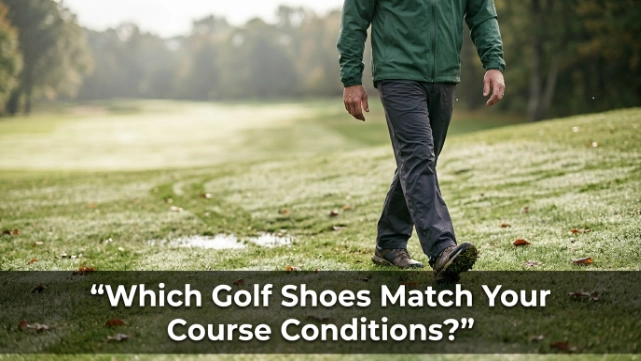
Match footwear to the harshest conditions you regularly face. That approach prevents buying a comfortable shoe that becomes unreliable when the course turns wet.
Your walking habits matter too. Cart golfers and dedicated walkers can reasonably prioritize different features.
Best setup for wet courses
Choose waterproof construction, reliable heel grip, and aggressive traction. Soft cleats or deep multidirectional lugs usually provide the strongest starting point.
Inspect the tongue and lace area because water often enters from above. Waterproof uppers cannot protect against water that runs through the opening.
Carry spare socks during prolonged rain. Even a waterproof shoe can become damp from perspiration or water entering around the ankle.
Best setup for hot and dry courses
Prioritize breathability and moderate weight. A mesh or ventilated upper can feel better than a sealed waterproof model.
Spikeless traction usually handles dry turf well. Avoid nearly flat fashion soles because dusty slopes can still become slippery.
Best setup for hilly courses
Look for heel-to-toe traction and a secure upper. Downhill walks expose heel slip, while sidehill lies test lateral stability.
Flex the shoe with your hands before trying it on. It should bend near the forefoot but resist excessive twisting through the middle.
Best setup for walking golfers
Comfort must last beyond the practice swing. Check cushioning, heel security, toe space, breathability, and shoe weight together.
A walking shoe should feel natural immediately. My preferred test is a brisk indoor walk followed by several controlled turns on each foot.
A detailed Golf Digest golf shoe fitting overview also recommends treating footwear as performance equipment rather than buying by appearance alone.
How should you clean golf shoes?
Remove loose grass and soil after each round. A soft brush, damp cloth, and mild soap handle most routine cleaning.
- Remove the insoles and loosen the laces.
- Brush dried soil from the outsole and traction channels.
- Wipe the upper with products suitable for its material.
- Clean around removable cleats without forcing the threads.
- Air-dry the shoes away from direct heat.
- Store them only after the interior is dry.
Don’t place wet shoes against a heater. High heat can damage adhesives, foam, waterproof membranes, and synthetic uppers.
When should you replace golf shoes?
There’s no universal replacement schedule. Frequency, walking distance, body weight, storage, and course conditions all affect wear.
Replace removable cleats when their traction arms become rounded, damaged, or difficult to clean. Follow the shoe maker’s instructions and use the correct cleat system.
Consider replacing the entire shoe when you notice:
- Permanent outsole wear beneath major pressure areas
- Cracked or separating upper materials
- Water entering through failed construction
- Compressed cushioning that no longer feels supportive
- Persistent heel movement despite correct lacing
- Uneven wear that makes the shoe feel unstable
Rotate two pairs if you play on consecutive days. Each pair receives more time to dry, and you can match traction to changing conditions.
Section Takeaway: Weather, terrain, and walking frequency should guide your footwear choice. Regular cleaning and drying protect both traction and comfort.
Golf Shoe FAQs
Are golf shoes worth buying for a beginner?
Golf shoes are worth buying once a beginner starts playing full rounds regularly. They provide grass-specific traction, lateral support, and weather protection. Stable athletic shoes remain acceptable for early range sessions or occasional dry-weather golf when the facility permits them.
Can you wear golf shoes as regular shoes?
Many spikeless golf shoes can be worn while driving, traveling, or visiting the clubhouse. Spiked shoes aren’t suitable for most hard indoor surfaces. Wearing spikeless shoes extensively on pavement can also wear down their molded traction faster.
Are waterproof golf shoes too hot?
Some waterproof golf shoes feel warmer because sealed construction reduces airflow. The difference depends on the upper, membrane, socks, and climate. Golfers in hot areas may prefer breathable shoes for dry days and a separate waterproof pair for rain.
Can golf shoes help prevent slipping?
Proper golf shoes can reduce slipping by providing turf-specific traction. They cannot guarantee grip on every surface. Wet bridges, paths, steep banks, and loose soil still require careful steps, even when you’re wearing aggressive cleats.
Do professional golfers wear spiked or spikeless shoes?
Professionals use both styles depending on personal preference, sponsorship options, swing demands, and course conditions. Their choices don’t automatically suit recreational golfers. Fit, walking comfort, and the surfaces you encounter remain more useful buying criteria.
How many pairs of golf shoes do you need?
One suitable pair is enough for most occasional golfers. Frequent players may benefit from two pairs: a breathable spikeless option for dry rounds and a waterproof, higher-traction option for wet conditions. Rotation also gives each pair time to dry.
Should you size up in waterproof golf shoes?
Don’t automatically size up. Try the shoes with your normal golf socks and judge their real fit. If the forefoot feels tight, test a wide size before adding length, because excess length can cause heel movement.
Which Golf Shoes Should You Buy?
Most recreational golfers should begin with a comfortable waterproof spikeless shoe that fits their actual foot width. It provides enough versatility for practice, dry rounds, moderate moisture, and clubhouse use.
Choose a spiked model if you regularly face wet grass, steep slopes, soft ground, or traction problems. Keep breathability higher on the list when most of your golf happens in hot, dry weather.
Before paying, complete this final checklist:
- The heel stays secure while walking.
- The toes can spread without touching the end.
- The width matches the shape of your forefoot.
- The outsole suits your normal course conditions.
- The upper provides the weather protection you need.
- The midsole feels cushioned but stable.
- The retailer’s return policy allows a careful indoor fit test.
Try several brands and ignore the size printed on your current pair. The shoe that fits your foot and your course is the right choice.
Final takeaway: Buy golf shoes as equipment, not decoration. Start with fit, add the traction your course demands, and choose a design you’ll comfortably wear for all 18 holes.