
Golf Fairway Explained: What It Is, Why It Matters, and How to Play It Better

If you are new to golf, the fairway can seem simple: it is just the short grass between the tee box and the green. But once you start playing, you quickly realize it affects almost every decision you make on a hole. Where you aim, which club you choose, how aggressive your shot should be, and even how you manage mistakes all depend on the fairway.
This Golf Fairway Explained guide breaks down what a fairway is, how it differs from the rough, why golfers try to hit it, and how beginners and intermediate players can use fairway strategy to score better. You will also learn common mistakes, practical shot tips, equipment considerations, and when it makes sense to get help from a golf pro or club fitter.
Quick Answer
Golf Fairway Explained: The fairway is the closely cut grass area between the teeing area and the putting green. It gives golfers a cleaner lie, more predictable ball contact, and a better chance to reach the green. Hitting the fairway usually makes the next shot easier, but good strategy matters more than simply aiming at the middle every time.
What Is a Fairway in Golf?
A fairway is the main playing corridor on most golf holes. It is usually the short, well-maintained grass that runs from the tee box toward the green.
The fairway is designed to reward accurate tee shots. When your ball lands there, it normally sits up better than it would in the rough. That makes it easier to strike the ball cleanly with an iron, hybrid, or fairway wood.
Under the official USGA Rules topic on fairways and rough, fairways and rough are part of the “general area” of the course. In simple terms, the fairway is not a separate Rules category like a bunker or putting green, but it is still one of the most important playing areas for golfers.
A typical fairway may include:
- A wide landing area for tee shots
- Narrower sections near hazards
- Slopes, humps, or valleys
- Fairway bunkers
- Doglegs that bend left or right
- Approach areas leading into the green
Key idea: The fairway is the safest and most controlled route from tee to green, but it is not always perfectly flat or easy.
Fairway vs Rough: What Is the Difference?
The fairway and rough are both grass areas, but they play very differently.
The fairway is cut short. The rough is longer, thicker, and more difficult to play from. When your ball is in the fairway, the clubface can reach the ball more cleanly. When your ball is in the rough, grass can get between the club and ball, reducing spin, distance control, and accuracy.
| Feature | Fairway | Rough |
|---|---|---|
| Grass height | Short and closely mown | Longer and thicker |
| Ball lie | Usually clean and visible | May sit down or be partly hidden |
| Shot control | More predictable | Less predictable |
| Club choice | Wider range of clubs | Often requires more loft or control |
| Beginner difficulty | Easier | Harder |
| Scoring impact | Usually improves scoring chances | Often leads to recovery shots |
The R&A Rule 2 explanation of the course also describes the general area as including fairway, rough, trees, and other ground that is not one of the specific areas like bunkers, penalty areas, teeing areas, or greens.
For everyday play, remember this: fairway means opportunity; rough means adjustment.


Why Hitting the Fairway Matters
Hitting the fairway does not guarantee a good score, but it usually gives you a better chance. Golf is easier when your next shot starts from short grass.
Better Ball Contact
A fairway lie lets the club strike the ball before the turf. This is especially important with irons and hybrids. If the ball is sitting cleanly, you can make a normal swing without fighting long grass.
More Predictable Distance
From the fairway, your shots usually fly closer to their expected distance. From the rough, the ball may come out short, jump farther than expected, or lose spin.
This matters most on approach shots. If you are trying to carry a bunker or stop the ball on the green, fairway contact gives you more control.
Easier Club Selection
From the fairway, you can usually choose from more clubs:
- Short irons
- Mid irons
- Hybrids
- Fairway woods
- Wedges
- Utility irons
From thick rough, your choices may be limited. Sometimes the smart play is just to advance the ball back into position.
Lower Stress
Golfers often score better when they avoid trouble. A fairway lie reduces pressure because you are not immediately trying to escape trees, rough, bunkers, or penalty areas.
Important warning: Do not judge your game only by fairways hit. A tee shot in light rough with a clear angle can be better than a fairway shot blocked by trees or a bad slope.
How Fairways Are Designed
Fairways are not random strips of short grass. Golf course architects shape them to create strategy.
Some fairways are wide and forgiving. Others are narrow and demanding. Many change width depending on distance from the tee.
A fairway may be designed to make you choose between safety and reward. For example, a wide right side may leave a longer approach, while a narrow left side may give you a better angle to the green.
The USGA notes that Course Rating and Slope Rating consider factors such as fairway terrain, forced carries, and landing-area data. That means fairway design can directly affect how difficult a course plays for different skill levels.
Common Fairway Shapes
Straight Fairway
A straight fairway runs directly from the tee toward the green. These holes are usually easier to understand, but hazards and slopes can still make them challenging.
Dogleg Fairway
A dogleg bends left or right. On these holes, position matters more than distance. Cutting the corner may be tempting, but missing the fairway can bring trees, bunkers, or penalty areas into play.
Split Fairway
A split fairway gives golfers two possible routes. One side may be safer, while the other offers a shorter approach. Beginners should usually choose the wider landing area.
Narrow Fairway
A narrow fairway rewards accuracy. On these holes, hitting driver is not always the best choice. A hybrid, fairway wood, or long iron may keep the ball in play more often.
How to Read a Fairway Before You Hit
Good golfers do not just aim and swing. They read the fairway first.
Use this simple process before each tee shot:
- Find the widest safe landing area. Look for where the fairway gives you the most room.
- Notice hazards. Identify bunkers, water, trees, out-of-bounds, and thick rough.
- Check the slope. A fairway sloping left or right can move your ball after landing.
- Choose your target. Pick a specific tree, bunker edge, or fairway stripe as your aim point.
- Choose the right club. Use the club that gives you the best chance to reach your target area, not always the club that goes farthest.
Best beginner rule: Aim for the biggest safe area, not the perfect spot.
What Club Should You Use to Hit the Fairway?
Many golfers assume driver is always the correct club from the tee. That is not true.
Driver can give you more distance, but it can also bring more trouble into play. If the fairway is narrow or hazards sit near your driver distance, a shorter club may be smarter.
Driver
Use driver when:
- The fairway is wide
- Trouble is not tight near your landing area
- You are comfortable controlling your tee shot
- Extra distance gives you a meaningful advantage
Fairway Wood
A fairway wood can be useful from the tee or from the fairway. It often gives good distance with slightly more control than a driver.
However, fairway woods can be difficult for beginners to hit from tight lies. If you struggle to get the ball airborne, a hybrid may be easier.
Hybrid
A hybrid is often a smart choice for beginners and intermediate players. It is usually easier to launch than a long iron and more forgiving than many fairway woods.
Iron
An iron is a good choice when accuracy matters more than distance. On short par 4s or tight holes, an iron from the tee may leave you safely in the fairway.
| Club Choice | Best For | Main Benefit | Main Limitation |
|---|---|---|---|
| Driver | Wide fairways and longer holes | Maximum distance | Less control |
| Fairway wood | Controlled distance from tee or fairway | Good distance with versatility | Harder from tight lies |
| Hybrid | Beginners and recovery-friendly shots | Easier launch and forgiveness | Less distance than wood |
| Long/mid iron | Tight holes and placement | Accuracy and control | Requires solid contact |
Decision point: If one club keeps you in play more often, it may save more strokes than a longer club that misses badly.
How to Hit Better Shots From the Fairway
Once your ball is in the fairway, your job is to take advantage of the good lie. Many golfers waste fairway opportunities by trying to swing too hard.
Set Up for Clean Contact
For most fairway shots, your goal is ball-first contact. That means the club should strike the ball before brushing the turf.
Try these basics:
- Keep your weight balanced
- Place the ball slightly forward of center for longer clubs
- Place the ball near center for shorter irons
- Make a smooth swing
- Finish in balance
With irons, a small divot after the ball is normal. With fairway woods and hybrids, you usually want more of a sweeping strike.
Do Not Try to Lift the Ball
A common beginner mistake is scooping the ball into the air. This often causes thin shots, topped shots, or fat shots.
The club is already designed with loft. Trust the club to launch the ball.
The PGA of America gives similar advice in its fairway wood guidance, reminding golfers that fairway woods are designed to provide lift and that players should avoid flipping or scooping at impact in these PGA fairway wood tips.
Match the Shot to the Lie
Even in the fairway, not every lie is perfect. Your ball may sit:
- On an upslope
- On a downslope
- Above your feet
- Below your feet
- In a divot
- On wet or firm turf
Warning: A fairway lie can still be difficult if the slope is severe or the ball is sitting down. Adjust your expectations and choose a safer shot when needed.
Fairway Strategy for Beginners

Beginners often think the goal is to hit the ball as far as possible. Better golfers think about the next shot.
A 210-yard tee shot in the fairway can be better than a 250-yard drive in trees. Keeping the ball in play lowers stress and reduces penalty strokes.
Use a Conservative Target
Aim away from the biggest trouble. If water is right, aim more left. If trees are left, favor the right side.
This does not mean playing scared. It means choosing a target that gives your normal miss room to survive.
Know Your Real Distance
Many golfers choose clubs based on their best shot, not their average shot. This leads to poor decisions.
Use your normal carry distance, not your once-a-month perfect strike.
Play for Your Next Shot
Think about where you want to hit your approach from. Sometimes the best fairway position is not the center. It may be the side that gives you a clear angle to the green.
For example, if the flag is on the right behind a bunker, the left side of the fairway may give you a better angle.
Fairway Conditions: How Grass, Weather, and Maintenance Affect Play
Fairways do not play the same every day. Conditions change how far the ball rolls and how easy the next shot feels.
Firm Fairways
Firm fairways create more roll. Your tee shot may travel farther after landing, but approach shots can be harder to stop.
On firm courses, avoid landing the ball too close to hazards because it may run into trouble.
Soft Fairways
Soft fairways reduce roll. The ball may stop quickly or even plug slightly. You may need more carry distance from the tee.
Soft turf can also make iron shots feel heavier if you hit the ground too early.
Wet Fairways
Wet fairways require careful footing and clean contact. Swinging too hard can cause slipping or fat shots.
Safety note: If the ground is slippery, wear proper golf shoes and avoid aggressive swings on steep slopes.
Dry or Thin Fairways
Dry fairways can create tight lies. The ball may sit close to the ground, which can make fairway woods harder to hit.
If you struggle from tight lies, use a hybrid or higher-lofted club instead of forcing a low-lofted fairway wood.
Equipment Considerations for Fairway Play
The fairway itself is not equipment, but your equipment affects how well you play from it.
Fairway Woods
Fairway woods are built for distance. They can work well from short grass, but they require decent contact.
A 3-wood can be difficult for many beginners because it has lower loft. A 5-wood or 7-wood may be easier to launch.
Hybrids
Hybrids are often more beginner-friendly. They help get the ball airborne and can be useful from fairway, rough, and light trouble.
Irons
Irons give control, especially on approach shots. Beginners may find short and mid irons easier than long irons.
Golf Ball Choice
A premium tour ball may spin more, but it may not help much if you are still learning consistent contact. Beginners often benefit from a durable, affordable ball that provides steady distance.
Cost, Quality, and Durability
You do not need expensive clubs to learn fairway play. But poorly fit or badly worn clubs can make improvement harder.
Consider these factors:
- Cost: Beginners can start with forgiving used clubs or a basic set.
- Quality: Choose clubs with enough forgiveness, especially in long clubs.
- Durability: Check grips, shafts, and clubface condition.
- Performance: Look for launch, control, and confidence.
- Skill level: Do not buy low-lofted, hard-to-hit clubs just because better players use them.
Important warning: If your grips are slick, your shafts feel too stiff, or you cannot launch your fairway woods, equipment may be holding you back.
Expert Tip
Expert Tip:
Before every tee shot, pick the club that keeps your bad shot playable. Most amateur golfers lower scores faster by reducing big misses than by chasing perfect distance.
Common Mistakes Golfers Should Avoid
Even experienced golfers make poor decisions around fairways. Beginners can improve quickly by avoiding these mistakes:
- Always hitting driver: Driver is not required on every par 4 or par 5.
- Aiming without a target: “Down the middle” is too vague. Pick a specific aim point.
- Ignoring slopes: Fairway slope can kick a good shot into rough or trouble.
- Trying to scoop fairway woods: Let the club loft do the work.
- Using too little loft from tight lies: A 3-wood may not be the best choice if the ball sits low.
- Swinging harder from good lies: A fairway lie rewards balance, not extra tension.
- Chasing pins from bad angles: Sometimes the smart shot is to the center of the green.
- Not checking local rules: Preferred lies, cart-path rules, and ground-under-repair rules can affect fairway play.
When to Get Help From a Golf Pro or Fitter
You should consider help from a golf pro or fitter if your fairway problems repeat often.
A golf pro can help if you:
- Top or thin most fairway shots
- Hit behind the ball regularly
- Slice or hook tee shots into trouble
- Struggle to choose safe targets
- Feel unsure about ball position
- Lose balance during the swing
A fitter can help if you:
- Cannot launch your fairway woods
- Hit hybrids much better than long irons
- Feel your shafts are too stiff or too soft
- Have clubs that are too long, short, heavy, or light
- Play with old grips that slip during the swing
The PGA of America coaching resources can be useful for golfers who want structured instruction instead of guessing through trial and error.
Honest advice: A lesson is usually a better first investment than buying a new club if your main problem is contact. A fitting makes more sense once your swing is repeatable enough to compare equipment fairly.
Practical Fairway Game Plan for Your Next Round
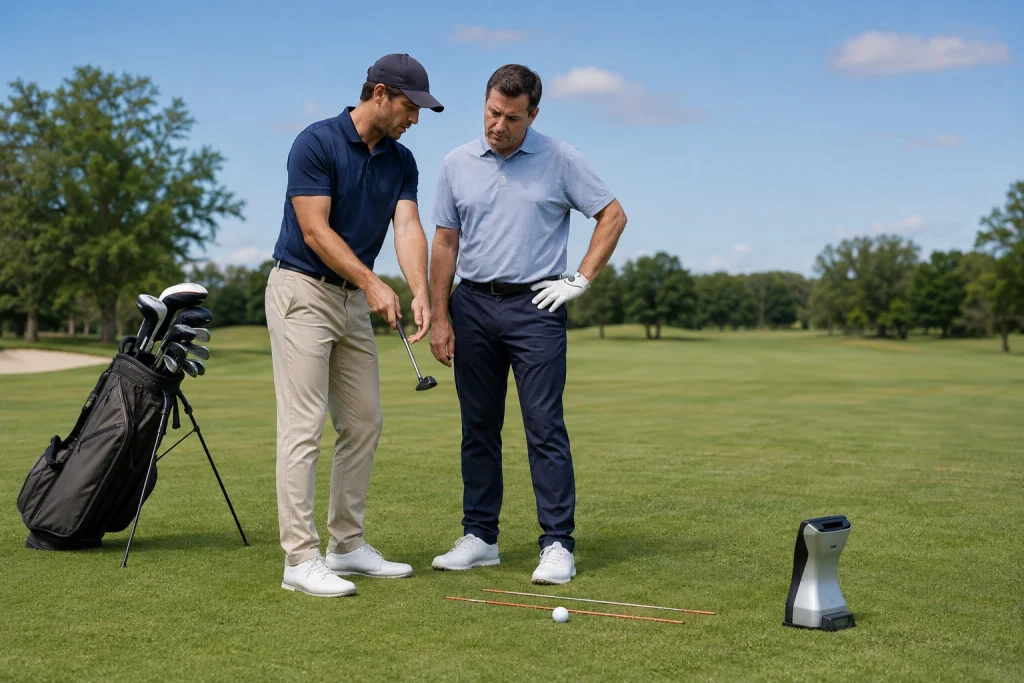
Use this simple plan the next time you play.
- Choose the safest tee club. Do not automatically pull driver.
- Aim at a specific target. Pick something small in the distance.
- Favor the wide side. Give your normal miss room.
- Check the lie before your second shot. Fairway does not always mean easy.
- Choose the shot you can repeat. Avoid low-percentage hero shots.
- Play to the center of the green when unsure. This reduces big mistakes.
- Track fairways hit and playable misses. A playable miss is often good enough.
The goal is not perfection. The goal is giving yourself more simple shots.
FAQs
What is a fairway in golf?
A fairway is the short grass area between the tee box and the green. It is the preferred landing area because it usually gives golfers a clean lie and better control for the next shot.
Is the fairway the same as the general area?
Not exactly. The fairway is part of the general area, but the general area also includes rough, trees, and other parts of the course that are not bunkers, penalty areas, teeing areas, or putting greens.
Why is it easier to hit from the fairway?
It is easier because the grass is shorter. The club can contact the ball more cleanly, which helps with distance, direction, and spin control.
Should beginners always aim for the middle of the fairway?
Usually, yes, but not always. Beginners should aim for the safest wide area. Sometimes that is the middle, but sometimes aiming slightly away from water, bunkers, or trees is smarter.
What club is best for hitting the fairway from the tee?
The best club is the one you can keep in play. For some golfers, that is driver. For others, it may be a fairway wood, hybrid, or iron.
Can you use a fairway wood from the fairway?
Yes, but it takes good contact. Many beginners find a 5-wood, 7-wood, or hybrid easier to launch than a low-lofted 3-wood.
Does hitting more fairways lower your score?
Often, yes. Hitting more fairways usually leads to easier approach shots and fewer penalty strokes. But position, angle, and avoiding trouble matter just as much as the fairway statistic.
Conclusion
Golf Fairway Explained comes down to one simple idea: the fairway is the best place to set up your next shot, but smart golfers use it with strategy. It gives you cleaner contact, better distance control, and more club options, yet it still requires good decision-making.
For beginners and intermediate golfers, the biggest improvement often comes from choosing safer targets, using the right club from the tee, and making balanced swings from good lies. Do not chase distance at the cost of control. Learn your normal shot pattern, aim with purpose, and choose equipment that fits your skill level.
The next time you stand on the tee, ask yourself: “What club gives me the best chance to play my next shot from a good position?” That simple question can help you hit more fairways, avoid costly mistakes, and build a smarter golf game.