
Do Cotton Golf Towels Scratch Golf Clubs?

Quick Answer
No, a clean cotton golf towel normally will not scratch golf clubs during routine cleaning. The bigger risk is sand, grit, or dried soil trapped in the fabric and dragged across a clubhead finish, so keeping your towel clean matters more than avoiding cotton itself; golfers can also review the USGA equipment standards for broader club and equipment information.
What matters most
- Clean fabric: Soft cotton itself is unlikely to damage a normal club finish during gentle wiping.
- Trapped grit: Sand and hard soil particles can become abrasive when rubbed across a clubhead.
- Light pressure: Wipe or blot dirt away instead of grinding a dry towel against the surface.
- Use moisture: Dampening part of the towel helps loosen dried mud before you wipe.
- Separate surfaces: Keep the dirty club-cleaning area away from the section used on glossy crowns and grips.
Simple safety check
- Shake the towel and inspect it for visible sand or grit before wiping a polished or painted clubhead.
I understand why golfers worry about this, especially after buying a new driver or polished set of irons. A cotton towel feels soft, yet one unexpected mark on a glossy clubhead can make you question what caused it.
The important distinction is between the towel and what gets trapped inside it. This guide explains where scratching risk comes from, which club surfaces deserve extra care, and how I use cotton towels without turning routine cleaning into a problem.
In This Guide
- Can Cotton Golf Towels Scratch Golf Clubs?
- What Actually Causes Scratches While Cleaning Golf Clubs?
- Is Cotton or Microfiber Safer for Golf Clubs?
- Which Parts of a Golf Club Need the Most Care?
- How Should You Clean Golf Clubs With a Cotton Towel?
- How Do You Keep a Golf Towel Safe for Club Cleaning?
- Cotton Golf Towel and Club-Scratch FAQs
Can Cotton Golf Towels Scratch Golf Clubs?
A clean, soft cotton towel is generally safe for routine golf club cleaning. Cotton fibers are not what I worry about when wiping my irons, wedges, or putter after a shot.
The greater concern is contamination. Once sand, dried mud, tiny stones, or other abrasive debris becomes trapped in the fabric, a soft towel can effectively carry those harder particles across the club.
Definition: Towel-related scratching occurs when abrasive material between the towel and club surface is dragged across that surface with enough pressure to leave a mark.
Think of the towel as the carrier rather than the abrasive. A perfectly clean piece of cotton behaves differently from the same towel after it has been dropped beside a sandy bunker.
Why Cotton Usually Feels Safe
Cotton terry towels use raised loops that create a soft, absorbent cleaning surface. Those loops hold moisture well and make cotton practical for wiping hands, grips, golf balls, irons, and wedges.
The softness also explains why cotton remains common in large caddie-style towels. A golfer can keep one section damp for dirt and another relatively clean and dry.
I like that setup on wet days because it limits unnecessary scrubbing. Mud is easier to remove after moisture loosens it.
When Cotton Can Become a Problem
- After bunker play: Sand can lodge between terry loops.
- After dropping the towel: Soil and small particles can attach to damp fabric.
- When mud dries: Dried debris becomes harder to remove without moisture.
- When one area does everything: A dirty cleaning section may later touch a glossy driver crown.
- When excessive pressure is used: Hard rubbing increases the effect of trapped particles.
The governing equipment information from The R&A Rules Hub covers golf clubs and other equipment. For everyday cosmetic care, however, preventing abrasive contamination is the practical issue.
Section Takeaway: Cotton is not automatically a scratch risk. A dirty cotton towel carrying sand or grit is the situation that deserves attention.
What Actually Causes Scratches While Cleaning Golf Clubs?
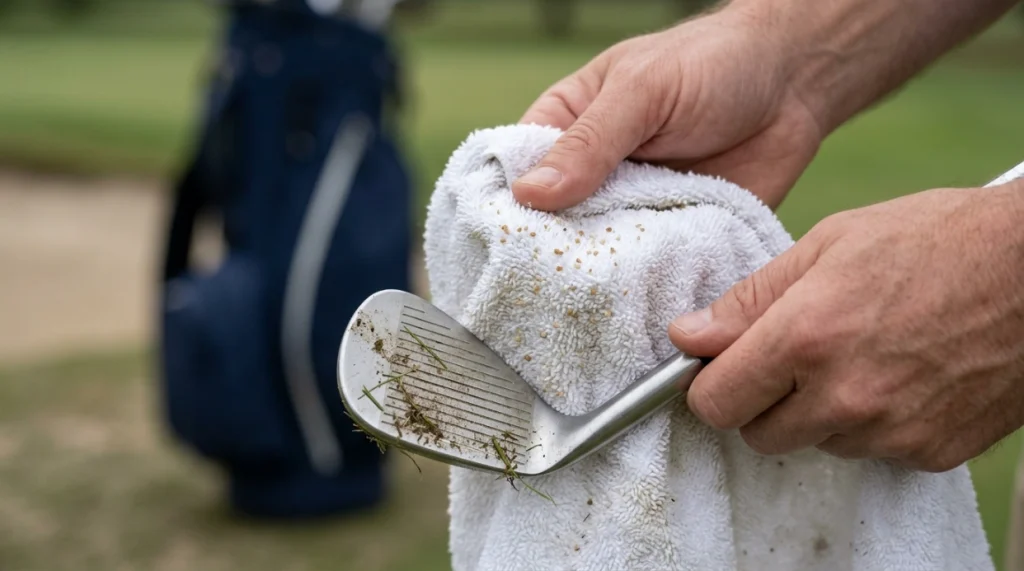
Most cleaning-related scratches come from friction combined with abrasive contamination. Sand, gritty soil, and hard debris can sit between the fabric and the club while you wipe.
This is similar to washing a car with a dirty cloth. The cloth may feel soft in your hand while the trapped particles create the marks.
Sand and Course Grit
Bunker sand is an obvious concern because golfers encounter it throughout a round. A towel used immediately after a bunker shot can collect plenty of loose particles.
Course soil can create the same issue. You do not need a large visible stone for contamination to matter.
- Shake first: Remove loose dirt before reusing the towel.
- Rinse when needed: Water helps carry gritty material away.
- Avoid dry grinding: Do not repeatedly rub dried mud into the finish.
- Use dedicated zones: Reserve one dirty area for clubfaces.
Pressure Makes Contamination More Important
Gentle wiping and aggressive scrubbing are not the same action. More pressure pushes any trapped material more firmly against the club surface.
I prefer several light passes over one forceful scrub. If dirt will not move, I add moisture instead of adding pressure.
A Dirty Towel Can Transfer Debris
A towel also moves contamination from one club to another. Cleaning a sandy wedge and immediately polishing a driver with the same section is unnecessary risk.
This is why I treat a golf towel as having separate working zones. The dirtiest area never becomes my polishing area later in the round.
Section Takeaway: The safest cleaning method controls grit, moisture, and pressure. The word “cotton” matters less than the condition of the towel.
Is Cotton or Microfiber Safer for Golf Clubs?
Both clean cotton and clean microfiber can be safe for golf clubs. Neither material becomes automatically scratch-proof once dirt and abrasive particles enter the fabric.
The differences are more about texture, drying behavior, bulk, and how each towel handles course debris. Golfers comparing wider equipment choices can also browse Golf Digest’s equipment coverage.
| Towel Type | Typical Construction | Scratch Risk When Clean | Debris Consideration | Best Use |
|---|---|---|---|---|
| Cotton Terry | Natural cotton with raised loops | Low with gentle use | Sand can hide between loops | Moisture, grips, hands, routine cleaning |
| Waffle Microfiber | Fine synthetic fibers with textured grid | Low with gentle use | Fine particles can still remain in fabric | Clubfaces, grooves, mud, everyday bag use |
| Smooth Microfiber | Fine synthetic fabric with smoother surface | Low when clean | Must stay free from abrasive contamination | Light wiping and final drying |
| Cotton Blend | Cotton combined with synthetic fibers | Depends on weave and cleanliness | Varies with surface texture | General-purpose golf use |
Microfiber Has a Cleaning Advantage
Waffle microfiber has raised and recessed areas that help lift grass and soil from clubfaces. It also tends to feel lighter than a thick cotton terry towel when wet.
That does not mean microfiber can safely hold unlimited sand. A contaminated microfiber towel still needs shaking, rinsing, or washing.
Cotton Has an Absorbency Advantage
A substantial cotton towel gives you plenty of material for creating wet and dry zones. That can be useful during rainy rounds or on soft, muddy courses.
My choice depends on conditions rather than fear of scratching. Cleanliness and technique remain the deciding factors.
Section Takeaway: Cotton and microfiber can both be club-safe. Choose by cleaning needs, then keep whichever towel you use free from abrasive debris.


Which Parts of a Golf Club Need the Most Care?
Not every part of your golf club shows cosmetic damage equally. Painted, polished, and decorative surfaces usually deserve more careful wiping than an already-worn iron sole.
Driver and Fairway-Wood Crowns
Glossy crowns can make fine cosmetic marks easier to see under bright light. I avoid using the muddy corner of my towel anywhere near these surfaces.
Blot moisture first when possible. Then use a visibly clean section for any final wipe.
Irons and Wedges
Iron and wedge faces constantly meet turf, sand, and soil during normal play. Their clubfaces need cleaning because debris can pack into the grooves.
Use a damp towel for loose contamination before reaching for aggressive scrubbing. A suitable club brush can help with stubborn groove debris.
Putters
Putter finishes vary widely, from polished metal to painted or coated surfaces. A clean towel and gentle pressure are sensible choices, especially on decorative areas.
The same rule applies to premium headcovers and accessories. Do not move bunker grit from one surface to another.
Shafts and Grips
Shafts usually need only light wiping during a round. Grips benefit from staying clean and dry, but they should not share the muddiest part of your towel.
That separation also helps your hands. Nobody wants bunker sand transferred onto the grip before a full swing.
Section Takeaway: Treat painted and polished areas more carefully than workhorse clubfaces. Always switch to a clean towel section before wiping cosmetic finishes.
How Should You Clean Golf Clubs With a Cotton Towel?
The safest routine is simple: remove loose grit before applying pressure. I would rather spend five extra seconds clearing debris than polish it into the finish.
- Inspect the club. Look for sand, loose soil, grass, or dried mud.
- Shake the towel. Remove visible contamination before touching the clubhead.
- Dampen one section. Use moisture to soften dried dirt instead of immediately scrubbing it.
- Wipe lightly. Move dirt away using several controlled passes.
- Clean the grooves. Use an appropriate brush when debris remains packed inside them.
- Use a clean section. Dry or lightly polish the club without returning to the dirty area.
- Check the towel again. Shake or rinse it after sandy shots.
Use a Wet Side and a Dry Side
This is the system I find easiest during a normal round. I dampen part of the towel while deliberately leaving another section cleaner and dry.
The wet area handles clubfaces and mud. The cleaner area handles final drying, grips, and surfaces I do not want contaminated.
Do Not Scrub a Dry Sandy Club
A wedge coming from a bunker may have loose sand across its face, sole, and back. Brushing that material away or rinsing first reduces what the towel must drag across the metal.
For broader golf instruction and equipment guidance, the PGA of America is a useful reference for players. Good equipment care should support your round rather than become a complicated ritual.
Section Takeaway: Remove grit first, use moisture second, and apply pressure last. That order is more important than whether the towel is cotton or microfiber.
How Do You Keep a Golf Towel Safe for Club Cleaning?
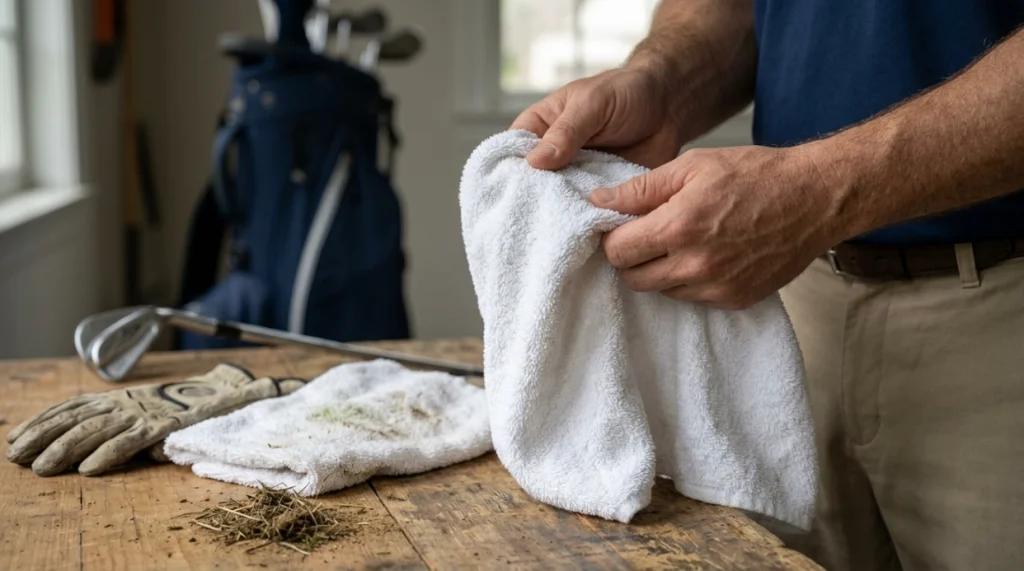
A golf towel becomes less useful when several rounds of dirt remain trapped inside it. Regular washing helps restore a cleaner surface for your next round.
Shake It During the Round
Do not wait until laundry day to manage contamination. Shake loose grass and sand whenever the towel becomes visibly dirty.
If the towel falls onto wet or sandy ground, inspect it before wiping a club. That habit takes seconds.
Wash According to the Care Label
- Remove loose debris: Shake sand and grass away before washing.
- Check instructions: Follow the temperature and drying guidance on the towel’s label.
- Use normal detergent: Avoid unnecessary treatments unless the manufacturer recommends them.
- Dry completely: Do not leave a damp towel packed inside your golf bag.
- Inspect before reuse: Look for hardened debris, damaged fabric, or contamination.
When Should You Replace the Towel?
A faded towel does not automatically need replacement. Condition matters more than appearance.
- The fabric has become permanently stiff or matted.
- Embedded dirt remains after proper washing.
- The towel no longer absorbs moisture effectively.
- The edges or attachment point are badly damaged.
- The surface has become rough from contamination or deterioration.
As of 2026, golfers can choose from cotton terry, waffle microfiber, blends, magnetic towels, and many other designs. None removes the need for basic towel care.
Section Takeaway: A clean inexpensive cotton towel can be safer than a premium towel full of bunker sand. Maintenance matters more than branding.
Cotton Golf Towel and Club-Scratch FAQs
Can a 100% cotton towel scratch a golf club?
Clean 100% cotton is generally suitable for routine club wiping. Scratching becomes more likely when sand, grit, or other abrasive material becomes trapped in the towel and gets rubbed across the club.
Are cotton towels safe for driver heads?
Yes, but use a clean section and light pressure on painted or glossy surfaces. Avoid wiping a driver crown with the same dirty section that just cleaned a sandy wedge.
Is microfiber safer than cotton for golf clubs?
Microfiber is not automatically safer when contaminated. Its fine fibers and waffle textures can be excellent for cleaning, but trapped abrasive particles can still create cosmetic marks.
Should I wet my golf towel before cleaning clubs?
Dampening part of the towel is useful when mud or grass has dried onto a clubface. Moisture loosens contamination and reduces the need for forceful rubbing.
Can I use a normal bath towel on golf clubs?
A clean, soft cotton towel can handle basic golf-club cleaning even if it was not marketed specifically for golf. Purpose-built golf towels mainly add convenient sizes, textures, clips, loops, or other attachment systems.
Can sand in a golf towel scratch a club?
Yes, sand and gritty soil are the bigger concern because they can act as abrasive particles between the towel and club surface. Shake, rinse, or switch towel sections after bunker shots.
How often should I wash my golf towel?
There is no universal round count because course conditions vary. Wash it whenever dirt, sand, odor, or heavy contamination builds up, and follow the manufacturer’s care instructions.
Bottom line: You do not need to stop using cotton golf towels because you are worried about scratching your clubs. Keep the towel clean, control grit, add moisture before scrubbing dried dirt, and reserve a clean section for polished or painted surfaces.
That simple routine protects your equipment while keeping the towel useful for what matters most on the course. Check yours before the next round, create a wet side and a clean dry side, and give each club a quick wipe before it goes back into the bag.