
Can a Golf Towel Damage a Golf Bag? Safety Guide

Quick Answer
Yes, a golf towel can damage a golf bag, but usually only when it’s dirty, wet, or attached incorrectly. A clean, dry towel hanging from a proper accessory ring is generally safe. Problems include fabric scratches, moisture stains, rust around metal fittings, and stress on weak attachment points. Good golf equipment care helps prevent these issues.
Five Ways a Golf Towel Can Cause Damage
- Trapped moisture: A wet towel can leave water against bag fabric and encourage musty odors.
- Sand and grit: Dirty fabric can rub abrasive particles against coated or synthetic bag surfaces.
- Metal hardware: Rough clips and damaged grommets may scratch finishes or snag stitching.
- Poor attachment: Hanging a towel from a zipper pull can strain components not designed for that load.
- Incorrect placement: Loose fabric can interfere with stand legs, straps, or pocket access.
Quick Safety Check
- Check the contact area: Lift the towel and inspect the bag for dampness, scuffs, or rust marks.
- Check the attachment: Confirm the clip sits on a reinforced ring without rubbing sharp edges against the bag.
I’ve always viewed a golf towel as one of the simplest accessories in my bag. Yet the way you hang and maintain it matters more than most golfers realize.
So, can a golf towel damage a golf bag during normal use? I’ll explain the real risks, how to recognize early warning signs, and the easiest ways to protect your equipment.
In This Guide
How Can a Golf Towel Damage a Golf Bag?
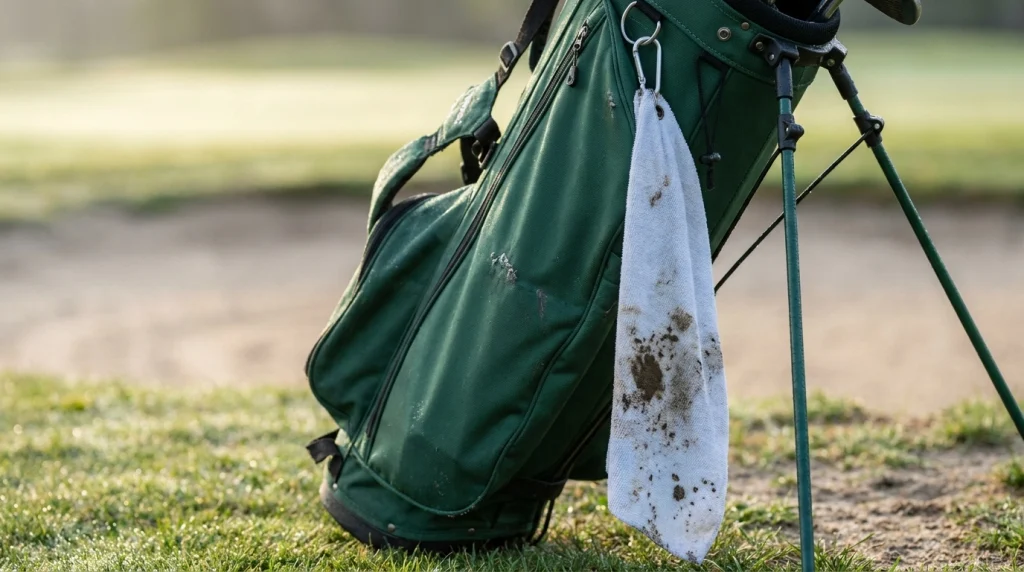
A golf towel usually won’t harm a bag simply by touching it. Damage becomes more likely when moisture, abrasive dirt, or unsuitable hardware remains in contact with the bag.
Most problems develop gradually rather than during one round. That’s why routine inspection matters.
1. Wet Towels Can Trap Moisture
Moisture is one of the most overlooked risks. A towel that stays wet against a bag can prevent the contact area from drying properly.
This matters particularly during rainy rounds or early morning golf. Dew, wet grass, and water used for cleaning clubs can saturate a towel.
Potential consequences include:
- Musty odors around damp fabric or pockets.
- Water marks on moisture-sensitive finishes.
- Prolonged dampness around seams and padding.
- Corrosion on vulnerable metal fittings.
- Mildew growth when moisture remains trapped during storage.
Not every wet towel causes permanent damage. Many modern golf bags use water-resistant synthetic materials that tolerate occasional moisture.
However, water resistance doesn’t mean a bag should remain damp for days. Even coated fabrics need proper drying.
2. Dirty Towels Can Scratch Bag Surfaces
Golf courses expose towels to sand, soil, grass, and bunker debris. Those particles can become trapped between the towel and your bag.
The fabric itself may be soft. Hard debris inside it is a different story.
A dirty towel swinging against a glossy synthetic panel could create light scuff marks. Repeated rubbing may gradually dull some decorative coatings.
On the course, I pay particular attention to towels used after bunker shots. A section carrying sand shouldn’t keep brushing against the same bag panel.
3. Metal Attachments Can Wear Bag Hardware
Many towels use a metal grommet and carabiner. A grommet is the reinforced ring surrounding a hole in the fabric.
These attachments work well when properly fitted. Problems arise when the hardware has rough edges or hangs from an unsuitable point.
- A sharp clip edge can catch nearby fabric.
- A corroded ring may transfer rust-colored marks.
- A large swinging clip can scuff decorative surfaces.
- Repeated pulling can weaken a lightly stitched attachment.
A dedicated towel ring is generally a better choice than a zipper pull. Manufacturers typically design accessory rings to carry hanging equipment.
4. Towels Can Interfere With Stand Mechanisms
Stand bags use moving legs and connecting components to support the bag. Long towels can occasionally become caught around those parts.
This is more than a cosmetic concern. Fabric trapped in a hinge could interfere with normal movement.
Before leaving the first tee, I recommend opening the stand and checking towel clearance. That simple test can reveal an awkward attachment immediately.
Section Takeaway: The towel itself is rarely the main problem. Dirt, prolonged moisture, poor positioning, and unsuitable attachments create most of the avoidable risks.
Which Golf Towel Materials Are Safest for Your Bag?
Clean microfiber and cotton towels are generally safe against normal golf bag materials. Neither fabric automatically protects a bag when it’s packed with sand or left soaking wet.
The best choice depends on your cleaning habits, towel size, and attachment method.
Microfiber Golf Towels
Microfiber consists of very fine synthetic fibers, commonly made from polyester and polyamide blends. Many golf towels use a textured waffle weave to pick up moisture and dirt.
Advantages include:
- Soft contact with many bag surfaces.
- Effective removal of light moisture and loose debris.
- Relatively lightweight construction.
- Convenient folding and storage.
Still, microfiber can hold fine grit within its texture. Rinse dirty sections before allowing them to rub repeatedly against delicate finishes.
Cotton Golf Towels
Cotton is another reliable option. It’s soft, absorbent, and easy to find in traditional golf towel designs.
Its main drawback is prolonged dampness. A thick cotton towel may take longer to dry than a lightweight alternative.
That doesn’t make cotton unsafe. It simply means drying habits become more important.
Microfiber vs. Cotton vs. Caddie Towels
| Towel Type | Main Advantage | Potential Bag Risk | Best Precaution |
|---|---|---|---|
| Microfiber | Lightweight and effective cleaning | Embedded grit rubbing on finishes | Rinse frequently |
| Cotton | Soft feel and good absorbency | Prolonged damp contact | Remove for drying |
| Large caddie towel | More cleaning surface | Dragging or catching moving parts | Fold and position securely |
| Magnetic towel | Easy removal for cleaning | Exposed or dirty magnetic hardware | Check magnet housing and contact area |
The table describes common design tendencies, not guaranteed performance. Actual risk depends on the towel, hardware, and bag finish.
For most recreational golfers, I’d choose a washable microfiber towel with smooth attachments. A cotton towel works equally well when you maintain it properly.
Can Golf Towel Clips Damage Your Bag?
Yes, unsuitable clips can scratch or strain a golf bag. Smooth, properly sized hardware attached to a reinforced accessory point is much less likely to create problems.
Three attachment styles deserve consideration.
Carabiner Clips
A carabiner is a small clip with a spring-loaded gate. Many golf towels connect to bags through a carabiner and metal grommet.
Look for these features:
- Smooth edges without burrs.
- A gate that closes securely.
- Corrosion-resistant construction.
- Appropriate size for the accessory ring.
- Enough clearance to avoid rubbing nearby panels.
A small carabiner usually provides a practical balance between convenience and security. There’s rarely a need for a heavy climbing-style clip.
Magnetic Golf Towel Attachments
Magnetic towel systems allow quick removal from compatible metal surfaces. They’re convenient when you frequently clean clubs around the green.
However, not every golf bag has a suitable magnetic mounting point. Aluminum, plastic, and many other bag components won’t hold an ordinary magnet.
Check that the magnetic housing is smooth and secure. Avoid sliding a grit-covered magnet across a painted metal fitting.
The USGA provides broader information about golf equipment standards, although towel attachment safety is primarily a practical maintenance issue.
Fabric Loops and Center-Slit Towels
Fabric loops remove the need for a heavy metal clip. Center-slit towels can hang over a suitable club or alignment stick.
These methods reduce some hardware contact. They still require proper positioning to prevent dragging and interference.
A towel hanging over a club should never obstruct club removal. Keep the fabric clear of grips and nearby delicate finishes.
For carrying bags, a lightweight loop is often a sensible choice. I especially like attachment methods that let me remove the towel without tugging on the bag.

Where Should You Hang a Golf Towel to Avoid Damage?
The safest usual location is a dedicated towel ring near the upper side of the golf bag. The towel should remain easy to reach without touching the ground or obstructing moving parts.
Correct placement matters for both stand bags and cart bags.
Best Position on a Stand Bag
Stand bags need clearance around their legs and support mechanism. A towel that hangs safely when upright might shift when you deploy the stand.
Use this positioning routine:
- Find the reinforced towel or accessory ring.
- Attach the towel using a smooth, secure clip.
- Deploy both stand legs completely.
- Check the towel’s distance from hinges and supports.
- Lift and carry the bag to test whether the towel swings into obstacles.
- Shorten or reposition the towel if necessary.
Avoid hanging heavy accessories directly from a stand-leg assembly. Those components have a different primary purpose.
Best Position on a Cart Bag
Cart bags remain more upright during play, but cart straps introduce another concern. A poorly placed towel may become trapped beneath a securing strap.
Choose an accessible accessory point away from the cart’s main contact surfaces. Don’t allow the towel clip to press sharply into a padded section.
The towel should also remain clear of frequently opened pockets. Constantly pulling it aside becomes frustrating during a round.
How Low Should the Towel Hang?
There’s no universal height measurement because bag dimensions and towel lengths vary. Instead, check clearance in the bag’s normal playing position.
A useful setup keeps the towel:
- Above grass, mud, and wet ground.
- Clear of stand legs and support arms.
- Away from wheel contact on push carts.
- Accessible without pulling against a zipper.
- Free from sharp or rough hardware.
Long towels may need folding before attachment. Shortening the hanging length can also reduce unwanted swinging.
Section Takeaway: Use the bag’s intended accessory attachment point, then test clearance while walking, carrying, and deploying the stand.
How Do You Prevent a Golf Towel From Damaging Your Bag?
Preventing towel damage comes down to keeping it clean, controlling moisture, and checking attachment points. These habits take little effort compared with repairing a worn bag.
Follow a Simple Post-Round Routine
After an ordinary dry-weather round, inspect the towel before storing your equipment. After rain, give the entire contact area more attention.
- Remove the towel: Unclip it instead of leaving wet fabric against the bag.
- Shake out debris: Remove loose sand, grass, and dried mud outdoors.
- Wash when needed: Follow the towel’s care label and cleaning instructions.
- Dry completely: Hang it in a ventilated place before storage.
- Wipe the bag: Check the towel ring, seams, and nearby fabric for moisture.
- Inspect the clip: Look for sharp edges, looseness, or visible corrosion.
Microfiber towels often benefit from washing without fabric softener. Residue can reduce the performance of their fine fibers.
Always follow the manufacturer’s instructions. Some towels have hardware that should be removed before laundering.
Protect Different Golf Bag Materials
Golf bags aren’t all made from the same material. Coated nylon, polyester, synthetic leather, and genuine leather may need different care.
For synthetic bags, use a soft cloth and an appropriate mild cleaner. Avoid aggressive scrubbing on printed or coated panels.
Leather bags deserve extra caution around water. Prolonged wet contact can affect finishes and should be addressed according to the maker’s instructions.
The R&A offers broader golf guidance and information, while your bag manufacturer’s care label remains the most relevant source for fabric-specific cleaning.
Separate Wet and Dry Cleaning Tasks
Using one heavily soaked towel for every task can create unnecessary moisture around your equipment. A two-towel system makes separation easier.
- Wet cleaning towel: Use for clubfaces, grooves, and stubborn dirt.
- Dry towel: Reserve for grips, hands, and final drying.
A dry towel is particularly useful during humid morning rounds. It helps keep moisture off the areas you touch before swinging.
You don’t need expensive towels for this system. Two ordinary, clean towels can handle the job.
Store Your Bag With Good Airflow
Never assume your bag is dry simply because its outer surface looks clean. Pockets and padded sections can hold moisture longer.
After wet rounds, remove damp gloves, towels, and rain gear. Leave the bag in a ventilated indoor area until everything dries.
Avoid sealing damp equipment inside a car trunk for several days. Warm, humid conditions can encourage unwanted odors and mildew.
For general maintenance advice, Golf Digest covers golf gear care and equipment practices.
Section Takeaway: Remove wet towels after playing, wash away grit, inspect attachments, and let both the towel and bag dry completely before storage.
What Should You Do If a Golf Towel Has Already Damaged Your Bag?
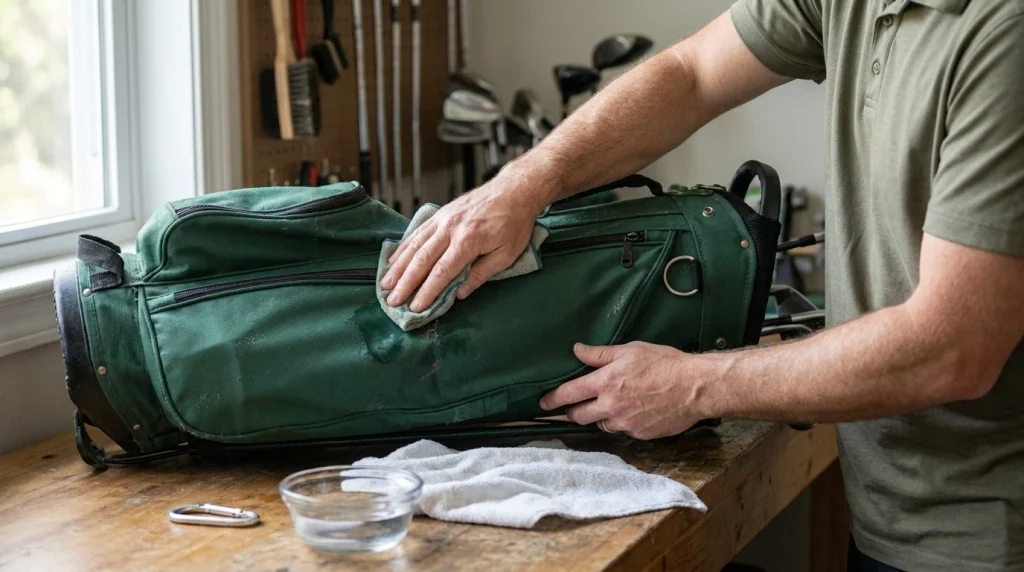
Start by identifying the cause and stopping further contact. Light dirt marks may clean away, while damaged stitching, coatings, or hardware may need specialist repair.
Don’t immediately use strong cleaning chemicals. An unsuitable product can make a small problem worse.
Removing Dirt and Surface Marks
For ordinary dirt on compatible synthetic fabrics, start with a slightly damp microfiber cloth. Test any cleaner on a hidden area first.
- Detach the golf towel and remove loose debris.
- Inspect the surface for actual scratches or removable marks.
- Use a cleaner approved for the bag material.
- Gently wipe without pressing grit into the fabric.
- Remove cleaning residue as directed.
- Allow the area to dry thoroughly.
If the coating itself has worn away, cleaning won’t restore it. Cosmetic repair options depend on the bag material and finish.
Dealing With Rust Around Attachment Rings
Rust-colored marks around a towel ring may indicate corrosion on ferrous metal hardware. However, discoloration alone doesn’t establish the cause.
Remove the towel and examine the clip and ring separately. Look for rough surfaces, flaking finishes, or weakening metal.
Replace badly corroded removable clips rather than continuing to use them. For fixed rings, consult the manufacturer about compatible replacement parts.
Avoid aggressive rust removers near coated fabric or leather. These chemicals may discolor surrounding materials.
Repairing Loose Stitching or Torn Loops
A loose attachment loop can worsen when you repeatedly pull on the towel. Stop using that point until the connection is secure.
Repair options include:
- Reinforcing suitable stitching through a qualified repair service.
- Replacing a removable accessory strap.
- Using another manufacturer-approved attachment point.
- Contacting the bag manufacturer about warranty coverage.
Avoid attaching the towel to a zipper as a permanent workaround. That could move the stress to another vulnerable component.
When Is Replacement Necessary?
A few cosmetic marks don’t usually justify replacing an entire golf bag. Focus on damage that affects normal use or equipment security.
Replacement or professional repair may be worth considering when:
- Stand legs no longer deploy reliably.
- Critical carrying straps or their attachment stitching are damaged.
- A torn section exposes clubs or important equipment.
- Structural hardware has cracked or detached.
- Repeated moisture damage has seriously affected the bag’s condition.
If the bag remains structurally sound, minor surface damage is often manageable. Correcting the towel setup may prevent it from spreading.
Frequently Asked Questions
Can a Wet Golf Towel Cause Mold in a Golf Bag?
Yes, prolonged moisture can encourage mold or mildew in susceptible materials. The risk increases when wet towels remain pressed against fabric in poorly ventilated storage.
Remove damp towels after playing and dry the bag completely. Address existing mold according to the manufacturer’s cleaning guidance.
Can a Golf Towel Scratch Leather or Synthetic Golf Bags?
A clean, soft towel is unlikely to scratch an ordinary bag during gentle contact. Sand, dried mud, exposed clips, and abrasive debris create greater risks.
Take extra care with delicate leather finishes and glossy coated panels. Keep these surfaces away from contaminated towel sections.
Is It Safe to Leave a Golf Towel Attached Overnight?
Usually, yes, if the towel and surrounding bag are completely dry. Problems arise when a damp towel remains attached in a closed or poorly ventilated space.
After rain or heavy cleaning, detach the towel and let it air-dry separately.
Are Magnetic Golf Towels Safer Than Clip-On Towels?
Magnetic attachments can reduce repeated clipping and unclipping, but they’re not automatically safer. Exposed hardware, trapped grit, and unsuitable mounting surfaces still create risks.
Choose a system with smooth, protected contact surfaces and reliable attachment to compatible metal.
Should a Golf Towel Touch the Golf Bag?
Normal contact between a clean towel and the golf bag is generally harmless. Golf bags are designed for outdoor use and routine accessory contact.
Avoid letting a wet or sand-covered towel rub continuously against delicate panels, particularly during walking rounds.
Can Hanging a Heavy Golf Towel Damage the Bag’s Ring?
A normal towel is unlikely to damage a properly designed accessory ring through ordinary use. However, excessive pulling, oversized hardware, or attachment to weak stitching can increase strain.
Use a dedicated reinforced ring and avoid yanking the towel while it’s still clipped.
How Often Should I Clean My Golf Towel?
Clean it whenever dirt, odors, or heavy moisture make washing necessary. A towel used for muddy clubfaces will need more frequent cleaning than one reserved for hands.
Check the towel after every round. Wash according to its label and dry it completely before storage.
Final Takeaway: Keep Your Golf Towel Helpful, Not Harmful
So, can a golf towel damage a golf bag? Yes, but the risk is usually avoidable.
A golf towel is meant to protect your equipment by keeping clubs, grips, and hands clean. It shouldn’t become a source of scratches, moisture, or hardware wear.
My preferred approach is straightforward: use a soft washable towel, attach it to a reinforced ring, and keep it clear of moving parts. After wet rounds, remove it and allow everything to dry.
Before your next round, take a moment to inspect where your towel hangs. A small adjustment today can help keep your golf bag looking and working better for many rounds ahead.