
What Towel Do Pro Golfers Use? Materials, Sizes, and Tour Secrets

Quick Answer
Professional golfers commonly use large golf towels made from microfiber or absorbent terry fabric, often with a waffle texture or a practical center slit. Club Glove, Titleist, and other golf brands offer tour-style designs, but there isn’t one universal towel used by every professional. The best choice for your own bag depends on whether you prioritize cleaning club grooves, drying your grips, or managing wet weather.
What makes a golf towel tour-worthy?
- Absorbent fabric: Microfiber and quality terry cloth help remove moisture, dirt, and grass.
- Useful texture: Waffle-weave microfiber can help lift debris from iron and wedge grooves.
- Generous size: A large towel provides enough material for separate cleaning and drying areas.
- Easy attachment: A center slit, clip, or loop keeps the towel accessible on the golf bag.
- Reliable dry section: Keeping a clean, dry area available helps protect club grips, especially in damp conditions.
The practical buying tip
- Choose a tour-size towel for a full-size golf bag, or a medium towel if you carry a lightweight stand bag.
- For rainy rounds, carry an additional dry towel and protect it beneath a rain hood or umbrella.
When you watch professional golf, you’ll often spot a large towel hanging from the caddie’s bag, ready for the next shot. That towel does more than wipe away sweat; it helps keep clubfaces clean and grips ready for a controlled swing.
In this guide, I’ll explain what towels professionals use, how microfiber compares with cotton, which features matter most, and how to build a simple towel routine for your own rounds in 2026.
In This Guide
What towels do professional golfers use?
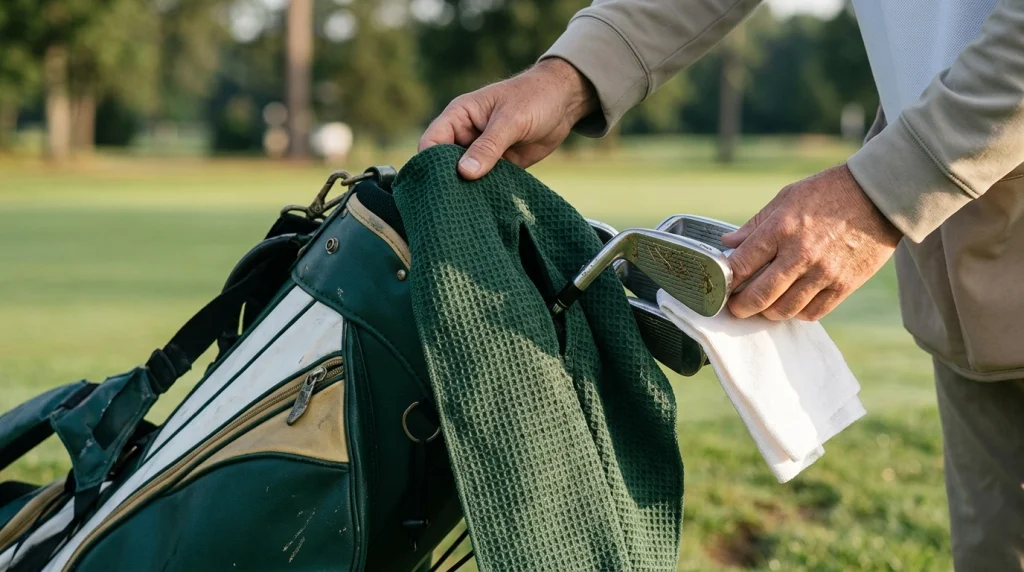
Professional golfers commonly use large, absorbent towels made from microfiber or terry fabric, with waffle-weave microfiber being a popular choice for cleaning clubheads. Many carry a branded towel supplied by an equipment sponsor, while caddies may select additional towels for specific conditions.
The important distinction is between the towel a player displays and the towel the player or caddie relies on during a round.
Why are tour towels so recognizable?
A tour towel often looks larger than a typical hand towel because it needs to handle repeated cleaning throughout 18 holes. The extra fabric gives a caddie room to remove grass, sand, and moisture without immediately running out of a clean section.
Some towels also feature a center slit that lets them hang over a club or alignment stick. This design makes the towel easy to reach and helps prevent it from slipping off the bag.
For example, Titleist has offered a Tour Staff Towel measuring 20 by 40 inches, alongside a smaller Players Towel measuring 16 by 32 inches. These published dimensions illustrate the difference between a large tour-style design and a more manageable everyday option.
Why do professionals care about keeping clubs clean?
A clean clubface helps remove unwanted dirt and grass from the grooves, where debris can interfere with consistent contact. This matters particularly with irons and wedges, which rely on clean contact to produce predictable launch and spin.
Tour players also need clean grips and a dry place to wipe their hands. A towel is a simple tool, but it helps remove distractions from a golfer’s pre-shot routine.
- Clubface cleaning: Remove loose grass, dirt, and moisture after shots.
- Groove maintenance: Clear debris from iron and wedge grooves using a suitable towel section and, when needed, a proper groove brush.
- Grip protection: Dry the handle before gripping the club, especially when humidity or rain becomes a problem.
- Ball cleaning: Wipe away visible dirt before returning the ball to play when permitted by the applicable Rules of Golf.
The PGA Tour’s own coverage of caddies preparing for wet conditions highlights why spare dry towels matter. You can read its practical discussion of keeping club grips dry in the rain.
Section Takeaway: Pros choose towels for dependable cleaning and moisture control, not just appearance. A large, absorbent towel with a convenient attachment is a sensible starting point.
Is microfiber or cotton better for golf?
Microfiber is an excellent choice for cleaning clubfaces, while cotton terry cloth works well for general wiping and absorbing moisture. Neither material wins in every situation, so the best option depends on how you use your towel during a round.
A golf towel is a reusable piece of absorbent fabric designed to remove dirt, grass, sand, and moisture from golf equipment and hands. Golf-specific versions may include textured cleaning surfaces, attachment hardware, and separate areas for wet and dry tasks.
Microfiber: best for cleaning club grooves
Microfiber uses extremely fine synthetic fibers that can trap small particles and absorb moisture. Waffle-weave versions have a raised, pocketed surface that helps lift debris from clubheads and groove channels.
That’s why microfiber is a strong choice for golfers who want a dedicated club-cleaning towel without carrying something bulky. It also works well for cleaning golf balls and removing moisture from equipment.
- Best use: Iron faces, wedge grooves, golf balls, and general equipment cleaning.
- Main advantage: Fine fibers and textured surfaces help collect debris.
- Potential drawback: Microfiber can hold onto oily residue if you don’t wash it properly.
Cotton terry: best for everyday wiping
Cotton terry cloth has small loops that absorb moisture and feel soft against the skin. It can be useful for wiping sweat, cleaning hands, and handling general drying duties around the course.
However, a cotton towel can become heavy when saturated, and its surface may not reach groove channels as effectively as a textured microfiber towel. It remains a practical option if you prefer a familiar, soft fabric.
- Best use: Hands, face, general drying, and all-purpose wiping.
- Main advantage: Comfortable texture and good moisture absorption.
- Potential drawback: A soaked towel may take longer to dry and become cumbersome.
Microfiber vs. cotton: which should you buy?
| Feature | Waffle microfiber | Cotton terry |
|---|---|---|
| Groove cleaning | Excellent practical choice | Suitable for loose dirt |
| Water absorption | Good to excellent, depending on construction | Good to excellent, depending on thickness |
| Drying speed | Often faster when lightly damp | Often slower when thick and saturated |
| Feel on skin | Smooth or textured, depending on weave | Soft, familiar terry texture |
| Best role | Primary club-cleaning towel | General wiping and drying |
These are general material characteristics, not guaranteed results for every towel. Thickness, weave, finishing treatments, and washing habits can change how each fabric performs.
My practical recommendation is straightforward: start with waffle-weave microfiber if your main goal is clean grooves. Add a separate cotton or microfiber towel if you frequently play in humid, rainy, or sweaty conditions.
Section Takeaway: Microfiber is a strong all-round choice for equipment cleaning, while cotton remains useful for everyday drying. Choose according to the job rather than assuming one fabric is always superior.
Which golf towel brands do professionals use?
Professional golfers use a mix of sponsor-branded towels and purpose-built caddie towels. Club Glove and Titleist are recognizable examples, but no single brand can accurately claim to be the universal choice of every professional golfer.
Brand visibility can also reflect sponsorship agreements, tournament merchandise, or a player’s equipment relationship. The logo alone doesn’t tell you how well a towel will suit your own game.
Club Glove Caddy Towel
The Club Glove Caddy Towel is a recognizable tour-style option associated with professional golf bags. Golf Channel has highlighted its waffle-textured microfiber construction, center slit, and practical cleaning design.
It’s worth considering if you want a substantial towel with a traditional caddie-style appearance. Before buying, check the current model’s dimensions, attachment design, and fabric details rather than relying on older product descriptions.
Titleist Tour Staff and Players towels
Titleist has offered different towel formats for players who want a large tour-style towel or a smaller everyday alternative. Its published product information includes terry and microfiber designs, showing that professional-style towels aren’t limited to one fabric.
The larger format suits golfers who want ample material for cleaning and drying, while a smaller towel may hang more neatly from a compact stand bag. Check the current regional catalogue because availability and specifications can change.
For a manufacturer example, visit Titleist’s official website and review its current golf accessories range.
Other branded and specialty golf towels
You may also see towels from other golf equipment companies, apparel sponsors, and specialist accessory makers. Some prioritize bold designs, while others focus on magnets, attachment systems, compact dimensions, or different fabric textures.
When comparing brands, I would focus on four practical details:
- Fabric: Look for microfiber or absorbent terry fabric suited to your cleaning routine.
- Texture: A waffle weave can be useful for lifting dirt from clubfaces.
- Construction: Inspect stitching, edges, grommets, and any center slit.
- Replacement cost: Choose a towel you’re comfortable washing regularly and replacing when worn.
There’s little reason to pay extra solely because a towel resembles something seen on television. A well-made, easy-to-clean towel can perform its job without a tour logo.
Section Takeaway: Club Glove and Titleist are useful starting points when exploring tour-style towels. Compare the actual construction and size before deciding which brand deserves a place on your bag.


What size and features should you choose?
The best golf towel is large enough to clean your equipment comfortably but manageable enough to stay out of your way. For many golfers, a medium towel is a sensible everyday choice, while a tour-size towel offers more room for separate cleaning and drying areas.
Small, medium, or tour-size?
Golf towels vary considerably in dimensions, so check the measurements rather than relying on labels such as compact, player, or tour. The following examples use published Titleist dimensions alongside a practical size category.
| Towel format | Example dimensions | Best fit |
|---|---|---|
| Compact towel | Varies by model | Minimalist carry bags and quick wiping |
| Players Towel | 16 × 32 inches | Everyday golf and stand bags |
| Tour Staff Towel | 20 × 40 inches | Large bags and frequent equipment cleaning |
The two named examples reflect previously published Titleist specifications, not a guarantee that every size or model remains available in 2026. Always verify the measurements of the version you intend to purchase.
Does a center slit matter?
A center slit is a practical feature on many tour-style towels. It lets you drape the towel over a club or alignment stick instead of relying entirely on a clip or carabiner.
This can be convenient when you want the towel to hang securely and remain easy to grab between shots. A clip or loop is also useful, particularly if you frequently remove the towel to clean equipment beside the green.
Are magnetic golf towels worth it?
Magnetic towels can be convenient if you use a golf cart with a suitable metal surface. They offer a quick way to attach or retrieve a towel without opening a clip or reaching for a bag pocket.
However, magnetic attachment is an extra convenience rather than a requirement for good cleaning. If you carry your bag or use a push cart, a traditional clip, loop, or center slit may suit your setup just as well.
- Choose a center slit if you want a classic caddie-style towel.
- Choose a clip or loop if you frequently detach your towel.
- Choose a magnetic design if your cart or accessories offer a suitable attachment point.
Section Takeaway: A 16 × 32-inch towel is a useful starting point for everyday golf, while a 20 × 40-inch model offers more working space. Prioritize dimensions and attachment style over appearance.
How do professional golfers use their towels?
Professional golfers and caddies use towels as part of a repeatable equipment-cleaning routine. They clean clubfaces, manage moisture, and keep a dry section available rather than treating the towel as an occasional accessory.
You can use the same principles without carrying a professional caddie’s full equipment setup.
1. Clean the clubface after shots
Grass, mud, and sand can collect on an iron or wedge face during a round. Use a suitable damp section of your towel to wipe away loose debris, paying attention to the grooves.
For packed dirt, a dedicated club brush can help remove stubborn residue. Avoid aggressive scrubbing with abrasive materials that could damage club finishes.
2. Keep a separate section dry
A practical towel routine separates the area used for wet cleaning from the area reserved for hands and grips. You can dampen one section for club cleaning while keeping another clean and dry.
This approach becomes particularly valuable in humid weather, when sweat can build up quickly, or after a shower passes over the course. If the entire towel becomes wet, switch to a spare dry towel instead of assuming a damp surface will protect your grip.
3. Clean the ball when appropriate
A clean golf ball helps you inspect its surface and remove visible mud or grass when cleaning is permitted. Use a clean towel section so you don’t transfer dirt from your clubface back onto the ball.
Remember that the Rules of Golf govern when and where you may lift and clean a ball. The USGA’s official Rules of Golf resources are a useful reference if you’re unsure about a particular situation.
4. Prepare for rain before it arrives
Wet grips can make it harder to maintain a secure hold on the club. Tour caddies often carry spare dry towels and protect them from rain, rather than depending on a single towel throughout a wet round.
For ordinary golfers, the same preparation can be simple:
- Keep a dry spare inside a waterproof pocket or protected bag compartment.
- Use a rain hood or umbrella to shield your equipment.
- Dry your hands and grips before taking your next shot.
- Replace a saturated towel when it no longer serves its purpose.
5. Avoid cleaning mistakes
Good towel habits matter more than complicated routines. A few small mistakes can make equipment cleaning less effective or leave your grips damp when you need them dry.
- Don’t use one dirty surface for everything: Separate club-cleaning areas from the section used for hands and grips.
- Don’t leave a soaked towel hanging all round: Switch to a dry spare when necessary.
- Don’t ignore groove buildup: Remove stubborn dirt carefully with an appropriate brush.
- Don’t clean with a contaminated towel: Wash it regularly to remove accumulated dirt and residue.
Section Takeaway: The most useful professional habit is consistency. Clean equipment when needed, keep dry fabric available, and prepare a backup before wet conditions become a problem.
How should you choose and maintain a golf towel?
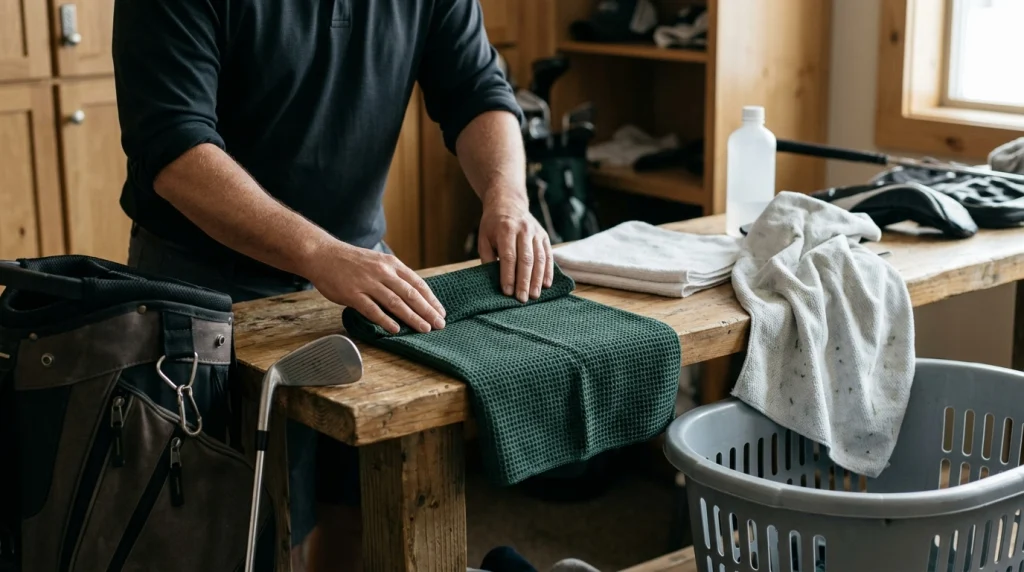
The right golf towel should match your bag, your local playing conditions, and the way you clean your clubs. You don’t need the most expensive tour model; you need one that stays useful throughout your round.
Match the towel to your playing conditions
Think about where you play most often and what your towel needs to handle.
- Hot, humid conditions: Consider a lightweight, quick-drying microfiber towel and a separate towel for sweat.
- Wet courses: Choose an absorbent towel and carry a spare in a protected compartment.
- Dry, dusty courses: A textured towel helps remove dust and loose debris from clubfaces.
- Walking rounds: Pick a size that doesn’t drag on the ground or add unnecessary bulk.
- Cart golf: A larger towel can provide more room for cleaning and drying different equipment.
How often should you wash a golf towel?
Wash your towel whenever it becomes noticeably dirty, develops an unpleasant smell, or stops cleaning effectively. Frequent golfers may need to wash it after every few rounds, while wet or muddy conditions can make washing necessary sooner.
Always follow the manufacturer’s care instructions. These general practices help maintain the fabric and its cleaning performance.
- Shake off loose grass, sand, and dirt before washing.
- Wash microfiber separately from lint-producing fabrics when practical.
- Avoid fabric softener on microfiber because residue can reduce its ability to absorb moisture.
- Use a suitable detergent and the washing temperature recommended on the care label.
- Let the towel dry completely before storing it in your golf bag.
What should you spend on a golf towel?
Set your budget around construction, not professional endorsements. A basic towel that absorbs moisture, cleans effectively, and attaches securely may be a better purchase than a premium model with features you won’t use.
Before buying, compare the fabric, dimensions, attachment system, washing instructions, and replacement cost. Prices and product availability vary by retailer and region, so check current listings rather than relying on old advertised prices.
For golfers who want to follow professional equipment-care principles, the R&A’s official golf resources provide a useful starting point for understanding the rules and traditions surrounding the game.
Section Takeaway: Buy for your actual playing conditions, wash the towel regularly, and carry a spare when rain or humidity is likely. Consistent maintenance helps a good towel remain useful for many rounds.
Golf towel frequently asked questions
1. What towel do most PGA Tour golfers use?
Many professional golfers use large, absorbent golf towels made from microfiber or terry fabric. Club Glove and Titleist are recognizable tour-style options, but players’ towels vary according to sponsorships and personal preferences. There is no single model that every PGA Tour golfer uses.
2. Do professional golfers use microfiber or cotton towels?
Both materials appear in golf towels. Waffle-weave microfiber is particularly useful for cleaning clubfaces and grooves, while cotton terry works well for general wiping and drying. The best choice depends on the fabric’s construction and the task, rather than the material name alone.
3. Why are professional golf towels so large?
Large towels provide more surface area for cleaning clubs, wiping golf balls, and separating wet and dry sections. They also make it easier for caddies to clean equipment repeatedly during a round. Smaller towels remain practical for golfers who carry their own bags.
4. What is the best golf towel size for an amateur golfer?
A medium towel measuring around 16 × 32 inches is a useful starting point for many recreational golfers. A larger 20 × 40-inch towel offers more working space for frequent cleaning. Choose according to your bag size, attachment method, and preference for carrying extra fabric.
5. Should I wet my golf towel before playing?
You can dampen part of your towel to help remove dirt and grass from clubfaces. Keep another section dry for your hands and grips, and carry a separate dry towel if conditions are wet. You don’t need to soak the entire towel before starting your round.
6. How many golf towels should I carry?
One towel is enough for many dry-weather rounds, especially if you clean it regularly. Carrying two is useful when playing in rain, high humidity, or muddy conditions. A practical setup includes one towel for equipment cleaning and another kept dry for hands and grips.
7. Are expensive golf towels worth the money?
Premium golf towels can offer useful construction, larger dimensions, better attachment systems, or distinctive designs. However, price alone doesn’t guarantee better cleaning. Compare the material, texture, durability, and care requirements before paying extra for a particular brand or a tour-inspired appearance.
Final takeaway: Choose the towel that keeps your equipment ready
So, what towel do pro golfers use? The short answer is that many rely on large, absorbent microfiber or terry towels, often with practical features designed for frequent cleaning and easy access.
For your own golf bag, start with a waffle-weave microfiber towel in a convenient size. Add a separate dry towel if you regularly play in humid or rainy conditions.
Most importantly, build a consistent routine: clean your clubfaces, keep your grips dry, and wash your towels regularly. Those simple habits are far more valuable than buying a particular logo.
Before your next round, check your golf bag and make sure your towel is clean, accessible, and ready for the conditions. It’s a small piece of equipment that can make your time on the course more organized.