
What Towel Do Caddies Use and Why? Golf Guide

Quick Answer
Golf caddies commonly use large, absorbent towels made from microfiber, waffle-weave microfiber, or cotton terry cloth. They use these towels to clean clubfaces and grooves, remove dirt from golf balls, and keep grips dry, especially in wet conditions. The PGA Tour provides examples of how caddies manage towels and protect equipment during professional rounds.
What makes a caddie towel useful?
- Waffle-weave texture: Helps collect dirt, grass, and moisture from club grooves.
- Large surface: Provides enough room for separate wet and dry sections.
- Absorbent material: Removes water and debris without requiring constant rinsing.
- Dry grip protection: Helps prevent moisture from interfering with a secure hold on the club.
- Easy attachment: A center slit, grommet, or clip keeps the towel accessible on the golf bag.
- Weather versatility: A practical setup includes a damp cleaning area and a protected dry area.
The simplest takeaway
- Choose a large waffle-weave microfiber towel for regular club cleaning, and carry a second dry towel when rain is likely.
Watch a professional golf tournament, and you’ll notice that caddies rarely leave club cleaning to chance. Their towels help keep equipment ready for the next shot, whether the course is dry, muddy, or soaked by rain.
If you’re wondering what towel caddies use and why, the answer involves more than a particular brand. I’ll explain the materials, typical sizes, cleaning routine, and practical features that make a caddie towel useful for everyday golfers, too.
In This Guide
What towels do golf caddies use?
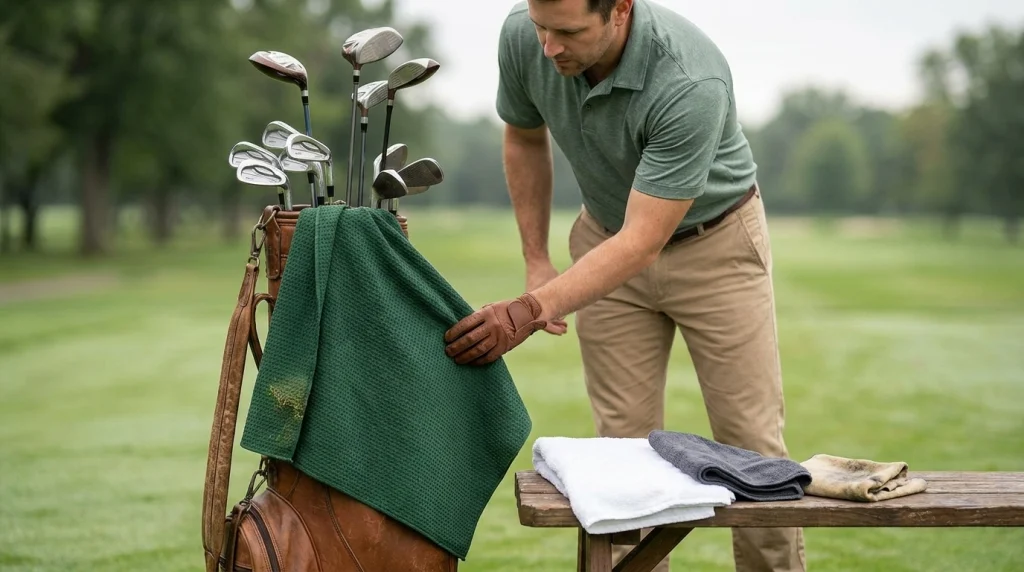
Golf caddies commonly carry a large golf towel made from waffle-weave microfiber or cotton terry cloth. The exact material, size, and brand vary by player, equipment arrangements, weather, and personal preference.
Waffle-weave microfiber towels
A waffle-weave microfiber towel uses fine synthetic fibers arranged in a textured pattern. Its surface helps lift moisture and collect dirt from clubfaces, grooves, and golf balls.
The textured construction also creates plenty of useful cleaning surface without making the towel excessively bulky. Many golfers prefer this style because it works well for regular cleaning and is easy to wash between rounds.
Large tour-style towels
Tour-style towels are larger than many compact towels sold for recreational golfers. A size around 20 × 40 inches is a useful example of the format, although actual dimensions vary by brand and model.
The extra fabric gives a caddie room to separate cleaning duties. One portion can stay damp for clubfaces, while another remains dry for hands and grips.
Other towel styles found on golf bags
- Cotton terry towels: Familiar, soft towels with looped fibers that absorb water effectively.
- Compact microfiber towels: Smaller options suited to walking golfers who want less weight and bulk.
- Shammy-style towels: Specialized synthetic or absorbent materials used for particular cleaning and drying tasks.
- Branded tournament towels: Towels carrying a sponsor, equipment company, golf club, or event logo.
There isn’t one universal towel that every professional caddie uses. A prominent logo may reflect a sponsorship arrangement rather than a special cleaning advantage.
Section takeaway: Large waffle-weave microfiber is a practical starting point, but cotton and other specialized towels can also serve useful roles.
Why do caddies use special golf towels?
Caddies use golf towels to keep clubs and balls clean, control moisture, and prepare equipment for the next shot. These simple tasks help remove avoidable distractions during a round.
Clean grooves help maintain consistent contact
The grooves on an iron or wedge help manage the interaction between the clubface, ball, grass, and moisture. Dirt and grass packed into those grooves can change how the clubface interacts with the ball.
A towel helps remove loose debris, while a brush or suitable cleaning tool can tackle stubborn dirt. Keeping the face clean is particularly useful when a player alternates between fairway lies, rough, sand, and damp grass.
Clean golf balls are easier to inspect
Mud, grass, and water can obscure a golf ball’s markings and affect its contact with the clubface. Caddies use damp towel sections to remove debris when cleaning is permitted under the Rules of Golf.
They also need to follow the applicable rules governing when a ball may be lifted and cleaned. The R&A Rules of Golf provides the official framework for these situations.
Dry grips matter in changing weather
A wet grip can feel slippery and make it harder to maintain consistent control of a club. During rainy rounds, caddies often protect dry towels and keep them available for grips and hands.
A damp cleaning towel cannot replace a dry towel when rain is falling steadily. That distinction becomes especially important when a player needs a secure grip before a full swing.
Preparation saves time between shots
A caddie who keeps a towel accessible can clean a club without searching through bag pockets. This small routine helps equipment stay organized and ready for the next shot.
The PGA Tour has described how tour caddies protect grips during rain, including keeping extra dry towels available and shielding them beneath an umbrella. Read its report on keeping club grips dry in rainy conditions for practical examples.
Section takeaway: A caddie towel is a working tool, not just a decorative accessory. Its main jobs are cleaning, drying, and keeping equipment ready for play.
Is microfiber or cotton better for a caddie towel?
Microfiber is a strong choice for cleaning club grooves, while cotton terry cloth remains useful for general absorption and drying. Neither material wins every situation, so the best option depends on how the towel will be used.
Here’s how the main choices compare.
| Feature | Waffle microfiber | Cotton terry | Shammy-style towel |
|---|---|---|---|
| Main strength | Textured cleaning | General absorption | Moisture removal |
| Groove cleaning | Very suitable | Suitable for loose dirt | Depends on material and texture |
| Drying speed | Often quick | Varies with thickness | Varies by construction |
| Wet/dry separation | Excellent in a large towel | Good in a large towel | Often best as a dedicated drying tool |
| Best use | Routine club and ball cleaning | Everyday drying and cleaning | Specific drying tasks |
Comparison note: These are general material characteristics, not standardized laboratory results. Actual absorbency, drying time, and cleaning performance depend on the towel’s construction and care.
Why the waffle weave is popular
The raised pattern and recessed pockets give a waffle-weave towel a useful surface for picking up grass and dirt. Its relatively open construction can also help it dry between uses, depending on the fabric and conditions.
For a caddie cleaning several clubs during a round, this combination is practical. The towel can handle routine cleaning without requiring a separate cloth for every club.
When cotton makes sense
Cotton towels are a sensible option when softness, familiarity, and general drying ability matter most. Many golf facilities and caddies use conventional towels, and a clean cotton towel can do the job well.
However, a thick cotton towel may become heavy when saturated. It can also take longer to dry than a lightweight alternative under some conditions.
Why some caddies carry a shammy
A shammy-style towel can provide a dedicated way to remove moisture from selected surfaces. Some versions work best when damp, while others are designed for specific drying tasks.
Check the manufacturer’s instructions before using one on a clubface or grip. Not every product marketed as a shammy works the same way.
Section takeaway: Start with waffle-weave microfiber if club cleaning is your priority. Add cotton or a specialized drying towel only when your playing conditions or routine justify it.


How do caddies use towels during a round?
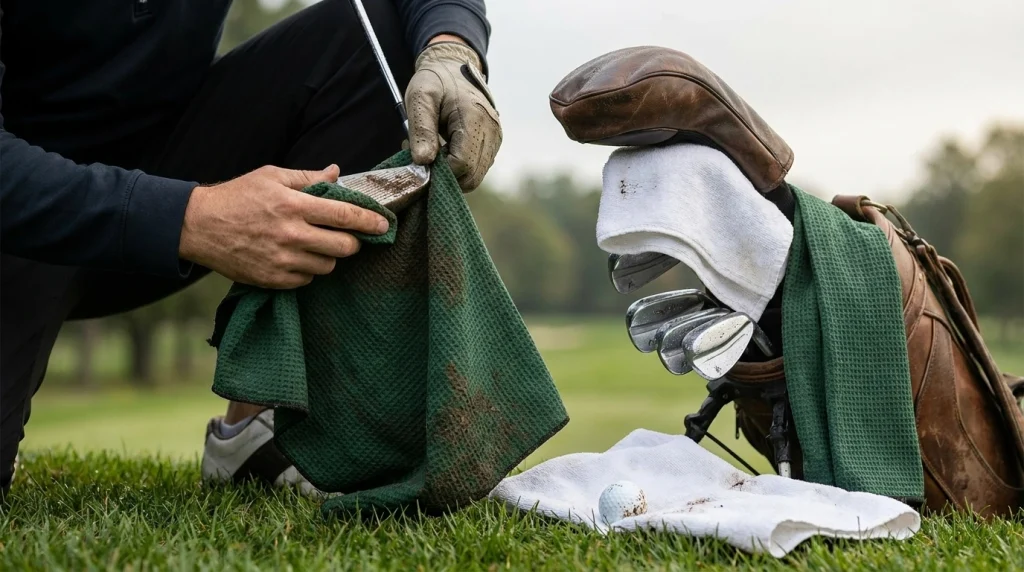
Caddies get the most value from a towel by assigning different areas to different jobs. A damp section handles dirt, while a protected dry section handles hands and grips.
1. Divide the towel into wet and dry sections
Before the round, dampen a portion of the towel with clean water. Leave the remaining section dry, and avoid soaking the entire towel unless the conditions call for a different approach.
- Damp section: Use it for mud, loose grass, and dirt on clubfaces.
- Dry section: Reserve it for grips, hands, and final drying.
- Clean reserve: Carry another dry towel if rain or heavy dew is expected.
Keep the two sections separate as you work. If the whole towel becomes wet, the dry section loses its main purpose.
2. Clean clubfaces after shots
After a shot, check the clubface for dirt and grass before returning the club to the bag. Wipe the face and grooves with the damp section, then dry the club when needed.
For packed-in dirt, use a suitable club brush rather than forcing grit across the surface. Follow the club manufacturer’s cleaning advice, especially when caring for delicate finishes.
3. Clean golf balls when permitted
A damp towel removes loose mud and grass from a ball when the Rules of Golf allow cleaning. However, a player cannot simply lift and clean a ball whenever desired.
For example, the rules distinguish between cleaning a ball lifted from the putting green and situations where lifting or cleaning is restricted. Check the applicable rule and any local rule before handling the ball.
4. Protect grips when the weather turns
Rain changes how a caddie manages the towel. The priority shifts from routine cleaning to keeping the grip, glove, hands, and spare towels as dry as possible.
- Keep spare dry towels in a protected bag compartment.
- Use an umbrella or suitable bag cover to shield equipment.
- Dry the grip before handing the club to the player.
- Replace a saturated towel with a dry one when necessary.
These steps matter because wiping a wet grip with an already soaked towel does little to solve the problem. A second towel can be more useful than buying a more expensive single towel.
5. Keep the towel clean between rounds
Grass, soil, sand, and moisture accumulate throughout a round. Wash the towel according to its care label, and let it dry thoroughly before storing it.
A dirty towel can transfer debris back onto a clubface or ball. Regular washing also helps prevent stale odors and keeps the fabric ready for the next round.
Section takeaway: The wet/dry method is the most useful habit to copy from experienced caddies. It gives you a cleaning surface without sacrificing a reliable way to dry grips and hands.
How do you choose a caddie-style golf towel?
The best caddie-style towel depends on your bag setup, typical weather, and cleaning habits. You don’t need professional-tour equipment to benefit from a sensible towel system.
Choose a practical size
A larger towel offers more space for separating wet and dry areas. A smaller towel takes up less room and is easier to carry when you’re walking the course.
| Towel format | Best suited to | Main trade-off |
|---|---|---|
| Large, around 20 × 40 inches | Caddie-style cleaning and wet/dry separation | More bulk and weight when wet |
| Medium, around 16 × 24 inches | Walking golfers and everyday use | Less space for separate sections |
| Compact, around 16 × 16 inches | Minimalist bags and quick cleaning | Limited drying and cleaning area |
These measurements are illustrative size categories, not official standards. Compare the actual dimensions and attachment design before buying.
Pick the right attachment
- Center slit: Allows a towel to drape over a suitable club or bag component.
- Grommet and clip: Provides a familiar attachment point for most golf bags.
- Magnetic attachment: Offers convenient access on compatible metal surfaces, depending on the design.
- Simple loop: Keeps the setup lightweight and easy to remove.
Check that the towel hangs clear of the ground. A towel that drags through wet grass or mud becomes dirty before it can help clean anything.
Look beyond the brand name
Club Glove, Titleist, TaylorMade, PING, and Callaway are examples of established golf brands associated with golf equipment and accessories. Their branded towels may suit golfers who prefer matching equipment, but the logo alone doesn’t establish superior cleaning performance.
Before choosing a model, compare its material, dimensions, attachment method, and washing instructions. A well-made generic microfiber towel may meet your needs just as well as a more expensive branded version.
Build a simple two-towel setup
For most golfers who want to follow a caddie-style routine, I recommend starting with one large waffle-weave microfiber towel and one smaller dry towel. This combination covers routine club cleaning and gives you a backup when the main towel gets soaked.
It also makes sense to keep a small club brush in your bag for stubborn debris. Use the brush carefully and follow the equipment manufacturer’s maintenance guidance.
Section takeaway: Match towel size to your bag and playing conditions. Material, a useful wet/dry setup, and convenient access matter more than a professional logo.
Frequently asked questions
What brand of towel do professional golf caddies use?
There is no single brand used by every professional caddie. Club Glove, Players Towel, and sponsor-branded towels are examples associated with professional golf, but individual choices vary by player, tournament, and sponsorship arrangements.
Why are golf caddie towels so big?
Large towels provide enough fabric for cleaning clubfaces, removing dirt from balls, and drying equipment. They also make it easier to keep one section damp while reserving another for dry grips and hands.
Do caddies prefer microfiber or cotton towels?
Both materials are used in golf. Waffle-weave microfiber is popular for its textured cleaning surface and practical drying characteristics, while cotton terry cloth provides familiar absorption and softness. The better choice depends on the task and towel construction.
Why do caddies keep one part of the towel wet?
A damp section helps loosen dirt, mud, and grass from clubfaces and golf balls. Keeping another section dry gives the caddie a clean area for drying grips and hands without transferring unnecessary moisture.
Can I use a regular bath towel as a golf towel?
Yes. A clean bath towel can handle basic golf-club cleaning and drying, provided its size and attachment work for your bag. However, a purpose-built golf towel may offer a more convenient shape, textured surface, or clip for on-course use.
How many towels should a golfer carry?
One towel is enough for many dry-weather rounds. Two towels are more practical when rain is likely or when you want to keep a dedicated dry towel available for grips, gloves, and hands.
How often should a golf towel be washed?
Wash a golf towel whenever it becomes heavily soiled, develops an odor, or stops cleaning effectively. For frequent golfers, washing after several rounds may be a reasonable starting point, but muddy or wet conditions can call for washing after each round.
Final takeaway: Choose function over appearance
Golf caddies use towels because clean clubs, clean balls, and dry grips support a consistent routine. Large waffle-weave microfiber towels are a practical option, although cotton and specialized drying towels also have their place.
If you’re upgrading your own golf bag, start with a medium or large microfiber towel, divide it into wet and dry sections, and carry a second towel in uncertain weather. That’s a simple, affordable way to adopt a useful caddie habit without paying extra just for a tour-style logo.