
What Is a Microfiber Golf Towel?

Quick Answer
A microfiber golf towel is a lightweight synthetic towel designed to remove dirt, grass, sand, and moisture from golf clubs, balls, grips, and hands. Most use fine polyester or polyester-polyamide fibers, while textured waffle weaves add extra cleaning surface for clubfaces and grooves. You can also use the towel to clean a ball whenever the Rules of Golf allow the ball to be cleaned.
Why golfers use microfiber towels
- Club cleaning: Textured microfiber helps lift grass, loose soil, and sand from clubfaces.
- Moisture control: The fabric handles water without the bulk of a thick bath-style towel.
- Quick drying: Microfiber generally dries faster than a heavy cotton terry towel.
- Low weight: It adds little bulk to a walking or stand bag.
- Easy access: Golf versions often include clips, center slits, loops, or other bag-friendly designs.
Simple setup
- Dampen one section for mud and dirt while keeping the rest dry for grips, hands, and final wiping.
A microfiber towel looks like a minor golf accessory until you play through morning dew, a damp bunker, or soft fairway turf. Then having a clean clubface and a dry grip becomes useful on nearly every hole.
I like microfiber because it gives me a practical wet-and-dry cleaning setup without hanging a heavy towel from the bag. This guide explains what microfiber golf towels are, how they work, and when they make more sense than cotton.
In This Guide
What Is a Microfiber Golf Towel Made Of?
A microfiber golf towel is made from extremely fine synthetic fibers rather than the natural cotton fibers found in traditional terry towels. Golf versions commonly use polyester or a polyester-polyamide blend.
Definition: A microfiber golf towel is a reusable synthetic cleaning cloth designed for on-course equipment care, moisture control, and convenient attachment to a golf bag.
Microfiber is the material, not the weave
This distinction causes plenty of confusion. Microfiber describes the fibers, while waffle weave describes how those fibers are arranged into a textured grid.
- Microfiber: The fine synthetic material used to make the towel.
- Waffle weave: A recessed grid texture that adds cleaning surface and pockets for moisture and debris.
- Flat weave: A smoother microfiber construction with less pronounced texture.
That means a waffle golf towel can be microfiber, but not every microfiber towel has a waffle pattern. For club cleaning, I usually prefer some texture instead of a completely smooth surface.
Why is microfiber popular in golf?
Golfers need a towel that can handle repeated wiping without becoming unnecessarily bulky. Microfiber fits that job because it combines low weight, practical absorbency, and relatively quick drying.
- It folds into a compact space.
- It works well for wet and dry cleaning.
- Textured versions can reach into clubface grooves.
- It usually produces less loose lint than plush cotton.
- It can be washed and reused throughout a season.
As of 2026, microfiber remains common across compact cart towels, clip-on towels, and oversized caddie-style designs.
How Does Microfiber Clean Golf Clubs?
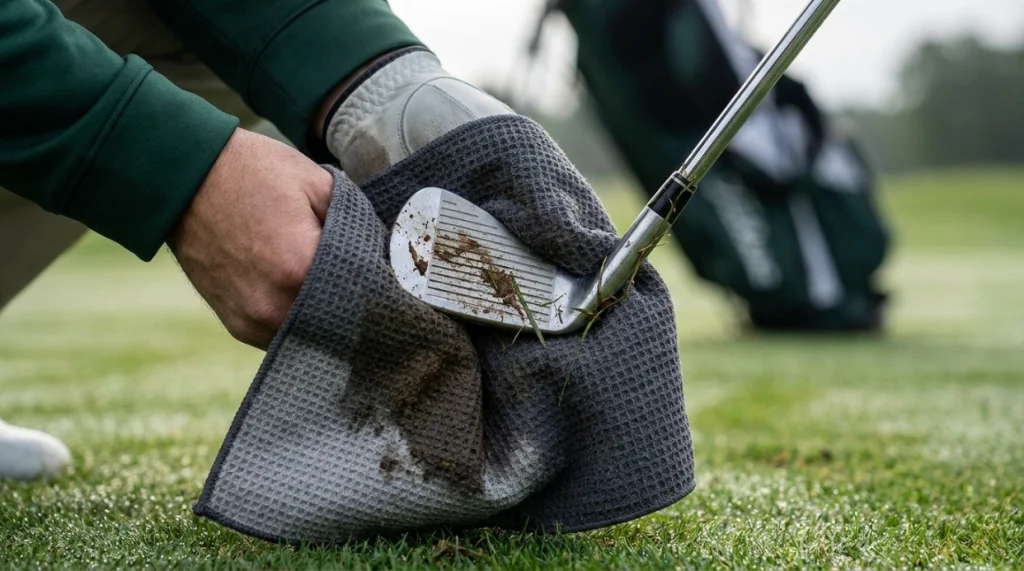
Microfiber cleans by giving moisture and loose debris more surface area to cling to as you wipe. A textured weave adds mechanical scrubbing action without requiring a stiff brush for every light cleaning job.
That becomes useful after an iron shot from damp turf. A quick wipe before returning the club to the bag prevents grass and soil from drying onto the face.
Why clubface grooves matter
Iron and wedge grooves need direct contact with the ball and turf conditions can leave them packed with dirt. A towel helps remove loose material before the next shot.
- Grass: Wipe it away before it dries into the grooves.
- Sand: Shake or brush away heavy grit before wiping.
- Mud: Use a damp towel section first, then finish with a dry area.
- Water: Dry the face when moisture is affecting your setup or storage.
I keep one corner slightly damp on soft-course days. That section loosens mud, while the dry half finishes the job before the club goes back into the bag.
A towel still has limits. Packed debris may need a proper groove brush rather than aggressive rubbing with fabric.
What Is a Microfiber Golf Towel Used For?
A microfiber golf towel can clean clubs and balls, manage moisture, and keep your hands or grips drier during a round. Its usefulness comes from having the towel within reach instead of buried in a bag pocket.
Cleaning clubheads
This is the main job. Wipe irons and wedges after shots that leave grass, soil, or sand on the face.
For heavier mud, dampen part of the towel first. Avoid using the same dirty section on your hands or sensitive surfaces later.
Cleaning a golf ball
A microfiber towel works well for removing dirt from a golf ball when the Rules permit cleaning. On the putting green, a lifted ball may be cleaned.
There are situations elsewhere on the course where a lifted ball cannot be cleaned. The R&A Rule 14 clarifications explain those exceptions in more detail.
Drying grips and hands
A dry grip gives you one less distraction before a shot. Keep a clean part of the towel separate from the area used on muddy clubheads.
- Dry light moisture from grips.
- Wipe damp hands before putting on a glove.
- Keep one section protected when rain is expected.
I find that dividing one large towel into dedicated zones works better than rubbing every surface with the same dirty corner.

Is Microfiber Better Than Cotton for Golf?
Microfiber is usually the more practical choice for golfers who prioritize low weight, fast drying, and club cleaning. Cotton remains appealing when softness, thickness, and a traditional towel feel matter more.
| Feature | Microfiber | Cotton Terry |
|---|---|---|
| Typical feel | Light, smooth, or textured | Soft and plush |
| Drying | Generally quicker | Usually slower when thick |
| Club cleaning | Strong with waffle texture | Good general wiping |
| Bag weight | Usually lighter for its size | Can feel heavier when saturated |
| Best fit | Walking, wet conditions, frequent club cleaning | Players wanting softness and traditional feel |
Neither material automatically makes a good towel. Size, weave, attachment, and how you maintain it can matter just as much.
If I carried my bag for 18 holes, I would usually choose microfiber. On a cart, where weight matters less, a large cotton or microfiber caddie towel can both work well.
What Size and Weave Should You Choose?
Choose a microfiber towel by how you carry your clubs and how much cleaning surface you need. Compact towels suit walkers, while larger caddie towels provide more separate wet and dry space.
Published manufacturer specifications show how much golf towel sizes can vary.
| Example | Published Size | Construction / Attachment | Practical Fit |
|---|---|---|---|
| Titleist Players Microfiber Towel | 16 × 32 in. | Performance microfiber | Mid-size all-purpose towel |
| Club Glove Microfiber Caddie Towel | 17 × 40 in. | Waffle texture, center slit | Large cleaning area |
| Club Glove Microfiber Cart Towel | 16 × 24 in. | Waffle texture, carabiner | Compact bag or cart use |
Which weave is best?
For routine club cleaning, waffle microfiber is my default choice. Its textured grid gives mud and grass somewhere to move instead of simply sliding across a flat surface.
A smoother microfiber towel can still handle moisture, hands, and light cleaning. It just provides less pronounced texture for dirty grooves.
- Choose waffle microfiber for clubs, balls, mud, and general on-course cleaning.
- Choose smooth microfiber when compactness and light moisture control matter most.
- Choose a larger caddie size if you want separate wet and dry sections.
- Choose a clip-on size if you walk and want the towel secured high on the bag.
How Should You Use and Wash a Microfiber Golf Towel?
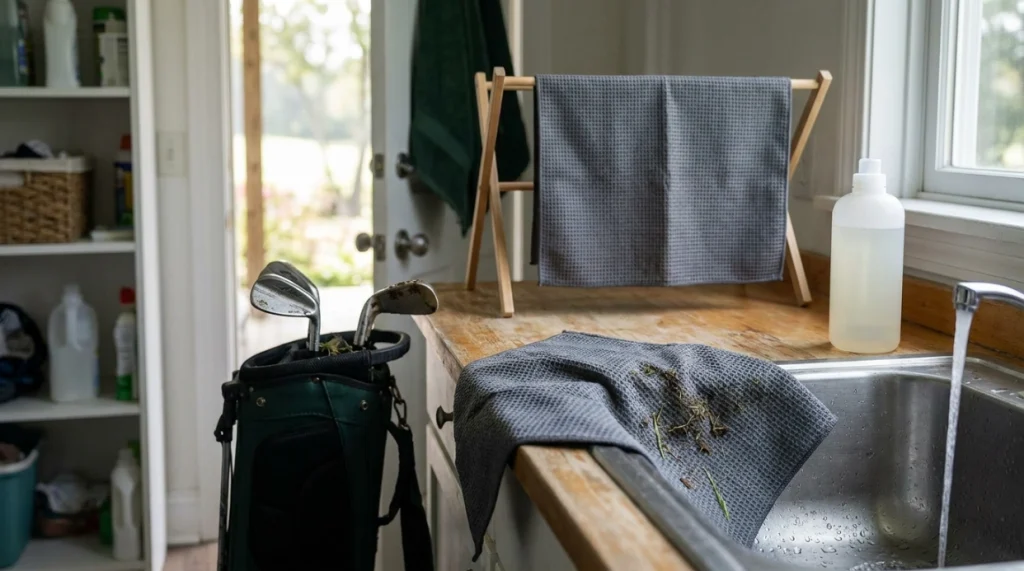
Use separate towel areas for dirty equipment and clean drying jobs. After the round, wash out grit and moisture rather than leaving the towel damp inside your golf bag.
A simple on-course routine
- Dampen one corner before the round if the course is muddy.
- Wipe the clubface after dirty or wet shots.
- Use a separate dry section for grips and hands.
- Shake loose sand away before rubbing the towel against equipment.
- Hang the towel where air can reach it after play.
Don’t store a wet, dirty towel inside a closed bag pocket. It becomes less pleasant to use and gives stains more time to settle.
How to wash microfiber
Always check the towel manufacturer’s label first. Club Glove, for example, specifies hand or machine washing in cold water with mild detergent for its microfiber golf towels.
- Remove loose grass, sand, and mud first.
- Use mild detergent and the temperature recommended by the manufacturer.
- Wash especially dirty golf towels separately from delicate clothing.
- Dry the towel fully before returning it to your golf bag.
Frequent washing is better than waiting until the towel becomes heavily stained. A golf towel is a working piece of equipment, so keeping it clean preserves the reason you carry it.
Frequently Asked Questions
Are microfiber golf towels worth it?
Yes, especially if you clean your clubfaces often or regularly play in wet conditions. Microfiber towels are lightweight, reusable, and available in textured designs that handle grass, dirt, and moisture without taking up much space on a golf bag.
Can you use a regular microfiber towel for golf?
Yes. A clean household microfiber towel can perform the basic cleaning jobs. A golf-specific towel mainly adds practical features such as a carabiner, grommet, center slit, larger dimensions, or a waffle texture designed for easy access during a round.
Should a microfiber golf towel be wet or dry?
Both can be useful. I prefer keeping one small section damp for mud and leaving the remaining fabric dry for grips, hands, and a final wipe. That setup prevents you from turning the entire towel into a wet cleaning rag.
Can microfiber scratch golf clubs?
Clean microfiber is generally suited to routine club care, and Club Glove describes its microfiber towels as non-abrasive. However, trapped sand or hard grit can be abrasive, so shake heavy debris away before wiping polished or painted equipment.
How many golf towels should I carry?
One large towel is enough for many golfers if you keep distinct wet and dry areas. In rain, carrying a second clean towel inside a protected bag pocket gives you a dry backup for grips, hands, and your glove.
How often should you wash a golf towel?
Wash it whenever it becomes muddy, heavily soiled, or develops an unpleasant smell. Golfers playing wet courses may need to wash a towel after nearly every round, while a lightly used dry-weather towel can often go longer between washes.
Bottom line: A microfiber golf towel is a lightweight, synthetic cleaning towel built for the dirt and moisture golfers encounter during a round. Waffle-textured microfiber is particularly useful when club cleaning is your main priority.
If your current towel stays soggy, smears mud, or never seems to be where you need it, try a microfiber model sized for your bag and playing style. The best towel is the one you can reach and use after every messy shot.