
Pull Shot in Golf: Causes, Diagnosis, and How to Fix It

Quick Answer
A pull shot in golf starts left of the target and usually stays left for a right-handed golfer. Reverse the directions for a left-handed golfer. The most common pattern is an out-to-in swing path with the clubface pointing left and fairly square to that path. This guide follows the same basic ball-flight principles used in professional instruction for fixing pulled golf shots.
Most likely causes
- Out-to-in path: The club travels left across the target line through impact.
- Upper-body start: The shoulders dominate the transition and move the club outward.
- Open alignment: Shoulders, hips, or feet may already be aimed left.
- Forward ball position: Contact can happen later in the arc when the club is moving farther left.
- Closed face: A face pointing too far left can worsen the starting direction.
- Poor sequencing: Rushing from the top can make a balanced delivery difficult.
Quick verification
- Check where the ball starts, whether it curves, where the divot points, and where the clubface struck the ball before changing your swing.
A pull can be frustrating because the strike often feels solid. I’ve found that makes golfers more likely to chase a quick fix instead of diagnosing what actually happened at impact.
The better approach is to read the ball flight first. As of 2026, that remains one of the simplest ways to separate a true pull from a hook, pull-hook, or pull-slice.
In This Guide
What Is a Pull Shot in Golf?
A pull shot is a ball that starts on the golfer’s lead side of the intended target and continues roughly straight in that direction. For a right-handed player, that means left.
For a left-handed golfer, the same pattern starts right. Direction changes, but the impact relationship is the same.
Definition: A true pull occurs when the clubface and swing path are both directed to the pull side at impact, with the face relatively square to the path. That produces a straight starting line away from the target with little sideways curve.
Why can a pull feel like a good strike?
A pull often comes from fairly centered contact. That means you may hear a crisp strike and feel plenty of compression even though the shot finishes well offline.
This is different from many slices, where the face-to-path difference can create a more glancing strike. A pull can therefore feel deceptively powerful.
What controls where the ball starts?
The clubface has a major influence on starting direction. The relationship between the face and swing path then influences curvature.
The PGA explains the importance of controlling clubface direction in its guidance on how the clubface works. That is why watching only the final landing point can lead to a bad diagnosis.
Instead, look at two separate clues:
- Starting direction: Did the ball begin left, straight, or right of your target?
- Curvature: Did it remain straight, curve farther left, or bend back to the right?
Those two observations tell you far more than saying, “I missed left.”
Why Do I Pull the Golf Ball Left?
For most right-handed golfers, a recurring pull points toward a delivery that is traveling left through impact. Setup can also create the same visual result before the swing begins.
1. Your downswing is moving out to in
An out-to-in path means the club approaches the ball from outside the target line and travels left through impact. If the clubface also points left and matches that path, the ball can start left without much curve.
This is often called coming over the top. The name matters less than identifying the direction of the club through the hitting area.
2. Your upper body starts the downswing
A common trigger is spinning the shoulders from the top. The trail shoulder moves outward, and the club follows it.
I prefer thinking about a smoother change of direction rather than trying to force the club “inside.” Overcorrecting the path can simply create a different miss.
3. Your shoulders are aimed left
Golfers often check their feet but ignore their shoulders. Open shoulders can encourage the club to move left even when the feet appear square.
- Aim the clubface first.
- Set your feet parallel to the target line.
- Check your knees, hips, and shoulders.
- Confirm the position from behind the ball.
The PGA also emphasizes building alignment from the clubface rather than blindly placing the feet first.
4. Your ball position is too far forward
Ball position changes where the club meets the ball within the swing arc. Moving it too far forward may let the club travel farther left before impact.
This does not mean every pulled shot needs the ball moved back. Check your normal position for the club before making an adjustment.
5. The clubface is pointing too far left
A strong grip, excessive hand rotation, or poor face awareness may cause the face to point left. If the face is also closed relative to the path, the shot can turn into a pull-hook instead of a straight pull.
The PGA’s ball-direction guidance highlights the connection between grip, face control, and the direction of the shot.
6. Your clubs may be contributing
Equipment should not be your first suspect. However, lie angle, club length, grip size, and other fitting factors can affect how easily you return the face and sole to impact.
A club that is too upright can encourage leftward starting tendencies with irons for some golfers. Have a qualified fitter confirm the issue before changing specifications.
Section Takeaway: A true pull usually comes from a leftward delivery combined with a face that also points left. Check alignment, ball position, path, and face before rebuilding the swing.
How Do You Diagnose the Cause of a Pull Shot?
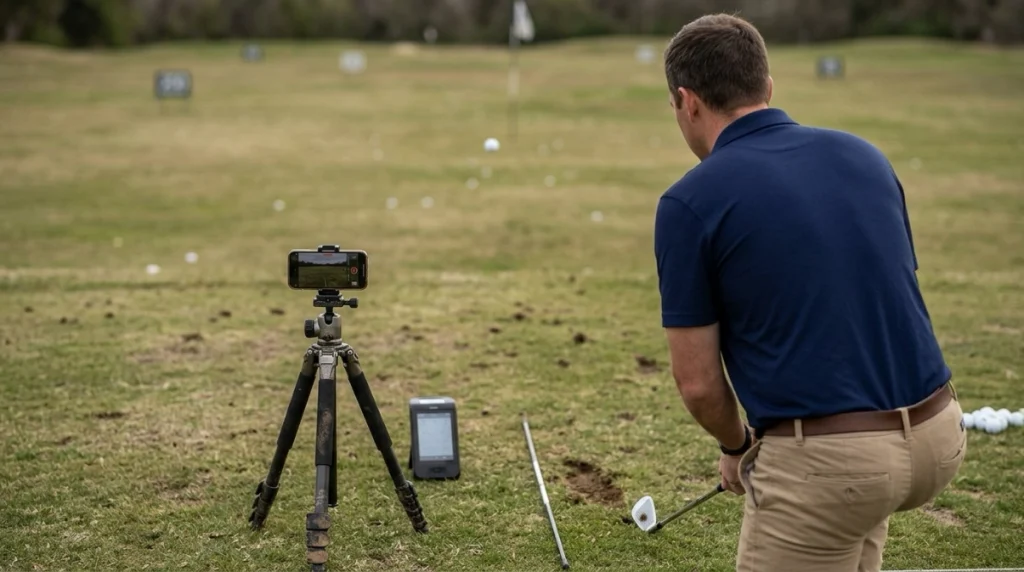
Diagnosis should start with evidence from the shot. Avoid making a mechanical change because one ball finished left.
Step 1: Record the starting line
Stand behind the hitting area and choose a precise target. Note where each ball starts relative to that line.
If five or six shots repeatedly launch left, you have a pattern worth investigating.
Step 2: Watch the curve
- Starts left and stays left: Likely a pull pattern.
- Starts left and curves farther left: More likely a pull-hook.
- Starts left and bends right: More likely a pull-fade or pull-slice.
Do not apply the same fix to all three. Their face-to-path relationships are different.
Step 3: Check divot direction
With an iron, look at the divot after impact. A divot that consistently points well left can support the idea that the club is traveling left.
Divots are not perfect measurements. Use them alongside ball flight rather than as the only clue.
Step 4: Check strike location
Use impact tape or a suitable face marker during practice. Heel and toe strikes can alter ball flight, especially with woods.
You want to know whether you have a path problem, a face problem, a strike problem, or a combination.
Step 5: Film from down the target line
Place your phone safely behind the hitting area and near hand height. Video can reveal open shoulders, a steep transition, or the trail shoulder moving outward.
Keep the camera away from the swing and ball-flight zone. Safety comes first.
Step 6: Use launch-monitor data if available
Useful numbers include club path, face angle, face-to-path, and strike location. Look for repeated patterns rather than obsessing over one swing.
A qualified instructor can help connect those numbers to a movement you can understand.


How Do You Fix a Pull Shot?
Start with setup, then work toward movement. That order prevents you from rebuilding a swing that was simply aimed incorrectly.
1. Reset your alignment
Place an alignment stick or spare club on the ground during a practice session. Position it parallel to your target line.
Aim the clubface first. Then set your body parallel to that intended start line.
2. Check your grip and clubface
Use a neutral grip as your baseline. Avoid changing hand position simply because the ball went left once.
At address, confirm that the clubface points where you intend the ball to start.
3. Return the ball to a neutral position
Use a normal ball position for the club you are hitting. An excessively forward position can make a leftward delivery easier to produce.
Move the ball only in small steps during practice. Compare groups of shots rather than single swings.
4. Smooth out the transition
Feel the change of direction happen without throwing the trail shoulder toward the ball. Your body should continue turning without the upper body lunging first.
A useful rehearsal is making slow swings where the trail shoulder feels as though it stays back for a fraction longer.
5. Try a headcover path drill
- Place a soft headcover just outside and slightly behind the ball.
- Make several slow practice swings without touching it.
- Hit short shots at half speed.
- Increase speed only when contact stays solid.
The goal is not to force a dramatic inside-out path. You are simply reducing an excessive move across the ball.
6. Use a three-quarter swing test
Hit ten controlled shots with a mid-iron using roughly a three-quarter motion. Keep the same target and pre-shot routine.
Track the start line and curve. A smaller swing often makes it easier to identify whether your correction is helping.
7. Take only one cue onto the course
Technical work belongs mostly on the practice tee. During a round, I prefer one simple intention such as a clear target or smooth transition.
Use alignment aids for practice, but check the applicable Rules of Golf before using training aids during a round. The USGA equipment rule and R&A Rule 4 guidance explain restrictions involving training and swing aids.
Pro tip: If a movement drill causes wrist, elbow, shoulder, hip, or back discomfort, stop and work with a certified golf instructor who can adapt the drill to your mobility.
Section Takeaway: Fix the simplest cause first. Confirm alignment and face control, then work on transition and path with slow, measurable practice.
Pull vs. Hook vs. Pull-Hook: What Is the Difference?
A pull, hook, and pull-hook can all finish left for a right-handed golfer. Their starting lines and curves are not the same.
| Shot | Starting Direction | Curve | Typical Impact Pattern |
|---|---|---|---|
| Pull | Left | Little or none | Face and path both left, relatively matched |
| Hook | Near target or right | Strongly left | Face closed relative to path |
| Pull-hook | Left | Farther left | Face left of target and closed relative to path |
| Pull-slice | Left | Right | Path left with face open relative to path |
This distinction matters because “stop hitting left” is not a diagnosis. A golfer with a pull-hook may need different face control than someone hitting a straight pull.
Start line plus curve gives you a much better picture of impact.
Frequently Asked Questions
What causes a pull shot in golf?
A pull usually happens when the club travels toward the golfer’s lead side through impact while the clubface points in roughly the same direction. Open alignment, an upper-body-driven transition, forward ball position, and poor face control can contribute.
Why do I pull my irons but not my driver?
Iron ball position, lie angle, swing direction, and setup may differ from your driver. Check alignment and starting direction first, then compare strike location and club delivery before assuming the same swing fault affects every club.
Can standing too close to the ball cause a pull?
It can contribute by changing posture, arm space, and the way the club travels through impact. However, standing too close does not automatically create a pull, so confirm the actual ball-flight pattern before changing your distance from the ball.
Can ball position cause a pull?
Yes. A ball placed too far forward may be contacted after the club has begun traveling farther toward the lead side of the swing arc. Return to a neutral position for the club and test the change with several shots.
Is a pull caused by a closed clubface?
The clubface usually points left of the target in a right-handed pull, but its relationship to the swing path determines whether the ball curves. If the face is strongly closed relative to the path, the shot becomes more like a pull-hook.
What is the best drill for stopping a pull?
A simple starting drill uses a soft headcover outside and slightly behind the ball to discourage an excessive out-to-in delivery. Begin with slow, short swings and judge the result by starting direction, curve, and contact quality.
Should I aim farther right if I keep pulling the ball?
Usually not as a permanent fix. Aiming farther right may hide the miss while leaving the underlying path or face problem unchanged. Diagnose alignment and impact first, then make a technical correction only when the evidence supports it.
Final Takeaway
A pull shot is easier to fix once you stop treating every left miss as the same problem. Watch where the ball starts and how it curves before changing your swing.
For a right-handed golfer, a straight pull usually means the face and path are both working left. Reverse those directions for a left-handed player.
Start with alignment, clubface position, grip, and ball position. Then test transition and swing path with controlled practice.
Most importantly, change one thing at a time. A clear diagnosis gives you a much better chance of building a starting line you can trust on the course.