
Impact Drills: How to Train Better Contact and Compression

Quick Answer
The best golf impact drills teach three things: ball-first contact, pressure moving toward the lead side, and continued body rotation through the strike. Start with slow impact rehearsals, then use half swings and a clear feedback drill before returning to full swings. PGA guidance on creating a consistent impact position also emphasizes forward hands and an opening body through contact.
Quick Impact Practice Sequence
- Rehearse impact: Pose the club in a balanced impact position before making a slow follow-through.
- Find low point: Practice brushing the turf just ahead of the ball with short iron swings.
- Move pressure forward: Feel your pressure shifting toward the lead foot before the club reaches impact.
- Keep rotating: Let your chest and hips continue turning instead of stopping while the hands flip past.
- Build speed gradually: Move from waist-high swings to three-quarter swings before hitting full shots.
What to Watch
- Judge the drill by contact, divot location, balance, and ball flight rather than how dramatic the position looks.
Impact drills are some of my favorite practice tools because they give you feedback almost immediately. A good strike feels different, sounds different, and usually leaves a different turf pattern.
The important part is not copying a tour player’s frozen impact photo. The goal is to train a motion that produces predictable contact with your own swing.
In This Guide
- What Are Golf Impact Drills Supposed to Teach?
- What Are the Best Impact Drills for Better Ball Striking?
- Which Impact Drill Should You Use for Your Miss?
- How Do the Main Impact Drills Compare?
- How Should You Practice Impact Drills at the Range?
- How Do You Know Your Impact Drills Are Working?
- Impact Drills FAQ
What Are Golf Impact Drills Supposed to Teach?
Golf impact drills are practice exercises designed to improve how the club, ball, and body interact around contact. They usually focus on low point, pressure shift, shaft orientation, rotation, and clubface control.
Definition: Impact is the brief moment when the clubface contacts the golf ball. An impact drill trains the movements leading into and immediately through that moment rather than simply asking you to hold a static pose.
Good impact is different from your address position
A common mistake is trying to return every part of the body to its setup position. With a normal iron shot, impact is a dynamic position rather than a copy of address.
For a right-handed golfer, several patterns commonly appear in a functional iron strike:
- Pressure favors the lead side: Your motion has moved toward the target instead of remaining loaded on the trail foot.
- Hands can lead the clubhead: The grip generally reaches the impact area before the clubhead on a standard iron strike.
- The body is rotating: The pelvis and torso aren’t frozen square to the ball.
- The low point is forward: The club reaches the bottom of its arc after contacting the ball.
- The motion continues: Impact is part of the swing, not the place where the swing stops.
That last point matters. I’ve seen golfers create an impressive rehearsal pose and then lose everything once they try to hit the ball.
The drill must eventually teach movement. A still photograph cannot do that by itself.
Impact with an iron versus a driver
Don’t use an iron impact drill as a rigid template for every club. A teed driver and a 7-iron from the turf have different impact requirements.
| Impact Feature | Typical Iron Goal | Typical Driver Goal |
|---|---|---|
| Ball position | Inside the lead heel to nearer center, depending on club | Usually farther forward, near the lead heel |
| Turf contact | Ball first, then turf on normal fairway shots | Ball is teed, so no divot is required |
| Primary drill feedback | Low point and strike quality | Face contact, launch, and balance |
This guide concentrates mainly on iron impact because that is where golfers can see low-point feedback most clearly.
Pro tip: If rehearsing an impact position causes wrist, elbow, back, hip, or shoulder discomfort, stop and work with a qualified PGA Professional or appropriate medical professional rather than forcing the position.
What Are the Best Impact Drills for Better Ball Striking?
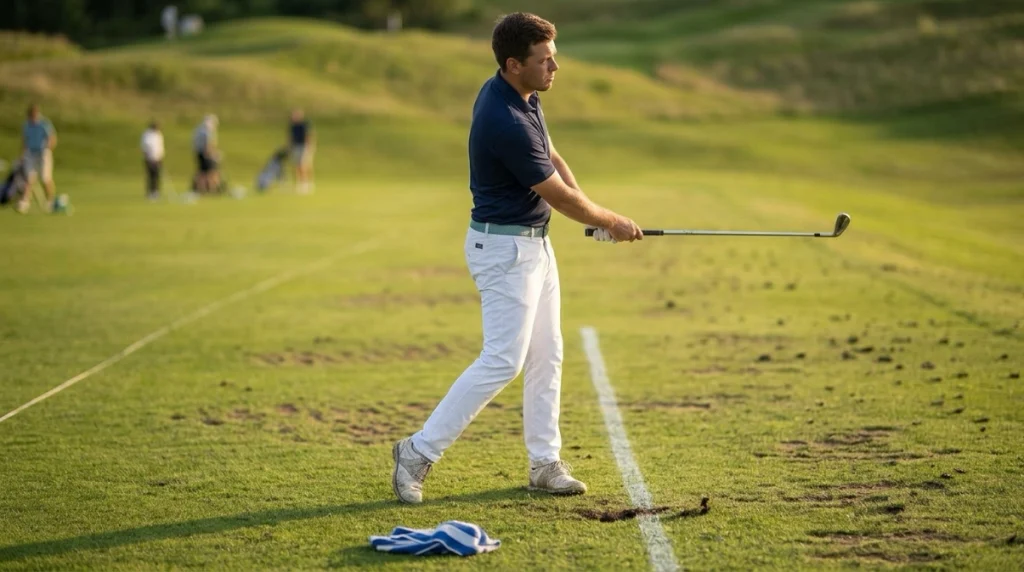
The most useful impact drills provide clear feedback without requiring complicated equipment. I prefer drills that tell me whether the club struck the correct place, not drills that only create an unusual feeling.
1. Impact preset drill
This is the simplest place to begin. Set up normally with a short or mid-iron, then slowly move into a simulated impact position.
- Address the ball normally.
- Shift some pressure toward your lead foot.
- Move the grip slightly toward the target.
- Allow your hips and chest to begin opening.
- Rehearse a short follow-through from that position.
Make five slow rehearsals before hitting a ball. Then hit a waist-high shot while keeping the same overall motion.
A similar impact-to-finish rehearsal has long been used in instruction, including this Golf Digest impact drill.
2. Line-on-the-ground low-point drill
This is one of the best drills for golfers who hit fat and thin shots. Draw a line perpendicular to your target line on grass or use a safe marking method on a practice mat.
- Make practice swings without a ball.
- Try to contact the ground on the target side of the line.
- Repeat until your strike location becomes predictable.
- Place the ball just behind the line.
- Hit short shots while keeping the turf contact ahead.
You aren’t trying to dig a trench. You’re learning where the bottom of your swing occurs.
PGA instruction also uses low-point feedback drills to train ball-first contact, including the baby-powder low-point drill.
3. Punch-shot impact drill
A short punch shot can make impact easier to feel because the swing is smaller. Use an 8-iron or 9-iron and start with shots that travel only a fraction of your normal distance.
- Use a narrow motion: Swing roughly waist high to waist high.
- Control speed: Start around half effort rather than attacking the ball.
- Finish balanced: Keep turning after contact instead of stabbing at the ball.
- Watch trajectory: Expect a controlled flight rather than trying to launch the ball high.
I like this drill because poor contact becomes obvious without full-swing speed hiding the mistake.
4. Step-through drill
The step-through drill is useful when you hang back on the trail foot. It exaggerates movement toward the target and helps the swing continue through impact.
- Take your normal stance with a mid-iron.
- Make a smooth backswing.
- Swing through the ball.
- Allow your trail foot to step toward the target after contact.
- Finish upright and balanced.
Start without a ball. Then hit soft shots before increasing speed.
5. Towel-under-arms half swings
This drill can help a golfer whose arms separate dramatically from the torso. Place a small towel across your chest and lightly secure it under both upper arms.
Make small swings while maintaining comfortable connection. Don’t squeeze the towel or restrict your natural movement.
The goal is synchronized motion through the strike. It isn’t to keep both arms pinned against your body during a full swing.
Section Takeaway: Start with impact rehearsals and low-point feedback before adding speed. The best drill is the one that gives you immediate evidence of a better strike.
Which Impact Drill Should You Use for Your Miss?
Choose an impact drill according to the ball-flight or contact problem you actually have. Don’t change five movements because one shot came out poorly.
If you hit behind the ball
Start with the line-on-the-ground drill. Your first goal is moving the swing’s low point to the target side of the ball.
- Use short irons first.
- Make half swings.
- Check the turf after every shot.
- Keep the finish balanced on the lead side.
Don’t solve fat shots by simply moving the ball farther back. That can hide the underlying low-point problem.
If you hit thin shots
Thin contact can happen when the low point occurs too early and the club is already moving upward by the time it reaches the ball. Start with short punch shots and low-point practice.
Focus on moving through the strike rather than forcing your head downward.
If you scoop or flip at impact
Use the impact preset drill followed by waist-high punch shots. Feel the grip reaching the impact zone before the clubhead without locking your wrists.
- Don’t drag the handle: Excessive shaft lean can create another problem.
- Keep turning: Rotation helps the club release without a desperate hand flip.
- Stay soft: Grip pressure should remain manageable.
The goal is functional forward shaft orientation, not the largest possible amount of lean.
If you hang back on the trail foot
The step-through drill is usually the clearest starting point. It gives you an exaggerated feeling of moving toward the target.
PGA coaching material also uses step-through movements to teach weight transfer and continuation through impact. The underlying idea is motion, not a forced slide.
If your chest stops and your hands race past
Use short swings where the finish matters as much as the strike. Freeze after impact and check whether your chest continued rotating toward the target.
Do not spin as hard as possible. Smooth rotation and balance matter more than speed during the learning phase.
Pro tip: A certified PGA Professional can identify whether your miss comes from setup, clubface control, swing direction, low point, or sequencing. That diagnosis can prevent you from drilling the wrong fix.
Section Takeaway: Match the drill to the miss. Fat, thin, flipping, and hanging-back patterns may look similar at full speed but often need different practice feedback.


How Do the Main Impact Drills Compare?
No single impact drill is best for every golfer. The table below shows what each drill is designed to teach and how quickly it gives useful feedback.
| Drill | Main Goal | Best For | Suggested Start | Feedback |
|---|---|---|---|---|
| Impact preset | Learn impact orientation | Early release or poor awareness | 5 rehearsals, then 5 short shots | Feel and video |
| Low-point line | Move turf contact forward | Fat or thin iron contact | 10 practice swings, then short shots | Ground contact |
| Punch-shot drill | Control strike through a smaller motion | Inconsistent compression | 10 waist-high shots | Strike and trajectory |
| Step-through | Improve pressure transfer | Hanging back | 5 rehearsals, then 5 soft shots | Balance and finish |
| Towel under arms | Coordinate torso and arms | Disconnected half swings | 5-10 short swings | Towel position and contact |
If I could choose only two drills for a typical range session, I’d start with the low-point line and punch shots. Together they give me external feedback and a swing small enough to control.
How Should You Practice Impact Drills at the Range?
Practice impact drills slowly enough to learn something, then gradually remove the drill. Staying in drill mode for an entire bucket can make the practice motion disconnected from actual golf.
Use a drill-transfer-test sequence
I prefer a simple three-stage routine. It keeps me from making fifty exaggerated rehearsals without checking whether the pattern transfers to a normal shot.
- Drill: Make five repetitions using your chosen impact exercise.
- Transfer: Hit three balls with a normal setup at reduced speed.
- Test: Hit one normal shot to a specific target without consciously performing the drill.
Repeat that sequence rather than machine-gunning balls. The target shot tells you whether the practice is becoming usable.
Start with shorter clubs
An 8-iron, 9-iron, or pitching wedge usually makes impact work easier because the club is shorter. You can concentrate on contact without chasing driver speed.
Once the pattern becomes predictable, progress toward longer irons or hybrids. Don’t assume success with a wedge automatically means the driver needs the same feel.
Practice at three speeds
A useful impact session changes speed gradually. I usually think in three broad effort levels rather than obsessing over exact swing-speed numbers.
- Slow: Rehearse the movement without caring about distance.
- Medium: Hit controlled half or three-quarter shots.
- Normal: Hit a regular shot to a specific target.
This progression matters because many golfers can create an impact position in slow motion but lose it when they add speed.
Use feedback instead of guessing
Impact practice works faster when you can measure something. Turf marks, face spray, impact tape, video, and ball flight can all provide feedback.
- Turf mark: Did the club enter the ground before or after the ball?
- Face contact: Did you strike near the center or consistently toward one edge?
- Start direction: Did the ball begin near the intended line?
- Trajectory: Was the flight predictable for the club and shot?
- Finish: Could you hold your balance comfortably?
Video can help too, but camera angles matter. A poorly positioned phone can make shaft angles and body positions look misleading.
Practice drills should ultimately improve movement rather than create prettier screenshots. PGA coaching guidance on using drills to connect learning with movement follows the same practical idea.
Take the drill to the course carefully
Use drills on the range and rehearsals before the round. During play, simplify your focus to a target, routine, or single feel.
If you use alignment sticks or other training devices, review the Rules of Golf resources from The R&A before using training equipment during a competitive or posted round.
Section Takeaway: Good practice alternates between learning and testing. Use the drill briefly, hit normal shots, and judge whether your contact survives without the training aid.
How Do You Know Your Impact Drills Are Working?
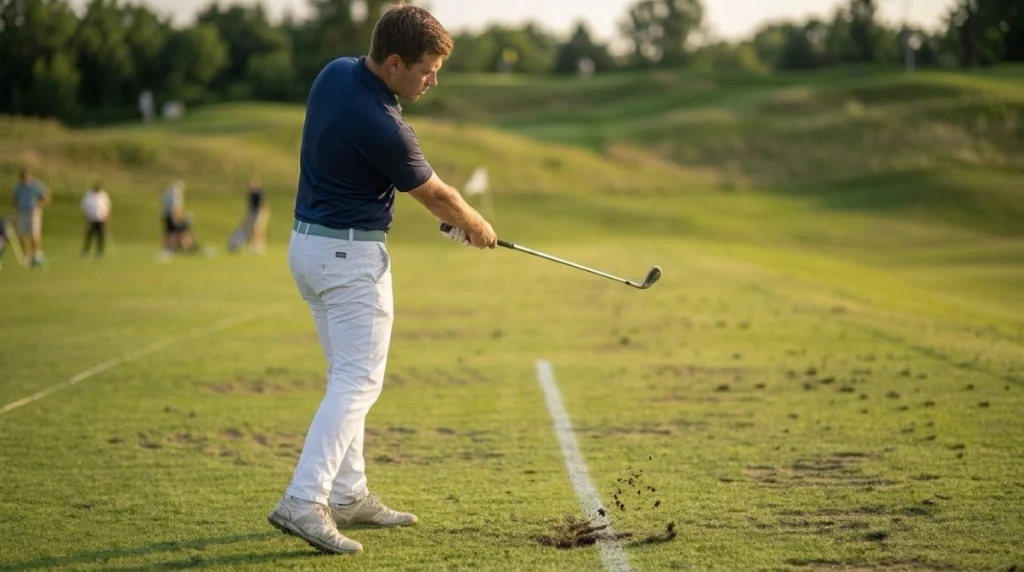
Your drills are working when contact becomes more predictable without needing an exaggerated swing thought. Better impact should show up in repeatable strike patterns, turf contact, trajectory, and balance.
Signs of useful progress
- Divots begin after the ball: On normal iron shots from turf, your low point is becoming more consistent.
- Fat and thin misses shrink: Your worst strikes become less extreme.
- Face contact tightens: Ball marks become more concentrated around a smaller area.
- Trajectory stabilizes: Similar swings produce more similar launch windows.
- Balance improves: You can finish without falling backward or stepping away involuntarily.
- The drill fades away: You can produce the motion without consciously forcing every checkpoint.
Common impact-drill mistakes
The biggest mistake is turning a drill into a permanent swing. Many exercises exaggerate a movement precisely because the golfer needs to feel the opposite of an existing habit.
- Forcing too much shaft lean: More forward lean is not automatically better.
- Locking the wrists: A stable strike doesn’t require rigid hands.
- Sliding instead of shifting: Moving pressure forward is different from driving the entire body laterally.
- Stopping rotation: Trying to “hold lag” can leave the body stalled.
- Practicing only without targets: Contact matters, but golf still requires direction and distance control.
- Changing drills constantly: Give one clear exercise enough repetitions to produce useful feedback.
Don’t chase a tour-player impact photo
Golfers have different builds, mobility, grips, swing shapes, and club deliveries. Two good players can look different while still producing excellent contact.
Your goal is not to manufacture one universal hip angle or wrist position. Your goal is a repeatable strike that matches your intended ball flight.
As of 2026, modern instruction makes video and launch data easier to access than ever. Those tools are useful, but the golf ball and turf still give excellent feedback.
Pro tip: If your contact gets worse after several sessions, take the pattern to a certified instructor. A lesson can identify whether the drill conflicts with your grip, setup, mobility, or existing swing pattern.
Section Takeaway: Measure success through contact and ball flight, not how extreme your rehearsal looks. A useful impact drill should eventually make itself unnecessary.
Impact Drills FAQ
What is the best golf impact drill for beginners?
The line-on-the-ground low-point drill is a strong starting point because the feedback is simple. Make short swings and try to brush the turf on the target side of the line before adding a golf ball.
How often should I practice impact drills?
Short, focused sessions usually work better than endless repetitions. Try several sets of five to ten drill swings, then alternate with normal shots so you can check whether the movement transfers.
Can impact drills fix fat iron shots?
They can help when the fat strike comes from poor low-point control or pressure movement. A low-point line drill is especially useful because it shows whether your club contacts the ground before the ball.
Do I need forward shaft lean at impact?
With many standard iron shots, the grip is forward of the clubhead at impact. However, the amount varies by club, shot, swing pattern, and golfer, so deliberately creating extreme shaft lean can cause problems.
Should my hands be ahead of the ball with a driver?
Don’t copy an iron impact pose with your driver. Driver impact involves a teed ball, more forward ball position, and different delivery conditions, so use driver-specific feedback such as face contact, launch, start direction, and balance.
Why can I perform an impact drill but not hit normal shots?
You may be practicing the drill without a transfer stage. Alternate drill repetitions with reduced-speed normal swings, then hit target-focused shots without consciously forcing the impact position.
Can I practice impact drills at home?
Yes. Slow impact presets, towel drills, and mirror rehearsals can work without hitting balls, provided you have enough safe space. Use range sessions later to confirm that the movement improves actual contact and ball flight.
Final takeaway: Impact drills work best when they simplify the strike rather than add more swing thoughts. Train low point, pressure movement, and rotation with clear feedback, then gradually return to normal golf swings.
Pick one drill that matches your miss and use it during your next range session. Once the strike improves, spend more time hitting targets and less time posing at impact.