
How to Choose a Golf Towel: Size, Material, Texture and Features

Quick Answer
To choose a golf towel, start with a size that fits your bag without dragging, then choose a material that absorbs moisture and releases dirt easily. I usually favor microfiber or waffle-textured microfiber for club cleaning, while cotton suits golfers who prefer a softer, traditional feel. For broader advice on golf equipment and playing, the PGA of America is also a useful resource.
Choose Your Golf Towel in Five Steps
- Pick the size: Choose a compact towel for light cleaning or a larger towel for wet, muddy rounds.
- Choose the material: Microfiber dries quickly, while cotton offers a familiar soft feel.
- Check the texture: Waffle and textured surfaces help work dirt from grooves and clubfaces.
- Select an attachment: A carabiner, grommet, center slit, or magnet should match how you carry your bag.
- Plan wet and dry zones: Keep part of the towel damp for cleaning and another section dry for grips and hands.
I’ve learned that a golf towel looks like a minor accessory until the course turns wet, sandy, or dusty. Then the difference between a useful towel and an awkward one becomes obvious within a few holes.
This guide explains how to choose a golf towel by size, material, texture, attachment style, weather conditions, and maintenance. The goal is simple: carry enough towel to keep your gear clean without adding unnecessary bulk.
In This Guide
What Size Golf Towel Should You Choose?
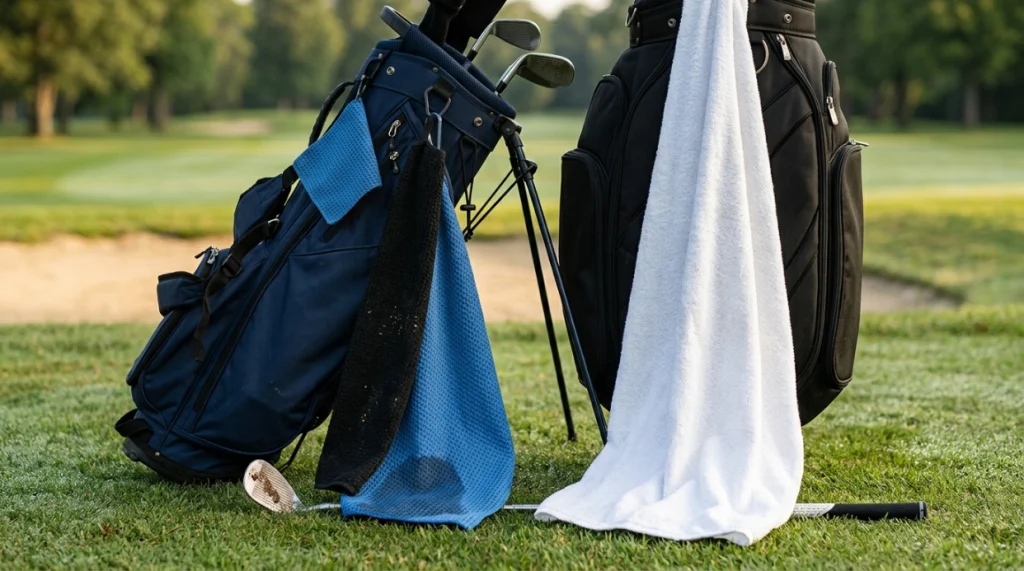
The best golf towel size depends on how much cleaning you expect and where the towel will hang. For most golfers, a medium towel gives enough usable surface without brushing the ground or getting tangled around the bag.
Golf towel dimensions are not universally standardized. As of 2026, you’ll still see everything from compact accessory towels to oversized caddie-style towels.
Common Golf Towel Sizes Compared
| Approximate Size | Best For | Main Advantage | Main Tradeoff |
|---|---|---|---|
| 12 × 18 in. | Range sessions, compact bags | Light and easy to store | Limited clean surface |
| 16 × 24 in. | Most recreational golfers | Good balance of size and portability | May become saturated in heavy rain |
| 16 × 32 in. | Frequent club cleaning | More wet and dry working area | Takes more bag space |
| 20 × 40 in. or larger | Carts, caddies, wet conditions | Large cleaning surface | Bulky for walking bags |
These dimensions are useful shopping references rather than official golf-industry standards. Always check the actual listed dimensions before ordering.
Choose a Smaller Towel If You Walk
A compact towel makes sense on a lightweight stand bag. It adds less bulk and is less likely to swing against your legs as you walk.
- Choose enough length to clean a clubface without unfolding the entire towel.
- Check that the towel hangs above the ground when your bag stands normally.
- Consider carrying a second small towel during rainy rounds instead of one oversized towel.
Choose a Larger Towel for Wet or Muddy Conditions
Large towels become useful when fairways are soft and clubfaces collect mud after almost every swing. More surface area lets you separate the dirty section from the section used for grips.
On damp morning rounds, I often keep one portion slightly wet for clubfaces. The opposite end stays as dry as possible for my hands and grips.
- Dry climates: A small or medium towel usually handles dust and light grass stains.
- Wet climates: A medium or large towel provides more usable dry surface.
- Cart golf: Larger towels are easier to carry because weight and swinging matter less.
- Walking golf: Compact towels help keep a stand bag lighter and tidier.
Section Takeaway: Start with a medium towel around the common 16 × 24-inch range unless your playing conditions give you a reason to go smaller or larger.
Which Golf Towel Material Is Best?
Microfiber is the most versatile golf towel material for many golfers because it combines low weight, absorbency, and quick drying. Cotton remains a good option when softness and a traditional towel feel matter more than compactness.
The material also changes how easily the towel handles mud, moisture, and repeated cleaning during an 18-hole round.
Microfiber Golf Towels
Microfiber towels use very fine synthetic fibers, commonly blends based on polyester and polyamide. Their fine structure gives them a large working surface relative to their weight.
- Best for: Clubfaces, golf balls, light mud, and all-purpose cleaning.
- Weight: Usually lighter than an equally sized thick cotton towel.
- Drying: Often dries faster than heavy cotton.
- Storage: Folds into a relatively small space.
I like microfiber when I’m carrying rather than riding. A large cleaning area can fit on the bag without feeling like a bath towel is hanging from it.
Cotton Golf Towels
Cotton has a softer and more familiar feel. Terry-style cotton towels can absorb plenty of water, but thicker examples can become heavy once soaked.
- Best for: Hands, grips, general wiping, and golfers who prefer natural fibers.
- Feel: Soft and comfortable against skin.
- Absorbency: Good when the towel has enough fabric weight.
- Tradeoff: Thick cotton can take longer to dry after a wet round.
Microfiber vs. Cotton Golf Towel
| Factor | Microfiber | Cotton |
|---|---|---|
| Packed size | Usually compact | Can be bulkier |
| Drying speed | Generally faster | Slower when thick |
| Soft feel | Varies by weave | Typically soft |
| Club-cleaning texture | Excellent with waffle weave | Good with terry loops |
| Walking-bag use | Excellent | Good if lightweight |
What About Blended or Specialty Fabrics?
Some towels use synthetic blends, recycled fibers, or fabrics marketed around softness and sustainability. Judge those towels by measurable details such as dimensions, fabric construction, attachment method, and washing instructions.
Brand alone does not determine usefulness. Titleist, Callaway, TaylorMade, Ping, Cobra, and other golf companies sell accessories, but the right towel still depends on your bag and conditions.
- Check whether the fabric can be machine washed.
- Look for a texture that can reach dirt around grooves.
- Avoid buying only because a towel matches your club brand.
- Compare actual dimensions instead of judging size from product photos.
For wider equipment comparisons, Golf Digest’s equipment section provides useful context on how golf products are evaluated and categorized.
Section Takeaway: Choose microfiber for lightweight, quick-drying versatility. Choose cotton when softness and traditional towel feel are higher priorities.
Does Golf Towel Texture Matter?
Yes. Texture affects how well a towel lifts dirt from grooves, holds debris, and feels when used on your hands or grips.
A smooth towel can handle moisture. A more structured weave is usually more useful when mud, sand, and grass are the main problem.
Waffle Weave
Waffle weave has a grid-like surface with raised and recessed areas. That structure creates useful edges for loosening dirt without requiring a thick towel.
- Works well for clubface cleaning.
- Provides texture without heavy terry loops.
- Pairs especially well with microfiber fabric.
- Usually folds relatively flat.
Terry Texture
Terry fabric uses raised loops that create a plush surface. It feels familiar because the same basic construction appears in many household towels.
Terry is comfortable for hands and grips, but deep debris can become trapped in the loops. Shake or rinse the towel before repeatedly rubbing dirty material across equipment.
Smooth Microfiber
Smoother microfiber works well for moisture and general wiping. It may be less aggressive than waffle weave when mud is packed into a wedge face.
The texture should help clean rather than replace proper club care. If dirt remains packed into grooves after wiping, use water and an appropriate brush instead of grinding debris across the clubface.
Section Takeaway: Waffle microfiber is my first choice for club cleaning, while terry or smoother fabric works well for hands, grips, and general drying.


Which Golf Towel Features Are Worth Having?
The most useful golf towel features solve attachment, access, and wet-versus-dry organization. Decorative extras matter less if the towel is inconvenient to reach after every shot.
Carabiner or Clip
A carabiner is simple and secure. Clip it to a towel loop, accessory ring, or suitable point on your golf bag.
- Good for walkers: The towel stays attached while the bag moves.
- Easy removal: Unclip the towel when washing it.
- Check first: Make sure the clip fits your bag’s attachment point.
Grommet
A grommet is a reinforced hole built into the fabric. A clip or ring passes through it, keeping pulling force away from the towel material itself.
Inspect the reinforcement before buying. A sturdy attachment means little if the fabric around it begins tearing after repeated use.
Center-Slit Towel
A center slit lets the towel hang over a club, alignment stick, or another suitable part of the bag. Golfers who dislike metal clips often prefer this simple design.
- No carabiner is required.
- A large towel can hang with usable material on both sides.
- Removal is fast when you need the whole towel.
Magnetic Attachment
Magnetic towels are designed for quick pickup and removal when paired with a suitable metal surface or attachment point. They can be convenient around carts and the green.
Check the product’s intended attachment method before buying. Magnet strength and compatible surfaces vary between designs.
Wet and Dry Zones
You do not need a specially labeled towel to create wet and dry zones. A large towel can be folded so one end handles muddy clubfaces while another stays clean.
- Dampen one corner before the round.
- Use that area for mud and grass.
- Reserve the opposite area for final drying.
- Keep grip-cleaning fabric away from sandy sections.
Should You Pay More for a Premium Golf Towel?
Pay more when the upgrade improves fabric construction, attachment quality, size, durability, or a feature you will use. Paying extra for a logo alone does not make a towel better suited to your round.
The USGA Equipment Standards are useful when you need official guidance about regulated golf equipment. For a normal towel purchase, practical fit and function should remain your main buying criteria.
- Prioritize: Fabric, dimensions, attachment, washability, and useful texture.
- Consider: Color, embroidery, branding, and matching accessories.
- Avoid: Paying for features that make the towel harder to wash or carry.
Section Takeaway: Attachment quality and easy access matter more than novelty features. Choose a towel you can reach, use, separate into clean zones, and wash without hassle.
How Should Weather and Your Bag Change Your Choice?
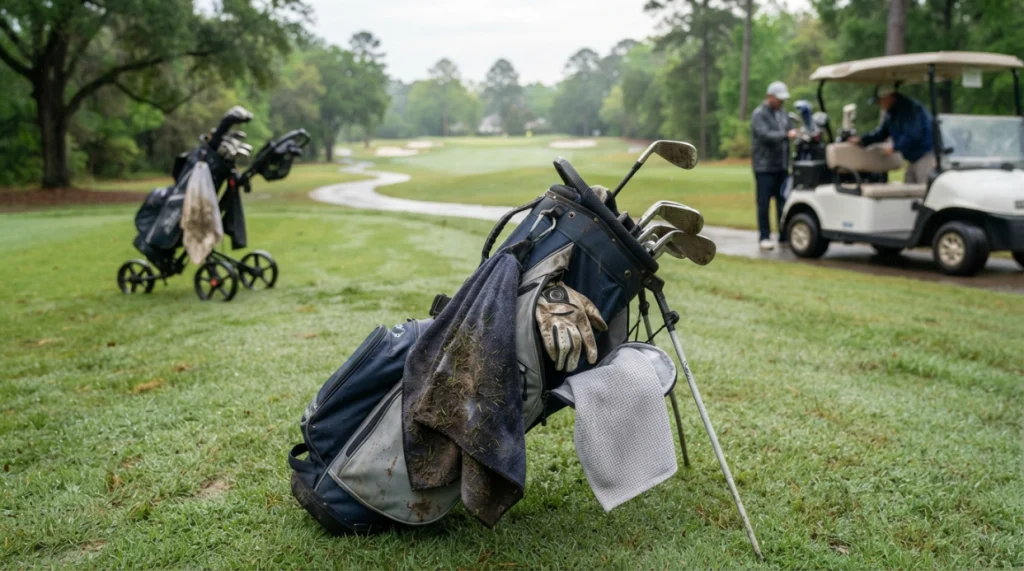
Your ideal towel changes with course conditions. A dry summer round and a muddy winter round put completely different demands on the same accessory.
Hot and Dry Conditions
Dust, dry grass, sunscreen, and perspiration become the main concerns in hot weather. A compact microfiber towel usually provides enough cleaning capacity.
- Carry one section for clubs and balls.
- Keep a cleaner section for hands.
- Choose a towel that dries quickly after light dampening.
Rainy or Dewy Conditions
Wet rounds require more dry fabric. Once a small towel becomes saturated, it cannot do much for slippery grips.
I prefer carrying two towels when rain looks likely. One can become the dirty work towel while the second stays protected inside the bag until needed.
- Outside towel: Use for mud, wet clubfaces, and golf balls.
- Protected towel: Keep for grips, gloves, and hands.
- After the round: Remove both towels from the bag so they can dry fully.
Stand Bag vs. Cart Bag
Stand bags reward compact equipment because every ounce travels with you. Cart bags allow larger towels because bulk matters less.
| Bag Setup | Towel Priority | Practical Choice |
|---|---|---|
| Stand bag | Low weight and secure attachment | Small or medium microfiber towel |
| Push cart | Access and surface area | Medium or large towel |
| Riding cart | Maximum cleaning capacity | Large towel or two-towel setup |
If you play competitive golf, check the event’s rules and local conditions before using unusual accessories or attachment systems. The R&A provides official rules and governance resources.
Section Takeaway: Match the towel to how you travel around the course. Walkers benefit from compact towels, while carts make larger or multiple towels easier to manage.
How Should You Clean and Replace a Golf Towel?
Wash a golf towel often enough that old mud, sunscreen, grass, and oils do not build up in the fabric. Always follow the manufacturer’s care label because heat and detergent recommendations vary.
Simple Golf Towel Cleaning Routine
- Shake loose sand, grass, and dried dirt outdoors.
- Check the care label for water temperature and drying instructions.
- Wash dirty golf towels separately when they contain heavy mud or debris.
- Avoid products the manufacturer says can damage absorbency or fibers.
- Dry the towel completely before returning it to a closed golf bag.
Microfiber care deserves extra attention because some fabric treatments can change how the fibers handle moisture. Follow the specific product instructions rather than assuming every synthetic towel washes the same way.
When Should You Replace a Golf Towel?
A golf towel does not need replacing because of cosmetic stains alone. Replace it when damage or loss of function makes cleaning harder.
- The attachment point is tearing away.
- The towel no longer absorbs or wipes effectively after proper washing.
- Fabric is badly frayed or developing holes.
- Persistent odor remains after correct laundering and complete drying.
- The towel has become too contaminated for the jobs you use it for.
Rotate two towels if you play several times each week. That gives each one time to be washed and dried instead of living damp inside the bag.
Golf Towel FAQs
What is the best size for a golf towel?
A medium towel around 16 × 24 inches is a practical starting point for many recreational golfers. Go smaller for lightweight walking bags or larger when you regularly play in rain, mud, or conditions that require frequent club cleaning.
Is microfiber or cotton better for a golf towel?
Microfiber is usually better when you want low weight, quick drying, and an effective club-cleaning surface. Cotton is a strong alternative when you prefer softness, familiar terry texture, and a towel mainly used for hands or general drying.
Why do golf towels have waffle texture?
Waffle texture creates raised and recessed sections that help collect moisture and loosen dirt from clubfaces. It can provide useful cleaning texture without requiring the towel to be thick or heavy.
Should you wet your golf towel before playing?
Dampening one section can make dried mud and grass easier to remove. Keep another portion dry so you still have clean fabric available for grips, hands, and final drying.
Where should a golf towel hang on the bag?
Attach it where you can reach it easily without letting it drag on the ground or interfere with clubs, straps, or stand legs. A towel ring or suitable accessory loop is usually more convenient than burying the towel inside a pocket.
Do you need two golf towels?
Not always, but two towels are useful in rain or muddy conditions. Use one for dirty clubfaces and balls while protecting the second towel for grips, gloves, and hands.
How often should you wash a golf towel?
Wash it whenever dirt, moisture, sunscreen, grass, or odor begins building up. Golfers playing frequently or in muddy conditions may need to wash towels after almost every round, while light-use towels can go longer between washes.
Final takeaway: Choose your golf towel around the conditions you actually play in. For most golfers, a medium waffle-weave microfiber towel with a secure attachment offers the best balance of cleaning ability, drying speed, weight, and everyday convenience.
Before buying, check the listed dimensions, fabric, attachment point, and washing instructions. Those four details tell you far more about practical usefulness than a logo or premium-looking product photo.