
Hip Rotation in Golf: How to Turn, Sequence, and Create Speed

Quick Answer
Good hip rotation in golf means turning the pelvis without swaying, then blending a small pressure shift with rotation toward the target. The hips should support the upper-body turn going back and help lead the downswing rather than spinning open as fast as possible. The PGA’s guidance on hip movement also emphasizes posture, rotation, and a slight lateral move toward the lead side.
Quick Hip-Rotation Sequence
- Set your posture: Hinge from your hips and stay balanced through the middle of your feet.
- Turn going back: Let the trail hip move behind you instead of sliding away from the target.
- Shift pressure: Begin moving pressure toward the lead foot as the backswing finishes.
- Rotate through: Allow the lead hip to move back and around as the club approaches impact.
- Finish balanced: End with most pressure on the lead side and your body facing the target.
Best Way to Check It
- Record your swing: Use face-on and down-the-line video before trying to change how much you turn.
Hip rotation sounds simple until you try to control it at full speed. Many golfers either slide away from the ball or fire their hips so aggressively that their arms get left behind.
I prefer to think about hip rotation as part of a sequence rather than one isolated move. This guide explains the backswing turn, transition, impact rotation, common faults, and practical drills that help the motion feel natural.
In This Guide
- What Is Hip Rotation in Golf, and Why Does It Matter?
- How Much Should Your Hips Turn in the Backswing?
- How Should Your Hips Move in the Downswing?
- Hip Rotation vs. Hip Slide: What’s the Difference?
- How Do You Improve Hip Rotation in Your Golf Swing?
- Frequently Asked Questions About Hip Rotation
- What Should You Feel When Hip Rotation Is Working?
What Is Hip Rotation in Golf, and Why Does It Matter?
Hip rotation is the turning of your pelvis around your body during the golf swing. It helps connect movement from your feet and legs to your torso, arms, club, and ultimately the ball.
Definition: Golf hip rotation is the rotational movement of the pelvis during the backswing, transition, downswing, and follow-through while the golfer maintains usable posture and balance.
The key word is rotation. Moving your pelvis several inches sideways without turning is a sway or slide, not an effective hip turn.
Hip rotation also shouldn’t happen independently. Your pelvis, rib cage, shoulders, arms, and club need to work in a coordinated order.
Why does hip rotation help the golf swing?
A functional hip turn gives your upper body room to complete the backswing. It also gives your lower body a better position from which to begin the downswing.
- Better depth: The trail hip can move behind you instead of toward the golf ball.
- More room: Proper rotation creates space for your arms to return toward impact.
- Improved balance: Turning around a stable base reduces unnecessary lateral movement.
- Better sequencing: The lower body can begin changing direction before the club reaches impact.
- Speed potential: Efficient body sequencing helps transfer energy through the swing.
That doesn’t mean more hip rotation always produces more distance. A golfer who turns excessively and loses foot pressure can become less stable.
As of 2026, a useful theme in modern instruction is to avoid artificially restricting the hips. The goal is enough rotation for your mobility, swing length, and body structure.
Section Takeaway: Hip rotation is useful because it creates space, balance, and sequencing. The goal isn’t maximum turn; it’s a controlled turn that works with the rest of your swing.
How Much Should Your Hips Turn in the Backswing?

There isn’t one perfect hip-turn number for every golfer. A traditional reference is roughly 45 degrees of pelvic turn with about 90 degrees of shoulder turn at the top.
The PGA discusses that approximate 45-to-90 relationship in its explanation of backswing hip and shoulder rotation. Treat those numbers as references rather than positions you must force.
What should the trail hip do?
For a right-handed golfer, feel the right hip pocket move behind you. A left-handed golfer would use the opposite side.
This movement helps your pelvis turn while keeping your center relatively stable. Your trail knee can remain flexed without becoming rigid.
- Good feel: Trail hip moves back and slightly around.
- Bad feel: Trail hip pushes sideways beyond the trail foot.
- Good pressure: You remain supported through the inside and center of the trail foot.
- Bad pressure: Your weight rolls excessively onto the outside edge of the foot.
Should you restrict the hips to create more coil?
Most recreational golfers don’t need to lock their lower body. Restricting hip rotation can make the shoulder turn harder for players with limited mobility.
A modest hip turn often makes it easier to create a complete backswing without straining the lower back. It can also reduce the urge to lift the arms independently.
The amount changes with the club. A short wedge swing needs less rotation than a full driver swing.
How can you check your backswing turn?
Film yourself from face-on with the camera near hand height. Watch whether your pelvis turns while your head and torso remain reasonably centered.
- Set up with a mid-iron.
- Place a club across your hips.
- Turn slowly into your trail side.
- Watch the trail end of the club move behind you.
- Stop if you feel pressure or pain in your hip, knee, or lower back.
I’d rather see a golfer make a comfortable 35-degree turn with balance than chase 45 degrees and lose posture. Your functional range matters more than copying a tour-player screenshot.
Pro tip: If hip, knee, or lower-back mobility limits your turn, work with a certified golf instructor and an appropriate medical or fitness professional before forcing extra range.
Section Takeaway: Let your hips turn enough to support your shoulder turn. Use 45 degrees as a reference, not a mandatory checkpoint.
How Should Your Hips Move in the Downswing?
The hips should begin changing direction as pressure moves toward the lead side. The best sequence blends a small lateral move with rotation rather than an immediate hard spin.
A simple downswing model is shift, rotate, then extend into the finish. Golf Digest describes the same basic order in its guide to golf swing sequencing.
What starts the downswing?
The transition begins before most golfers realize it. Pressure can start moving toward the lead foot while the club is completing the backswing.
You don’t need to throw your lead hip toward the target. Think about settling into the lead side while the lead hip begins moving back.
- Pressure moves: Your lead foot accepts more pressure.
- Pelvis opens: Your belt line begins rotating toward the target.
- Torso follows: The chest starts unwinding after the lower body begins.
- Arms descend: The club gains room to return toward the ball.
- Body extends: Your legs and torso rise naturally through the finish.
Should you fire your hips as fast as possible?
No. Trying to spin the hips open immediately can separate your lower body from your arms.
That can leave the clubface open, move the handle away from you, or force a late hand action. Some golfers respond by blocking shots right, while others flip the club and hook it.
Rotation needs to stay connected to pressure movement. Your lead hip should have room to move behind you rather than thrusting closer to the ball.
Where should the hips be at impact?
For most full swings, the pelvis is already open relative to its address position at impact. The exact amount varies with club, speed, mobility, and individual technique.
Don’t try to freeze at a particular degree number. Impact happens too quickly for conscious position chasing.
- Lead hip: Moving back and around.
- Trail hip: Moving toward the target side without thrusting at the ball.
- Pressure: Predominantly moving into the lead side.
- Posture: Enough space remains between your pelvis and the ball.
Pro tip: A qualified PGA professional can identify whether your hips truly stall or whether another problem, such as clubface position, is forcing the apparent stall.
Section Takeaway: The downswing is not a hip race. Shift pressure, rotate into the lead side, and let the rest of the body follow in sequence.

Hip Rotation vs. Hip Slide: What’s the Difference?
Hip rotation turns the pelvis while maintaining usable balance. A slide moves too much of the pelvis laterally without enough turning.
Some lateral motion is normal. The problem appears when sideways movement replaces rotation.
| Swing Feature | Functional Hip Rotation | Excessive Slide or Spin | Useful Check |
|---|---|---|---|
| Backswing | Trail hip turns behind the body | Pelvis sways over the outside of the trail foot | Reference model: about 45° hip turn and 90° shoulder turn |
| Transition | Pressure shifts before rotation increases | Hips spin while pressure remains on the trail side | Lead foot should begin accepting pressure |
| Impact | Pelvis is open with room for the arms | Pelvis moves closer to the ball or stalls | Lead hip appears farther behind than at address |
| Finish | Balanced over the lead side | Falling backward, stepping, or losing posture | Hold the finish for three seconds |
What does a backswing sway look like?
Your trail hip moves sideways instead of behind you. The outside of the trail leg may also drift beyond the foot.
That makes returning to the ball harder because your entire center has traveled away from the target. You now need a larger recovery move during the downswing.
What does early hip spin look like?
The pelvis opens quickly while the chest and arms remain behind. The golfer may feel powerful, but the club can become trapped or approach too steeply.
Tom Watson’s explanation of turning rather than sliding the hips is a useful reminder that rotation and pressure transfer must work together.
Can poor hip rotation cause a slice?
It can contribute, but hip movement alone doesn’t determine shot shape. Clubface angle relative to swing path remains a major part of the ball’s starting direction and curvature.
- Early spin: Can leave the clubface open or pull the path left.
- Backswing sway: Can create a late recovery and inconsistent strike.
- Hip stall: Can force the hands to release quickly and produce hooks.
- Pelvic thrust: Can reduce space for the arms and contribute to heel strikes or inconsistent contact.
Don’t diagnose a slice by watching only the hips. Check the grip, clubface, strike location, alignment, and swing direction too.
Section Takeaway: Some lateral movement is normal, but it should support rotation. The strongest visual checkpoint is a trail hip that moves behind you going back and a lead hip that moves behind you going through.
How Do You Improve Hip Rotation in Your Golf Swing?
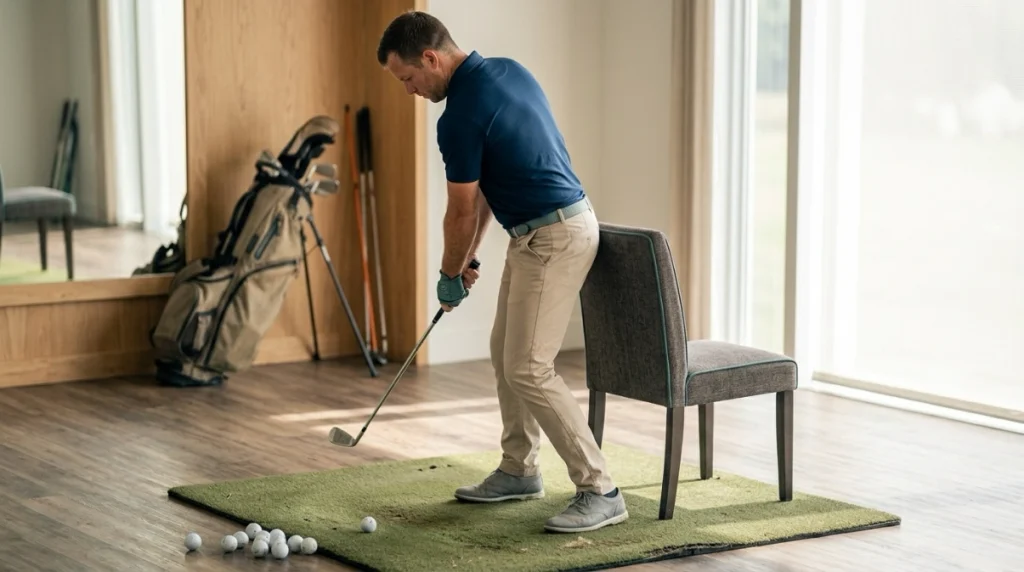
Start slowly and improve the movement before adding speed. Three simple drills can teach the difference between turning, sliding, and spinning.
1. Chair hip-turn drill
This is my favorite starting concept because the feedback is immediate. You only need a chair, golf bag, or similar safe reference point.
- Take your normal golf posture without hitting a ball.
- Position the chair lightly behind your hips.
- Turn back and feel the trail side remain in contact.
- Start down and let the lead hip replace that contact.
- Repeat slowly before trying the motion with a club.
If both hips move away from the chair, you’re likely standing up. If your trail hip pushes hard sideways, you’re probably swaying.
2. Step-through sequencing drill
The step-through drill helps golfers who spin without transferring pressure. It exaggerates movement toward the target before the finish.
- Address the ball with a short iron.
- Make a smooth backswing at half speed.
- Begin moving pressure toward your lead foot.
- Swing through and allow the trail foot to step toward the target.
- Start without a ball, then hit soft shots once balanced.
The goal is rhythm rather than distance. You should feel the body moving through the shot instead of twisting from the trail leg.
3. Belt-buckle rehearsal
Make several waist-high practice swings without a ball. Notice where your belt buckle points at address, halfway back, impact, and finish.
- Address: Roughly toward the ball.
- Backswing: Turned away from the target.
- Through-swing: Rotating open as pressure reaches the lead side.
- Finish: Facing toward the target area.
What if your hips feel physically tight?
Don’t force more range with aggressive twisting. Hip mobility varies considerably between golfers.
Golf Digest’s guidance on hip mobility and rotation for swing speed also connects usable hip function with better movement and reduced tendencies to sway or slide.
A longer backswing isn’t automatically better. A slightly shorter motion with stable rotation can produce more reliable contact.
Pro tip: Pain isn’t a swing cue. If rotation causes sharp hip, knee, groin, or lower-back discomfort, stop and seek appropriate professional advice before continuing.
Section Takeaway: Train hip rotation at slow speed first. Chair feedback, step-through swings, and short rehearsals can teach the sequence without forcing your body into artificial positions.
Frequently Asked Questions About Hip Rotation
How much should the hips rotate in a golf backswing?
About 45 degrees is a common reference for a full backswing, often paired with roughly 90 degrees of shoulder rotation. Your ideal amount can be lower or higher depending on mobility, stance width, club length, and swing style.
Should the hips start the downswing?
The lower body plays an important role in transition, but don’t think only about spinning the hips. A better feel is pressure moving toward the lead foot while the pelvis begins rotating open.
Can too much hip rotation be bad?
Yes. Excessive rotation can reduce stability if the trail knee collapses, the foot rolls, or your body loses pressure against the ground. More turn only helps when you can control it.
Why do my hips stop rotating through impact?
Your hips may stall because the clubface, swing path, balance, or pressure shift requires a compensation. Video from face-on and down-the-line can help identify whether the stall is a cause or a reaction.
Can better hip rotation help stop a slice?
Better rotation can improve sequencing and create more room for the club, which may help some slicers. It won’t automatically fix a slice caused primarily by an open clubface, poor grip, strike location, or out-to-in swing path.
Should your hips slide toward the target?
A small lateral movement toward the lead side is normal during transition. The problem is excessive sliding without rotation, which can make contact and low-point control less predictable.
Do the hips rotate differently with a driver and irons?
The basic sequence remains similar, but stance width, ball position, swing length, and speed change. A driver swing usually involves more overall rotation than a controlled wedge or short-iron swing.
What Should You Feel When Hip Rotation Is Working?
Good hip rotation should feel athletic rather than forced. Your trail hip turns behind you, pressure begins moving forward in transition, and your lead hip clears behind you through the strike.
Don’t chase a tour player’s exact positions. Build a motion that lets you stay balanced, strike the ball cleanly, and finish without strain.
- Backswing: Turn instead of sway.
- Transition: Shift pressure before forcing speed.
- Downswing: Rotate while maintaining room for the arms.
- Impact: Let the pelvis be open without thrusting toward the ball.
- Finish: End balanced over the lead side.
If you’re working on hip rotation, start with slow video rehearsals and one drill at a time. Once the movement becomes natural, gradually add speed and test it with real shots.
A simple goal beats five swing thoughts: turn back, move into the lead side, and rotate through in balance.