
Mastering Golf Terminology Explained: Your Ultimate Guide to Talking Like a Pro

Stepping onto a golf course for the first time can feel like learning a completely foreign language. From terms like “bogey” and “birdie” to technical equipment descriptions and strange field markers, the jargon can easily overwhelm a beginner. When you do not know the vocabulary, it becomes harder to follow broadcasts, understand instructional videos, or even communicate with your playing partners. Golf Terminology Explained is designed to clear up that confusion once and for all, turning intimidating locker-room talk into simple, everyday concepts. Whether you are prepping for your first round or trying to decipher advice from a coach, mastering these definitions will instantly boost your confidence. This guide breaks down the essential terms every player needs to know, covering scoring, equipment, course layout, and on-course etiquette. Let’s dive into the core vocabulary that will help you navigate the game with clarity and ease.
Quick Answer
Golf terminology refers to the standardized language used to describe scores, equipment, rules, and course features. Learning these terms helps beginners understand game rules, communicate effectively with other players, and follow professional broadcasts. Key vocabulary spans basic scoring units like par and birdie, as well as structural course markers.
Core Scoring Terms You Must Know
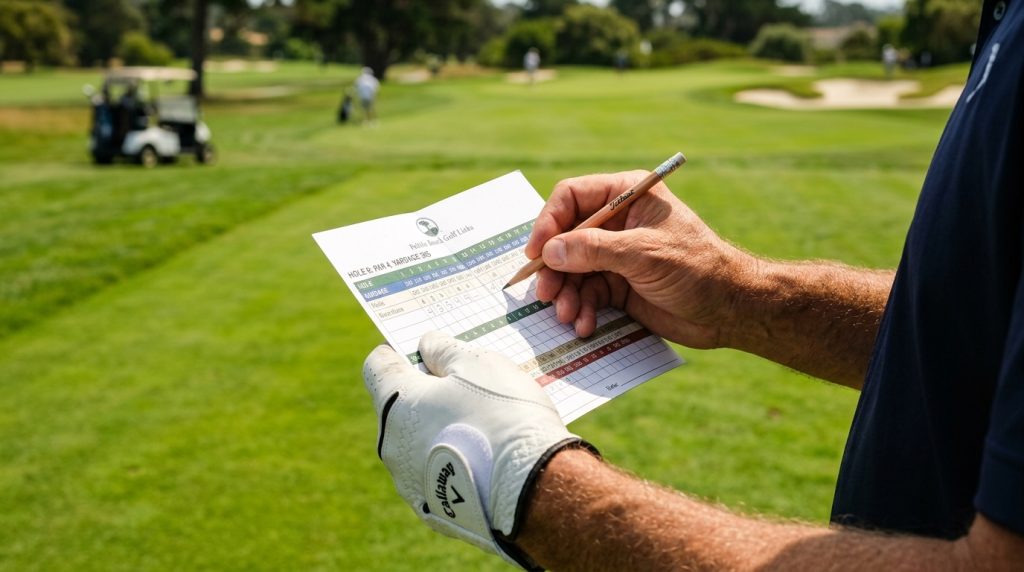
Scoring is the heartbeat of golf, and every stroke counts toward your final tally. Knowing how numbers translate into nicknames and technical categories is essential for tracking your game. Every hole on a course has a designated par, which sets the baseline for expected performance.
According to the official guidelines provided by the USGA Handicapping System, accurate scorekeeping is vital for establishing a reliable handicap index that reflects your true playing ability.
Par, Birdie, and Eagle
- Par: The predetermined number of strokes an expert golfer is expected to take on a single hole. Holes are typically rated as par 3, par 4, or par 5 based on their length.
- Birdie: Scoring one stroke under par on a specific hole (-1). For example, making a 3 on a par-4 hole.
- Eagle: Scoring two strokes under par on a single hole (-2). This is common on par-5 holes for skilled players, such as reaching the green in two shots and sinking the putt.
Over Par Scores
- Bogey: Scoring one stroke over par on a hole (+1). This is a very common and respectable score for beginner and intermediate players.
- Double Bogey: Scoring two strokes over par on a hole (+2).
- Triple Bogey: Scoring three strokes over par on a hole (+3).
Important: Do not let high scores on a single hole ruin your mental focus. In modern casual play, many beginners practice the mercy rule, picking up their ball after reaching double par to keep the pace of play moving smoothly.
Understanding Golf Clubs and Equipment Jargon
Shopping for gear requires understanding what different clubs and components actually do. Manufacturers label clubs by numbers, names, and loft angles, which can confuse newcomers.
For a deeper look into how equipment tolerances are regulated, you can review the official equipment guidelines set by the R&A.
Key Equipment Terms
- Loft: The angle between the clubface and a vertical plane. Higher lofted clubs (like a pitching wedge) launch the ball higher and shorter, while lower lofted clubs (like a 3-wood) launch it lower and farther.
- Shaft Flex: The measure of how much a club shaft bends during the swing swing. Options range from Ladies (L), Senior (A/M), Regular (R), Stiff (S), to Extra Stiff (X). Choosing the right flex ensures optimal ball speed and accuracy.
- Sweet Spot: The exact center point on the clubface that delivers maximum energy transfer, optimal distance, and a pure feel upon impact.
- Grooves: The horizontal channels carved into the clubface designed to create spin on the golf ball, helping it stop on the green.
Equipment Material and Construction Comparison Table
| Component | Common Material | Performance Impact | Best Suited For |
|---|---|---|---|
| Driver Head | Titanium / Carbon Composite | Maximizes forgiveness and reduces weight for higher swing speeds | All skill levels |
| Iron Set | Stainless Steel / Carbon Steel | Steel provides durability; forged carbon steel offers softer feedback | Intermediate to advanced |
| Putter Face | Milled Metal / Soft Insert | Soft inserts dampen vibration; milled faces offer crisp feedback | Personal feel preference |
| Ball Cover | Urethane / Ionomer | Urethane maximizes spin and control; ionomer offers durability and distance | Beginners prefer ionomer; advanced players prefer urethane |


Course Layout and Hazard Terminology
Navigating a golf course safely requires knowing what different areas of the terrain are called. Hitting your ball outside these safe zones introduces penalty strokes.
Essential Course Zones
- Teeing Area (Tee Box): The starting designated area for each hole, marked by two tee markers. You must tee your ball between and behind these markers.
- Fairway: The tightly mown grass running from the tee box to the green. This is the optimal surface to hit your next shot from.
- Rough: The taller, thicker grass flanking the fairway. It creates resistance against the clubhead, making shots harder to control.
- Green (Putting Green): The heavily manicured, smooth surface surrounding the hole where putters are used.
Common Course Hazards
- Bunker (Sand Trap): A depression filled with sand designed to penalize wayward shots. Escaping a bunker requires a specialized technique called a bunker explosion.
- Penalty Area (Water Hazard): Ponds, lakes, rivers, or designated desert washes marked by yellow or red stakes. Entering these areas usually costs you one penalty stroke.
- Out of Bounds (OB): Marked by white stakes or boundary fences, indicating areas where play is prohibited. If your ball goes OB, you must replay the shot from the original spot with a penalty stroke.
Shot Shapes and Ball Flight Terms
When watching or playing golf, you will hear players describe how the ball moves through the air. Understanding these ball-flight terms helps you diagnose swing flaws.
- Hook: A shot hit by a right-handed golfer that curves sharply from right to left.
- Slice: A shot hit by a right-handed golfer that curves sharply from left to right. This is the most common frustration for beginner players.
- Draw: A controlled, slight curve from right to left for a right-handed player. This is a desirable shot shape for distance.
- Fade: A controlled, gentle curve from left to right for a right-handed player. Many professional golfers prefer a fade because it offers predictable stopping power.
- Push: A shot that starts straight and flies directly to the right of the target line (for a right-hander).
- Pull: A shot that starts straight and flies directly to the left of the target line.
Expert Tip:
When your shots consistently slice to the right, do not try to fix it by aiming further left. Instead, check your grip and ensure your clubface is closing through impact.
Common Mistakes Golfers Should Avoid
- Using equipment with the wrong shaft flex, which limits distance and decreases accuracy.
- Mistaking a hazard drop procedure, leading to unnecessary extra penalty strokes.
- Ignoring golf etiquette terms like “fore” (the warning shout) or slow play warnings.
- Assuming all wedges perform the same task without checking loft degrees.
- Confusing gross score (total strokes taken) with net score (score minus handicap).
When to Get Help From a Golf Pro or Fitter
While learning definitions online is a great starting point, applying them to your physical game requires personal feedback. If you find yourself consistently confused by equipment jargon like launch angles, spin rates, or shaft torque, it is time to seek professional guidance.
Visiting a certified club fitter removes the guesswork from buying equipment. A professional uses launch monitor data to match your swing speed and attack angle with the exact club specifications you need. Similarly, working with a PGA professional instructor can help you translate complex swing terminology into actionable physical movements. If your scores stall or physical discomfort arises, booking an expert session is always a smart investment.
Frequently Asked Questions
FAQs
What does “Par” mean in golf?
Par is the predetermined number of strokes an expert golfer is expected to take to complete a specific hole, usually ranging from 3 to 5 strokes.
What is the difference between a birdie and a bogey?
A birdie is scoring one stroke under par (-1), while a bogey is scoring one stroke over par (+1) on a given hole.
Why do golf balls have dimples?
The dimples on a golf ball reduce aerodynamic drag and create lift, allowing the ball to fly significantly farther and more stably than a smooth ball would.
What does “Out of Bounds” mean?
Out of bounds refers to areas where play is prohibited, typically marked by white stakes or property fences. Hitting your ball out of bounds incurs a stroke-and-distance penalty.
What is the difference between a draw and a fade?
A draw is a controlled shot that curves slightly from right to left for a right-handed player, while a fade is a gentle curve from left to right. Both are intentional, controlled shot shapes used by skilled players.
How many clubs are allowed in a golf bag during a round?
According to the rules of golf, a player is allowed a maximum of 14 clubs in their bag during a competitive or casual round.
Conclusion
Mastering golf terminology is a fundamental step toward building confidence, improving communication, and enjoying your time on the course. By familiarizing yourself with terms like par, handicap, slope, loft, and hazards, you transform a confusing game into an accessible sport. Remember that every great golfer started exactly where you are now, learning the vocabulary one round at a time. Take what you have learned, apply these concepts during your next practice session, and continue exploring our expert resources at LinksatSunsetRidge.com to elevate your overall golf journey today.