
Golf Tee Box Explained: What It Is, How It Works, and Which Tee You Should Play

Many golfers step onto the first hole and wonder the same thing: Which tee box should I use, and where am I actually allowed to tee the ball? That is exactly why this Golf Tee Box Explained guide matters. The tee box affects distance, difficulty, pace of play, confidence, and even whether your opening shot follows the Rules of Golf.
In simple terms, the tee box is where each hole begins. But there is more to it than standing between two markers and swinging away. This guide explains what a tee box is, how tee markers work, how to choose the right tee, common beginner mistakes, and when it is smart to ask a golf pro or fitter for help.
Quick Answer
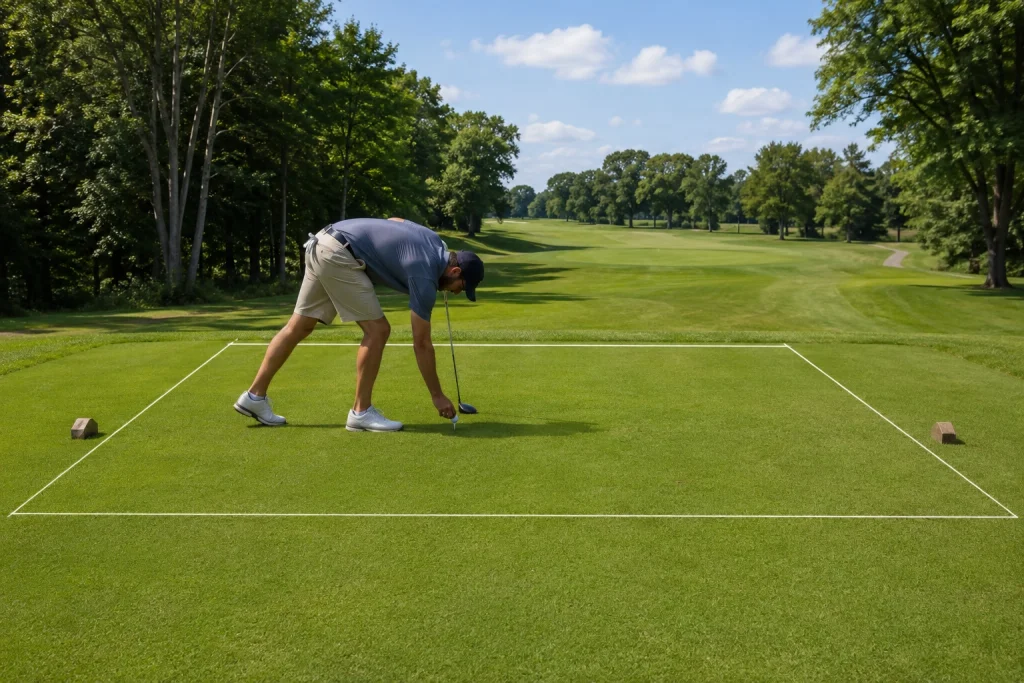
A golf tee box is the starting area for a hole. Under the Rules of Golf, the official “teeing area” is a rectangle between the tee markers and two club-lengths behind them. Choosing the right tee box helps match the course distance to your skill, swing speed, and enjoyment level.
What Is a Golf Tee Box?
A golf tee box is the prepared starting area on each hole where golfers hit their first shot. Many players casually call it the tee box, while the official Rules of Golf use the term teeing area.
The tee box usually includes:
- Two tee markers
- A flat or slightly raised hitting surface
- Short-cut grass, turf, or mats
- Several tee positions for different skill levels
- Yardage markers showing total course distance from that set of tees
According to the USGA teeing area rules, the teeing area is not the entire mowed teeing ground. It is the specific rectangular space created by the tee markers and the two-club-length depth behind them. (USGA)
This matters because hitting from the wrong place can lead to penalties in formal play. For casual rounds, it also helps keep the game fair and consistent.
Tee Box vs. Teeing Area: What Is the Difference?
Most golfers use “tee box” and “teeing area” to mean the same thing, but they are not exactly identical.
The tee box is the larger physical area built by the golf course. It may include several sets of markers, grass space, signage, and walkways.
The teeing area is the legal area where you must start the hole from your chosen markers.
Think of it this way:
| Term | Simple Meaning | Why It Matters |
|---|---|---|
| Tee box | The larger physical starting area | Helps golfers find where each hole begins |
| Teeing area | The official legal hitting area | Determines where your first shot must be played |
| Tee markers | Objects that show the front edge of the teeing area | You must tee off between and behind them |
| Forward tees | Shorter course setup | Helpful for beginners, seniors, juniors, and shorter hitters |
| Back tees | Longer course setup | Better for advanced players with distance and control |
Important: The tee markers define your legal starting area. You cannot simply tee your ball anywhere on the tee box because it looks level or comfortable.


How the Teeing Area Is Measured
The legal teeing area is a rectangle. The front line runs between the forward-most points of the two tee markers. From there, the area extends two club-lengths backward.
Your ball must be inside that rectangle when you make your opening stroke.
Your feet can stand outside the rectangle, but the ball itself must be within the teeing area. This is a small detail, but it matters in competitions and handicap rounds.
The R&A Rule 6 guidance also explains that moving tee markers to improve your stance, swing, or line can lead to a penalty. (R&A)
A Simple Way to Check Your Position
Before you hit, ask yourself:
- Is my ball between the two tee markers?
- Is my ball no farther forward than the markers?
- Is my ball within two club-lengths behind the markers?
- Am I using the correct set of markers for my chosen tee?
If the answer is yes, you are in the correct teeing area.
Why Golf Courses Have Multiple Tee Boxes
Golf courses use multiple tee boxes to make the same hole playable for different golfers. A beginner, a senior golfer, a junior player, and a scratch golfer should not always play the same yardage.
Different tees change:
- Total course distance
- Required carry distance over hazards
- Angle into the fairway
- Club selection off the tee
- Pace of play
- Scoring difficulty
- Enjoyment level
A hole from the forward tees may require a controlled 160-yard shot. From the back tees, the same hole may demand a 240-yard carry over trouble. That is a completely different challenge.
The USGA notes that course rating considers obstacles such as fairway width, topography, forced carries, green design, and hazards when evaluating course difficulty. Its guidance on course playability and tee selection is a useful reminder that yardage is only one part of difficulty. (USGA)
What Do Tee Box Colors Mean?
Tee colors vary by golf course, but many courses follow a general pattern. Do not assume every course uses the same system.
Common tee colors often include:
- Red tees: Forward tees or shorter yardage
- Gold tees: Senior, junior, or shorter-distance tees
- White tees: Middle tees or standard recreational tees
- Blue tees: Longer tees for skilled players
- Black tees: Championship or back tees
Some modern courses avoid gender-based labels and instead use yardage-based names. This is better for most golfers because the right tee should be based on ability, distance, and comfort, not age or gender alone.
Best rule: Choose tees by how far you actually hit the ball, not by ego.
How to Choose the Right Tee Box
Choosing the right tee box is one of the easiest ways to make golf more enjoyable. It can also help you play faster and make smarter decisions.
Use Your Average Driving Distance
Do not choose tees based on your longest-ever drive. Use your normal, playable drive.
Here is a simple guide:
| Average Drive Distance | Suggested Total Course Yardage |
|---|---|
| Under 150 yards | 4,000–4,800 yards |
| 150–175 yards | 4,800–5,400 yards |
| 176–200 yards | 5,400–6,000 yards |
| 201–225 yards | 6,000–6,400 yards |
| 226–250 yards | 6,400–6,800 yards |
| Over 250 yards | 6,800+ yards |
This is not a strict rule. Course layout matters. A shorter course with narrow fairways and forced carries can play harder than a longer course with open landing areas.
Look at Par-4 Approach Shots
A good tee box lets you reach many par 4s with a realistic second shot.
You may be playing tees that are too long if you often hit:
- Driver, then fairway wood
- Driver, then hybrid
- Driver, then still cannot reach the green
- Long irons into most par 4s
- Layups because hazards are too far to carry
A better tee box gives you a mix of wedges, short irons, mid irons, and occasional longer clubs.
Consider Pace of Play
Playing from tees that are too far back can slow down the entire group. You may spend more time searching for balls, hitting recovery shots, and waiting for safe landing areas.
Fair-play warning: Moving up a tee is not a weakness. It often shows good judgment.
The PGA of America encourages golfers to consider moving up a tee box when it helps them score better and enjoy the game more, especially while improving. The PGA’s advice on choosing the right tees supports a more practical, enjoyment-based approach. (PGA of America)
What Club Should You Hit From the Tee Box?
Many beginners think “tee shot” means “driver.” That is not always true.
You can use any legal club from the tee box, including:
- Driver
- Fairway wood
- Hybrid
- Long iron
- Mid iron
- Wedge on short par 3s
The right club depends on the hole.
Use driver when the fairway is wide and distance gives you a clear advantage. Use a hybrid or iron when accuracy matters more than distance. On short par 4s, a controlled tee shot can be smarter than trying to hit the ball as far as possible.
Key idea: The goal of a tee shot is not always maximum distance. The goal is to set up the next shot.
How High Should You Tee the Ball?
Tee height affects launch, spin, contact, and direction. Many golfers ignore it, but it can change the quality of your strike.
Driver Tee Height
For a driver, tee the ball high enough so that about half the ball sits above the top edge of the clubface at address. This helps you hit slightly upward on the ball, which can improve launch.
Fairway Wood or Hybrid Tee Height
For a fairway wood or hybrid, tee the ball lower. The ball should sit just above the grass. You want a sweeping strike, not a steep upward hit.
Iron Tee Height
For irons, tee the ball very low. The tee should barely lift the ball above the grass. This gives you a clean lie without changing the iron’s normal strike too much.
Common Tee Height Problems
- Tee too high with irons: causes thin or high-face contact
- Tee too low with driver: encourages low launch and mishits
- Inconsistent tee height: makes ball flight harder to control
- Changing tee height without a reason: creates confusion in your setup
Tee Box Etiquette Every Golfer Should Know
Good tee box etiquette makes the round smoother and more enjoyable.
Follow these simple habits:
- Stand still and quiet when another golfer is hitting.
- Do not stand directly behind the player’s line unless they allow it.
- Keep your shadow away from the ball and player.
- Wait your turn unless the group agrees to play ready golf.
- Replace or collect broken tees when possible.
- Avoid taking large divots on practice swings.
- Step away from the hitting area after your shot.
On crowded courses, good etiquette also supports pace of play. Have your tee, ball, and club ready before it is your turn.
Can You Move the Tee Markers?
No. You should not move tee markers to improve your stance, swing path, angle, or lie.
Tee markers are set by the course or tournament committee. They define the official front edge of the teeing area. Moving them can create an unfair advantage and may lead to penalties under the Rules of Golf.
Warning: Even if a tee marker blocks your stance or swing, do not move it before teeing off. Instead, tee the ball in another legal spot within the teeing area.
What Happens If You Tee Off From the Wrong Place?
In casual golf, your group may simply ask you to hit again from the correct spot. In competition, the result can be more serious.
If you tee off from outside the teeing area, you may need to correct the mistake and may receive a penalty depending on the format. Match play and stroke play handle this differently, so it is smart to know the basic rule before entering leagues, tournaments, or handicap events.
For everyday golfers, the safest habit is simple: place the ball between the markers and no more than two club-lengths behind them.
How Tee Box Choice Affects Scoring
The right tee box helps you play the course as designed. The wrong tee box can make every hole feel harder than it needs to be.
When you play tees that fit your game, you usually get:
- More fairways in regulation
- Shorter approach shots
- More realistic par chances
- Fewer lost balls
- Better pace of play
- More confidence
- More fun
When you play tees that are too long, you may feel forced to swing harder. That often leads to slices, hooks, topped shots, and poor decisions.
Better golf often starts before the swing. It starts with choosing the correct tee.
Tee Box Quality: What to Look For
Not all tee boxes are maintained equally. A good tee box should give golfers a fair, stable starting point.
Look for:
- Level ground
- Healthy turf
- Clear tee markers
- Safe footing
- Enough space for different players
- Good sightline to the fairway or green
Poor tee box quality can affect performance. Uneven ground can change your balance. Thin turf can make iron tee shots uncomfortable. Wet or damaged areas can reduce confidence.
If the tee box is badly worn, use another legal spot within the teeing area. Do not place the ball in front of the markers just to find better grass.
Equipment Considerations on the Tee Box
The tee box is where equipment choices become noticeable. Your club, golf ball, tee height, and setup all work together.
Golf Tees
Wooden tees are inexpensive and traditional. Plastic tees can be more durable. Brush-style or specialty tees may help some golfers with consistency, but they are not magic fixes.
Consider:
- Cost: Wooden tees are usually cheaper.
- Durability: Plastic tees often last longer.
- Performance: Tee height consistency matters more than tee material.
- Feel: Some golfers prefer the feedback of wooden tees.
- Skill level: Beginners should focus on repeatable setup, not expensive tee designs.
Golf Balls
Beginners do not need premium tour balls to enjoy the tee box. A softer, affordable ball may be better if you lose several balls per round.
More advanced players may care about spin, launch, and short-game control. But for most beginners, keeping the ball in play matters more than chasing maximum distance.
Driver Fit
A poorly fitted driver can make tee shots harder. Shaft flex, loft, length, and head design all affect launch and direction.
If your tee shots are consistently too low, too high, or curving heavily, your swing may be part of the issue. But equipment can also play a role.
Expert Tip:
Most amateur golfers should choose a tee box that lets them hit short or mid irons into several par 4s. If every par 4 requires a long club for your second shot, move forward one tee and track whether your scores, pace, and enjoyment improve.
Beginner Tee Box Strategy
Beginners should use the tee box to make golf simpler, not harder.
Try this strategy:
- Start from the forward tees.
- Use a club you can keep in play.
- Tee the ball at a consistent height.
- Aim away from obvious trouble.
- Make a smooth swing instead of a hard swing.
- Track how many tee shots stay playable.
- Move back only when your contact and direction improve.
This approach builds confidence. It also helps you learn course management without fighting distance all day.
Intermediate Tee Box Strategy
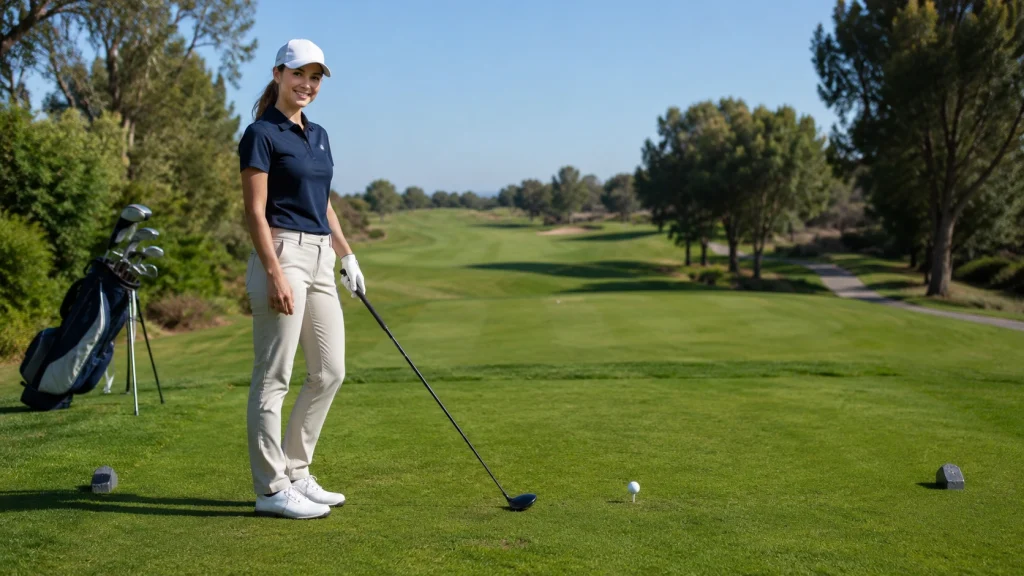
Intermediate golfers can be more selective. You may not need driver on every hole.
Before choosing your club, ask:
- Where is the widest landing area?
- What distance leaves my favorite approach club?
- Is there water, sand, or out-of-bounds near driver distance?
- Does the hole reward distance or accuracy?
- What miss can I accept?
For example, if a 370-yard par 4 has water at 240 yards, a 200-yard hybrid may be smarter than a driver. You may leave a longer approach, but you also avoid a penalty.
When to Get Help From a Golf Pro or Fitter
You do not need a lesson every time you hit a poor tee shot. But professional help can save time when the same problem keeps showing up.
Get help from a golf pro if:
- You slice or hook most tee shots.
- You top the ball often.
- You feel off balance during the swing.
- You do not know where to aim.
- You are afraid to use driver.
- Your tee shots create slow play or frustration.
- You want a simple pre-shot routine.
A golf pro can help with setup, alignment, ball position, grip, and swing path. These basics often fix more tee box problems than buying new equipment.
Get help from a club fitter if:
- Your driver feels too long or too heavy.
- Your launch is very low or very high.
- You create too much spin.
- Your shaft feels too stiff or too soft.
- You hit the center of the face but still get poor results.
- You are upgrading from beginner clubs to a long-term set.
Honest advice: A fitting works best when your swing is reasonably repeatable. If your contact changes wildly from swing to swing, take a lesson first.
Common Mistakes Golfers Should Avoid
- Playing tees that are too long: This makes the course harder, slower, and less fun.
- Teeing the ball in front of the markers: This can be illegal in formal play.
- Assuming driver is always required: Accuracy may matter more than distance.
- Using random tee heights: Inconsistent tee height creates inconsistent contact.
- Moving tee markers: Do not move course markers to improve your shot.
- Ignoring hazards: Aim for the safest landing area, not always the flag or center line.
- Choosing tees based on ego: Pick the tee that fits your real game.
- Standing too close to another golfer: Respect space, safety, and concentration.
- Practicing too many swings on the tee: Be ready, but do not slow the group.
- Blaming equipment first: Setup and swing basics often matter more than gear.
FAQs
What is a tee box in golf?
A tee box is the starting area of a golf hole. It is where players hit their first shot. The official teeing area is the rectangle between the tee markers and two club-lengths behind them.
Can I tee the ball behind the tee markers?
Yes, but only within two club-lengths behind the front edge of the tee markers. You cannot tee the ball too far back and still be in the official teeing area.
Can my feet be outside the tee box?
Yes. Your feet may stand outside the teeing area as long as the ball is inside the legal teeing area when you make the stroke.
Which tee box should a beginner use?
Most beginners should start from the forward tees. This shortens the course, reduces pressure, improves pace of play, and helps create more enjoyable scoring chances.
Do tee box colors mean the same thing at every course?
No. Tee colors vary by course. Always check the scorecard, starter instructions, or tee signs before choosing. Yardage is more reliable than color alone.
Should I always use driver from the tee box?
No. Driver is useful when distance helps and the landing area is wide enough. On tight holes, a fairway wood, hybrid, or iron may be a smarter choice.
What happens if I hit from the wrong tee box?
In casual play, your group may simply correct it. In competition, you may face penalties or need to replay from the correct area. Always confirm your chosen tee markers before starting.
Conclusion
A golf tee box may look simple, but it plays a major role in how fair, enjoyable, and manageable a round feels. This Golf Tee Box Explained guide comes down to a few key ideas: know the legal teeing area, choose the right markers for your ability, use smart club selection, and avoid common beginner mistakes.
The best tee box is not always the longest one. It is the one that gives you a fair challenge, keeps the round moving, and helps you enjoy better golf. Before your next round, check the scorecard, choose a realistic yardage, tee the ball legally, and give yourself the best chance to play with confidence.