
Golf Handicap Explained: A Simple Guide for Beginners and Improving Golfers

You hear golfers say, “I’m a 15 handicap,” or “What’s your index?” but the numbers can feel confusing when you are new to the game. If you have ever wondered whether a golf handicap is your average score, how it is calculated, or why it changes from course to course, this guide will make it clear.
Golf Handicap Explained simply means understanding how golf measures a player’s potential ability so golfers of different skill levels can compete fairly. It matters because your handicap helps you track progress, choose fair matches, enter events, and understand your scoring ability beyond one good or bad round.
This guide explains what a handicap means, how it works, how to get one, what counts toward it, and how to use it in real golf situations.
Quick Answer
Golf Handicap Explained: A golf handicap is a number that represents your potential playing ability, not your average score. The lower the handicap, the better the golfer. Under the World Handicap System, your Handicap Index is based on recent scores, course difficulty, and slope rating so players of different abilities can compete fairly.
What Is a Golf Handicap?
A golf handicap is a scoring adjustment that helps golfers of different skill levels play against each other in a fair way.
Think of it as a golfer’s ability number. A beginner may have a high handicap, while a strong player has a low handicap. A scratch golfer has a Handicap Index around 0.0. A plus-handicap golfer is even better than scratch and may actually give strokes back in competition.
A handicap is useful because golf courses are not all equally difficult. Shooting 90 on a short, flat course is not the same as shooting 90 on a long championship course with narrow fairways, fast greens, and heavy rough.
That is why the handicap system looks beyond raw score. It considers:
- The score you posted
- The tees you played
- The difficulty of the course
- The slope rating
- Your recent scoring record
- Adjustments for unusual playing conditions
According to the USGA Handicap Index calculation guide, a Handicap Index is based on the best 8 Score Differentials from a player’s most recent 20 rounds, with built-in safeguards to protect the integrity of the system. (USGA)
Handicap Index vs Course Handicap vs Playing Handicap
Golfers often use the word “handicap” loosely, but there are a few different terms you should know.
Handicap Index
Your Handicap Index is your main handicap number. It is portable, meaning you can take it from one golf course to another.
For example, you might have a Handicap Index of 18.4. That does not mean you will always shoot 18 over par. It means your better recent scores suggest that is close to your demonstrated playing potential.
Course Handicap
Your Course Handicap tells you how many strokes you receive on a specific course from a specific set of tees.
This number can change depending on where you play. A harder course may give you more strokes. An easier course may give you fewer.
The USGA explains that Course Rating and Slope Rating help measure course difficulty, with Course Rating reflecting the expected score for a scratch player and Slope Rating measuring relative difficulty for bogey golfers compared with scratch golfers through the USGA Course Rating and Slope Rating system. (USGA)
Playing Handicap
Your Playing Handicap is the number used for a specific format or competition. Some events use handicap allowances, especially in team formats.
For casual golf, most players mainly need to understand their Handicap Index and Course Handicap.


Why Golf Handicaps Exist
Golf handicaps exist to make the game more enjoyable and fair.
Without handicaps, a 5-handicap player would usually beat a 25-handicap player. With handicaps, both golfers can compete in a match where each has a realistic chance.
A handicap can help you:
- Play fair matches with friends
- Track real improvement over time
- Enter club tournaments
- Choose the right tees
- Understand whether your scores are improving
- Set realistic scoring goals
- Compare performance across different courses
Important: A handicap is not meant to make every match perfectly equal. It is a fair-play tool, not a guarantee of winning.
How Is a Golf Handicap Calculated?
Most golfers do not need to calculate their handicap manually. Golf association systems and handicap apps do it for you. Still, understanding the basics helps you trust the number.
Under the World Handicap System, the calculation uses Score Differentials instead of raw scores.
A Score Differential estimates how well you played after adjusting for course difficulty.
A simplified version looks like this:
| Term | What It Means | Why It Matters |
|---|---|---|
| Adjusted Gross Score | Your score after handicap score limits are applied | Prevents one disaster hole from unfairly inflating your record |
| Course Rating | Expected score for a scratch golfer | Shows how hard the course is for an expert player |
| Slope Rating | Relative difficulty for bogey golfers | Adjusts for how much harder the course plays for higher-handicap golfers |
| Playing Conditions Calculation | Adjustment for unusual conditions | Accounts for days when weather or setup makes scoring unusually hard or easy |
| Score Differential | Your adjusted performance number | Used to calculate your Handicap Index |
The system averages your best recent differentials, not every score. This is why your handicap reflects your potential, not your normal average.
Simple Example
Imagine two golfers both shoot 92.
Golfer A shoots 92 on an easy course from forward tees.
Golfer B shoots 92 on a difficult course from longer tees.
Their raw score is the same, but Golfer B probably played better relative to course difficulty. The handicap system accounts for that.
That is one reason you should not compare scores without considering the course and tees.
How Many Rounds Do You Need to Get a Handicap?
To establish an official Handicap Index, you need to post scores from at least 54 holes. This can be made up of 9-hole and 18-hole rounds.
For example, you could post:
- Three 18-hole rounds
- Six 9-hole rounds
- A mix of 9-hole and 18-hole scores adding up to 54 holes
The USGA states that a player must submit acceptable scores from a minimum of 54 holes to obtain an initial Handicap Index through its guidance on scores required for an initial Handicap Index. (USGA)
Your first handicap may move more quickly because the system has less scoring history. Once you build a fuller record, your number becomes more stable.
What Is a Good Golf Handicap?
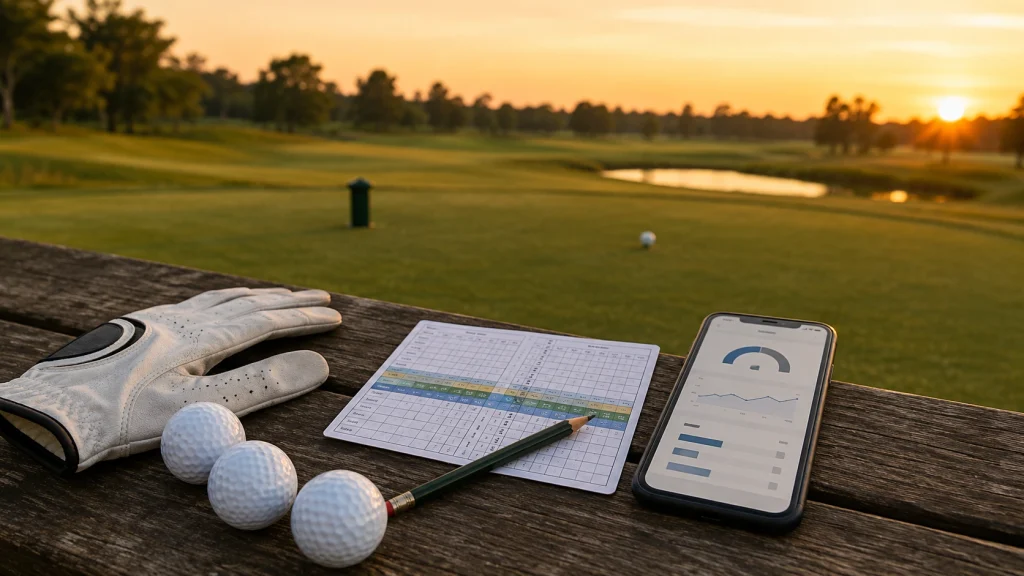
A “good” handicap depends on your experience, goals, and how often you play.
For a brand-new golfer, simply establishing a handicap is a good step. For a weekend golfer, improving from 30 to 24 can be meaningful. For a serious club player, getting from 12 to 9 might be a major goal.
Here is a simple guide:
| Handicap Range | Common Skill Level | What It Usually Means |
|---|---|---|
| 30+ | Beginner or casual golfer | Still learning contact, direction, short game, and course strategy |
| 20–29 | Improving recreational golfer | Can finish rounds but may struggle with consistency |
| 10–19 | Intermediate golfer | Makes some pars, limits big mistakes, and has better course control |
| 5–9 | Strong amateur golfer | Usually has solid ball striking and better short-game control |
| 0–4 | Low-handicap golfer | Consistently scores near par on good days |
| Plus handicap | Advanced competitive player | Often shoots around or under par |
Key idea: Your handicap is not your worth as a golfer. It is just a tool for measuring progress and creating fair games.
How to Get an Official Golf Handicap
Getting an official golf handicap is easier than many beginners think.
Step 1: Join an Authorized Golf Club or Association
In the United States, many golfers establish a Handicap Index through a golf club, local Allied Golf Association, or authorized handicap service.
Outside the U.S., golfers should follow the process used by their national golf association. The R&A Rules of Handicapping explain the broader purpose and structure of handicapping under the World Handicap System. (R&A)
Step 2: Play Acceptable Rounds
Your scores must come from acceptable formats of play. Casual rounds often count if played under the required rules and posted correctly.
Do not post made-up scores, scramble scores, or practice-hole scores unless your local handicap authority allows them under the proper format.
Step 3: Use the Correct Tees and Course Information
When posting, choose the correct course, tees, date, and score type. This matters because each tee box has its own Course Rating and Slope Rating.
A score from the blue tees may calculate differently than the same score from the white tees.
Step 4: Post Scores Consistently
A handicap only works well when your scoring record is honest and complete.
Do not post only your good rounds. Do not hide bad rounds. That makes your handicap inaccurate and unfair to other golfers.
Step 5: Keep Playing
Your Handicap Index updates as your scoring record changes. The more valid scores you post, the more reliable your handicap becomes.
How Handicaps Work in a Real Match
Let’s say you and a friend are playing match play.
You have a Course Handicap of 22. Your friend has a Course Handicap of 12.
The difference is 10 strokes. That means you would usually receive one stroke on the 10 hardest handicap holes on the scorecard.
If you make a 5 on one of those holes and your friend makes a 4, your net score is also 4 because you received one stroke. The hole is tied.
This is what makes handicap golf fun. Better players still need to play well, but higher-handicap players get a fair chance when they play to their ability.
Handicap and Tee Selection
Your handicap can help you choose better tees, but it should not be the only factor.
Many beginners play tees that are too long. This leads to longer approach shots, more forced carries, more penalty strokes, and slower rounds.
Consider moving up a tee if:
- You rarely reach par 4s in two shots
- You hit long irons or fairway woods into most greens
- You lose many balls from forced carries
- Your round feels stressful instead of enjoyable
- You slow down because every hole feels too long
Playing the right tees is not weakness. It is smart golf.
A well-chosen tee box makes the course more playable and helps your handicap reflect your actual decision-making and scoring ability.
What Handicap Does Not Tell You
A handicap is helpful, but it does not tell the whole story.
It does not directly show:
- Whether you hit the ball far
- Whether your putting is strong
- Whether your swing is technically sound
- Whether you struggle under pressure
- Whether your short game needs work
- Whether your equipment fits you
Two golfers can both be 18 handicaps but play very different games. One may drive it far but lose balls. Another may hit short but straight shots and struggle with putting.
That is why improvement should go beyond chasing a lower number.
Track patterns such as:
- Fairways hit
- Greens in regulation
- Penalty strokes
- Three-putts
- Up-and-down chances
- Trouble off the tee
- Wedge distance control
These details show why your handicap is moving.
Expert Tip:
Before trying to lower your handicap with a new driver or expensive irons, track your last five rounds and identify where you lose the most strokes. Many golfers can improve faster by reducing penalty shots, improving lag putting, and choosing smarter targets than by changing equipment first.
Cost Considerations: Is a Handicap Worth Paying For?
For many golfers, yes. An official handicap usually involves a yearly fee through a club, association, or authorized service.
The cost can vary depending on where you live and how you register. Some private clubs include handicap services in membership fees. Public-course golfers may pay separately through a local golf association or online system.
A handicap is worth it if you:
- Play regularly
- Want to enter tournaments
- Enjoy competitive rounds with friends
- Want a trusted progress tracker
- Travel and play different courses
- Care about fair matches
It may not be necessary if you only play once or twice a year and never compete. In that case, a free score-tracking app may be enough until you play more often.
Equipment, Skill Level, and Handicap
Your handicap can guide equipment decisions, but it should not be the only factor.
High-Handicap Golfers
Higher-handicap golfers often benefit from:
- Forgiving cavity-back irons
- Higher-lofted drivers
- Hybrids instead of long irons
- Softer-feeling golf balls
- Wedges with enough bounce
- Larger mallet-style putters if alignment is a problem
The goal is forgiveness, launch, and consistency.
Mid-Handicap Golfers
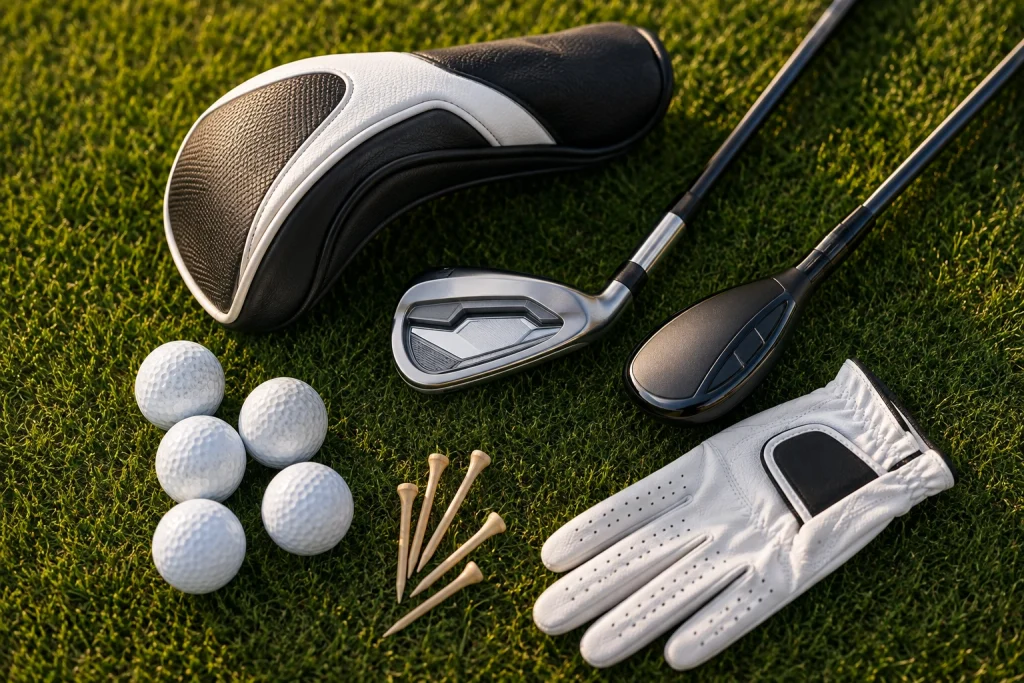
Mid-handicap golfers may start looking for more control while still needing forgiveness.
Good options may include:
- Game-improvement irons
- Adjustable drivers
- Hybrids or utility irons depending on comfort
- Wedges with proper gapping
- A ball that balances distance and greenside control
Low-Handicap Golfers
Low-handicap players often care more about precision, shot shaping, spin control, and feel.
But even good players still need properly fitted equipment. A club that looks advanced is not always better for your score.
Warning: Do not buy clubs based only on your handicap. Swing speed, strike pattern, launch angle, shaft fit, and comfort matter too.
Common Mistakes Golfers Should Avoid
Many golfers misunderstand handicaps when they first start tracking scores. Avoid these common mistakes:
- Thinking your handicap is your average score: It reflects your better scoring potential, not your normal round.
- Posting only good scores: This creates an unfair handicap and hurts fair competition.
- Ignoring course difficulty: A score means more when you know the Course Rating and Slope Rating.
- Playing tees that are too long: This can inflate scores and make golf less enjoyable.
- Comparing handicaps without context: A 15-handicap golfer at one course may face different challenges than a 15 at another.
- Buying equipment only because of handicap range: Get clubs that fit your swing, not just your number.
- Getting upset after one bad round: One score rarely defines your handicap.
- Not learning basic rules: Incorrect drops, mulligans, and gimmies can make posted scores unreliable.
- Using handicap as an excuse: It should help you compete fairly, not limit your goals.
When to Get Help From a Golf Pro or Fitter
A handicap tells you what you shoot. A golf professional or fitter can help you understand why you shoot it.
Consider getting help from a golf pro if:
- Your handicap has stopped improving
- You struggle with the same miss every round
- You lose multiple balls off the tee
- You three-putt often
- You do not understand course strategy
- You are preparing for tournaments
- You feel stuck despite practicing
Consider a club fitting if:
- Your shots launch too low or too high
- Your driver feels hard to control
- Your irons produce inconsistent distance gaps
- Your wedges do not cover enough yardages
- Your grips are worn or the wrong size
- Your clubs are very old or poorly matched
- You are making better swings but not getting better results
The PGA of America notes that PGA professionals help golfers at many levels learn and improve through coaching, instruction, and player development through the PGA of America’s coaching resources. (PGA of America)
Best decision: Take a lesson before making a major swing change or buying a full new set of clubs. A trained coach or fitter can help you avoid expensive mistakes.
How to Use Your Handicap to Improve
Your handicap is most useful when you treat it as feedback, not judgment.
Use it to set simple goals.
For example:
- If you are a 30 handicap, aim to reduce penalty strokes and improve contact.
- If you are a 22 handicap, work on short game and avoiding blow-up holes.
- If you are a 15 handicap, track approach shots and putting.
- If you are a 10 handicap, focus on wedge control and course management.
- If you are below 5, small mistakes matter more, so refine strategy and scoring shots.
Do not chase a lower handicap by practicing everything at once. Pick one or two weak areas and work on them for several weeks.
Good handicap improvement usually comes from:
- Keeping the ball in play
- Avoiding doubles and triples
- Improving lag putting
- Learning reliable wedge distances
- Choosing safer targets
- Playing the right tees
- Practicing with purpose
- Using properly fitted equipment
FAQs
Is a golf handicap the same as average score?
No. A golf handicap is not your average score. It reflects your demonstrated potential based on better recent rounds and course difficulty. Most golfers usually shoot a few strokes higher than their Handicap Index suggests.
Is a lower golf handicap better?
Yes. A lower handicap means a golfer usually scores closer to par. A 5-handicap golfer is generally stronger than a 20-handicap golfer. A scratch golfer is around 0.0, while a plus-handicap golfer is better than scratch.
Can beginners get a golf handicap?
Yes. Beginners can get a handicap once they post enough acceptable scores. In many systems, you need scores from at least 54 holes to establish an initial Handicap Index.
What handicap is considered average?
Many recreational golfers fall somewhere in the mid-to-high handicap range. A handicap around 15–25 is common for casual players, but averages vary by country, course, age, and how often someone plays.
Does my handicap change every round?
It can change when you post a new acceptable score, but not every round will affect it equally. Since the system uses your best recent Score Differentials, a poor round may have little impact if it is not one of your counting scores.
Can I use my handicap at any golf course?
Yes, that is one of the main benefits. Your Handicap Index can be converted into a Course Handicap based on the course, tees, Course Rating, and Slope Rating.
Should I get fitted for clubs based on my handicap?
Your handicap can help guide equipment choices, but it should not be the only factor. A proper fitting looks at swing speed, launch, lie angle, shaft fit, strike pattern, and ball flight. This is especially helpful if you are serious about improvement.
Conclusion
Golf Handicap Explained comes down to one simple idea: your handicap is a fair-play and progress-tracking number that reflects your potential ability, adjusted for course difficulty. It is not your average score, and it is not a label that defines you as a golfer.
If you are new to golf, start by keeping honest scores, learning the basic rules, and posting rounds consistently. If you already have a handicap, use it to identify trends and make smarter choices about practice, tee selection, equipment, and lessons.
The best next step is simple: track your scores honestly, review where you lose strokes, and focus on one improvement area at a time. That is how your handicap becomes more than a number—it becomes a practical roadmap to better golf.