
Fat Shot in Golf: Why It Happens and How to Fix It

Quick Answer
A fat shot happens when the club strikes the ground before the golf ball, causing the clubhead to lose speed before impact. The main fix is moving the bottom of your swing, or low point, forward so an iron contacts the ball before the turf. A simple PGA low-point drill can help you see exactly where the club is entering the ground.
Common causes of fat golf shots
- Weight stays back: Your pressure remains on the trail side too long, moving the swing bottom behind the ball.
- Ball too far forward: The club may reach its lowest point before reaching the ball.
- Early release: Throwing the clubhead too soon can make the club bottom out early.
- Posture changes: Standing up, dropping down, or swaying can change your distance from the ball.
- Poor low-point control: Inconsistent ground contact makes both fat and thin shots more likely.
Quick verification
- Draw or spray a line on the practice ground, place the ball on the line, and check whether your divot starts on the target side.
A fat shot can make a normal iron swing feel as if the ground suddenly grabbed the club. I usually diagnose the turf contact before changing anything else because the divot often tells the story faster than the ball flight.
This guide explains what a fat shot is, why golfers hit behind the ball, and how to correct it without rebuilding the entire swing.
In This Guide
What Is a Fat Shot in Golf?
A fat shot is a golf shot where the clubhead contacts the turf before contacting the ball. Golfers also call it a heavy shot, chunk, or hitting behind the ball.
Definition: The key feature of a fat shot is not simply taking a divot. It is reaching the ground too early, before the ball has been struck.
The PGA golf glossary describes a fat shot as one where the clubhead strikes the turf behind the ball and produces poor contact.
With a well-struck iron, the sequence is different. The club contacts the ball first and continues downward into the turf afterward.
| Contact | Where the Club Reaches the Turf | Typical Result | Main Clue |
|---|---|---|---|
| Fat | Before the ball | Heavy contact and reduced distance | Divot begins behind the ball |
| Clean iron | After ball contact | Solid compression and predictable flight | Turf mark starts on the target side |
| Thin | Little or no turf contact | Low-face contact and lower flight | Club misses the intended ground point |
A divot by itself is not a mistake. Its starting position relative to the ball matters much more.
Why Do I Hit the Ground Before the Golf Ball?
You hit the ground first when the low point of your swing occurs too far behind the ball. Several setup and motion faults can move that low point backward.
Too much pressure stays on the trail side
If your body remains behind the ball through impact, the club can reach the ground before arriving at the ball. This often appears when a golfer tries to lift an iron shot into the air.
Irons already have loft. You don’t need to help the ball upward.
The ball is too far forward
Ball position changes where the club meets the ball relative to the swing arc. Moving an iron excessively forward can place it beyond your normal low point.
Don’t automatically move every fat shot backward, though. Ball position is only one possible cause.
You release the club too early
An early release happens when the wrists straighten and the clubhead passes downward too soon. Golfers sometimes call this casting.
The result can be a swing bottom that occurs behind the ball. Trying to manufacture extreme wrist angles is not the solution.
Your posture or body height changes
Your address position creates a certain distance between your body, hands, and the ground. Large changes during the swing make reliable contact harder.
Common patterns include standing up through impact, dropping excessively, or swaying away from the target without returning.
You are trying to hit the ball instead of swinging through it
When I see golfers become afraid of another chunk, they often slow down and guide the club toward the ball. That reaction can make low-point control even less predictable.
A committed motion through the hitting area is usually easier to repeat than a last-second rescue attempt.
Pro tip: If fat shots continue after basic setup checks, a certified PGA instructor can identify whether pressure movement, release pattern, or posture is the main cause.
How Can I Diagnose the Cause of My Fat Shots?
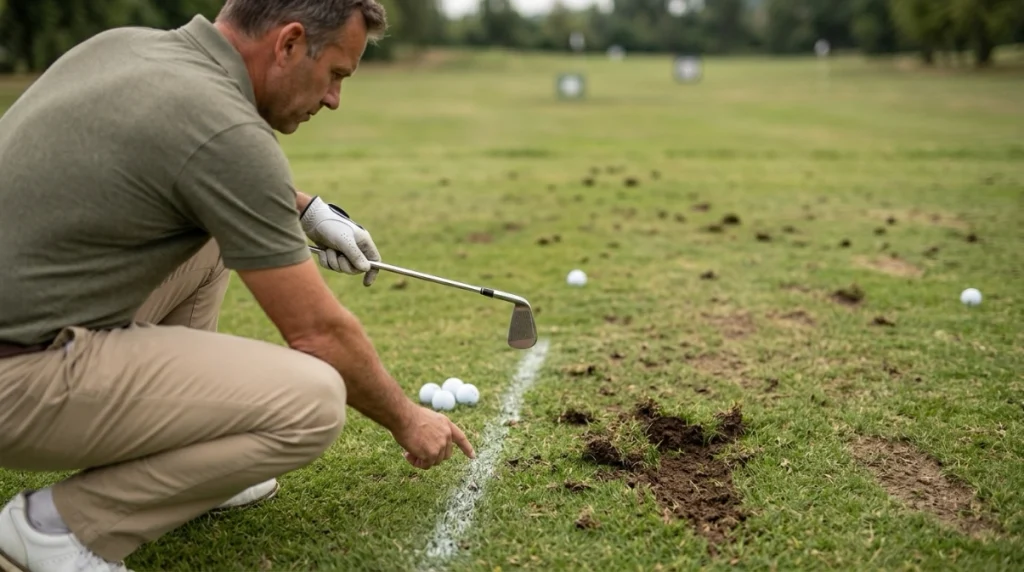
Start with evidence rather than swing theory. Your goal is to learn where the club hits the ground and whether that pattern repeats.
Use a ground-contact line
Draw a straight line on the practice surface using a method allowed by the facility. Place the ball directly on that line.
Hit several controlled iron shots and inspect where the turf disturbance begins.
- Mark behind the line: Your low point is occurring too early.
- Mark consistently past the line: Your low-point location is moving in the right direction.
- Marks scattered everywhere: Your contact pattern is inconsistent, so avoid making tiny setup changes after every swing.
PGA instruction also recommends watching the turf because fat, thin, and solid strikes leave different ground-contact patterns.
Check ball position before changing the swing
Use the center of your stance as a reference rather than guessing. Then compare the ball position with the club you’re using.
If the ball has gradually crept too far forward, correct the setup first. Make one change and retest.
Notice your finish
A finish is not a perfect diagnostic tool, but it can reveal a major balance problem. If you repeatedly finish with most pressure on the trail foot, investigate your movement through impact.
I prefer this approach because it keeps diagnosis simple. Check the ground, setup, balance, and strike before thinking about complicated mechanics.


How Do I Stop Hitting Fat Iron Shots?
The simplest goal is to move your iron swing’s low point to the target side of the ball. You can work toward that with setup, pressure movement, and a committed follow-through.
Start from a neutral ball position
Use a repeatable reference for ball position. Avoid reacting to one poor strike by moving the ball several inches.
Small adjustments are easier to evaluate. Big changes can create a different contact problem.
Feel pressure moving toward the target
You don’t need a violent slide. You need enough forward movement that your body isn’t hanging behind the ball while the club reaches impact.
Try making small swings while finishing balanced on your lead side. Keep the motion athletic rather than forced.
Let the club strike down through the ball
With an iron, ball-first contact and a turf strike afterward are compatible. The club does not need to sweep every iron shot cleanly from the surface.
This is one reason trying to lift the ball can cause trouble. The instinct often moves the swing bottom backward.
Keep turning through impact
A stalled body can encourage the hands to throw the clubhead at the ball. Keep your chest and body moving through the shot instead.
The PGA towel drill for better contact is one simple way to practice turning back and through without obsessing over impact positions.
Pro tip: If a movement causes pain or requires a major swing change, work with a qualified instructor rather than forcing a position your body cannot comfortably reach.
Which Drills Help Fix Fat Shots?
The best fat-shot drills provide immediate feedback about where the club hits the ground. You should know whether the attempt worked without guessing from ball flight alone.
1. Line drill
- Make a visible line perpendicular to your target line.
- Place the golf ball on the line.
- Hit a short iron shot at controlled speed.
- Inspect the first turf contact.
- Work toward starting the mark on the target side of the line.
This is my preferred starting drill because the feedback is immediate. You aren’t trying to create a perfect divot shape.
2. No-ball low-point drill
- Choose a spot on the turf or practice mat.
- Make a half swing without a golf ball.
- Try to touch the ground just beyond the chosen spot.
- Repeat before adding a ball.
This removes the urge to lift or scoop the ball. It lets you focus entirely on where the swing reaches the ground.
3. Towel-behind-the-ball drill
Place a small towel behind the golf ball, leaving enough space to swing safely. The goal is to strike the ball without hitting the towel first.
Start with short swings. Increase speed only after the contact pattern becomes predictable.
4. Three-quarter finish drill
Hit controlled shots using a shorter backswing and a balanced finish. This can expose excessive sway or a tendency to remain on the trail side.
Don’t chase maximum distance during the drill. Contact is the priority.
When practicing from natural turf, care for the practice area afterward. The USGA’s practice-tee guidance recommends using efficient linear divot patterns to reduce turf damage.
Do Course Conditions Make Fat Shots Worse?
Yes. Soft or wet turf can make a slightly heavy strike much more noticeable because the clubhead digs into the ground more easily.
Firm turf may let a marginally heavy strike skid forward. Soft ground is less forgiving.
Fat shots from wet fairways
Wet conditions reward precise ball-first contact. A club entering the turf too early can lose speed quickly before reaching the ball.
PGA guidance on playing short shots from wet turf also notes that soft conditions make the club more prone to digging and producing a fat strike.
Fat shots from rough
Rough adds grass between the club and ball, but that doesn’t change the basic diagnosis. If the club also strikes the ground early, contact becomes even less predictable.
Prioritize solid contact and choose a realistic target. Trying to force a difficult recovery can add another swing error.
Fat shots from downhill or uneven lies
Uneven ground changes the relationship between your body and the ball. Your normal low-point pattern may no longer match the lie.
Make rehearsal swings beside the ball when the rules and situation allow. Use them to feel the slope and maintain balance.
As of 2026, the core principle hasn’t changed: diagnose where the club meets the ground before searching for a complicated swing fix.
Frequently Asked Questions
What does a fat shot mean in golf?
A fat shot means the clubhead strikes the ground before it strikes the golf ball. The turf contact slows the club and usually produces a heavy-feeling shot that finishes shorter than intended.
Why am I suddenly hitting fat iron shots?
A sudden pattern can come from changed ball position, balance, pressure movement, posture, or timing. Check your setup and ground-contact location before making major swing changes.
Does putting the ball farther back fix a fat shot?
It can help when the ball is genuinely too far forward, but it isn’t a universal fix. Moving the ball back may hide problems involving balance, posture, or low-point control without correcting them.
Why do I hit fat shots when I try to swing hard?
Extra effort can change your balance, sequence, or body height. If your low point moves behind the ball when speed increases, practice controlled swings first and add speed gradually.
Why do I hit both fat and thin shots?
Fat and thin shots can come from the same underlying problem: inconsistent control of the swing bottom. One swing reaches the ground too early, while the next compensates and misses the turf or catches the ball low on the face.
Should an iron hit the ball or ground first?
For a normal iron shot from the turf, the club should contact the ball before entering the ground. The divot or turf mark should begin on the target side of the ball’s original position.
Can a club fitting fix fat shots?
Equipment can influence how a club interacts with the turf, but a fitting cannot automatically correct a low point that repeatedly occurs behind the ball. A qualified fitter can check whether club length, lie, shaft, or sole design is creating an additional problem.
Final takeaway: If you’re fighting a fat shot, focus on the ground before you focus on the ball. Find where the club bottoms out, confirm your setup, and practice moving that contact point to the target side.
Use short, controlled swings until the strike becomes repeatable. Once the contact improves, build speed without losing the same low-point pattern.