
Dropping the Ball in Golf: Rule 14.3 Explained

Quick Answer
Dropping the ball in golf means putting a ball back into play through a relief procedure. Under Rule 14.3, you normally release the ball straight down from knee height, without throwing or spinning it, and it must be dropped in the required relief area. The official Rule 14 dropping procedure gives the complete requirements.
The basic dropping rules
- Use knee height: Release the ball from the height of your knee when you are standing.
- Drop straight down: Do not throw, roll, spin, or deliberately direct the ball.
- Find the relief area: The applicable Rule determines where the ball must first touch the ground.
- Check where it stops: A correctly dropped ball normally must come to rest inside its relief area.
- Drop again if needed: If the first correct drop finishes outside the area, make a second correct drop.
- Place after two failures: If the second correct drop also finishes outside, follow the placing procedure.
Easy way to remember it
- Identify the Rule, establish the relief area, drop from knee height, and confirm where the ball finishes.
Dropping the ball looks simple until a cart path, penalty area, steep slope, or awkward lie puts the procedure under pressure. I recommend learning one dependable sequence instead of trying to remember a different dropping motion for every situation.
This guide covers the current 2026 procedure, common relief areas, re-drops, placement, penalties, and the mistakes that cost golfers avoidable strokes.
In This Guide
What Does Dropping the Ball Mean in Golf?
Dropping the ball is a Rules procedure used when you are putting a ball into play while taking relief. It applies to many forms of both free relief and penalty relief.
Definition: A golf drop is the act of releasing a ball through the air in the prescribed way so it first touches the required location and can come to rest inside its relief area.
The key point is that a drop is not the same as placing or replacing a ball. Golfers often use those words interchangeably during casual rounds, but the Rules treat them differently.
| Procedure | What You Do | Typical Use |
|---|---|---|
| Drop | Release the ball from knee height into the required area. | Free or penalty relief. |
| Place | Set the ball directly on a required spot. | Certain relief procedures or after two valid drops fail to stay in the area. |
| Replace | Return a ball to its original spot. | When a Rule requires a lifted or moved ball to go back. |
When taking relief, you can generally use the original ball or another ball. That makes dropping different from many replacement situations, where the original ball is normally required.
Another important distinction is that dropping does not automatically mean a penalty. Cart-path relief may be free, while lateral relief from a red penalty area normally costs one penalty stroke.
Section Takeaway: A drop is a specific method of putting a ball into play during relief. First identify whether the Rule requires dropping, placing, or replacing.
How Do You Drop a Golf Ball Correctly?
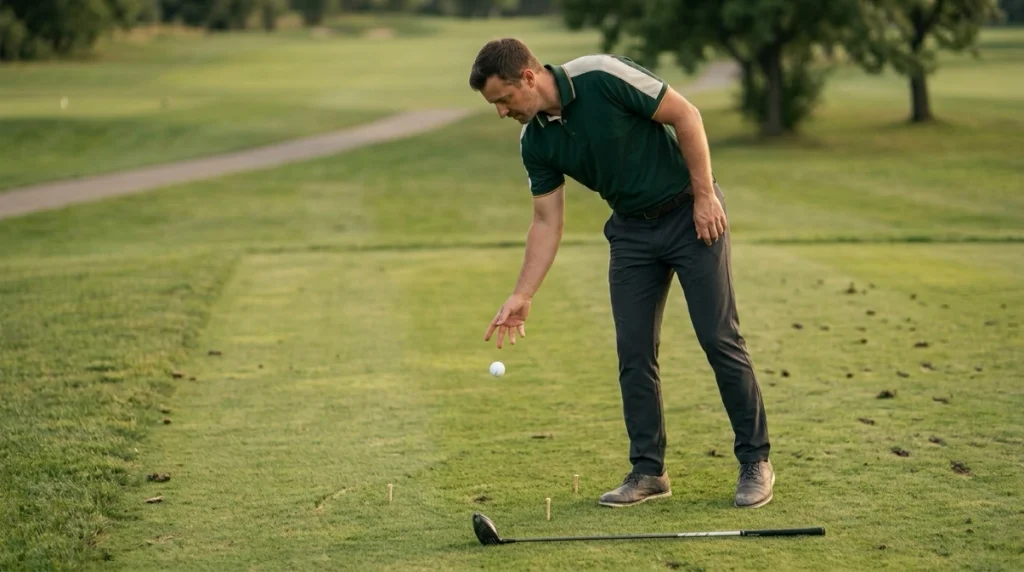
A correct golf drop requires the right height, release, location, and result. The easiest method is to follow the same checklist every time.
The USGA dropping guidance explains the procedure and how the relief area works.
Step 1: Determine why you are taking relief
Do not start by choosing a convenient patch of grass. Identify the Rule or relief option first because it determines your reference point and relief area.
Common reasons include an abnormal course condition, penalty area, unplayable ball, embedded ball, or stroke-and-distance relief.
Step 2: Find the correct relief area
Your relief area is normally measured from a reference point specified by the Rule. Depending on the situation, it commonly extends one or two club-lengths.
A club-length is measured using the longest club in your bag other than your putter. For most golfers, that club will be the driver.
Step 3: Release the ball from knee height
Knee height means the height of your knee when you are standing. You do not have to remain perfectly upright while releasing the ball.
- Hold the ball at the correct knee height.
- Release it so it falls straight down.
- Do not throw, spin, roll, or deliberately direct it.
- Do not let it touch you or your equipment before it hits the ground.
- Make sure it first touches where the applicable Rule requires.
Step 4: Check where the ball comes to rest
A ball dropped correctly must normally come to rest in the relief area. If it stays there, your relief procedure is complete.
The final lie does not need to be attractive. Thick grass, a divot, or an awkward stance can still be a valid result if the ball remains inside the legal relief area.
A practical habit I recommend is checking the reference point and boundary before releasing the ball. That simple pause prevents many wrong-place mistakes.
Section Takeaway: Think “Rule, area, knee, result.” Establish the relief area first, drop correctly, then verify that the ball stayed inside it.
Where Must the Ball Be Dropped?
The Rule providing relief determines where your ball must be dropped. There is no universal spot that applies to every relief situation.
A relief area normally begins with a reference point. Its size and restrictions then depend on why you are taking relief.
What is a relief area?
A relief area is the defined area in which your ball must be dropped and normally come to rest. It is usually measured one or two club-lengths from a reference point.
- Reference point: The starting point used to establish the relief area.
- One club-length: Common for several forms of free relief and stroke-and-distance procedures.
- Two club-lengths: Common for lateral relief from a red penalty area or an unplayable ball.
- No nearer the hole: A common restriction on where the relief area may extend.
Does the golfer have to stand inside the relief area?
No. Your feet do not have to be inside the relief area while you make the drop.
The Rules focus on the ball. What matters is that you release it correctly and that it first touches the required area.
Does relief guarantee a good lie?
No. Legal relief does not promise fairway grass, a clear swing, or your preferred angle to the green.
This matters around cart paths. The nearest point of complete relief is determined by the Rule, not by which side gives you the easiest next shot.
For abnormal course conditions in the general area, the official Rule 16 relief guidance uses the nearest point of complete relief as the reference point.
Section Takeaway: Your relief area comes from the Rule, not personal preference. Identify the reference point before measuring or dropping.


When Do You Drop Again or Place the Ball?
You must drop again when a ball dropped correctly comes to rest outside the required relief area. A first failed result does not let you place immediately.
The current procedure uses two correct drops before moving to placement.
- First correct drop stays inside: Play the ball as it lies.
- First correct drop finishes outside: Drop correctly a second time.
- Second correct drop stays inside: Play the ball as it lies.
- Second correct drop finishes outside: Place a ball on the spot where the second drop first touched the ground.
This procedure often matters on firm ground or steep slopes. A ball may land legally but keep rolling beyond the relief area.
If the placed ball does not remain on its required spot, the placing rules provide the next procedure. You should not keep re-dropping indefinitely.
What if the ball hits your foot after touching the ground?
A correctly dropped ball does not automatically become invalid because it accidentally hits you, another person, or equipment after first touching the ground. Where it finally comes to rest remains important.
If it comes to rest inside the relief area and no deliberate deflection occurred, the relief procedure can be complete.
What if the first drop was made incorrectly?
An incorrect drop does not count as one of your two correct drops. Correct the dropping procedure before playing the ball.
For example, dropping from shoulder height does not earn you the right to place after another failed attempt. The counted drops must be made correctly.
Section Takeaway: Two correct drops that finish outside the relief area lead to placement. Incorrect drops do not count toward that two-drop sequence.
What Happens If You Drop the Ball Wrong?
A dropping mistake can often be corrected without penalty before you make your next stroke. Problems become more serious when you play the ball without fixing the error.
That makes the few seconds before your shot important. Check both the dropping method and the location before swinging.
Examples of dropping the ball the wrong way
- Dropping from shoulder height.
- Dropping significantly below the required knee height.
- Throwing or rolling the ball.
- Adding deliberate spin to influence the result.
- Allowing the ball to touch your body or equipment before it reaches the ground.
- Having someone not permitted by the Rules make the drop for you.
What is the penalty for playing a wrongly dropped ball?
If a ball was dropped in the wrong way but you play it from the correct relief area, the standard consequence is one penalty stroke. Correcting the mistake before playing avoids that penalty.
Playing from outside the correct relief area is more serious because you have played from a wrong place. The general penalty is normally two strokes in stroke play or loss of hole in match play.
Can you correct a bad drop before playing?
Yes. If you notice the procedural mistake before making a stroke, lift the ball and correct the procedure as allowed by Rule 14.
This is one reason I recommend checking the ball’s resting position before choosing your club. A correction is much easier before the next stroke is made.
Section Takeaway: Most dropping errors are easiest to fix before playing. A wrong-way drop and a wrong-place shot can carry different penalties.
When Do Common Relief Situations Require a Drop?
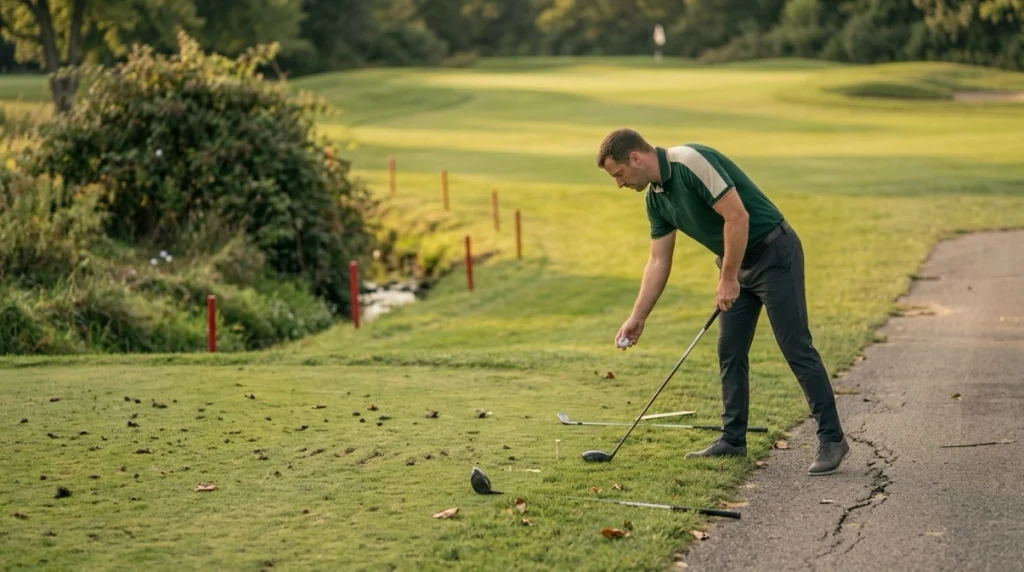
Once the basic dropping motion becomes automatic, the harder question is deciding where the relief area belongs. Different Rules use different reference points.
| Situation | Typical Reference Point | Typical Relief Area | Penalty |
|---|---|---|---|
| Cart path or ground under repair | Nearest point of complete relief | Normally one club-length | Free when relief is allowed |
| Red penalty area, lateral option | Where the ball last crossed the edge | Two club-lengths | One stroke |
| Unplayable ball, lateral option | Original ball position | Two club-lengths | One stroke |
| Stroke and distance from general area | Previous-stroke location | One club-length from the estimated spot | One stroke |
Cart paths and abnormal course conditions
Free relief can apply when an abnormal course condition interferes with your ball, intended stance, or intended swing. Common examples include immovable cart paths, temporary water, ground under repair, and certain animal holes.
The nearest point of complete relief is normally established first in the general area. From there, the usual relief area extends one club-length and cannot be nearer the hole.
Red penalty areas
A red penalty area offers lateral relief as one of its penalty-relief options. The usual reference point is where your ball last crossed the edge of the penalty area.
For lateral relief, the relief area extends two club-lengths from that reference point and cannot be nearer the hole. Taking this option costs one penalty stroke.
Unplayable balls
You may normally decide that your ball is unplayable anywhere except in a penalty area. Lateral relief uses the original ball position as the reference point.
The lateral relief area extends two club-lengths and cannot be nearer the hole. The standard lateral option costs one penalty stroke.
Stroke and distance
Stroke-and-distance relief requires one penalty stroke plus playing again from the previous-stroke location. The exact method for putting a ball back into play depends on the area where the previous stroke was made.
From the general area, bunker, or penalty area, you normally use a dropping procedure based on the estimated spot of the previous stroke. From the putting green, the procedure instead involves placing the ball on the previous spot.
Pro tip: If a relief procedure becomes confusing during competition, ask a rules official before making your next stroke whenever one is available.
Section Takeaway: The dropping motion stays largely the same, but the reference point and relief-area size change with the Rule you are using.
Frequently Asked Questions About Dropping the Ball
Why do golfers drop the ball from knee height?
The current procedure requires the ball to be released from the height of the player’s knee when standing. The knee-height method replaced the older shoulder-height procedure and helps keep relief within a defined area.
Can I use a different golf ball when taking a drop?
Yes. When taking relief under Rule 14.3, you may generally use the original ball or another ball each time you drop or place under that relief procedure.
Can my caddie drop the ball for me?
Generally, the player must make the drop. A caddie cannot simply drop the ball for the player, although specific Rules provide modifications for some formats and golfers with certain disabilities.
What happens if my dropped ball rolls closer to the hole?
The important question is whether the ball remains inside the defined relief area. If it finishes outside that area, it must be dropped again under Rule 14.3.
Can I place the ball instead of dropping if the ground is steep?
Not immediately. You normally make two correct drops first, and both must fail to remain in the relief area before the procedure changes to placing.
Does the ball need to stay exactly where it first lands?
No. The ball may bounce or roll after first touching the ground. It normally only needs to finish inside the required relief area after being dropped in the correct way.
Where should I check the official golf rules?
For competitive or unusual situations, use the current Rules published by the USGA and The R&A. The USGA is a reliable starting point for official Rules information in the United States.
Dropping the ball becomes much easier when you separate the procedure from the relief option. First determine why you are taking relief, establish the correct reference point and area, then make a legal knee-height drop.
Before your next round, remember four words: Rule, area, knee, result. That sequence will solve most everyday dropping situations before they turn into unnecessary penalties.