
Benefits of Golf: Physical, Mental, Social, and Practical Reasons to Play

Golf can look simple from a distance: hit a ball, walk toward it, and repeat until it reaches the hole. Once you begin playing, however, you quickly discover that the game challenges your body, concentration, patience, judgment, and emotional control.
The benefits of golf extend far beyond improving your score. A round can provide meaningful physical activity, time outdoors, social connection, stress relief, and a long-term skill-building challenge. Golf can also be adapted to different ages, fitness levels, schedules, and budgets.
This guide explains the main physical, mental, social, and lifestyle benefits of golf. It also covers practical limitations, common beginner mistakes, safety considerations, and when professional instruction or club fitting may be worthwhile.
Quick Answer
The main benefits of golf include increased walking and physical activity, improved balance and coordination, better concentration, reduced everyday stress, and valuable social interaction. Golf can be played competitively or casually, making it suitable for many ages and skill levels. However, proper technique, sensible equipment choices, hydration, and realistic expectations are important.
Why Golf Offers More Than Recreation
Golf combines several activities within one sport. During a round, you may walk several miles, rotate your body repeatedly, calculate distances, select clubs, manage risk, follow rules, and communicate with other players.
Unlike sports that require constant high-intensity movement, golf usually alternates between walking, preparing, swinging, and recovering. This makes the game accessible to many golfers who prefer moderate activity rather than continuous running or physical contact.
Golf is also adjustable. You can:
- Play nine holes instead of 18.
- Walk, use a push cart, or ride in a golf cart.
- Choose forward tees to reduce course length.
- Practice putting without playing a full round.
- Play recreationally or enter competitions.
- Use beginner-friendly equipment instead of advanced clubs.
These options make golf a flexible activity rather than a one-size-fits-all sport.
Physical Benefits of Golf
Golf Encourages Regular Walking
Walking is one of the clearest physical benefits of golf. A golfer who walks the course moves between tee boxes, fairways, greens, practice areas, and the clubhouse.
The R&A’s official Golf and Health overview reports that golfers commonly walk four to five miles during a regular 18-hole round. The exact distance depends on the course layout, shot accuracy, terrain, and route between holes. (Randa)
Walking the course may help improve:
- General endurance
- Cardiovascular fitness
- Daily step count
- Leg strength
- Energy expenditure
- Exercise consistency
The CDC’s adult physical activity guidelines recommend at least 150 minutes of moderate-intensity activity each week, together with muscle-strengthening activity on two or more days. Walking during golf can contribute to that weekly target, although golf should not automatically be treated as a complete fitness program. (CDC)
Using a golf cart does not remove every physical benefit. You still walk around greens, teeing areas, bunkers, practice facilities, and parking areas. However, walking the course normally provides more sustained activity.
Golf Develops Balance and Coordination
A golf swing requires coordinated movement through the feet, legs, hips, torso, shoulders, arms, and hands. Your body must remain balanced while generating speed and controlling the clubface.
Regular practice may help develop:
- Hand-eye coordination
- Rotational control
- Postural awareness
- Dynamic balance
- Lower-body stability
- Controlled weight transfer
These benefits depend on using suitable technique. Repeatedly swinging with poor posture or excessive force can place unnecessary stress on the back, wrists, elbows, shoulders, or knees.
Golf Can Support Mobility
Golf involves bending, turning, walking, reaching, and maintaining different body positions. These movements may help golfers remain active and mobile, particularly when combined with an appropriate warm-up and basic strength training.
However, a golf swing should not be painful. Sharp pain, recurring joint discomfort, numbness, or reduced movement should not be ignored. Adjusting the swing, shortening the backswing, using lighter equipment, or consulting an appropriate specialist may be necessary.
Golf Provides Moderate Rather Than Constant High-Impact Activity
Golf is generally less physically aggressive than many running or contact sports. Players can rest between shots, shorten the round, choose flatter courses, or use transportation when needed.
That does not mean every course is easy to walk. Hills, heat, wet ground, long rough, and uneven paths can make a round physically demanding. Golfers should choose courses and playing formats that match their mobility and conditioning.


Mental and Emotional Benefits of Golf

Golf Requires Concentration
Every golf shot presents a small decision-making problem. You must consider the distance, lie, wind, hazards, target, club selection, and type of shot.
This encourages focused attention. For a few moments, your mind has to move away from work, household responsibilities, and other distractions.
The concentration required in golf may help players practice:
- Staying present
- Following a routine
- Controlling impulses
- Making decisions under pressure
- Recovering after mistakes
- Separating results from preparation
Golf does not guarantee better concentration in daily life, but it creates repeated opportunities to practise it.
Time Outdoors Can Help Players Reset
Golf courses provide open space, natural light, trees, grass, water features, and a change from indoor routines. Many golfers value the calm periods between shots as much as the shots themselves.
The R&A identifies mental wellbeing and social connection among the important health-related qualities of golf. The benefit is often strongest when golfers approach the game as restorative recreation rather than another source of pressure. (Randa)
Golf Teaches Emotional Control
Even good golfers hit poor shots. A well-struck drive may land in a divot, a short putt may miss, or a good approach may receive an unlucky bounce.
Because mistakes are unavoidable, golf teaches an important lesson: you cannot control every result, but you can control your next decision.
Players gradually learn to:
- Accept imperfect outcomes
- Avoid rushing after a mistake
- Reset before the next shot
- Manage frustration
- Stay patient during slow rounds
- Keep one bad hole from affecting the entire scorecard
These habits can make golf mentally rewarding, although the learning process can also be frustrating.
Social Benefits of Golf
Golf provides long periods for conversation without requiring constant interaction. Players can talk while walking and then pause when someone prepares to hit.
A round may help people:
- Spend uninterrupted time with friends or family
- Meet players from different backgrounds
- Join leagues, clubs, or community events
- Build professional relationships
- Participate in charity tournaments
- Stay socially active later in life
Golf can also be played alone. Solo practice allows a golfer to concentrate on technique, enjoy quiet time, or complete a short round efficiently.
Fair play and etiquette matter. Respect other players, avoid distracting movement or noise, repair ball marks, replace divots where required, rake bunkers, and keep pace with the group ahead.
Golf Builds Patience and Long-Term Learning Skills
Improvement in golf is rarely immediate. A player may understand a swing concept during a lesson but need several practice sessions before performing it consistently.
That makes golf valuable for developing:
- Patience
- Realistic goal setting
- Practice discipline
- Strategic thinking
- Self-assessment
- Long-term motivation
A beginner may first aim to make reliable contact. Later goals might include reducing three-putts, avoiding penalty areas, improving wedge distance control, or breaking a scoring milestone.
Progress is easier to recognize when you measure specific skills instead of expecting every score to improve.
Benefits for Different Types of Golfers
| Golfer Type | Main Benefits | Practical Approach | Important Limitation |
|---|---|---|---|
| Complete beginner | Outdoor activity, social enjoyment, learning a new skill | Start with putting, short shots, lessons, and nine-hole rounds | Full-length courses may initially feel overwhelming |
| Intermediate golfer | Strategy, scoring improvement, competition, consistency | Track performance and practise specific weaknesses | Too many swing changes can slow progress |
| Busy golfer | Mental break and flexible recreation | Use ranges, simulators, short courses, or nine-hole rounds | Occasional practice may produce slower improvement |
| Older golfer | Walking, balance, mobility, social connection | Use forward tees, lighter clubs, push carts, or golf carts | Uneven terrain and heat require extra care |
| Fitness-focused golfer | Steps, walking endurance, outdoor movement | Walk when safe and add strength and mobility sessions | Golf alone may not provide complete strength training |
| Social golfer | Conversation, community, shared experiences | Join leagues, group clinics, or casual events | Slow play and mismatched expectations can reduce enjoyment |
Golf Can Be Enjoyed Without Expensive Equipment
One practical benefit of golf is that beginners do not need a full bag of premium clubs. A basic set containing a driver or fairway wood, hybrid, several irons, wedge, and putter is enough to begin.
A sensible starter setup may include:
- One club for tee shots
- One fairway wood or hybrid
- Two or three irons
- One wedge
- One putter
- Comfortable shoes
- Affordable golf balls
- A glove, tees, and a simple bag
Equipment quality matters, but price is not the same as suitability. A durable used set with the correct length and reasonable shaft flex can perform better for a beginner than expensive clubs designed for a fast, consistent swing.
Before buying, check used clubs for:
- Worn or hardened grips
- Bent shafts
- Loose clubheads
- Deep face damage
- Cracks in graphite shafts
- Excessive rust
- Missing or mismatched clubs
Beginner-friendly clubs typically offer larger clubfaces, more perimeter weighting, and easier launch. Advanced players may prefer equipment that provides greater control but less forgiveness.
The PGA of America’s guidance for golfers taking up the game recommends finding suitable instruction and choosing clubs that match the player’s body type, goals, and budget. (PGA of America)
Expert Tip:
Spend money on one introductory lesson before buying an expensive full set. A professional can identify basic length, shaft, grip, and setup needs before you make a larger equipment investment.
Golf Can Encourage Better Lifestyle Habits
Golf often creates a reason to schedule outdoor activity. A golfer may begin walking more, arriving early to warm up, drinking more water, or improving flexibility to play comfortably.
The game may also encourage travel. Players can experience public courses, resort courses, parkland layouts, links-style courses, executive courses, and par-three facilities.
However, the lifestyle benefits depend on your habits. Heavy meals, excessive alcohol, poor hydration, limited sleep, and riding every possible distance may reduce the physical value of the activity.
How to Get More Benefits From Golf
1. Begin With Shorter Sessions
Start with 30–60 minutes at a practice facility or play nine holes. This reduces fatigue and allows you to focus on learning.
2. Walk When Appropriate
Walk the course when your health, weather, course rules, and terrain allow it. A push cart can reduce the strain of carrying a bag.
3. Warm Up Before Full Swings
Begin with gentle movement, short wedge shots, and controlled half-swings. Avoid stepping out of the car and immediately hitting drivers at maximum speed.
4. Use the Correct Tees
Choose tees based on your comfortable playing distance, not age, gender, or ego. Playing a suitable course length improves pace, decision-making, enjoyment, and scoring opportunities.
5. Practise the Short Game
Putting, chipping, and pitching require less physical effort than repeated driver swings and can quickly improve scoring.
6. Track Simple Performance Measures
Instead of recording only your final score, track:
- Fairways or playable tee shots
- Penalty strokes
- Greens reached
- Chips that finish on the green
- Number of putts
- Three-putts
- Poor decisions
This helps separate technical problems from strategic mistakes.
Limitations and Safety Considerations
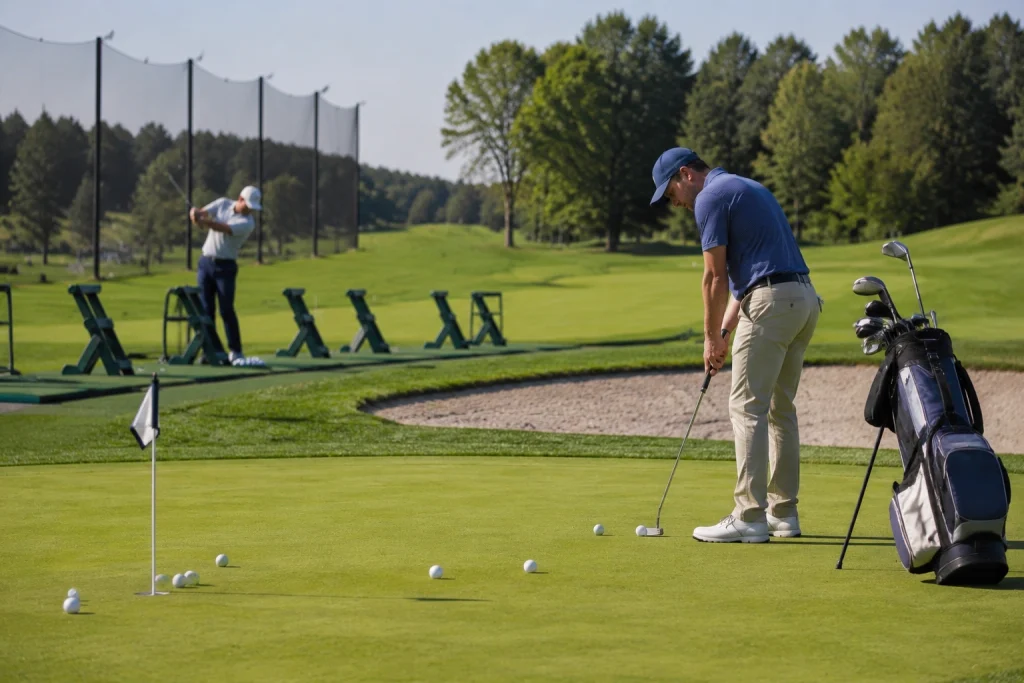
Golf offers many advantages, but it also has limitations.
Time Commitment
An 18-hole round may take several hours. Travel, warm-up, and waiting time add to the commitment. Nine-hole courses, par-three facilities, simulators, and practice sessions are better options for limited schedules.
Cost
Green fees, equipment, lessons, balls, clothing, and transportation can become expensive. Begin with public facilities, used clubs, affordable balls, and group lessons before committing to premium options.
Weather Exposure
Golfers may face heat, cold, wind, rain, and strong sunlight. Wear appropriate footwear, use sunscreen, carry water, and follow course warnings.
The USGA advises golfers and spectators to walk carefully on uneven surfaces, stay hydrated, and use sun protection during extended time on the course. (USGA)
Overuse and Technique-Related Injuries
Hitting too many full swings, practising on hard mats, gripping too tightly, or using clubs that do not fit can cause discomfort.
Stop practising when pain changes your swing. Continuing to compensate may create additional problems.
Frustration
Golf is difficult. Unrealistic expectations can turn an enjoyable activity into a stressful one. Beginners should measure progress through contact, confidence, course management, and enjoyment—not only score.
When to Get Help From a Golf Pro or Fitter
Professional help is valuable when a problem cannot be solved through simple practice.
Consider working with a golf professional when:
- You frequently miss the ball or strike the ground first.
- Your shots curve severely in one direction.
- You do not understand grip, posture, alignment, or ball position.
- Practice is making your results worse.
- You experience discomfort during or after swinging.
- You want to build a reliable practice plan.
- You are preparing to play on a course for the first time.
Consider a club fitting when:
- Your clubs appear too long or too short.
- You cannot launch the ball with reasonable contact.
- Your shafts feel unusually heavy, soft, or difficult to control.
- Your grips are uncomfortable or the wrong size.
- Your swing has become reasonably repeatable.
- You plan to make a significant equipment purchase.
A beginner does not always need a complete professional fitting immediately. A basic assessment of club length, shaft weight, set composition, and grip size may be enough at first.
Common Mistakes Golfers Should Avoid
- Buying advanced clubs too early: Small, less-forgiving clubheads may make learning unnecessarily difficult.
- Trying to swing at maximum speed: Controlled contact is more useful than uncontrolled distance.
- Copying several instructors at once: Conflicting advice can create confusion.
- Ignoring putting and chipping: Short-game shots make up a large part of most recreational scores.
- Playing tees that are too long: This increases difficulty, slows play, and reduces enjoyment.
- Skipping the warm-up: Full-speed swings with cold muscles may reduce control and increase discomfort.
- Using damaged or poorly fitted equipment: Worn grips and unsuitable club specifications can affect consistency.
- Focusing only on score: Early progress should also include better contact, fewer penalties, improved pace, and greater confidence.
- Ignoring etiquette: Slow play, unrepaired damage, noise, and unsafe hitting can affect everyone on the course.
- Playing through pain or dangerous weather: Health and safety should take priority over finishing a round.
FAQs
Is golf good exercise?
Golf can provide useful moderate physical activity, especially when you walk the course. Swinging, carrying or pushing equipment, and moving over varied terrain also require coordination and balance. However, golf should be combined with strength, mobility, and other aerobic activity for a more complete fitness routine.
Can golf help reduce stress?
Many golfers find that outdoor time, focused decision-making, social interaction, and separation from daily routines help them feel calmer. The effect depends on your approach. Unrealistic expectations and excessive focus on scoring may increase frustration.
Is golf suitable for older adults?
Golf can be adapted for older players through forward tees, nine-hole rounds, lightweight clubs, push carts, golf carts, and shorter swings. Course terrain, weather, balance, and existing physical limitations should still be considered.
Do I need to walk 18 holes to benefit from golf?
No. Nine-hole rounds, short courses, walking selected holes, range sessions, and putting practice can all provide benefits. Choose an activity level that is safe and sustainable.
Is golf an expensive sport to start?
It can be expensive, but it does not have to be. Used clubs, beginner sets, public courses, driving ranges, group lessons, and affordable golf balls can reduce the starting cost.
Can golf improve concentration?
Golf repeatedly asks players to assess conditions, choose a target, follow a routine, and commit to a shot. This can help practise focused attention and emotional control, although improvement requires deliberate habits.
How often should a beginner play or practise?
One or two focused sessions per week can be enough to build basic skills. Short, structured practice is usually better than occasionally hitting a large number of balls without a goal.
Conclusion
The benefits of golf include physical activity, outdoor recreation, improved coordination, focused decision-making, emotional discipline, and meaningful social connection. The game can be adapted to different ages, schedules, physical abilities, and levels of ambition.
Golf is not a complete exercise program, and it can require time, money, patience, and proper technique. The best results come from starting gradually, choosing suitable tees and equipment, practising with a clear purpose, and respecting safety and etiquette.
Begin with a short practice session, a nine-hole round, or an introductory lesson. Focus on comfortable contact and enjoyment before distance or score. A sensible start will help you gain the long-term benefits of golf without creating unnecessary cost, frustration, or injury.