
Golf Pace of Play: How to Play Faster Without Feeling Rushed

Quick Answer
Golf pace of play means completing each shot, hole, and round without unreasonable delay. Most golfers can improve it by preparing before their turn, using ready golf, limiting ball searches, and keeping pace with the group ahead.
Six ways to maintain a good pace
- Prepare early: Check your yardage and choose a club while other golfers play.
- Play when ready: Safely play out of turn during casual stroke play when it saves time.
- Watch every shot: Track each ball until it stops or note a clear reference point.
- Use carts efficiently: Drop one golfer near their ball before driving to the other ball.
- Keep moving: Walk promptly between shots without rushing your swing or routine.
- Stay in position: Follow the group ahead instead of judging your pace by the group behind.
A useful timing target
- Make each stroke within 40 seconds after you can play without interference or distraction—and usually sooner.
Golf feels better when the group moves steadily and nobody feels pushed. I’ve found that the biggest time savings happen between shots, not during the swing itself.
This guide explains golf pace of play, ready golf, common delays, and practical ways to finish comfortably. The advice works for beginners, regular weekend players, and mixed-skill groups.
In This Guide
What Does Pace of Play Mean in Golf?
Golf pace of play is the speed at which a group completes its round while maintaining position on the course. It includes preparation, shot time, walking, ball searches, and movement between holes.
A good pace doesn’t mean running or swinging before you’re comfortable. It means removing delays that add no value to your shot.
Pace is measured by position, not pressure
Your group is normally in position when it follows the group ahead at a reasonable distance. An empty hole ahead often signals a pace problem, even when nobody behind is waiting.
A slow group creates a chain reaction. Every following group may wait on tee shots, approach shots, and putts.
- On the tee: Have your ball, tee, glove, and club ready.
- In the fairway: Start checking the lie, distance, wind, and target before your turn.
- Around the green: Carry the likely wedge and your putter when leaving a cart.
- After the hole: Clear the green before recording scores.
Prompt play is part of the Rules of Golf
Rule 5 of the Rules of Golf says a round should be played at a prompt pace. Players should prepare in advance and move promptly between shots.
The recommended maximum is 40 seconds once a player can play without interference or distraction. Most routine shots should require less time.
That guidance isn’t a demand for a hurried swing. You can keep the same tempo and still remove wasted time before and after it.
Section Takeaway: Good pace comes from efficient preparation and movement. Your swing itself should remain calm and committed.
How Long Should a Round of Golf Take?

A standard 18-hole round often takes about four hours, but there is no universal time for every course. Group size, course design, walking distances, weather, and congestion all affect the total.
The course’s published pace or “time par” should be your primary target. A time par assigns an expected completion time to each hole or group of holes.
| Format | Practical Time Range | Main Pace Factors |
|---|---|---|
| 9 holes | About 1¾–2¼ hours | Group size, tee spacing, course traffic |
| 18-hole twosome | About 3–3¾ hours | Open course, walking distance, skill level |
| 18-hole foursome | About 4–4½ hours | Course policy, difficulty, cart rules |
| Tournament round | Often 4½ hours or longer | Field size, rulings, scoring format, course setup |
These ranges are planning guides, not official limits. Always follow the scorecard, starter, committee policy, or posted pace for that course.
Why course difficulty changes round time
Long forced carries, thick rough, blind landing areas, and fast greens can slow play. Long walks between a green and the next tee also increase the total.
A higher course rating or slope rating may suggest greater playing difficulty, but neither number directly predicts round length. Slope rating compares how difficult a course is for a bogey golfer relative to a scratch golfer.
Cart-path-only conditions can add considerable walking. Players should carry several clubs to avoid repeated trips to the cart.
What Causes Slow Play on a Golf Course?
Slow play usually comes from many small delays rather than one golfer’s long routine. Course congestion can also make an efficient group wait on nearly every hole.
In my own weekend rounds, the worst delays often begin when everyone watches one shot before starting any preparation. That habit can turn four quick routines into four separate waiting periods.
Common player-related delays
- Late preparation: A golfer starts measuring distance only after the previous player finishes.
- Excessive practice swings: Several full rehearsals add time and can create tension.
- Poor ball tracking: Nobody watches where an offline shot finishes.
- Cart inefficiency: Both riders wait at every ball instead of preparing separately.
- Long green routines: Players wait until their turn before reading a putt.
- Scorecard delays: The group remains beside the green while recording scores.
- Wrong tees: A course plays much longer than the group can manage comfortably.
Course and management factors
Players aren’t responsible for every slow round. Tight starting intervals can place more groups on the course than its practical capacity supports.
The R&A’s pace-of-play resources identify management practices, course setup, and player behavior as connected factors. Improving only one area may not solve recurring congestion.
- Tee-time spacing: Short intervals can cause delays before groups reach the turn.
- Course setup: Severe hole locations and deep rough increase playing and search time.
- Insufficient guidance: Golfers may not know the course’s expected pace.
- Routing bottlenecks: Reachable par 5s and short par 4s can create backups.
- Weather restrictions: Cart-path-only rules and wet rough slow movement.
Section Takeaway: Players should fix avoidable delays, but courses must also manage starting intervals, setup, and expectations.


How Can You Improve Your Golf Pace of Play?
You can play faster without shortening your normal shot routine. Complete safe preparation while other players are hitting, then begin promptly when the way is clear.
Before the round
- Arrive early. Check in, organize your bag, and reach the first tee before your assigned time.
- Choose suitable tees. Pick a yardage that lets your group reach most greens with realistic clubs.
- Read local rules. Note cart restrictions, drop zones, and course-specific pace expectations.
- Carry useful supplies. Keep spare balls, tees, a ball marker, and a divot tool accessible.
Trying a tougher tee can be enjoyable, but it shouldn’t force repeated waits or searches. Move forward when the course length overwhelms the group.
From tee to green
- Watch the full flight: Use a tree, bunker, or yardage marker as a reference for offline shots.
- Move toward your ball: Do so when it is safe and you won’t distract another golfer.
- Check distance early: Use markers, GPS, or a permitted rangefinder before your turn.
- Limit rehearsals: One purposeful practice swing is usually enough for a routine shot.
- Take several clubs: This matters when walking from a cart path or approaching the green.
- Hit a provisional ball: Use one when your original may be lost outside a penalty area or out of bounds.
A provisional ball can prevent a long return to the previous spot. Announce it clearly before playing it.
Pro tip: A certified PGA instructor can help simplify an overly long routine without disrupting your rhythm or confidence.
On and around the putting green
Place your bag or cart toward the next tee before you putt. That prevents backtracking after the hole.
- Read your line while others putt, without moving or distracting them.
- Repair your ball mark before your turn when doing so is safe.
- Finish a short putt when appropriate instead of marking repeatedly.
- Carry the flagstick efficiently based on the group’s preference.
- Record scores after reaching the next teeing area.
The USGA pace-of-play guidance recommends planning shots early, moving promptly, and using shared carts efficiently. These habits save time without changing how you swing.
Section Takeaway: Prepare early, move efficiently, and keep your normal swing tempo. Faster golf should feel organized rather than rushed.
What Is Ready Golf, and Is It Allowed?
Ready golf means safely playing when you’re ready instead of always following the traditional order. It is encouraged in stroke play when it saves time and doesn’t endanger, distract, or interfere with anyone.
Under traditional order, the player farthest from the hole normally plays first. The golfer with the lowest score on the previous hole usually has the honor on the next tee.
Examples of safe ready golf
- A shorter hitter plays while a longer hitter waits for the landing area to clear.
- A ready golfer tees off while the player with the honor prepares.
- A player hits before helping another golfer search for a ball.
- Someone holes a short putt instead of marking and waiting again.
- A golfer plays while another player rakes a bunker after a shot.
Ready golf doesn’t give anyone permission to hit across another player. Safety and awareness always come first.
Ready golf versus match play
| Situation | Stroke Play | Match Play |
|---|---|---|
| Playing out of turn | Generally no penalty; safe ready golf is encouraged | The opponent may cancel the stroke promptly |
| Agreement to save time | Common in casual play | Order can affect strategy, so use caution |
| Best practice | Communicate and play when safe | Respect the proper order of play |
The distinction matters during competition. Check the event’s pace policy and ask a rules official when you’re unsure.
What Should You Do When Your Group Falls Behind?
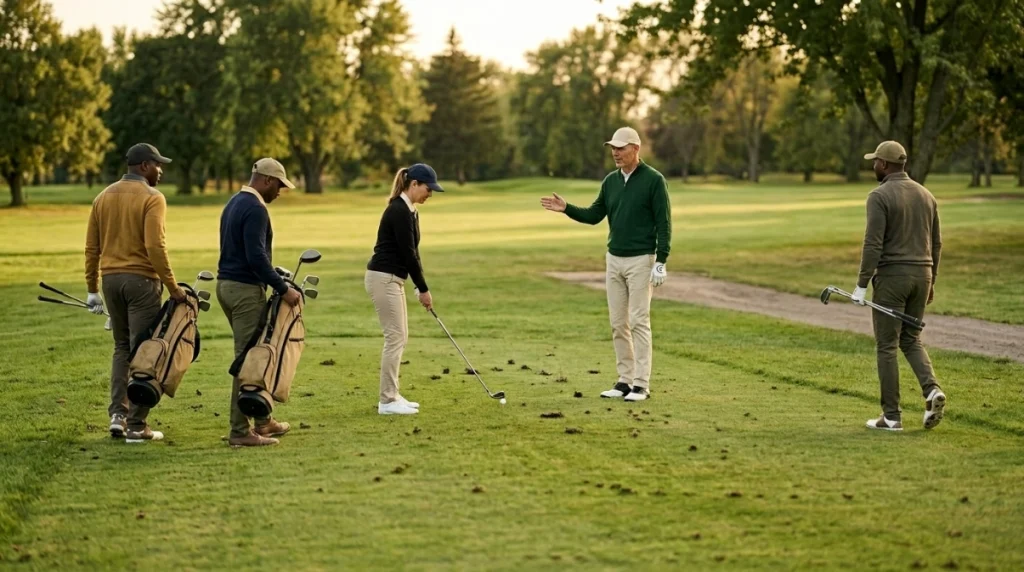
Respond early when a full hole opens ahead. Ask everyone to prepare sooner, use ready golf, and move directly toward the next safe position.
Don’t blame one golfer in front of the group. A calm, specific reminder works better than criticism.
A simple recovery plan
- Confirm the gap: Check your position relative to the group ahead.
- Tell the group: Say, “We’ve lost some ground; let’s play ready golf.”
- Split cart duties: Drop one player with clubs, then drive to the second ball.
- Reduce delays: Limit practice swings and prepare putts before your turn.
- Pick up when allowed: Use the competition or group’s maximum-score policy.
- Let others through: Invite a faster group through when space exists ahead.
How beginners can keep up
Beginners don’t need low scores to maintain pace. They need simple routines and permission to move on after a difficult hole.
- Play from forward tees or start selected holes closer to the green.
- Use a provisional ball when the original may be lost.
- Pick up after reaching the agreed maximum score.
- Drop near another player for casual practice rounds.
- Save repeated practice swings for the driving range.
As of 2026, the Rules still encourage prompt play and safe ready golf. Individual courses and competitions may enforce more detailed timing policies.
Section Takeaway: Address a lost position quickly and respectfully. Beginners can keep pace through simpler formats without feeling unwelcome.
Frequently Asked Questions
Is four hours a good pace for 18 holes?
Four hours is a reasonable target for many 18-hole rounds, especially for a foursome on an open course. The course’s posted time par takes priority because layout, traffic, weather, and cart restrictions can change the expected time.
What is the 40-second rule in golf?
The Rules recommend making a stroke within 40 seconds after you can play without interference or distraction. Golfers are usually expected to play sooner, while committees may adopt specific pace policies and penalties for competitions.
Can you play ready golf in stroke play?
Yes. Safe and responsible ready golf is encouraged in stroke play when it saves time and doesn’t endanger, distract, or interfere with another player.
Should you keep up with the group ahead or stay ahead of the group behind?
Your correct position is normally behind the group ahead. A large empty gap in front can show that your group has fallen out of position, even when the following group isn’t waiting yet.
How long can golfers search for a lost ball?
The permitted search time is three minutes from when you or your caddie begins searching. Playing a provisional ball when appropriate can prevent a lengthy return to the original spot.
Does letting a group play through fix slow play?
It helps when your group has lost position and open space exists ahead. It won’t solve a course-wide backup when several groups are already waiting on every shot.
How can a beginner avoid holding up the course?
Use suitable tees, prepare before your turn, watch each ball, and limit practice swings. In casual play, agree on a maximum score and pick up when a hole stops being productive.
Better golf pace of play starts with awareness, not speed. Prepare while others play, move promptly between shots, and protect the rhythm of the whole course.
Try two changes during your next round: play safe ready golf and record scores at the next tee. Those small habits can make the day smoother for everyone.