
9 Golf Stance Mistakes That Hurt Your Swing and Ball Striking

Quick Answer
The most common golf stance mistakes are poor alignment, incorrect stance width, misplaced ball position, excessive knee bend, bad hip posture, uneven weight, and too much tension. Correct these setup errors before changing your swing, and consider working with a PGA Coach if your contact remains inconsistent.
Check These Setup Problems First
- Alignment: Your feet, hips, and shoulders may point away from the intended target line.
- Stance width: A stance that is too wide restricts rotation, while a narrow stance reduces stability.
- Ball position: Moving the ball too far forward or back changes contact, launch, and starting direction.
- Posture: Squatting, rounding excessively, or standing too upright makes the club harder to deliver consistently.
- Balance: Too much pressure on your heels or toes forces compensations during the swing.
- Tension: Locked knees and tight arms restrict speed, rotation, and natural movement.
Fast Verification Tip
- Record your setup from face-on and down-the-line, then check alignment, posture, ball position, and balance before analyzing the swing.
I’ve watched golfers rebuild their backswings when the real problem started before the club moved. A small stance error can quietly cause fat shots, slices, hooks, and weak contact.
This guide explains the biggest golf stance mistakes, what each one does to ball flight, and how to correct it. The goal is a balanced setup you can repeat with every club.
In This Guide
What Is a Correct Golf Stance?
A correct golf stance is an athletic, balanced address position that lets you rotate without losing control. Your exact setup should change slightly with the club and shot.
You shouldn’t feel frozen or forced. You should feel ready to move in either direction while remaining centered.
Definition: A golf stance is the position of your feet, legs, hips, spine, shoulders, and weight when addressing the ball.
The foundations of a sound setup
Start with the clubface aimed at your chosen target. Build your body position around that reference rather than aiming your feet first.
- Feet: Set them at a width suited to the club and required swing length.
- Knees: Add a small, comfortable amount of flex without squatting.
- Hips: Hinge forward from the hip joints while keeping your backside behind your heels.
- Arms: Let them hang naturally beneath your shoulders.
- Weight: Feel pressure through the middle of each foot rather than the toes or heels.
- Upper body: Stay relaxed enough to turn freely.
The ball position also changes with the club. A mid-iron often starts near the center, while longer clubs move progressively toward the lead foot.
Driver normally sits near the inside of the lead heel. That forward position helps the club meet the ball later in its swing arc.
Stance versus alignment
Stance and alignment are related, but they aren’t identical. Stance describes your address position, while alignment describes where the clubface and body point.
The clubface generally aims at the target. Your feet, knees, hips, and shoulders should look roughly parallel to that target line for a standard shot.
The USGA treats alignment as a skill the player must perform. That matters because a sound stance must help you aim without outside assistance during play.
Section Takeaway: A correct stance feels athletic, centered, and adaptable. Build it from the clubface backward instead of placing your feet first.
How Do Alignment and Ball-Position Mistakes Affect Your Shots?
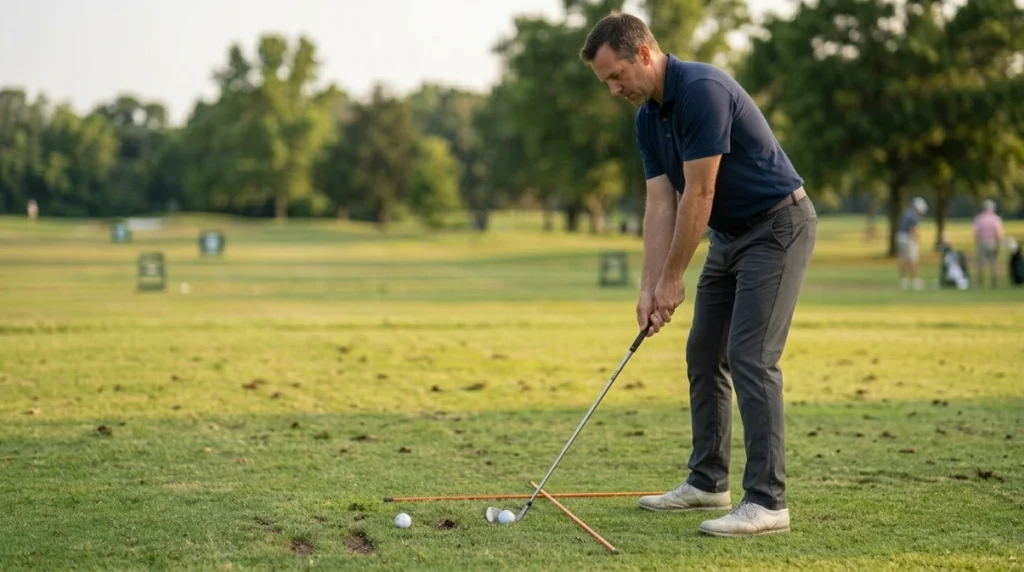
Alignment and ball-position mistakes change the club’s path, face direction, and contact point. They can create poor shots even when your swing motion is functional.
Mistake 1: Aiming your body directly at the target
Many golfers point their toes at the target while aiming the clubface there too. That setup often leaves the entire body aimed right for a right-handed player.
Think of two railway tracks. The clubface sits on the target line, while your body runs along a parallel line beside it.
- Common result: Pushes, compensating pulls, or an outside-in swing path.
- Simple check: Place one alignment stick along the target line and another beside your toes.
- Correction: Aim the clubface first, then organize your feet and body parallel to it.
Mistake 2: Open or closed shoulders
Your feet can appear square while your shoulders point elsewhere. This usually happens because golfers reach for the club or repeatedly look toward the target.
Open shoulders can encourage a leftward path for a right-handed golfer. Closed shoulders may send the path too far right.
Hold a club across your shoulders after taking your stance. Compare that line with the stick placed beside your feet.
Mistake 3: Using one ball position for every club
Ball position controls where the club meets the ball along its arc. One fixed position rarely suits wedges, irons, fairway woods, and driver equally well.
| Club or Shot | Useful Starting Position | Typical Stance Width |
|---|---|---|
| Wedge | Center or slightly forward of center | Narrower than shoulder width |
| Mid-iron | Around one ball forward of center | About shoulder width |
| Long iron or hybrid | Two balls forward of center | Around shoulder width |
| Fairway wood | Inside the lead heel | Slightly wider than shoulder width |
| Driver | Near the inside of the lead heel | Wider than shoulder width |
These are starting points, not universal measurements. Your delivery pattern, body proportions, lie, and intended trajectory may require small adjustments.
A ball too far forward often produces thin contact, pulls, or glancing strikes. A ball too far back can produce low shots, pushes, or steep divots.
Section Takeaway: Check clubface aim, body alignment, and ball position together. A swing change cannot reliably overcome a different setup on every shot.
Is Your Golf Stance Too Wide or Too Narrow?
A stance that is too wide restricts rotation and pressure movement. A stance that is too narrow can reduce balance and make a full swing unstable.
Mistake 4: Standing too wide
A broad base may feel powerful, but excessive width can lock your lower body. It becomes harder to turn into the trail hip or reach a balanced finish.
- Common signs: Restricted hip turn, swaying, heavy shots, or finishing with weight behind the ball.
- Best adjustment: Move each foot inward by half a shoe width and retest your balance.
- Useful feeling: Your pelvis should rotate without forcing either knee sideways.
I often see this mistake after golfers try to add driving distance. They widen their feet, swing harder, and lose the rotation that could create speed.
Mistake 5: Standing too narrow
A narrow stance can work for chips and controlled wedge shots. It becomes less reliable when a longer club creates more speed and rotational force.
- Common signs: Falling toward the target, stepping after impact, or inconsistent low-point control.
- Best adjustment: Widen gradually until you can turn and finish without losing balance.
- Useful feeling: Your finish should remain stable until the ball lands.
Use the width table as a baseline, then test it. Your stance should support the swing you intend to make.
Pro tip: Ask a certified instructor to check your hip mobility and stance width if turning causes pain or physical strain.


Which Posture Mistakes Ruin a Golf Swing?
Poor posture moves your body and arms away from their natural working positions. The swing then needs compensations to return the club to the ball.
Mistake 6: Squatting instead of hinging
Some golfers bend deeply at the knees while keeping their torso upright. This places the hips under the body and limits space for the arms.
Hinge from your hips first. Add only enough knee flex to feel balanced and ready.
- Stand tall with your feet at the required width.
- Place your fingers in the creases at the front of your hips.
- Push those creases backward while tipping your chest forward.
- Soften your knees without lowering into a squat.
- Let your arms hang before taking your grip.
Mistake 7: Standing too upright or reaching
Standing too upright can crowd your hands and raise the club’s handle. Standing too far away makes you reach and shifts pressure toward your toes.
Your arms should hang naturally beneath the shoulder area. They shouldn’t feel pinned against your legs or stretched toward the ball.
- Too close: The hands feel trapped, and heel strikes may appear.
- Too far: Balance moves forward, and toe strikes become more likely.
- Neutral distance: The arms hang freely with room to swing past the body.
Mistake 8: Forcing a rigid spine
“Keep your back straight” is often misunderstood. Some golfers overarch the lower back and pull their shoulders unnaturally behind them.
A neutral, comfortable posture works better than a military pose. Your upper back may look slightly rounded when your arms hang naturally.
The international rules and development resources available through The R&A are useful reminders that golf serves many body types. There isn’t one picture-perfect stance for every player.
Section Takeaway: Hinge from the hips, soften the knees, and let the arms hang. Good posture creates room without forcing the body into a rigid shape.
Are Poor Balance and Tension Causing Your Mishits?
Yes. Poor pressure distribution and excessive muscle tension can disrupt contact before the backswing begins.
Mistake 9: Starting on your toes or heels
Pressure too far toward the toes often makes you stand up during the downswing. Pressure in the heels can push your hips toward the ball.
Start with pressure through the middle of each foot. You should feel the ground beneath the balls of your feet and your heels.
- Toe-heavy setup: Often creates reaching, early extension, and toe contact.
- Heel-heavy setup: Can limit athletic movement and create heel contact.
- Centered setup: Makes small balance corrections easier throughout the swing.
For most standard iron shots, begin close to balanced between the lead and trail foot. Shot type and club selection can change that distribution.
Excess tension is a hidden stance mistake
Tension isn’t visible like foot position, but it changes how your stance functions. Tight hands, locked knees, and raised shoulders restrict movement.
Before swinging, breathe out and soften your elbows. Maintain enough grip pressure to control the club without squeezing it.
Confusing a weight shift with a sway
A functional swing moves pressure while the body rotates. A sway pushes the upper body laterally away from the target without useful rotation.
From a balanced stance, feel your trail hip turn behind you. Don’t slide the outside of your trail knee beyond your trail foot.
When practicing, follow normal facility rules and respect the playing guidance published by organizations such as the PGA Tour. Always leave enough space between yourself and nearby golfers.
Pro tip: Persistent balance loss may come from mobility limits or a misunderstood swing pattern. A certified coach can identify the cause safely.
How Can You Fix Your Golf Stance?
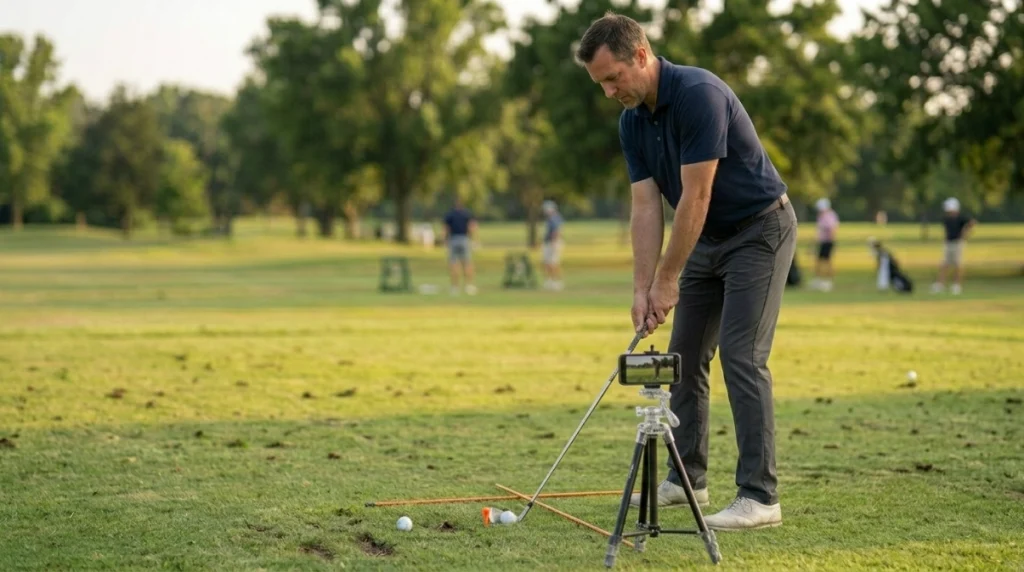
Fix your stance by checking one setup variable at a time. A repeatable five-minute routine works better than changing several positions together.
Use this six-step stance check
- Aim the clubface: Choose a small intermediate target a few feet ahead of the ball.
- Set ball position: Match its position to the club and intended shot.
- Place your feet: Use enough width for stability without blocking rotation.
- Build posture: Hinge from the hips, soften the knees, and let the arms hang.
- Center your pressure: Avoid settling completely into your toes or heels.
- Remove tension: Exhale, soften your shoulders, and make one smooth rehearsal.
Try the alignment-stick drill
Place one stick outside the ball, pointing toward the target. Put another parallel to it beside your toes.
Hit five balls while checking only alignment. Remove the sticks and hit another five using the same visual picture.
Use a mirror for posture
Take your normal address without a ball. Check your posture from face-on and down-the-line.
- Confirm that your knees remain softly flexed.
- Check that your hips sit behind your heels.
- Let your arms hang rather than reaching.
- Make sure your head isn’t forced downward.
Record your setup before your swing
Place a phone around hand height when filming down-the-line. From face-on, position it approximately level with your hands and opposite your body’s center.
Record three normal shots without trying to pose. Your natural setup matters more than a corrected position held only for the camera.
Change the setup before changing the motion
I use a simple test whenever contact suddenly disappears. I check the target line, ball position, and distance from the ball before touching my swing.
That order has saved many practice sessions. Setup errors are easier to correct and verify than moving swing positions.
Section Takeaway: Build every stance in the same order and test one correction at a time. Your ball flight and strike pattern should decide whether the change works.
Frequently Asked Questions
What is the most common golf stance mistake?
Poor alignment is one of the most common stance mistakes. Golfers often aim their body at the target, leaving the clubface and body on conflicting lines. Aim the clubface first, then set your feet, hips, and shoulders roughly parallel to the target line.
How wide should my golf stance be?
Use a narrower stance for short wedges and a wider stance for longer clubs. Shoulder width is a practical starting point for mid-irons. Driver usually needs extra width, but your hips must still rotate freely.
Where should the ball be in my stance?
Start near the center for wedges and move the ball progressively forward with longer clubs. A driver commonly sits near the inside of the lead heel. Adjust these positions slightly according to your strike pattern and intended shot.
Can a bad stance cause a slice?
Yes. Open shoulders, poor aim, excessive reaching, or a ball positioned too far forward can contribute to a slice. However, grip, clubface control, and swing path also matter, so diagnose the setup before assuming it is the only cause.
Why do I lose balance during my golf swing?
Your stance may be too narrow, too wide, or weighted toward the toes or heels. Excess effort can also pull you off balance. Make controlled swings and hold your finish until the ball lands to test your stability.
Should my knees be bent in a golf stance?
Your knees should have a small, comfortable amount of flex. Deep knee bend creates a squat and can restrict rotation. Locked knees are also unhelpful because they make the stance rigid and reduce athletic movement.
Should every golfer use the same stance?
No. Core principles remain similar, but stance width, posture, ball position, and foot flare depend on mobility, body proportions, club choice, and shot shape. Use standard positions as starting points rather than rigid rules.
Build a Better Stance Before Rebuilding Your Swing
Your stance cannot guarantee a perfect shot, but it gives the swing a fair chance. Correct alignment, ball position, width, posture, balance, and tension before making a technical overhaul.
Choose one mistake that matches your usual miss and test its correction during a short range session. If the pattern continues, have a qualified instructor evaluate both your setup and club delivery.