
Overlapping Grip: How the Vardon Grip Works and Who Should Use It

Quick Answer
The overlapping grip, also called the Vardon grip, connects your hands by resting the trail-hand pinky over the gap between the lead-hand index and middle fingers. It can create a unified, comfortable hold without physically locking the hands together. If you’re learning how to hold the club, the PGA of America is also a useful starting point for professional instruction.
How to form an overlapping grip
- Set the lead hand: Place the club mainly through the fingers rather than deep in the palm.
- Add the trail hand: Bring it onto the grip below the lead hand.
- Overlap the pinky: Rest it over the gap between the lead-hand index and middle fingers.
- Join the hands: Let the lead thumb sit comfortably beneath the trail-hand palm.
- Check pressure: Hold firmly enough for control without squeezing the club.
Best quick test
- Hit short shots with overlap, interlock, and 10-finger grips. Keep the style that gives you the best combination of comfort, control, and consistent clubface contact.
The overlapping grip looks simple, yet the way those two hands connect can influence how comfortable and repeatable your swing feels.
I’ve found that golfers often focus on the overlapping pinky while overlooking hand placement and grip pressure. This guide covers the entire setup, including when overlap makes sense and when another grip may suit you better.
In This Guide
- What Is an Overlapping Grip in Golf?
- How Do You Use the Overlapping Grip Correctly?
- Overlapping Grip vs. Interlocking Grip: What’s the Difference?
- Who Should Use an Overlapping Golf Grip?
- What Overlapping Grip Mistakes Cause Problems?
- How Should You Practice the Overlapping Grip?
- Overlapping Grip FAQ
- Final Takeaway
What Is an Overlapping Grip in Golf?
An overlapping grip is a golf grip in which the pinky of the trail hand rests over the lead hand. It is commonly known as the Vardon grip, after Harry Vardon helped popularize the technique.
For a right-handed golfer, the right pinky typically rests over the space between the left index and middle fingers. A left-handed golfer reverses those positions.
Definition: The overlapping grip describes how your two hands connect. It does not describe whether your overall hand position is strong, neutral, or weak.
Those terms refer to hand rotation around the handle. They are separate from overlap versus interlock.
- Overlap: Trail pinky rests over the lead hand.
- Interlock: Trail pinky and lead index finger hook together.
- 10-finger: All 10 fingers contact the club without overlapping or interlocking.
That distinction matters. Changing from overlap to interlock doesn’t automatically correct a slice, hook, or poor strike.
Clubface control depends on many factors. Your hand orientation, wrist motion, swing path, strike location, and timing all play roles.
Why is it called the Vardon grip?
Harry Vardon’s name became closely associated with the overlap as the technique spread through competitive golf. The grip is therefore commonly called either the Vardon grip or overlapping grip.
The modern setup is easy to recognize because the hands visibly blend together rather than sitting separately.
Section Takeaway: The overlap describes the connection between your hands, not your grip strength or hand rotation. Treat those as separate setup choices.
How Do You Use the Overlapping Grip Correctly?
Build the overlapping grip from the lead hand upward. Don’t start by forcing the pinky into a particular position.
A good connection should feel secure without creating tension in your fingers, wrists, or forearms.
Step 1: Position your lead hand
Hold the club in front of you and place the handle diagonally through the fingers of your lead hand.
For most conventional full-swing grips, you don’t want the handle buried deeply through the center of the palm.
Step 2: Close the lead hand
Wrap your fingers around the handle. Place the thumb comfortably down the grip rather than stretching it excessively.
Your exact hand rotation will depend on your swing and instruction plan.
Step 3: Add the trail hand
Slide the trail hand onto the lower portion of the grip. Let its palm cover the lead thumb naturally.
The two hands should begin to feel like a connected unit.
Step 4: Place the trail-hand pinky
Rest the trail pinky over the junction between your lead index and middle fingers. Some golfers sit it slightly more on the index finger.
Comfort matters more than forcing your hands into a picture-perfect pose.
Step 5: Check your pressure
A common mistake is squeezing harder because the overlap initially feels less secure. Excess pressure can add unwanted tension to the hands and forearms.
- Hold the club securely enough that it won’t move during the swing.
- Avoid crushing the handle with your palms.
- Keep pressure consistent from address through the motion.
- Pay special attention to tension in the thumb and index finger.
The Golf Digest instruction library is another useful reference when comparing conventional grip styles and hand positions.
Pro tip: If changing your grip alters your ball flight dramatically or creates hand discomfort, work with a certified PGA professional rather than making repeated compensations on your own.
Section Takeaway: Build the overlap after establishing sound lead- and trail-hand placement. The pinky connection should support the grip, not become the entire grip.
Overlapping Grip vs. Interlocking Grip: What’s the Difference?
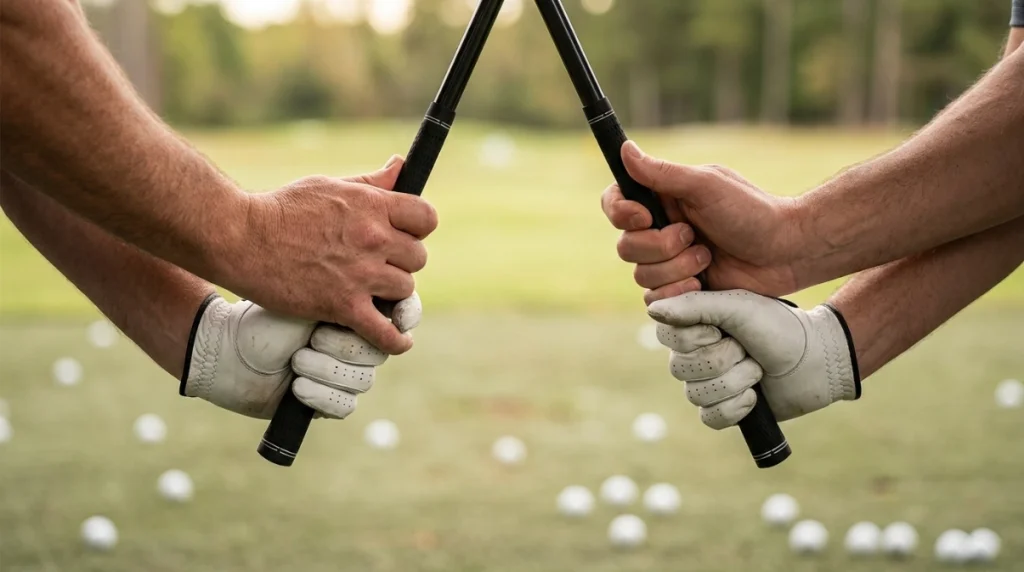
The main difference is how the lead and trail hands connect. Overlap places one finger over the other hand, while interlock physically links two fingers.
Neither method is automatically better. Both are established ways to hold a golf club.
| Grip Style | Hand Connection | Typical Feel | Worth Trying If |
|---|---|---|---|
| Overlap | Trail pinky rests over lead hand | Connected without locking fingers | The overlap feels natural and secure |
| Interlock | Trail pinky links with lead index finger | Hands feel closely locked together | Your hands tend to separate with overlap |
| 10-Finger | No overlap or interlock | All fingers contact the handle | Overlap and interlock both feel awkward |
Does the interlock give more control?
It can feel more connected because two fingers are physically linked. That doesn’t mean every golfer will control the clubface better with it.
Some players dislike the pressure created where the fingers interlock. Others immediately prefer that tighter connection.
Does overlap create more freedom?
The overlap doesn’t lock the fingers together, so some golfers perceive a less restricted hand connection.
I’ve always treated that feeling as a fitting preference rather than a performance guarantee. The ball flight still has to prove whether the change works.
Section Takeaway: Overlap, interlock, and 10-finger are connection styles. Choose through comfort and repeatable shots rather than assuming one method is technically superior.


Who Should Use an Overlapping Golf Grip?
The overlapping grip is worth trying if it lets your hands work together without discomfort or excessive tension. Hand size alone shouldn’t decide the issue.
I prefer testing grip styles with actual shots instead of judging them at address.
You may like the overlap if:
- Your hands feel naturally unified with the trail pinky resting over the lead hand.
- An interlocking grip creates uncomfortable finger pressure.
- A 10-finger grip makes your hands feel too independent.
- You can maintain the connection throughout full swings.
- Your grip pressure stays moderate rather than tightening during transition.
When should you try another grip?
Don’t keep using overlap simply because you’ve heard it’s the “proper” method. Your grip needs to fit your hands and swing.
- Try interlock if your hands keep separating.
- Try 10-finger if both connected styles feel cramped.
- Seek coaching if every grip change produces unpredictable curvature.
- Check grip size if holding the club comfortably seems difficult.
Grip size matters because the handle is your physical connection to the club. Different grip diameters can change how comfortably your fingers wrap around it.
A qualified club fitter can evaluate handle size alongside your hand dimensions and preferences. The USGA also provides authoritative information on golf equipment and the Rules of Golf.
Pro tip: Persistent finger, wrist, or hand pain isn’t something to solve by repeatedly changing positions. Stop if a grip hurts and get appropriate professional guidance.
What Overlapping Grip Mistakes Cause Problems?
Most overlap problems come from the rest of the grip rather than the overlapping finger itself. The goal is to create a stable connection without unnecessary tension.
1. Squeezing the club too tightly
A golfer who feels insecure with overlap may instinctively squeeze harder. That often makes the grip feel worse rather than better.
Start with enough pressure to control the club, then notice whether your forearms remain relaxed.
2. Digging the pinky into the lead hand
The trail pinky should rest comfortably. It shouldn’t be jammed into the lead index finger with painful pressure.
A slightly adjusted resting position can make the connection much more natural.
3. Putting the club too deep in the palms
Changing to overlap won’t rescue poor basic hand placement. Pay attention to how the handle runs through your fingers before connecting the hands.
4. Leaving a large gap between the hands
The purpose of overlap is to help the hands function as a unit. A noticeable separation can undermine that connection.
5. Changing grip style after every bad shot
One poor strike doesn’t prove that your grip style is wrong. Golf swings produce normal variation.
Test a change over a meaningful practice session while keeping other setup variables as stable as possible.
- Start with short pitches.
- Move to half-swings.
- Hit controlled iron shots.
- Finish with longer clubs.
- Compare comfort, contact, and directional consistency.
Section Takeaway: Don’t judge the overlapping grip by the pinky alone. Hand placement, pressure, connection, and repeatability matter more.
How Should You Practice the Overlapping Grip?
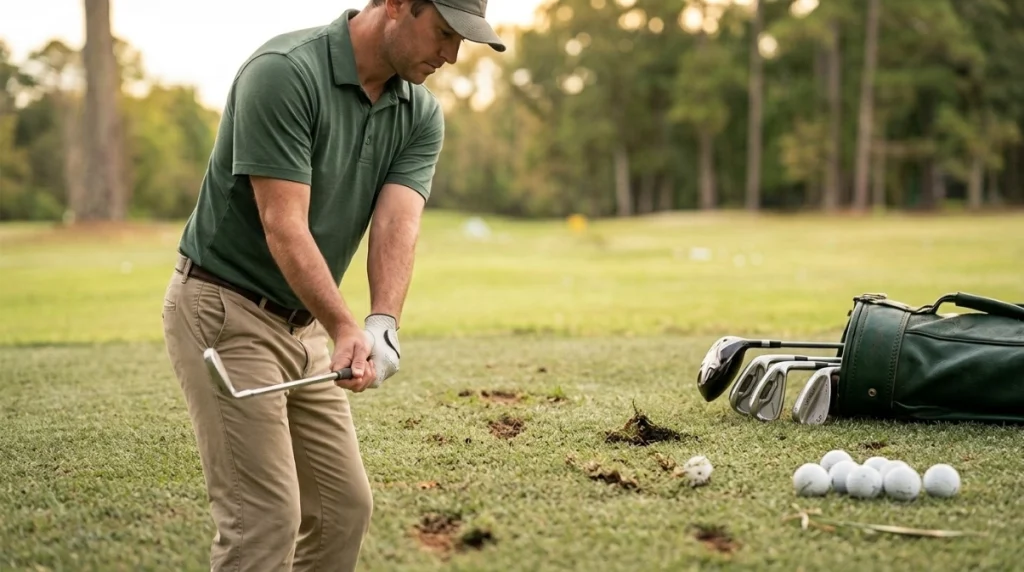
Practice the overlap at low speed before taking it directly to full driver swings. A slower progression makes unusual pressure or positioning easier to notice.
Use this simple practice progression
- Grip-only rehearsals: Form the grip 10 times without hitting a ball.
- Small chips: Hit short shots while monitoring hand pressure.
- Half-swings: Increase speed without changing the connection.
- Iron shots: Track strike pattern and starting direction.
- Longer swings: Add hybrids, fairway woods, or driver after the grip feels automatic.
I like this progression because it separates “this feels unfamiliar” from “this doesn’t work.” Those aren’t the same thing.
Any new grip can feel strange during the first few repetitions. Give yourself enough practice to evaluate it fairly.
What should you monitor?
- Comfort: No pinching or unnecessary finger pressure.
- Connection: Hands remain together throughout the swing.
- Pressure: You aren’t squeezing harder as swing speed rises.
- Strike: Contact remains reasonably centered and repeatable.
- Direction: Starting line and curvature don’t become less predictable.
Don’t assign every change in ball flight to the overlap itself. Your clubface and swing path ultimately determine shot direction.
For formal instruction and coaching resources, visit the PGA of America. For worldwide rules information, The R&A is another authoritative resource.
Pro tip: A certified instructor can check your grip alongside clubface position and swing path. That’s more useful than changing hand positions in isolation.
Overlapping Grip FAQ
Is the overlapping grip the same as the Vardon grip?
Yes. The overlapping grip is commonly called the Vardon grip. The trail-hand pinky rests over the lead hand, usually around the gap between the index and middle fingers.
Is an overlapping grip better than an interlocking grip?
Not universally. Overlap and interlock are both established golf grips. The better option is the one that lets your hands stay comfortably connected while producing repeatable contact and clubface control.
Where does the pinky go in an overlapping grip?
For a right-handed golfer, the right pinky generally rests over the area between the left index and middle fingers. Left-handed golfers reverse the hand positions.
Should beginners use an overlapping grip?
Beginners can certainly learn with an overlapping grip, but they don’t have to. A new golfer should compare overlap, interlock, and 10-finger options and favor the method that feels secure without excessive pressure.
Can an overlapping grip fix a slice?
Changing your hand connection alone doesn’t guarantee a slice fix. Slice curvature involves clubface orientation relative to swing path, so hand rotation, wrist action, path, and impact conditions may also need attention.
Can you use an overlapping grip with every club?
You can use it for full-swing clubs from wedges through driver. Putting is different because golfers commonly use specialized putting grips such as reverse overlap, cross-handed, claw, or other styles.
Why does my overlapping grip feel uncomfortable?
The pinky may be pressing too hard, your hands may be crowded, or the basic hand placement may not suit you. Try minor adjustments and compare another connection style rather than forcing a painful position.
Final Takeaway: Is the Overlapping Grip Right for You?
The overlapping grip is a proven way to connect your hands, but its biggest advantage is simple: it may feel natural for your hands and swing.
Place the trail pinky comfortably over the lead hand, keep the hands unified, and avoid excessive pressure.
- Build the lead-hand position first.
- Add the trail hand without creating a gap.
- Rest the trail pinky rather than forcing it down.
- Keep pressure controlled.
- Compare overlap against interlock and 10-finger grips with real shots.
As of 2026, golfers still succeed with several different grip connections at every level of the game. Don’t choose one because it looks more traditional.
Choose the grip you can repeat. Then spend your practice time improving the swing built around it.