
How Often Should You Practice Golf? A Realistic Weekly Plan

Most recreational golfers should practice two or three times per week for about 30–60 minutes per session. Beginners can make solid progress with two focused sessions, while golfers trying to improve faster may practice three or four times if they manage fatigue and keep each session purposeful. The PGA recommends building a regular weekly practice schedule rather than practicing only when convenient.
A Practical Weekly Target
- Once per week: Usually enough for maintaining basic feel, but improvement may be slow.
- Twice per week: A strong starting point for beginners and busy recreational golfers.
- Three times per week: Good for golfers actively trying to improve a specific part of their game.
- Four or more: Best when sessions are varied, structured, and balanced with recovery.
- Session length: Aim for roughly 30–60 focused minutes rather than hitting balls until you become tired.
Most Important Rule
- Practice with a specific target, skill, or scoring goal instead of simply finishing a bucket of balls.
Golfers often ask how often they should practice because the answer affects both improvement and enjoyment. More practice can help, but only when the sessions have a clear purpose.
I prefer shorter sessions spread across the week rather than one marathon range visit. That approach makes it easier to stay focused on contact, distance control, and shot selection.
This guide explains how often to practice golf, how long each session should last, and what to work on at different skill levels.
In This Guide
- How Often Should You Practice Golf Each Week?
- How Long Should a Golf Practice Session Be?
- What Should You Practice During Each Session?
- Is It Better to Practice More Often or for Longer?
- How Often Should Different Skill Levels Practice?
- How Do You Know If Your Practice Schedule Is Working?
- Frequently Asked Questions
How Often Should You Practice Golf Each Week?
For most recreational golfers, **two to three practice sessions per week** provide a practical balance between improvement, recovery, and everyday responsibilities. Beginners can start with two sessions and add another only when they can maintain good concentration.
Definition: Golf practice frequency is the number of deliberate skill-development sessions you complete during a week. A few warm-up swings before a round do not necessarily count as a full practice session.
The right number depends on your goals. Someone playing socially twice a month does not need the schedule of a competitive amateur.
A golfer trying to build a repeatable swing needs more frequent exposure. However, those sessions do not have to be long.
| Goal | Practice Frequency | Session Length | Main Focus |
|---|---|---|---|
| Maintain current game | 1 time per week | 30–60 minutes | Putting, contact, basic short game |
| Beginner improvement | 2 times per week | 30–60 minutes | Setup, contact, putting, chipping |
| Steady handicap improvement | 3 times per week | 45–75 minutes | Weaknesses plus scoring skills |
| Competitive preparation | 3–5 structured sessions | Varies by session | Technique, skills, pressure practice, playing |
Think about consistency before volume. Practicing every Saturday for three hours is less useful if concentration disappears after the first hour.
A Tuesday putting session and Thursday range session may fit a beginner better. Playing nine holes on the weekend then adds real-course feedback.
Golf also places repeated rotational and impact demands on the body. Stop when fatigue begins changing your balance, tempo, or contact.
Pro tip: If repeated practice causes discomfort or you are making a major swing change, work with a qualified PGA professional or appropriate healthcare professional rather than forcing more repetitions.
Section Takeaway: Two or three focused sessions per week are enough for many recreational golfers. Build consistency first, then increase frequency only when each session remains productive.
How Long Should a Golf Practice Session Be?
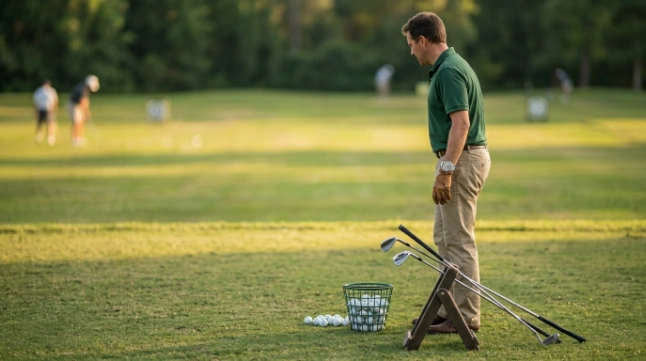
A useful golf practice session can last just **30–60 minutes**. You do not need to hit hundreds of balls to improve.
The better question is how long you can maintain attention. Once you start swinging without a target or routine, the session has probably gone too long.
A 30-Minute Golf Practice Session
Thirty minutes works well when your schedule is tight. Choose one main skill instead of trying to cover your entire game.
- 5 minutes: Easy warm-up swings and short shots.
- 15 minutes: Work on one specific skill or drill.
- 5 minutes: Change clubs, targets, or shot shapes.
- 5 minutes: Finish with a scoring challenge.
A 60-Minute Golf Practice Session
An hour gives you enough time to combine technique and skill practice. You can also spend more time on the short game.
- 10 minutes: Warm up with wedges and controlled swings.
- 15 minutes: Practice one technical priority.
- 15 minutes: Hit varied shots to different targets.
- 10 minutes: Practice chipping or pitching.
- 10 minutes: Finish with putting or a pressure game.
The number of golf balls matters less than the thought behind each shot. I would rather hit 40 deliberate shots than rush through 100 without changing targets.
That approach also matches how good practice is typically structured. PGA guidance emphasizes planning sessions and practicing with a purpose rather than simply repeating swings.
What Should You Practice During Each Session?
Your practice schedule should cover the shots that affect your score, not only the shots you enjoy hitting. That usually means combining putting, short game, approach shots, and tee shots.
The PGA’s guidance on practicing with purpose also encourages golfers to practice shots they use regularly and vary the situations they face.
Putting
Putting practice should include both start-line control and distance control. Do not spend the entire session rolling the same putt from one spot.
- Three- to six-foot putts for start-line control
- Long putts for speed and distance control
- Breaking putts from different slopes
- Pressure games requiring several consecutive makes
Chipping and Pitching
Short-game practice becomes more useful when you change lies and landing spots. Real rounds rarely give you the same chip repeatedly.
- Low-running chips
- Higher pitches
- Shots from light rough
- Different carry and roll distances
- Bunker shots when a suitable practice area is available
Practice facilities take considerable wear, especially around hitting and short-game areas. Follow local signs and the USGA’s guidance for protecting golf practice areas when using grass tees and practice greens.
Iron and Wedge Shots
Start with a target instead of aiming toward the middle of the range. Every shot should have an intended direction and distance.
Wedges deserve plenty of attention because they cover many scoring situations. Include full swings, three-quarter swings, and shorter distance-control shots.
Driver and Longer Clubs
Driver practice should look more like a golf hole than a ball-hitting contest. Create an imaginary fairway between two range targets.
Go through your normal pre-shot routine before each ball. Then change the target occasionally so you must reset your alignment.
Finish With Random Practice
Blocked practice means repeating the same shot many times. Random practice means changing clubs, targets, or shot types more often.
Both can have a place. I like repetition while learning a movement, then more varied shots before ending the session.
Tour-player range habits also tend to include changing targets, working through different clubs, and approaching shots deliberately rather than racing through a bucket. Golf Digest’s look at professional range habits gives several examples.
Section Takeaway: Build practice around scoring skills and realistic shots. Use repetition to learn something, then add variety so the skill has to work in changing situations.


Is It Better to Practice More Often or for Longer?
For most golfers, shorter and more frequent practice is more manageable than occasional marathon sessions. Frequent sessions give you repeated opportunities to revisit a skill without packing everything into one day.
For example, compare these two schedules.
| Schedule | Weekly Time | Practical Advantage |
|---|---|---|
| 1 × 120-minute session | 120 minutes | Convenient when only one day is available |
| 3 × 40-minute sessions | 120 minutes | More frequent contact with the skills being learned |
The total practice time is identical. The second schedule simply spreads the work across three days.
This structure also makes it easier to assign one purpose to each session. You might practice putting Tuesday, ball-striking Thursday, and short game Saturday.
Do not confuse frequency with constant technical work. Changing your swing every day can create more confusion than improvement.
If you are working on mechanics, keep the technical priority simple. Then dedicate part of each session to hitting normal golf shots.
A useful weekly pattern might look like this:
- Tuesday: 30 minutes putting and chipping
- Thursday: 45 minutes range practice
- Saturday: Nine holes or 45 minutes of mixed practice
- Sunday: Optional light putting or rest
This is only a framework. Work, weather, course access, family commitments, and physical condition all matter.
How Often Should Different Skill Levels Practice?
Beginners, improving mid-handicappers, and experienced low-handicap golfers usually need different practice priorities. Frequency should match the skills each golfer is trying to build.
Beginner Golfers
Most beginners can start with **two practice sessions per week**. Forty-five minutes is enough if each session has a clear structure.
Early practice should build contact and confidence rather than chase perfect swing positions.
- Grip and setup
- Half-swings with wedges or short irons
- Basic putting
- Simple chip shots
- Safe alignment and target awareness
A beginner can also play short courses or nine-hole rounds. Course time teaches decisions, pace, and recovery shots that a range cannot reproduce.
Mid-Handicap Golfers
A mid-handicap golfer trying to lower scores may benefit from **two or three focused sessions each week**. One session should target the weakness costing the most strokes.
That weakness is not automatically the driver. Poor wedge distance control, three-putts, penalties, and missed short putts can matter just as much.
- One short-game or putting session
- One full-swing session
- One optional mixed or on-course session
Track mistakes for several rounds before choosing a priority. Practice becomes much easier when you know exactly what needs attention.
Low-Handicap and Competitive Golfers
Experienced golfers may practice three to five times per week during active periods. Their sessions should still vary in intensity and purpose.
A low-handicap golfer may spend less time rebuilding basic contact. More attention can go toward distance control, specific ball flights, trouble shots, and pressure situations.
- Technical maintenance
- Wedge distance control
- Putting start line and speed
- Course-specific shot preparation
- Competitive pressure games
- Actual rounds of golf
As of 2026, nothing about modern equipment removes the need for basic skill practice. Forgiving clubs can help with mishits, but they cannot replace target control and decision-making.
Section Takeaway: Beginners usually need repetition of fundamentals, while better players need more targeted and variable practice. Match the schedule to your current weaknesses instead of copying another golfer’s routine.
How Do You Know If Your Practice Schedule Is Working?
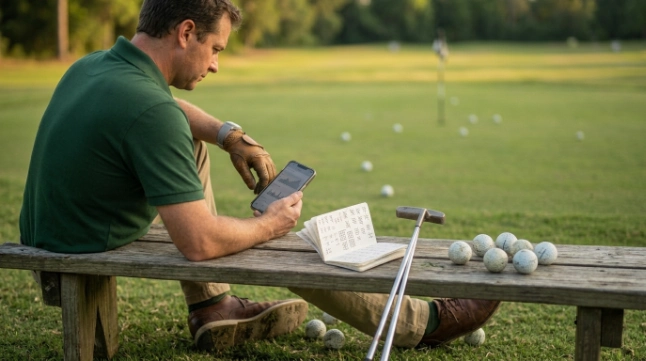
A good practice schedule should eventually change something you can observe. Simply completing more sessions does not prove that your game is improving.
Measure one or two skills at a time. Keep the tracking simple enough that you will continue doing it.
Track Practice Results
You can create small tests that stay consistent from week to week.
- Putting: Record makes from three, five, and six feet.
- Lag putting: Count how many long putts finish within a three-foot circle.
- Chipping: Count how many shots finish inside a chosen target zone.
- Irons: Track how many shots start inside your intended corridor.
- Driver: Track how many shots finish inside an imaginary fairway.
Track What Happens on the Course
Practice performance is useful, but golf scores happen on the course. Compare your practice goals with real-round patterns.
Useful statistics include:
- Penalty shots
- Fairways or playable tee shots
- Greens in regulation
- Up-and-down attempts
- Three-putts
- Putts from short range
You do not need professional-level analytics. A simple notebook or phone note can reveal repeated mistakes.
Watch for Signs of Unproductive Practice
More practice is not always better. Change your approach if sessions begin producing these patterns:
- You hit balls without choosing targets.
- You repeat the same club for most of the session.
- You keep changing swing thoughts after every poor shot.
- You continue after physical or mental fatigue appears.
- You practice only your favorite clubs.
- Your range contact improves, but the skill never transfers to the course.
When I notice a session becoming mechanical, I finish with a small challenge. For example, I may imagine three holes and change clubs for every shot.
That simple change forces a fresh setup and target each time. It also makes the last part of practice feel more like golf.
Section Takeaway: Judge practice by measurable skills and on-course patterns, not by buckets of balls. If the same mistakes continue for several weeks, adjust the practice plan rather than simply adding more repetitions.
Frequently Asked Questions About Golf Practice
Is practicing golf once a week enough?
Practicing once per week can help a recreational golfer maintain basic feel and technique. However, improvement may be faster with two or three shorter sessions because you revisit the same skills more frequently.
How often should a beginner practice golf?
A beginner can start with two focused sessions per week lasting about 30–60 minutes. Spend most of that time on basic contact, putting, chipping, alignment, and controlled swings before adding more practice days.
Should I practice golf every day?
Daily practice is not necessary for most golfers. Short putting or movement drills can be done frequently, but full-swing practice every day may become unproductive if fatigue or too many swing thoughts begin affecting technique.
How many balls should I hit at the driving range?
There is no required number. A smaller bucket used deliberately can be more productive than rushing through a large bucket, especially when you use a target and pre-shot routine for each ball.
Is 30 minutes of golf practice enough?
Yes. Thirty focused minutes can be valuable when you choose one clear objective, such as short putting, wedge distance control, or iron contact. Avoid trying to practice every part of your game during such a short session.
Should I practice or play more golf?
You usually need both. Practice allows repetition and technical work, while playing tests club selection, distance control, decision-making, recovery shots, and pressure in situations a driving range cannot fully reproduce.
How often should I take golf lessons?
Lesson frequency depends on your goals and how much time you have to practice between sessions. Give yourself enough practice time to understand the previous lesson before adding several new technical changes.
Final Takeaway: If you are wondering how often you should practice golf, begin with two focused sessions per week. Keep them around 30–60 minutes, divide your time between scoring skills and full swings, and track what happens on the course.
Once that routine becomes consistent, add a third session only when you have a clear reason. Purposeful practice beats simply hitting more golf balls.
Your next step is simple: choose one weakness from your last few rounds and build your next practice session around it.