
Why Do Golfers Use White Towels? 6 Key Reasons

Quick Answer
Golfers use white towels because they make dirt, grass stains, and other debris easy to spot, helping players and caddies judge when a towel needs cleaning. White also suits golf’s traditional appearance, is easy to wash with suitable laundry products, and provides a clean background for club logos and embroidery. Colored towels work just as well when they suit a golfer’s preferences and maintenance routine.
The main reasons golfers choose white
- Visible dirt: Mud, grass, and dark marks stand out against white fabric.
- Easy cleaning: Plain white cotton towels can often tolerate suitable whitening products, depending on their care labels.
- Traditional appearance: White towels fit the classic look of golf clubs and caddie equipment.
- Equipment care: A clean towel helps remove dirt and moisture from clubfaces, grooves, and golf balls.
- Simple customization: White fabric provides strong contrast for many embroidered names, logos, and tournament designs.
- Easy inspection: Players can quickly see which areas of the towel have become dirty and choose a cleaner section.
One useful tip
- Keep one towel section slightly damp for cleaning clubheads and another dry for grips and hands. Wash the towel when it becomes too dirty to clean effectively.
If you’ve watched professional golf, you’ve probably noticed the white towel hanging from a caddie’s bag. There’s a practical reason behind this familiar sight, although tradition and appearance also play a part.
In this guide, I’ll explain why white remains a popular golf towel color, how it helps with equipment care, and when a colored or microfiber towel might make more sense for your game.
In This Guide
- Why do golfers prefer white towels?
- How does a white towel help keep golf equipment clean?
- Why are white towels common among caddies and professional golfers?
- Are white golf towels better than colored towels?
- What material and size should you choose?
- How should you clean and maintain a white golf towel?
- Frequently asked questions
Why Do Golfers Prefer White Towels?
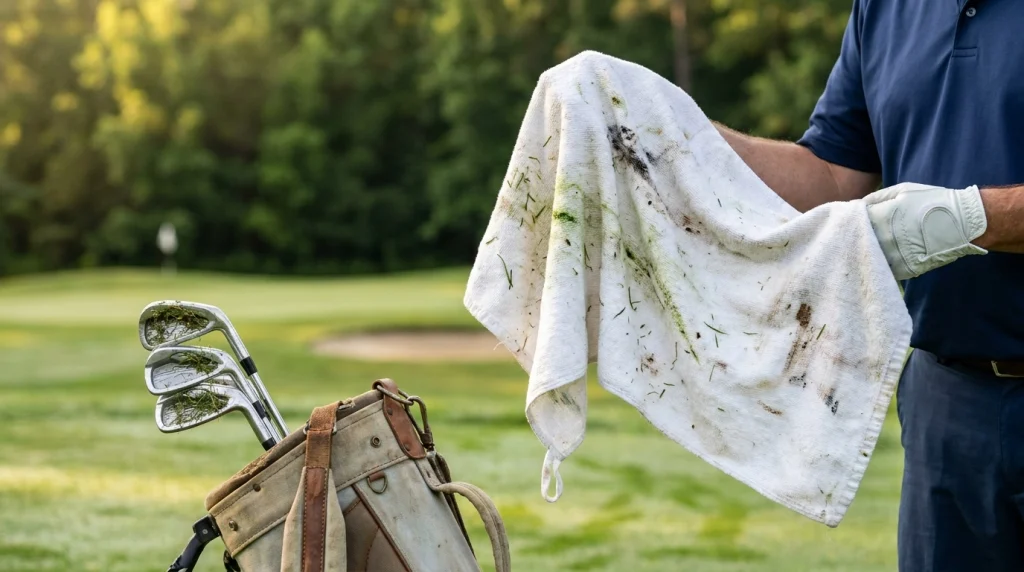
Golfers often prefer white towels because they can see dirt, grass, and mud immediately. That visibility makes it easier to identify a dirty cleaning surface before using it on a clubface or golf ball.
However, white isn’t a special performance material. Its main advantage is visibility, while the fabric, weave, absorbency, and cleaning routine determine how well the towel performs.
White makes dirt easier to spot
Imagine hitting an approach shot from damp rough. Grass and moisture cling to the iron’s grooves, and a quick wipe transfers some of that debris onto your towel.
On white fabric, those green and brown marks are easy to see. You can rotate the towel to a cleaner section rather than repeatedly wiping your equipment with a dirty patch.
- Grass stains: Green marks show up clearly against white fabric.
- Mud and soil: Brown and gray marks become easier to identify.
- Dark residue: Rubber marks and other visible debris stand out on many white towels.
This doesn’t mean a white towel stays clean longer. It simply makes contamination more obvious, which can encourage better equipment-care habits.
White suits golf’s traditional appearance
White towels have a long-standing place in golf because they match the sport’s familiar, understated look. They fit naturally alongside traditional golf clothing, neatly arranged club bags, and coordinated caddie uniforms.
White is also a practical choice for clubs that purchase towels in bulk. Plain white towels are easy to distribute, personalize, and replace without coordinating different colors or patterns.
White can simplify laundry
Many plain white cotton towels can be washed with suitable whitening products when their care labels allow it. This can help remove certain stains and restore a brighter appearance over time.
Still, not every white towel can be bleached safely. Microfiber, decorative embroidery, colored stitching, and specialty finishes may require gentler treatment.
Section Takeaway: White is popular because it reveals dirt, supports straightforward laundry routines, and matches golf’s traditional style. The color itself doesn’t make a towel more absorbent or clean equipment better.
How Does a White Towel Help Keep Golf Equipment Clean?
A white golf towel helps golfers monitor dirt and moisture while cleaning their clubs and balls between shots. Keeping those surfaces clean supports consistent equipment care, particularly when grass, sand, or mud builds up during a round.
Clean club grooves between shots
Golf club grooves are the channels cut into an iron or wedge’s face. They help manage grass and moisture around the ball at impact, so accumulated debris is worth removing before your next shot.
A towel lets you wipe away loose grass and dirt without searching for a wash station after every swing. For stubborn material, use a suitable club brush or cleaning tool rather than forcing grit across the clubface.
My preferred routine would be simple: remove visible debris after a shot, inspect the grooves, and finish with a clean, dry section when needed. A white towel makes that inspection easier because the transferred dirt is obvious.
Keep golf balls clean
Grass, mud, and soil can cling to a golf ball after a shot from the fairway or rough. A clean towel helps remove that residue before you return the ball to play, where the Rules of Golf permit cleaning it.
White fabric makes dirt transferred from the ball easier to spot. However, the towel color doesn’t change the ball’s flight or performance; the benefit comes from removing unwanted debris.
For official guidance on when a ball may be cleaned, consult the USGA’s Rules of Golf resources. The applicable rule and playing situation determine whether cleaning is permitted.
Protect grips and hands from unwanted moisture
A clean, dry grip helps you maintain a comfortable hold on the club. Rain, sweat, and damp equipment can make that task harder, especially during a humid summer round.
Reserve a dry section of your towel for grips and hands rather than using the same muddy patch you use on clubheads. White fabric helps you identify dirty areas, but keeping the cleaning and drying surfaces separate matters more.
- Use a slightly damp section to loosen dirt from clubfaces.
- Use a clean section to wipe away remaining moisture.
- Keep another dry section available for hands and grips.
Section Takeaway: A towel helps maintain clean clubfaces, golf balls, and grips throughout a round. White makes dirt easier to monitor, but a sensible wet-and-dry routine delivers the real practical benefit.
Why Are White Towels Common Among Caddies and Professional Golfers?
White towels are common in traditional caddie settings because they combine practical cleaning with a familiar, professional appearance. Their visibility also helps caddies notice when a towel section has collected enough dirt to need changing.
The caddie’s towel is a working tool
A caddie may handle clubs after shots from fairways, bunkers, rough, and damp ground. A large towel offers enough surface area to remove dirt repeatedly without running out of clean fabric after a few holes.
Some caddie guidelines explicitly recommend bringing a white towel for cleaning clubs and golf balls. For example, Bloomfield Hills Country Club’s caddie guidelines describe a white towel as a standard tool and recommend keeping one end wet for cleaning.
That example illustrates a traditional practice, not a universal rule for every course or professional event. Golfers and caddies can use other colors and materials according to their needs.
Why professional golf reinforces the tradition
Televised tournaments make familiar equipment choices highly visible. Large white towels hanging from caddie bags have become part of the recognizable look of professional golf.
Clubs and tournament organizers may also use branded or embroidered towels. A white background offers clear contrast for many logos, player names, and event designs.
It’s important not to confuse a common sight with a requirement. The color of a towel doesn’t determine whether someone is a professional, and professional golfers use a range of branded and colored equipment accessories.
Do professionals use white because it improves performance?
Not directly. A white towel doesn’t increase swing speed, generate extra spin, or make a club more forgiving.
Its benefit is indirect: visible dirt can help a player or caddie keep cleaning habits consistent. Clean grooves, dry grips, and a clean ball can help avoid preventable equipment-care problems, regardless of towel color.
Section Takeaway: Caddie traditions and the professional appearance of white towels help explain their popularity. The functional advantage is easy inspection and maintenance, not a special performance benefit from the color.


Are White Golf Towels Better Than Colored Towels?
White golf towels aren’t automatically better than colored towels. White makes dirt easier to see, while darker colors can conceal stains and maintain a tidy appearance between washes.
The right choice depends on how you use your towel, how often you wash it, and whether you prefer a traditional or personalized look.
White vs. black vs. colored golf towels
| Feature | White towel | Dark towel | Bright or patterned towel |
|---|---|---|---|
| Visible dirt | Usually easy to spot | Many light-colored marks stand out | Depends on the pattern and stain |
| Stain concealment | Limited | Often better for everyday marks | Patterns can disguise some stains |
| Laundry options | Some fabrics allow whitening products | Color-safe products are often preferable | Follow dye and fabric care instructions |
| Style | Classic and understated | Subtle and coordinated | Personalized and eye-catching |
| Cleaning performance | Depends on material and weave | Depends on material and weave | Depends on material and weave |
This comparison reflects general fabric and maintenance characteristics, not laboratory performance testing. A white cotton towel and a black microfiber towel may perform very differently because their materials differ.
When should you choose a white towel?
A white towel makes sense if you prioritize easy visual inspection, prefer classic golf accessories, or want a plain towel that suits a traditional club setting.
It’s also a reasonable choice if you wash towels regularly and want to use whitening products that are safe for the fabric.
When is a colored towel the better option?
A colored towel may suit golfers who want to hide some visible stains, match their golf bag, or choose a distinctive design. It’s also useful if you want different colors for different cleaning tasks.
- White: Useful when seeing dirt is the priority.
- Black or navy: Useful for a darker look and concealing many everyday marks.
- Bright colors: Useful for easy identification and personal style.
- Two-color towels: Useful for visually separating cleaning and drying surfaces.
Whatever color you choose, don’t let a tidy appearance fool you into thinking the towel is clean. Dark fabric can hide contamination, so inspect it, wash it, and replace it when necessary.
Section Takeaway: Choose white for visibility and tradition, or choose a colored towel for appearance and stain concealment. Material and cleanliness matter more than color when you’re cleaning golf equipment.
What Material and Size Should You Choose?
The material, weave, and size of a golf towel have a greater effect on everyday usefulness than its color. Choose a towel that can clean your equipment effectively, absorb moisture, and hang conveniently from your golf bag.
Cotton vs. microfiber golf towels
Cotton towels are familiar, soft, and absorbent. They’re a traditional choice for caddies and golfers who want a straightforward towel for wiping equipment and managing moisture.
Microfiber towels use fine synthetic fibers, often in a waffle weave, to help lift dirt and moisture from clubfaces. Many are lightweight and dry relatively quickly, although performance depends on the construction and how you care for them.
| Towel type | Main strengths | What to consider |
|---|---|---|
| Cotton | Soft feel, familiar texture, good absorbency | Can become heavy and take longer to dry when wet |
| Microfiber | Lightweight options, useful dirt removal, quick-drying designs | Some fabrics need gentler washing and should not be bleached |
| Waffle weave | Textured surface helps lift dirt from grooves | Actual performance depends on the fiber and weave |
| Terry cloth | Looped texture and familiar absorbency | Thicker designs can hold more water and bulk |
For more equipment-care guidance, the PGA of America’s golf resources provide a useful starting point for general golf education.
What size golf towel works best?
A small towel is convenient for quick cleaning, while a larger towel gives you more room to separate damp and dry sections. Your choice should reflect whether you walk, ride, or carry a full set of clubs with a caddie.
- Small towel: Convenient for wiping hands, golf balls, and light dirt.
- Medium towel: A practical all-around option for cleaning clubheads and keeping dry fabric available.
- Large caddie towel: Offers more cleaning surface for repeated use throughout a round.
There isn’t one mandatory size for every golfer. Check the towel’s dimensions before buying, especially if you want it to hang from a stand bag without dragging on the ground.
Should you carry one towel or two?
One sufficiently large towel can work for many golfers if you reserve separate areas for cleaning and drying. Two towels provide a clearer separation between dirty equipment and clean hands or grips.
For example, use a damp white towel to clean the clubface, then keep a second dry towel available for your hands. That simple arrangement is particularly useful in humid weather or after playing in wet conditions.
Section Takeaway: Start with the right fabric and a useful size, then choose the color you prefer. A well-maintained cotton or microfiber towel in any color can serve a golfer effectively.
How Should You Clean and Maintain a White Golf Towel?
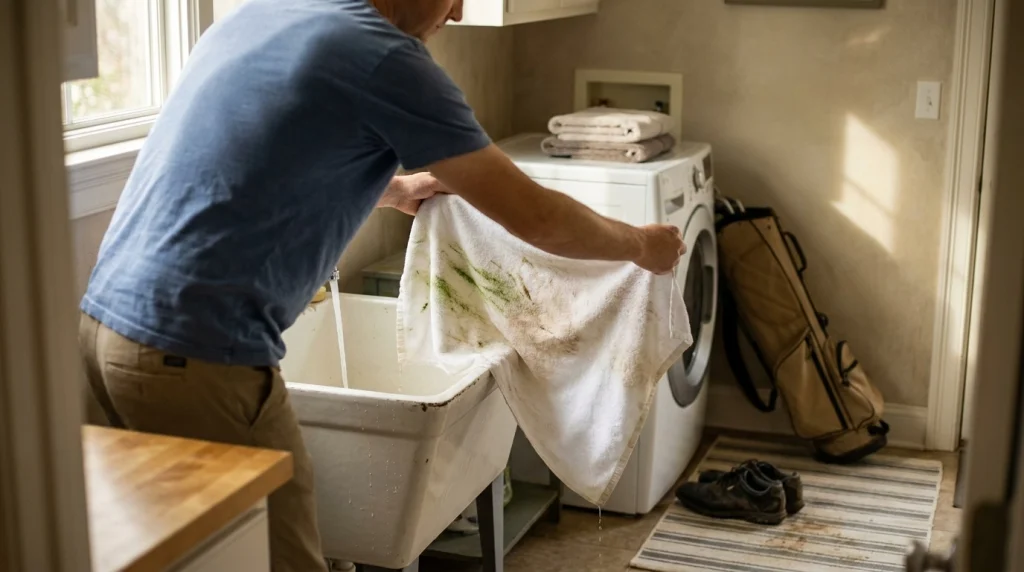
A white golf towel works best when you wash it regularly and allow it to dry thoroughly between rounds. Dirt, grass, sweat, and moisture can build up in the fabric, making a neglected towel less pleasant to handle.
Wash the towel before dirt builds up
Don’t wait until the towel turns gray or develops a persistent smell. Rinse away loose dirt after your round and follow the fabric’s care instructions when laundering it.
- Shake off loose grass and soil outdoors.
- Rinse heavily soiled areas when appropriate.
- Wash with a suitable detergent according to the care label.
- Use whitening products only if the towel’s fabric and stitching allow them.
- Dry the towel completely before storing it in your golf bag.
Can you bleach a white golf towel?
Some plain white cotton towels can tolerate chlorine bleach, but others cannot. Always check the care label, because microfiber fibers, colored stitching, embroidery, and specialty treatments may be damaged by unsuitable products.
When bleach isn’t recommended, use a compatible detergent or a fabric-safe alternative. Never assume that a towel is bleach-safe simply because the main fabric is white.
Keep the wet and dry sections separate
If you use one towel for several jobs, assign different areas to different tasks. This reduces the chance of transferring mud from a clubface onto your hands or grip.
- Use the damp section for removing dirt from clubheads and balls when permitted.
- Use a clean, dry section for wiping moisture away.
- Reserve a separate towel for hands and grips when possible.
Don’t let a wet towel remain bunched up in a closed golf bag for long periods. Hang it somewhere ventilated after your round so it can dry fully.
When should you replace a golf towel?
Replace a towel when it develops persistent odors, damaged stitching, holes, or a texture that no longer cleans effectively. Permanent discoloration alone doesn’t always mean the towel has stopped working.
A towel can remain useful even after it loses its bright white appearance, provided it’s clean, intact, and suitable for the job. If it continues transferring dirt to your equipment after washing, it’s time to retire it.
Section Takeaway: Regular washing and complete drying matter more than keeping a towel perfectly white. Follow the care label and replace towels that no longer clean equipment effectively.
Frequently Asked Questions About White Golf Towels
Do golf rules require players to use white towels?
No. The Rules of Golf do not generally require golfers to carry white towels. Players can choose white, black, colored, or patterned towels according to their preferences and equipment-care needs.
Why do golf caddies carry large white towels?
Caddies use towels to remove dirt and moisture from clubs and golf balls throughout a round. A large white towel offers plenty of cleaning surface and makes transferred dirt easy to see, while its traditional appearance suits many golf-club settings.
Do white golf towels clean clubs better than black towels?
No. Color alone doesn’t determine cleaning performance. Fabric, weave, moisture, and how you use the towel matter more, although white fabric makes many dirt marks easier to identify during a round.
Why do golfers wet one end of a towel?
A slightly damp section helps loosen grass and dirt from clubfaces and grooves. Keeping another section dry lets golfers remove moisture from grips and hands without transferring the same dirt between surfaces.
Are white microfiber golf towels better than white cotton towels?
Neither material is best for every golfer. Microfiber often offers lightweight handling and useful dirt removal, while cotton provides a familiar, absorbent feel. Choose based on your cleaning routine, drying needs, and care preferences.
How often should you wash a golf towel?
Wash it whenever dirt, sweat, or odors accumulate, and after particularly muddy or wet rounds. Frequent players may need to wash their towels after every round, while light use in dry conditions may require less frequent laundering.
Can you use a regular white hand towel for golf?
Yes. A regular hand towel can work if it absorbs moisture, cleans equipment without leaving lint or debris, and fits securely on your bag. A golf-specific towel may offer a more convenient size, texture, or attachment system.
Final Takeaway: Why Do Golfers Use White Towels?
Golfers use white towels because they’re practical, easy to inspect, and closely associated with the traditional look of the game. Their biggest everyday advantage is making dirt and grass marks visible before those contaminants spread across equipment.
But you don’t need a white towel to care for your clubs properly. Choose a clean, absorbent towel in a material and size that suit your routine, keep separate surfaces for cleaning and drying, and wash it regularly.
If you’re building a simple golf-bag setup, start with one dependable towel and add a second dry towel if you regularly play in wet or humid conditions. Consistent equipment care matters far more than the color hanging from your bag.