
Why Does My Golf Towel Smell? Causes, Fixes, and Prevention

Quick Answer
Your golf towel usually smells because moisture, dirt, grass, sweat, and organic residue stay trapped in the fabric after a round. Leaving a damp towel folded, clipped against a bag, or stuffed inside a pocket gives odors more time to develop, so controlling moisture and drying damp material quickly is the most important first step.
Most Common Causes
- Stored while damp: A wet towel folded into a golf bag can develop a musty odor quickly.
- Ground and grass residue: Mud, divot soil, grass, and bunker debris remain deep in the fibers.
- Sweat and skin oils: Using the same towel for clubs, hands, and your face adds organic residue.
- Detergent buildup: Too much detergent or poor rinsing can leave residue that holds odors.
- Improper microfiber care: Fabric softener, high heat, and mixed-fabric loads can reduce microfiber performance.
Fast Check
- Smell the towel when completely dry. If the odor returns as soon as it becomes damp, it needs a deeper wash rather than another quick rinse.
If you’re asking, “Why does my golf towel smell?”, the towel itself usually isn’t the real problem. The bigger issue is what happens between the 18th green and your next round.
A golf towel picks up moisture, turf, sand, groove debris, sunscreen, and sometimes sweat. I treat odor as a drying problem first and a washing problem second.
In This Guide
What Causes a Golf Towel to Smell?

A golf towel smells when moisture combines with the material it collected during play. The usual mixture includes soil, grass, sweat, skin oils, and residue from dirty clubfaces.
Definition: A musty golf towel odor is a stale or damp smell that develops when moisture and residue remain in the fabric instead of being washed away and fully dried.
Leaving the towel damp after your round
This is the cause I would check first. Golfers often finish a round, load the bag into the trunk, and forget about the towel.
A towel that cleaned wet irons or golf balls may still hold considerable moisture. Folding that towel into a pocket removes the airflow it needs to dry.
Mud, grass, and groove debris
Your wedges and short irons can load a towel with more than visible dirt. Damp divots contain fine soil and organic material that works into the weave.
That buildup matters most after wet morning rounds. Dew-covered fairways and soft rough keep both the clubhead and towel damp for hours.
- Wedges: Packed grooves transfer soil and grass directly to the towel.
- Irons: Wet turf and divot residue create repeated damp spots.
- Golf balls: Mud and putting-green moisture add another source of contamination.
- Hands: Sweat, sunscreen, and skin oils add residue that plain water may not remove.
Using one section for everything
I prefer separating the towel into a wet cleaning area and a relatively dry finishing area. It keeps grime from spreading across the entire towel.
The same idea applies to hands and your face. A club-cleaning towel isn’t the towel I would use to wipe sweat from my forehead.
Waiting too long between washes
There’s no universal round count for golf towels because course conditions vary. A towel used on a dry summer range session stays cleaner than one used through 18 holes of rain.
The American Cleaning Institute recommends letting ordinary towels dry between uses. That same basic habit makes sense for a golf towel.
Section Takeaway: Moisture is the main trigger, but dirt, sweat, and poor storage give the odor something to feed on.
How Can You Identify the Type of Odor?
The smell itself can point you toward the cause. You don’t need laboratory testing to decide whether a towel needs washing, drying, or replacement.
Musty or basement-like smell
A musty smell usually points toward prolonged dampness. Check whether the towel was stored wet, left in the trunk, or forgotten inside a zipped bag compartment.
The CDC notes that mold can smell musty and grows where moisture is present. Visible spotting plus a persistent musty odor deserves more attention than ordinary golf-course dirt.
Sour or sweaty smell
A sour smell often appears when the towel has been used on hands, neck, or face. Sunscreen and body oils can also remain in the fibers.
Wash it rather than spraying it with fragrance. Covering an odor doesn’t remove the material causing it.
Dirty or earthy smell
An earthy smell after a muddy round often comes from turf and soil. Shake loose debris outdoors before the towel goes into the washer.
Pay special attention to thick waffle patterns. Mud can stay lodged inside the texture even when the surface looks clean.
- Smells only when wet: Residue probably remains in the fibers.
- Smells while completely dry: The towel needs a thorough wash before reuse.
- Visible spots remain: Inspect carefully and consider replacement if cleaning doesn’t solve the issue.
- Fresh towel smells after washing: Check the washer and your drying routine.
How Do You Get the Smell Out of a Golf Towel?
Start with the towel’s care label. Cotton, microfiber, printed towels, embroidered towels, and magnetic designs may require different temperatures or drying methods.
Step 1: Remove loose dirt first
Shake the towel outside before washing. Brush away dried mud, grass, sand, and loose debris rather than sending all of it into the washer.
If one section is heavily caked with dirt, rinse that area first. Don’t roll the dirty section into the cleaner side.
Step 2: Wash with the correct amount of detergent
Use a normal laundry detergent that suits the fabric and follow its dosing instructions. More soap doesn’t automatically mean a cleaner towel.
Overloading the washing machine can also reduce rinsing and agitation. Give heavily soiled golf towels enough room to move.
Step 3: Choose water temperature by material
For cotton towels, use the warmest temperature allowed by the care label. For microfiber, cooler or warm settings are often safer than high heat.
The goal is to remove soil without damaging the towel. That’s especially important with magnetic attachments, printed logos, stitched edging, or synthetic fibers.
Step 4: Treat stubborn odor carefully
If an ordinary wash doesn’t remove the smell, an oxygen-based laundry additive can help when the care label allows it. Follow the product directions instead of improvising a stronger mixture.
Never mix household cleaning chemicals. In particular, don’t combine bleach with vinegar, ammonia, or other cleaners.
Step 5: Dry the towel completely
This step matters as much as washing. A clean towel that stays damp can become unpleasant again.
Whirlpool’s towel-care guidance recommends moving towels to the dryer promptly and storing them only after they are completely dry. Air drying also works when airflow reaches the whole towel.
- Open the towel fully instead of leaving it folded.
- Hang it where air can reach both sides.
- Don’t return it to the golf bag while damp.
- Make sure thick hems and corners are dry too.
Pro tip: For normal towel care, follow the fabric label first. If a specialized coating, magnet, or printed finish has unusual instructions, follow the manufacturer’s directions.
Section Takeaway: A good wash removes the residue, but complete drying prevents the same odor cycle from starting again.


Does Microfiber Smell Worse Than Cotton?
Neither material automatically smells bad. Odor depends more on contamination, drying time, storage, and washing habits than the name of the fabric.
Still, cotton and microfiber behave differently. That changes how I would clean and dry each towel.
| Feature | Cotton Golf Towel | Microfiber Golf Towel |
|---|---|---|
| Common strength | Soft feel and familiar towel texture | Fine fibers grab moisture and small particles well |
| On-course concern | Thick cotton can remain damp if folded | Fine fibers can hold dirt, lint, and residue |
| Typical washing approach | Use the warmest setting permitted by the care label | Cool or warm water and a gentle cycle are commonly recommended |
| Fabric softener | Follow the towel manufacturer’s directions | Usually best avoided because coatings can reduce cleaning performance |
| Drying | Dry fully before storage | Air dry or use low heat when the care label allows |
Microfiber deserves special care because its tiny synthetic fibers are designed to grab debris. The microfiber care guidance from Whirlpool advises avoiding fabric softener and high dryer heat.
For golf, I like microfiber when cleaning grooves and wiping moisture from clubfaces. I just wouldn’t leave it crumpled in a cart basket after the round.
Section Takeaway: Choose the material you prefer, then match your washing and drying routine to that material.
Why Does a Golf Towel Still Smell After Washing?
If the towel smells clean from the machine but turns musty again, something in the cleaning cycle may be incomplete. Rewashing it the same way may produce the same result.
The towel didn’t dry all the way
Thick seams and folded corners can stay damp after the main surface feels dry. Check those areas before putting the towel away.
The washer may need cleaning
A washing machine with residue or odor can transfer that smell back to laundry. Check the drum, detergent dispenser, door seal, and manufacturer cleaning instructions.
Too much detergent was used
Excess detergent can be difficult to rinse away. That residue can combine with soil left in the towel.
The load was packed too tightly
Golf towels need enough movement for water and detergent to reach the fibers. A tightly packed washer limits that movement.
The towel may be past its useful life
Sometimes repeated cleaning no longer restores a heavily used towel. Permanent staining alone isn’t always a problem, but persistent odor after proper washing and drying is different.
Replacement makes sense when the towel stays musty, has damaged fibers, or has visible growth that you cannot safely remove. A golf towel is a working piece of equipment, not a lifetime purchase.
How Do You Prevent Golf Towel Odor?
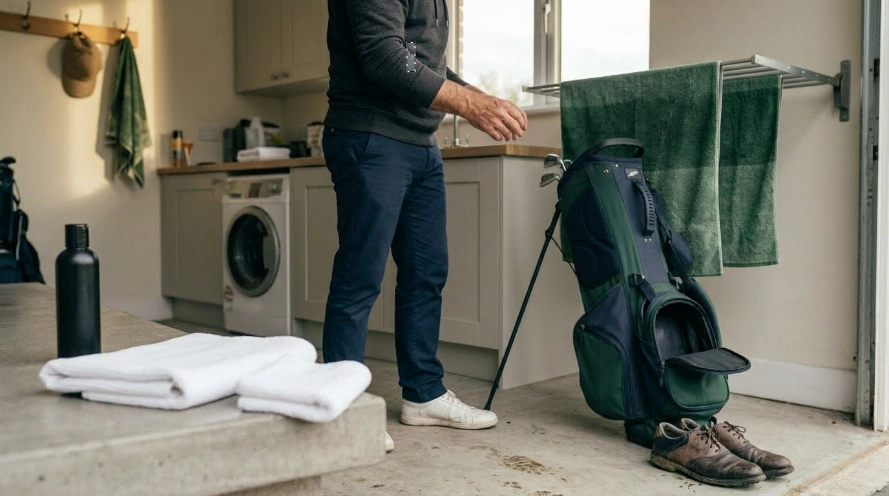
Prevention is easier than rescuing a towel that has spent three humid days zipped inside a cart bag. My routine starts before I leave the course.
Open and dry it after every round
Take the towel off the bag when you get home. Hang it open rather than dropping the entire golf bag into storage.
Use a wet side and a dry side
Keep one part damp for dirty clubfaces and another part as dry as possible. That gives you a cleaner final wipe before the club returns to the bag.
Don’t use the club towel for everything
Carry a second small towel for sweat if needed. Separating jobs reduces the amount of body oil and sunscreen entering your club-cleaning towel.
Wash based on conditions, not the calendar
- Muddy or rainy round: Wash the towel after the round.
- Heavy groove cleaning: Wash when soil is clearly embedded.
- Hot, sweaty round: Wash sooner if the towel touched your hands or face repeatedly.
- Light dry-weather use: Let it dry completely and inspect it before deciding whether another round is reasonable.
Never store it wet
This is the easiest habit to remember. A towel hanging openly on a rack has a much better chance to dry than one sealed inside a pocket.
As of 2026, my simplest golf-towel rule hasn’t changed: clean it when it’s dirty and dry it whenever it’s wet.
Section Takeaway: Your post-round storage routine has more influence on odor than any fragrance, spray, or quick cosmetic fix.
Frequently Asked Questions
Why does my golf towel smell sour?
A sour odor commonly comes from damp fabric mixed with sweat, skin oils, sunscreen, dirt, or detergent residue. Wash the towel according to its care label, rinse it thoroughly, and make sure it dries completely before returning it to your golf bag.
Can I wash a golf towel after every round?
Yes, provided the manufacturer’s care instructions allow normal machine washing. Washing after muddy, rainy, or sweaty rounds is sensible. A lightly used towel from a dry round may only need complete drying before its next use.
Can I put a golf towel in the dryer?
Many can go in a dryer, but the care label should make the decision. Microfiber often benefits from air drying or low heat, while cotton may tolerate different settings. Magnetic hardware, embroidery, and printed designs can also affect care.
Should I use fabric softener on a microfiber golf towel?
It’s generally better to avoid fabric softener on microfiber. Softening products can coat the tiny fibers and reduce their ability to grab moisture and debris. Use a suitable detergent and follow the towel manufacturer’s washing directions.
Why does my towel smell fine when dry but bad when wet?
Moisture can make trapped odor-producing residue noticeable again. That usually means the towel needs more than air drying. Give it a thorough wash, rinse it well, and dry it completely before checking whether the smell has disappeared.
Should I throw away a moldy golf towel?
If visible growth or a persistent musty smell remains after appropriate cleaning, replacing the towel may be the practical choice. This is especially reasonable for an inexpensive towel with deeply contaminated or damaged fibers.
How should I store a golf towel between rounds?
Store it only when completely dry. Hang it in an open, ventilated area after playing, then return it to the golf bag once no damp areas remain. Avoid leaving wet towels in trunks, zipped pockets, or closed equipment lockers.
Final takeaway: If your golf towel smells, start with moisture. Wash away the turf, sweat, and residue, dry the towel completely, and keep it out of closed bag pockets while damp. That simple routine solves most golf-towel odor problems and keeps your cleaning gear ready for the next tee time.