
How Do You Remove Odor From a Golf Towel?

Quick Answer
Remove odor from a golf towel by shaking off dirt, washing it promptly with the correct amount of mild detergent, rinsing thoroughly, and drying it completely before storage. For microfiber towels, start with the care label; for example, Club Glove’s microfiber towel care instructions specify cold water and mild detergent.
Fast odor-removal routine
- Remove debris: Shake out dried mud, sand, grass, and loose soil before washing.
- Pretreat dirt: Work a small amount of mild detergent into heavily soiled areas.
- Wash correctly: Follow the towel’s care label and avoid using excessive detergent.
- Rinse well: An extra rinse can help when detergent or softener residue is trapping odor.
- Dry completely: Never return a damp towel to a closed golf bag.
If the smell keeps returning
- Rewash the towel without fabric softener, rinse thoroughly, and let it dry fully in good airflow.
A golf towel can smell surprisingly bad after only a few damp rounds. Moisture, soil, grass, sweat, sunscreen, and storage inside a closed bag create an ideal setup for musty odors.
I’ve found that removing the smell is usually easier than golfers expect. The bigger challenge is stopping the same odor from returning two days later.
In This Guide
- Why Does My Golf Towel Smell?
- How Do You Remove Odor From a Golf Towel Step by Step?
- What Should You Do If the Odor Will Not Go Away?
- Does the Cleaning Method Change by Golf Towel Material?
- What Should You Avoid When Deodorizing a Golf Towel?
- How Do You Keep a Golf Towel From Smelling?
- Golf Towel Odor FAQ
Why Does My Golf Towel Smell?
A golf towel usually smells because moisture and organic debris remain trapped in the fabric. Keeping it damp inside a bag makes the problem worse.
Golf towel odor is the musty or sour smell that develops when a used towel stays dirty, wet, or poorly ventilated long enough for odor-producing microorganisms and residues to build up.
- Rain and morning dew: A towel may stay wet for hours after your round.
- Grass and soil: Organic material gets trapped deep inside textured fibers.
- Sweat: Towels used on hands or faces collect body oils and perspiration.
- Sunscreen: Oily residue can transfer from your hands onto the fabric.
- Detergent buildup: Using too much detergent can leave residue behind.
- Fabric softener: Coating absorbent fibers can make thorough cleaning harder.
The worst towel smell I’ve encountered usually followed wet rounds rather than muddy ones. A visibly dirty towel often gets washed immediately, while a slightly damp towel gets forgotten in the bag.
That forgotten moisture is the problem. By the next round, the towel can smell stale before it even touches a club.
Useful test: If the towel smells acceptable when freshly washed but becomes musty again after sitting in your bag, storage and incomplete drying are likely bigger issues than washing power.
How Do You Remove Odor From a Golf Towel Step by Step?
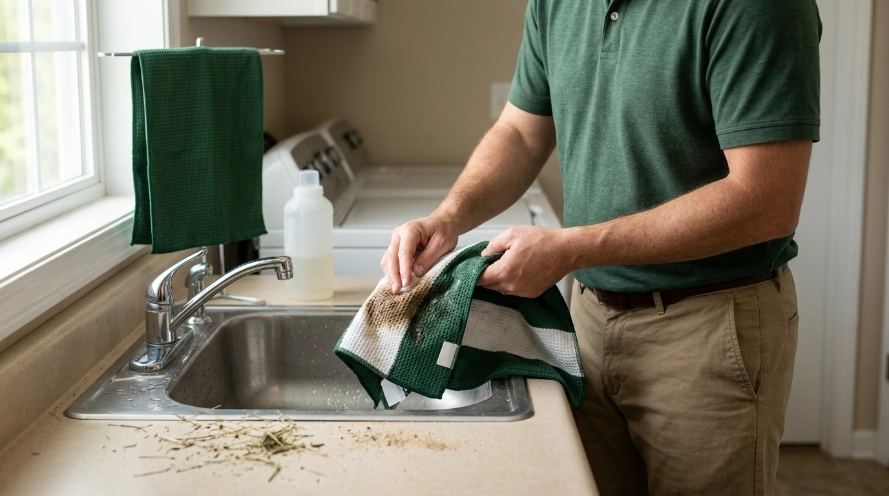
The best approach is to remove physical dirt first, wash gently, rinse thoroughly, and eliminate all remaining moisture. Harsher chemicals are rarely the best starting point.
1. Remove grass, sand, and dried mud
Shake the towel outside before it goes near your washing machine. Brush away dried mud if the fabric can handle gentle brushing.
Large pieces of soil don’t need to circulate through an entire wash cycle. Removing them first also lets detergent reach the actual fibers.
2. Check the care label
Golf towels aren’t all constructed the same way. Microfiber, cotton, magnets, embroidery, printed graphics, clips, and waterproof layers can change the washing instructions.
- Check the permitted water temperature.
- Check whether machine drying is allowed.
- Look for bleach restrictions.
- Check special instructions for attached magnets or hardware.
3. Pretreat obvious dirty areas
Apply a small amount of suitable mild liquid detergent to muddy or oily sections. Work it gently into the fabric instead of aggressively scrubbing.
Give particular attention to the section you use for clubfaces. That’s where damp grass, soil, bunker sand, and groove debris tend to accumulate.
4. Wash with the correct amount of detergent
More detergent doesn’t automatically produce a cleaner towel. Too much can become difficult to rinse from an absorbent fabric.
For at least some microfiber golf towels, cold water is specifically recommended. Club Glove, for example, lists cold-water washing with mild detergent for its microfiber cart and caddie towels.
5. Give a smelly towel a thorough rinse
If you’ve been generous with detergent or fabric softener in the past, use an extra rinse if your washing machine offers one. Residue can hold dirt and make a towel feel less fresh.
- Don’t add another heavy dose of detergent.
- Don’t automatically add fabric softener.
- Make sure suds are fully rinsed away.
6. Dry it completely
This step matters as much as washing. A clean towel placed back into storage while damp can quickly develop another musty smell.
Air drying is the cautious option when you’re unsure about heat tolerance. Otherwise, follow the drying instructions printed on the towel’s care label.
Section Takeaway: Odor removal works best when you remove dirt, avoid product buildup, rinse thoroughly, and eliminate moisture completely before the towel returns to your golf bag.
What Should You Do If the Odor Will Not Go Away?
A persistent smell usually means something remains in the fibers or the towel keeps becoming damp again after cleaning. Rewashing correctly is a better first move than immediately reaching for aggressive chemicals.
- Wash the towel separately from heavily soiled golf clothing.
- Use only the recommended amount of mild detergent.
- Skip fabric softener and dryer sheets.
- Select an extra rinse when available.
- Dry the towel completely in moving air or according to its label.
- Smell it again only after it is fully dry.
If odor remains, check the manufacturer’s label before using oxygen bleach, sanitizers, vinegar, or other laundry treatments. Some fabrics, printed areas, embroidery, magnets, and attached components may have restrictions.
Never mix chlorine bleach with vinegar, ammonia, or other household cleaning chemicals. When a product label doesn’t clearly allow a treatment, I wouldn’t experiment on a golf towel I wanted to keep.
When is it time to replace the towel?
A towel doesn’t need replacing just because it became smelly once. Repeated odor after proper washing and complete drying is a more useful warning sign.
- It smells again immediately after drying.
- The fabric remains greasy or coated.
- It no longer absorbs water effectively.
- The material is fraying or separating.
- Permanent mildew staining or damage remains.
If replacement becomes necessary, broader Golf Digest equipment coverage can help you stay current on golf gear and accessories.


Does the Cleaning Method Change by Golf Towel Material?
Yes. The care label always takes priority because microfiber, cotton, terry cloth, and specialty golf towels tolerate heat and laundry products differently.
As of 2026, microfiber and cotton remain common choices, while many golf-specific towels add waffle textures, clips, magnets, or other hardware.
| Towel Type | Common Odor Issue | Safe Starting Approach | Main Caution |
|---|---|---|---|
| Microfiber | Residue and trapped moisture | Mild detergent, label-approved cool or cold wash, thorough rinse | Avoid assuming high heat or softener is safe |
| Cotton | Slow drying after wet rounds | Wash according to label and dry fully | Don’t leave thick cotton damp in the bag |
| Waffle-textured towel | Dirt lodged in textured areas | Shake debris out, pretreat, wash gently | Avoid aggressive scrubbing |
| Magnetic or specialty towel | Moisture around layered construction or hardware | Follow manufacturer-specific instructions | Don’t assume standard machine settings apply |
My microfiber towels get the most conservative treatment. Their job is to absorb moisture and grab grime, so preserving those fibers matters more than making them smell heavily perfumed.
What Should You Avoid When Deodorizing a Golf Towel?
Avoid treatments that mask the smell without solving the moisture or residue problem. A strong fragrance doesn’t necessarily mean the towel is clean.
- Too much detergent: Excess product may stay trapped in absorbent material.
- Automatic fabric softener: Residue can interfere with a towel’s absorbent surface.
- Unapproved bleach: Check the care label before using chlorine or oxygen-based products.
- Excessive heat: Don’t assume the hottest wash or dryer setting is appropriate.
- Wet storage: Never seal a damp towel inside your golf bag or trunk.
- Chemical mixing: Never combine bleach with vinegar, ammonia, or unrelated cleaners.
Be especially cautious with personalized towels. Embroidery, printed logos, decorative borders, magnets, and attachment hardware may have different care limits than the towel fabric itself.
Also remember that a clean golf towel has an on-course rules consideration when it’s used on your ball. The USGA’s guidance on when a golf ball may be cleaned explains the exceptions under Rule 14.1c.
The R&A’s Rule 14 guidance provides the corresponding Rules of Golf language. This matters in competition even though it doesn’t change how you wash the towel at home.
How Do You Keep a Golf Towel From Smelling?
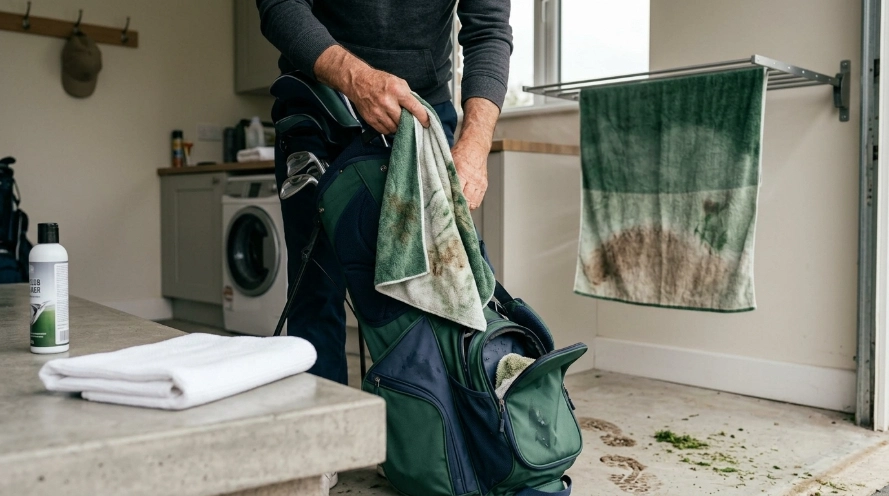
Prevention comes down to airflow, separation, and washing before odor has time to settle in. My simplest rule is that a wet golf towel never spends the night attached to my bag.
That habit matters most after rainy rounds and humid summer golf. Even a towel that looks fairly clean can remain wet deep inside folded fabric.
- Hang it after every wet round: Give both sides exposure to moving air.
- Don’t ball it up: Spread the fabric open so hidden sections can dry.
- Wash muddy towels promptly: Don’t leave soil and grass sitting for several days.
- Create working zones: Keep one section damp for clubs and another section clean and dry.
- Rotate two towels: One can dry or wash while the other stays on your bag.
- Clean the bag area: A clean towel can pick up odors from a damp pocket or trunk.
I like the two-towel rotation because it removes the temptation to clip a half-dry towel back onto the bag. It also gives me a clean backup before an early tee time.
If you’re new to organizing golf equipment, the PGA of America’s equipment guidance gives beginners useful context about common gear carried for a round.
Section Takeaway: The easiest odor to remove is the one that never develops. Get the towel out of your bag, open it fully, and let it dry after every damp round.
Golf Towel Odor FAQ
Why does my golf towel smell even after washing?
It may still contain detergent, softener, oils, or trapped moisture. Rewash it with an appropriate amount of detergent, use an extra rinse, and dry it completely before judging the result.
Can I use vinegar on a smelly golf towel?
Only use vinegar when the towel manufacturer’s instructions allow it. Specialty fabrics, printing, embroidery, magnets, and other components may have specific restrictions, so the care label should come first.
Can I use baking soda to remove golf towel odor?
Check the care instructions before adding any deodorizing product beyond normal detergent. A proper wash, thorough rinse, and complete drying often solve mild musty odors without requiring extra treatments.
Should I use hot water on a smelly golf towel?
Not automatically. Some microfiber golf towel manufacturers specify cold water, so hotter isn’t always better. Follow the sewn-in label or manufacturer’s instructions rather than choosing heat based only on odor strength.
Can fabric softener make a golf towel smell worse?
Residue from softener can coat absorbent fibers and make thorough rinsing more difficult. If a towel smells or has lost absorbency, try rewashing it without softener and giving it an extra rinse.
How often should I wash my golf towel?
Wash it whenever it becomes heavily soiled, smells stale, or remains damp after a dirty round. A towel used frequently on muddy clubfaces may need washing much more often than one used mainly for light drying.
Should I throw away a golf towel that smells musty?
Not immediately. Wash and rinse it correctly, then dry it completely. Replacement becomes more sensible when persistent odor, damaged fibers, mildew staining, or poor absorbency remains despite proper care.
Final Takeaway
Removing odor from a golf towel isn’t mainly about stronger chemicals. It’s about getting soil and residue out of the fibers, rinsing well, and preventing moisture from remaining trapped afterward.
After a wet round, take the towel off your bag as soon as you get home. That small habit has done more for my towels than any complicated laundry routine.