
How Do You Remove Oil and Sunscreen From a Golf Towel?

Quick Answer
To remove oil and sunscreen from a golf towel, rinse or blot away excess residue, pretreat the stain with liquid laundry detergent, and wash the towel in the warmest water allowed by its care label. For stubborn sunscreen marks, following a proven sunscreen stain-removal method before drying gives you a better chance of lifting the oily residue completely.
Quick cleaning steps
- Remove excess residue: Blot oil and rinse away loose sunscreen without aggressively rubbing it deeper into the towel.
- Pretreat the stain: Work a small amount of liquid laundry detergent into the affected fibers.
- Wait briefly: Give the detergent about 5 to 10 minutes to begin breaking down oily residue.
- Rinse thoroughly: Remove loosened sunscreen, detergent, and oil before the main wash.
- Wash correctly: Use the warmest water that the towel’s care label permits.
- Check before drying: Air-dry first if any stain remains because dryer heat can make stubborn marks harder to remove.
One important precaution
- Always follow the towel manufacturer’s care label, especially with microfiber, printed designs, embroidery, or magnetic golf towels.
Golf towels pick up more than mud and grass. During a warm round, my towel can end up carrying sunscreen, skin oil, sweat, damp turf, and residue from grips before I reach the back nine.
The good news is that most oily sunscreen marks on a golf towel are manageable. The key is treating the oil before heat or repeated washing gives it more time to cling to the fibers.
In This Guide
Why Do Oil and Sunscreen Stick to Golf Towels?
Sunscreen and body oil cling to towel fibers because much of the residue is oil-based. Water alone often moves sweat and loose dirt but does a poor job breaking apart greasy deposits.
That difference matters on a golf towel. A quick rinse at the clubhouse may make the towel look cleaner while leaving an oily film behind.
Definition: An oily towel stain is residue containing fats, oils, waxes, or oil-soluble ingredients that attach to fabric fibers and resist plain-water rinsing.
Why sunscreen can leave yellow or orange marks
Sunscreen isn’t always a simple grease stain. Some formulas can leave yellowish or orange discoloration in addition to their oily film.
That is one reason I avoid assuming a golf towel is permanently ruined after one wash. The stain may need another pretreatment cycle rather than stronger scrubbing.
Why a golf towel gets dirty so quickly
A course towel has an unusually messy job. The same piece of fabric may touch your hands, face, grips, clubheads, golf balls, wet grass, sand, and cart surfaces.
- Sunscreen: Transfers from hands, arms, neck, and face.
- Skin oil: Builds up where you repeatedly wipe your hands or forehead.
- Sweat: Adds moisture, salts, and odor-producing residue.
- Grass and soil: Mix with oily areas and create darker marks.
- Grip residue: Transfers when you wipe damp or dirty grips.
That combination can make an ordinary wash less effective. Treating the oily part first usually gives the detergent a much easier job.
How Do You Remove Fresh Oil and Sunscreen Stains?
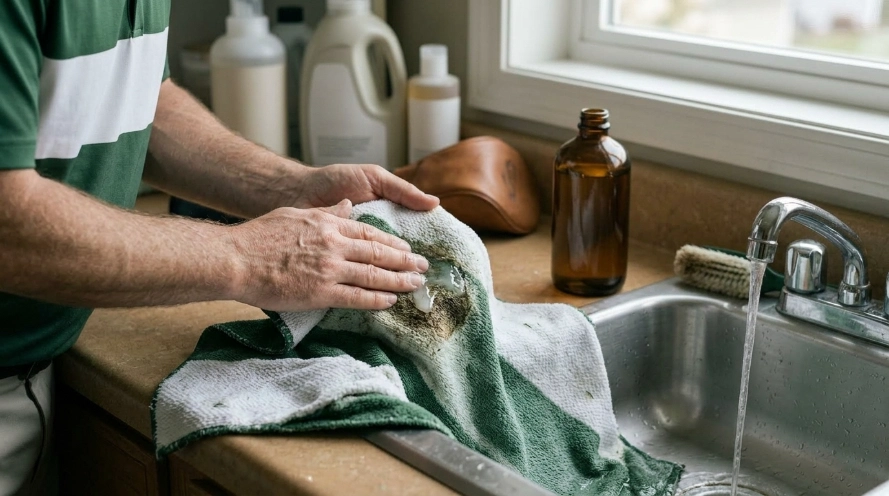
Fresh stains are usually the easiest to handle. My preference is to deal with obvious sunscreen or oily patches before putting the towel into a normal load of laundry.
Step 1: Remove as much excess residue as possible
If the sunscreen is still sitting on the surface, gently lift or rinse away the excess. For oily residue, blot rather than grind it into the fibers.
Don’t attack the mark with hard scrubbing yet. That can spread the stain across a wider section of the towel.
Step 2: Apply liquid detergent
Place a small amount of liquid laundry detergent directly on the stained area. Gently work it through the fibers with your fingers or a soft brush.
Give it about 5 to 10 minutes. That short pretreatment period helps detergent surround and loosen oily material before the wash cycle begins.
Step 3: Rinse the treated area
Rinse thoroughly, especially if you’ve used concentrated detergent or a small amount of hand dishwashing liquid. You don’t want excessive suds going into the washer.
Step 4: Wash according to the care label
Choose the warmest water allowed by the towel manufacturer. Warm water often helps with oily residue, but the care label gets the final say.
That matters most with synthetic microfiber towels. Excessive heat can be harder on synthetic fibers, printed graphics, adhesives, and some attached accessories.
| Stain | First Action | Pretreatment | Before Drying |
|---|---|---|---|
| Fresh sunscreen | Remove excess and rinse | Liquid detergent, about 5 minutes | Inspect for oily or yellow residue |
| Body oil | Blot excess oil | Liquid or enzyme detergent, about 10 minutes | Air-dry if the mark remains |
| Oil mixed with dirt | Brush away loose soil first | Treat the remaining greasy patch | Repeat treatment if needed |
Step 5: Check before using the dryer
Look closely while the towel is still damp. If you can still see or feel oily residue, repeat the pretreatment rather than applying high dryer heat.
This is the step golfers often rush. One more short cleaning cycle can be easier than dealing with a stain after repeated drying.
How Do You Remove Old or Set-In Stains?
An older sunscreen or oil mark normally needs more contact time with detergent. It can still improve, so I wouldn’t retire a favorite towel after one unsuccessful wash.
Pretreat it again before soaking
Apply liquid detergent or an appropriate stain pretreatment to the dry or slightly damp affected area. Work it in gently and leave it for around 10 minutes.
For stubborn oily stains, the general process recommended in this grease stain removal guide also uses pretreatment before washing.
Give stubborn residue a longer soak
If the towel’s care instructions allow it, soak the stained portion in warm water with detergent for about 30 minutes. Then wash it normally.
Check the towel again before drying. Two controlled treatments are usually safer than jumping immediately to harsher chemicals.
What about a yellow or rusty sunscreen stain?
Don’t automatically reach for chlorine bleach. Sunscreen discoloration can behave differently from plain mud, particularly on white fabric.
Start with detergent and a fabric-safe stain remover. If you use an oxygen-based product, confirm that both the product label and towel care instructions allow it.
Avoid mixing cleaning chemicals
Never create your own chemical cocktail. Products containing chlorine bleach, ammonia, acids, or other cleaners can react dangerously when combined.
Use one treatment according to its label, rinse as directed, and only move to another method when it’s safe to do so.


Does the Cleaning Method Change by Golf Towel Material?
Yes. The basic goal stays the same, but the safest wash temperature and drying method depend on the towel’s construction.
Microfiber golf towels
Microfiber is popular because its fine synthetic fibers grab moisture, dirt, and debris effectively. Those same fibers can also hold oily residue if the towel is overloaded with sunscreen.
- Follow the manufacturer’s temperature limit.
- Use a modest amount of detergent.
- Avoid heavy product buildup.
- Keep the towel away from excessive dryer heat unless the label permits it.
- Check attached magnets, clips, or carabiners before machine washing.
Cotton terry towels
Cotton towels can often tolerate a more traditional wash routine. Still, embroidery, printed logos, and sewn accessories may require gentler treatment.
Don’t assume every cotton golf towel can handle hot water. Read the actual care label first.
Waffle-weave towels
Waffle textures create small pockets that help lift moisture and debris. Sunscreen can settle into those textured areas, so thorough rinsing matters after pretreatment.
Should you use fabric softener?
I skip it on towels I depend on for absorbency and cleaning clubs. Products that leave a coating on fibers can work against the towel’s main job.
More detergent isn’t necessarily better either. Excess product that doesn’t rinse clean can leave its own residue.
How Can You Prevent Sunscreen and Oil Buildup?

The easiest stain to clean is the one that never gets heavily embedded. A few small habits make a noticeable difference during hot-weather rounds.
Let sunscreen settle before grabbing your towel
Apply sunscreen as directed and give it time to settle before repeatedly handling your clean towel. Don’t wipe excess sunscreen onto the towel as if it were a disposable rag.
Sunscreen is still important on exposed skin. PGA summer-golf guidance specifically emphasizes sun protection during hot-weather rounds.
Use different areas for different jobs
I like dividing a larger towel mentally into zones. One section handles clubheads and golf balls, while another stays cleaner for hands.
- Wet corner: Use for stubborn dirt on irons and wedges.
- Dry section: Use for drying grips and clubfaces.
- Clean section: Reserve for hands when possible.
PGA hot-weather advice also recommends keeping a towel nearby to help keep grips clean and dry. That’s another reason I don’t want the entire towel saturated with sunscreen.
Carry two towels during humid rounds
This is one of the simplest upgrades I’ve made to a golf-bag routine. A second towel keeps face and hand use separate from mud, sand, and club-cleaning work.
You don’t need anything complicated. Even a small backup towel can prevent the primary towel from becoming an oily, muddy mess by the 14th hole.
Wash it soon after the round
Don’t leave a damp, sunscreen-covered towel balled inside a golf bag for days. Hang it open when you get home and wash it as soon as practical.
That also helps prevent the familiar stale odor that develops when sweat, turf moisture, and body oils remain trapped in damp fabric.
Section Takeaway: Keep sunscreen on your skin rather than your towel, separate clean and dirty towel zones, and wash heavily used towels promptly after the round.
Frequently Asked Questions
Can dish soap remove sunscreen from a golf towel?
A small amount of hand dishwashing liquid may help break down an oily stain, but rinse it thoroughly before machine washing. Excess dish soap can create too many suds in a washing machine, so liquid laundry detergent is often the simpler choice.
Can I use hot water on a microfiber golf towel?
Use only the temperature permitted by the towel’s care label. Microfiber towels are usually synthetic, and unnecessary high heat can be harder on the fibers, printing, attachments, or other components.
Will vinegar remove sunscreen stains?
Vinegar is sometimes used in household laundry routines, but it isn’t my first choice for oily sunscreen. A liquid detergent or suitable stain pretreatment targets the greasy residue more directly and is easier to use consistently.
Can I use bleach on a white golf towel?
Only if the care label and bleach product both say it is safe. Chlorine bleach can damage colors, embroidery, synthetic fibers, and some finishes, so don’t assume a white towel automatically makes bleaching appropriate.
Why does my golf towel still smell after washing?
Oil, sweat, detergent buildup, or soil may still be trapped in the fabric. Pretreat oily areas, avoid overloading the washer, rinse thoroughly, and let the towel dry completely rather than storing it damp.
Should I wash golf towels separately from clothes?
It’s a good idea when the towel is heavily soiled with mud, grass, sunscreen, or cleaning residue. I prefer washing dirty course towels with similar utility items instead of mixing them with lighter everyday clothing.
How often should I wash a golf towel?
Wash it whenever it becomes oily, smelly, muddy, or heavily soiled. During hot summer rounds, that may mean after every outing, while a lightly used dry towel may go longer between washes.
The simplest routine is also the most reliable: remove excess sunscreen or oil, pretreat the stain, wash according to the care label, and inspect the towel before drying.
Do that soon after your round and most golf towels are much easier to keep fresh. I also keep a spare clean towel in my bag so one towel never has to handle every dirty job on the course.