
Can You Use Any Towel as a Golf Towel?

Quick Answer
Yes, you can use almost any clean, absorbent towel as a golf towel. A cotton hand towel or microfiber cloth can clean clubs, dry grips, wipe your hands, and clean a golf ball when the Rules of Golf allow the ball to be cleaned. Purpose-built golf towels are simply more convenient because of their size, texture, attachment points, and wet-weather features.
What to look for in a substitute towel
- Good absorbency: The towel should hold enough moisture to loosen mud while leaving another area dry.
- Useful texture: Cotton loops or microfiber help lift dirt from clubfaces and grooves.
- Manageable size: Choose something large enough to clean clubs but small enough to stay out of your way.
- Low lint: Avoid towels that leave fibers on grips, clubfaces, or golf balls.
- Easy attachment: A loop, clip, or secure place on your bag prevents repeated bending and searching.
Simple recommendation
- If you already own a small cotton or microfiber towel, try it before spending money on a dedicated golf towel.
If you’ve forgotten your golf towel before a round, there’s no reason to panic. I’ve used ordinary towels as substitutes, and the basic job isn’t complicated.
The important question is whether the towel works well around a golf bag. This guide explains which household towels work, what dedicated golf towels add, and which types I’d leave at home.
In This Guide
Can Any Towel Work as a Golf Towel?
Most ordinary towels can perform the basic jobs of a golf towel. They can remove dirt, absorb water, dry your hands, and help keep your equipment cleaner.
A golf towel is simply a towel carried during a round for cleaning or drying golf equipment, golf balls, hands, grips, or other gear. It doesn’t need a special shape to perform those basic jobs.
That means an inexpensive hand towel can be perfectly usable. A clean microfiber cloth from your garage can also work if it hasn’t been exposed to grease or harsh chemicals.
- Cotton towels are familiar, absorbent, and easy to wash.
- Microfiber towels are lightweight and useful for lifting moisture and surface dirt.
- Old hand towels can make practical low-cost golf towels.
- Small gym towels often work if they fit comfortably on your bag.
The limitation is convenience. A normal towel may have no clip, no reinforced loop, and no useful way to stay attached while you’re walking.
Large bath towels create the opposite problem. They can drag near the ground, snag on equipment, or take up unnecessary space.
There is also a rules distinction worth remembering. The USGA allows towels as normal equipment, and Rule 4.3 even addresses permitted towel use around a club’s grip.
However, carrying a towel doesn’t mean you can clean your golf ball whenever you want. Rule 14.1c controls when a lifted ball may be cleaned.
As of 2026, that practical distinction remains important. Your towel can be ordinary, but how you use it during competition still needs to follow the Rules of Golf.
What Makes a Towel Good for Golf?
A good golf towel needs to handle dirt and moisture without becoming inconvenient. Material matters, but size, texture, placement, and drying ability matter too.
Absorbency matters on wet courses
Golf creates two different towel jobs. You may need moisture to loosen mud, then a dry area to finish the cleaning job.
I prefer keeping one section slightly damp and another section dry. That simple setup is more useful than soaking the whole towel.
- Damp section: Loosens grass, soil, and mud from the clubface.
- Dry section: Removes remaining moisture before the club returns to the bag.
- Clean section: Gives you somewhere better to wipe hands or grips.
Texture helps with dirt
A smooth decorative towel may absorb water while struggling with packed dirt. Textured cotton and waffle-style microfiber give the surface more contact with the mess.
This is one reason major golf brands use microfiber in dedicated towels. Callaway’s golf towel range includes absorbent designs made for clubs, balls, and hands.
Size should match how you play
Walkers usually appreciate a towel that stays controlled against the bag. Cart golfers have more flexibility because a larger towel can remain in the cart.
Don’t assume larger always means better. A towel only needs enough usable surface area to stay functional throughout your round.
Attachment makes a bigger difference than expected
A home towel often works until you need somewhere secure to put it. Purpose-built towels usually solve that problem with a clip, loop, handle, or bag-friendly shape.
You can improvise with a safe bag attachment. Just make sure the towel can’t fall into a wheel, drag through mud, or interfere with your clubs.
What Is the Difference Between a Golf Towel and a Regular Towel?
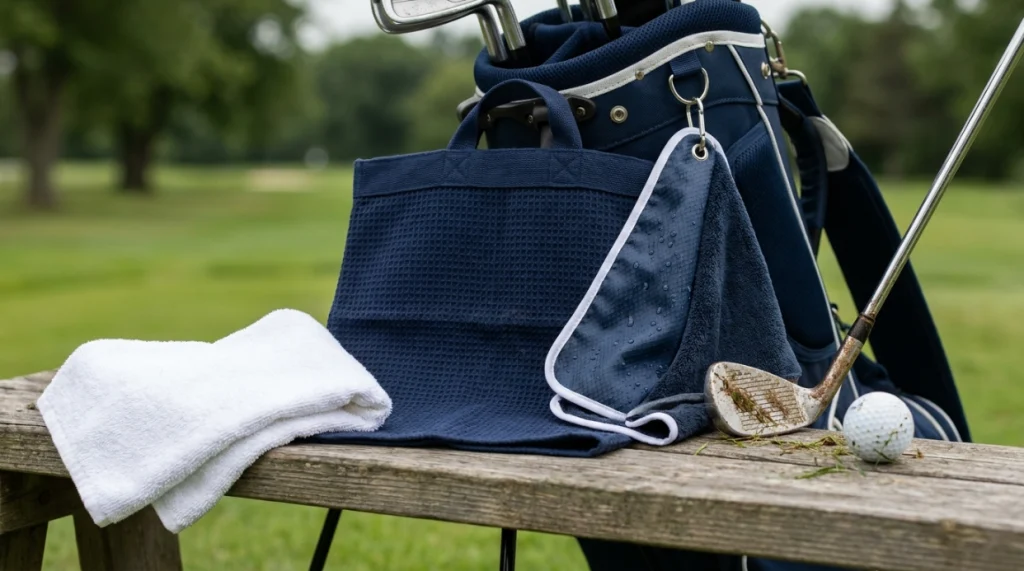
The biggest difference is design rather than cleaning ability. Golf towels are shaped and equipped for repeated use around a golf bag.
Here is a practical comparison using ordinary household towels and two current purpose-built examples.
| Towel type | Material or construction | Size | Bag attachment | Best use |
|---|---|---|---|---|
| Household hand towel | Varies; commonly cotton or blended fabric | Varies by manufacturer | Usually none | Low-cost substitute |
| Ogio Golf Towel | 380 gsm, 85/15 waffle microfiber | 37 × 19 inches | Reinforced top handle | Large cleaning surface |
| Titleist StaDry Performance Towel | Water-repelling outer construction with microfiber interior | 20 × 20 inches | Integrated clip | Wet-weather convenience |
The table shows why a dedicated golf towel can feel better without being essential. You’re mostly paying for golf-specific construction and convenience.
A household towel still handles the fundamental cleaning job. It simply may require more thought about where you store or attach it.


Which Household Towels Work Best for Golf?
A clean microfiber cloth or medium cotton hand towel is usually the easiest household substitute. Both provide useful cleaning area without the bulk of a full bath towel.
Microfiber cloths
Microfiber is a strong choice for golfers who want something light and easy to carry. Waffle-textured versions are particularly convenient for clubfaces and everyday course dirt.
Keep automotive or workshop microfiber separate from golf gear. Residual waxes, cleaners, grease, or abrasive debris don’t belong on your grips and clubheads.
Cotton hand towels
A basic cotton hand towel remains one of the simplest substitutes. It’s absorbent, washable, inexpensive, and easy to replace.
An older towel is fine if it’s still clean and structurally sound. Frayed loops that catch on equipment are a reason to retire it.
Small gym towels
Gym towels can work well because they’re designed around sweat and frequent washing. Check the dimensions before clipping or tucking one onto your golf bag.
A long towel that swings below the bag can collect more dirt than it removes. Secure placement matters.
Towels I would avoid
- Large bath sheets: They are bulky and awkward around a golf bag.
- Lint-heavy towels: Loose fibers can stay on clubfaces and grips.
- Decorative towels: Some prioritize appearance rather than absorbency or cleaning texture.
- Greasy workshop towels: Residue can transfer directly onto golf equipment.
- Heavily treated towels: Strong residue or coatings may make them unpleasant for grips and hands.
Don’t overthink the replacement. Start with a clean towel you already own and see whether it remains practical for 18 holes.
How Should You Use a Towel During a Round?
The most useful habit is cleaning your clubs as you play. Dirt is easier to remove before it dries inside the grooves.
- Moisten one section of the towel before the round or early in play.
- Wipe the clubface after shots that leave soil or grass on the face.
- Use the textured area to work loose dirt away from the grooves.
- Finish with a dry section before returning the club to your bag.
- Keep another clean area available for your hands or grips.
I find this wet-side, dry-side system easier than carrying two towels during normal conditions. On a rainy day, a second dry towel becomes much more useful.
Be careful when cleaning your golf ball
A towel is useful for cleaning a golf ball, but the Rules determine when cleaning is permitted. On the putting green, a lifted ball may be cleaned.
Elsewhere, Rule 14.1c lists situations where cleaning a lifted ball is restricted. That includes lifting solely to identify the ball, except for the amount of cleaning needed for identification.
The R&A and USGA jointly govern the Rules of Golf. Tournament golfers should know the applicable cleaning procedure instead of assuming every lifted ball can go straight into a towel.
Keep grips as dry as possible
A dry grip supports predictable contact between your hands and the club. Keep the cleanest dry section of your towel away from muddy clubheads when conditions turn wet.
If rain becomes steady, protect that section under your umbrella, bag hood, or another sheltered area. A completely soaked towel loses much of its usefulness for drying.
When Is a Dedicated Golf Towel Worth Buying?
A dedicated towel becomes worthwhile when convenience starts mattering more than saving a few dollars. Frequent golfers usually benefit most from secure attachment and golf-specific sizing.
- You walk regularly: A secure loop or clip keeps the towel accessible without carrying it.
- You play wet courses: Weather-focused designs can provide better moisture management.
- You clean after most shots: A larger textured surface gives you more usable cleaning area.
- You dislike loose accessories: Purpose-built attachment systems keep the bag more organized.
- You play often: Repeated convenience becomes more valuable across dozens of rounds.
You don’t need an expensive towel simply because you play golf. Plenty of golfers can use the same clean cotton towel for years.
Dedicated designs make the strongest case in rain. Titleist, for example, uses a water-repelling exterior and microfiber interior in its StaDry design.
For occasional golfers, I’d spend money elsewhere first. Balls, gloves, lessons, range time, or worn equipment may affect your experience more than replacing a towel that already does its job.
For regular golfers, however, a good towel is an inexpensive convenience that gets used throughout almost every round. That’s enough reason to buy one when your household substitute starts becoming annoying.
Frequently Asked Questions
Can I use a normal bathroom towel for golf?
Yes. A clean bathroom towel can clean clubs and absorb moisture, but a full-size bath towel is usually larger than necessary. A smaller hand towel is easier to attach, carry, wash, and keep away from the ground.
Can I use a microfiber car towel as a golf towel?
Yes, provided it is clean and hasn’t been used with automotive chemicals, waxes, oils, or gritty debris. A fresh microfiber towel can be a practical option because it’s lightweight, absorbent, and easy to pack.
Is cotton or microfiber better for a golf towel?
Both materials can work well. Cotton is absorbent and familiar, while microfiber is usually lighter and often offers useful cleaning texture. Your preferred size, feel, attachment method, and playing conditions matter more than choosing one universal winner.
Do I need to wet my golf towel?
You don’t have to, but a damp section helps loosen dried soil and grass from clubfaces. Keep another part dry so you can remove remaining moisture and maintain a separate area for hands or grips.
Can I clean my golf ball with a towel?
Yes, when the Rules of Golf permit you to clean the ball. A ball lifted from the putting green may be cleaned, while Rule 14.1c identifies several situations elsewhere on the course where cleaning is restricted.
Why do golfers hang towels from their bags?
Hanging the towel keeps it accessible after shots and lets golfers clean equipment without searching through a bag pocket. It can also help a damp towel remain exposed to airflow rather than being stored wet inside the bag.
How often should I wash my golf towel?
Wash it whenever accumulated dirt, odor, or moisture makes it unpleasant or ineffective. Golfers playing muddy or rainy courses may need to wash towels after each round, while dry-weather use may require cleaning less often.
The takeaway is simple: you don’t need a special towel to play golf. A clean cotton or microfiber towel can handle the job if it’s absorbent, manageable, and easy to keep accessible.
If your regular towel keeps slipping off the bag, dragging on the ground, or becoming soaked too quickly, that’s when a purpose-built golf towel starts earning its place. Until then, use what works and keep your clubs clean.