
What Should a Golf Towel Be Made Of?

Quick Answer
A golf towel should usually be made of waffle-weave microfiber if you mainly clean clubs and golf balls. It is lightweight, textured, and quicker to dry than thick cotton. Cotton remains an excellent choice for hands, sweat, and golfers who prefer a softer feel, while a quality blend can balance both jobs. If fast drying matters most, see these quick-dry golf towel options.
What to look for
- Club cleaning: Choose textured waffle microfiber for mud, grass, sand, and moisture.
- Hands and sweat: Choose soft cotton terry when comfort against skin matters most.
- Wet weather: Favor a material that releases moisture quickly between holes.
- All-around use: Consider a microfiber-cotton blend when you want balanced feel and drying.
- Weave matters: A textured surface usually cleans golf equipment better than a flat, smooth face.
Simple recommendation
- Carry microfiber for clubs and balls, plus a separate soft cotton towel if you regularly wipe your face or hands.
Golf towels look simple until you play a muddy morning round or need a perfectly dry grip before an important shot. I’ve found that the fabric choice matters more than logos, colors, or clever attachments.
In this guide, I’ll explain microfiber, cotton, waffle weave, blended fabrics, and the features that make a towel practical on the course in 2026.
In This Guide
What Is the Best Material for a Golf Towel?
For most golfers, waffle-weave microfiber is the best all-around golf towel material. Its textured surface works well for wiping moisture and loose debris from clubfaces, grooves, and golf balls.
Microfiber also tends to feel lighter than thick cotton and dries relatively quickly. That matters when one section of the towel stays damp for cleaning while another needs to remain usable.
Definition: Microfiber is a fabric made from extremely fine synthetic fibers, commonly polyester or a polyester-polyamide blend. “Waffle weave” describes the textured grid-like construction of the fabric, not the fiber itself.
That distinction is important. A towel can be microfiber without having a waffle weave, and two microfiber towels can feel completely different.
My preference for club cleaning is a textured towel rather than a slick one. The texture gives me something to work against when a wedge face has damp soil or grass sitting in the grooves.
- Best overall: Waffle-weave microfiber
- Best for skin comfort: Cotton terry
- Best compromise: Cotton-microfiber or similar blended fabric
- Best priority in rain: Lightweight, quick-drying construction
Is Microfiber or Cotton Better for a Golf Towel?
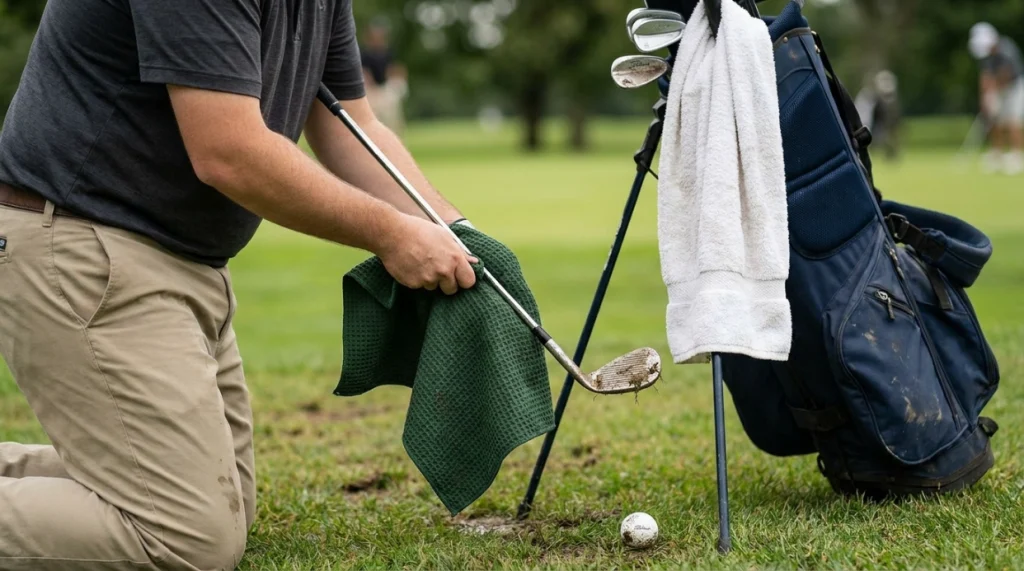
Microfiber is generally better for cleaning golf equipment, while cotton is often better for comfort. Neither material wins every category.
If moisture capacity is your priority, compare dedicated absorbent golf towels rather than choosing by fabric name alone.
| Material | Typical Feel | Drying | Best Use | Main Tradeoff |
|---|---|---|---|---|
| Waffle microfiber | Light, textured | Fast | Clubs and balls | Less plush on skin |
| Cotton terry | Soft, substantial | Slower | Hands and sweat | Can remain damp longer |
| Smooth microfiber | Thin, smooth | Fast | Light wiping and drying | Less scrubbing texture |
| Blended fabric | Varies by blend | Medium to fast | General-purpose use | Performance varies |
When cotton makes more sense
Cotton deserves a place in the bag when softness matters. A good cotton golf towel feels more natural against your hands, neck, or face.
Traditional terry cloth golf towels also provide the familiar plush feel many golfers expect from a towel.
When microfiber makes more sense
Choose microfiber when the towel’s main job is dirty equipment. It suits golfers who regularly wipe irons, wedges, balls, and wet grips throughout a round.
Why Does Waffle Weave Matter?
Waffle weave matters because its raised grid gives the towel a textured cleaning surface. That structure is useful when you need to pick up loose dirt instead of simply moving moisture around.
Think about a wedge after playing from damp turf. A smooth towel can wipe the face, but texture gives you more grip as you work across the grooves.
- Raised texture: Helps collect loose grass, sand, and mud.
- Lower bulk: Many waffle towels stay compact on a carry or stand bag.
- Useful wet or dry: You can dampen one section and leave another dry.
- Easy handling: The texture gives your fingers more purchase while wiping equipment.
Waffle weave should not be confused with softness. If that is your priority, compare soft golf towels and check the actual fabric construction.
I also like separating towel duties. The lower portion can handle muddy clubs, while the upper section stays cleaner for grips.


Which Golf Towel Material Works Best for Different Playing Conditions?
Your weather and playing style should influence the fabric you choose. A towel that works well during a dry cart round may be frustrating during a wet walking round.
Wet and muddy courses
I would choose waffle microfiber first. It keeps bag weight reasonable and is practical when you repeatedly clean wet clubfaces.
Hot summer rounds
For sweat, a separate cotton towel is hard to beat for comfort. Keep it away from the section used for muddy wedges and golf balls.
Walking with a light bag
Weight and bulk matter more when you carry. A compact microfiber towel gives you useful cleaning area without hanging a thick, waterlogged towel from the bag.
One towel for everything
A blend can make sense when you want one towel instead of two. These blended fabric golf towels show the range of constructions available.
- Rainy round: Waffle microfiber
- Hot round: Cotton for skin, microfiber for clubs
- Carry bag: Lightweight microfiber
- Cart golf: Larger cotton, microfiber, or dual-towel setup
- Minimalist setup: Versatile blended fabric
What Else Should You Look for in a Golf Towel?
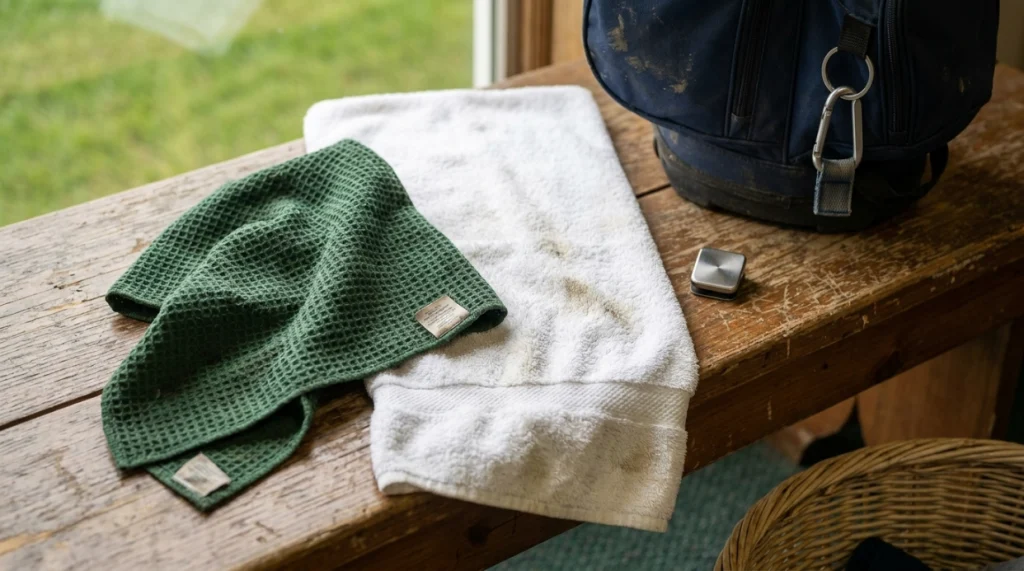
Material is the starting point, but size, attachment, construction, and care instructions determine whether the towel works in your bag. I would check those details before paying extra for branding.
Choose enough surface area
Compact towels around 16 by 16 inches are easy to carry. Larger or tri-fold designs around 16 by 24 inches give you more room to separate wet and dry areas.
Check the attachment
Carabiners and loops suit most golf bags. Magnetic attachments are convenient around carts, while a simple loop can reduce hardware and weight.
Think about towel care
Read the manufacturer’s washing instructions before cleaning microfiber. Fabric softener can reduce the useful properties of some microfiber fabrics, so follow the towel’s specific care label.
Keep rules and equipment information separate from marketing
A towel is an accessory, but golfers often research it alongside clubs, balls, brushes, and other equipment. For official equipment information, I rely on the USGA equipment resources and The R&A Equipment Standards.
For broader equipment coverage and comparisons, the Golf Digest equipment section is another useful industry resource.
Golf Towel Material FAQs
What is the best fabric for cleaning golf clubs?
Waffle-weave microfiber is one of the most practical fabrics for club cleaning. Its textured surface helps pick up loose dirt, grass, sand, and moisture while remaining relatively lightweight and quick to dry.
Are cotton golf towels good?
Yes. Cotton golf towels are soft, absorbent, and comfortable for wiping hands or sweat, but thick cotton usually dries more slowly than lightweight microfiber.
Is microfiber safe for golf clubs?
A clean, soft microfiber golf towel is suitable for routine wiping of clubheads. Remove trapped grit before rubbing polished or delicate surfaces because abrasive debris in any towel can cause marks.
Should a golf towel be wet or dry?
Both can be useful. Dampening one section helps loosen dirt on clubs and balls, while keeping another section dry gives you a clean area for grips, hands, or final drying.
Is polyester good for a golf towel?
Yes. Polyester is commonly used in microfiber golf towels, either alone or in blends, and works well when low weight and quick drying are priorities.
How many golf towels should I carry?
One towel can work in dry conditions, but two are more versatile. I prefer one microfiber towel for clubs and balls and a second clean towel for hands or sweat during hot or wet rounds.
What color golf towel is best?
Color is mostly personal preference. Dark colors hide dirt better, while lighter colors make it easier to see when the towel needs washing.
My final pick: choose waffle-weave microfiber if you want one practical towel for everyday golf. Choose cotton when softness matters more, or carry one of each if you want the most versatile setup.
The best golf towel is not the one with the fanciest logo. It is the one that stays useful from the first tee through the eighteenth green.