
What Makes a Good Golf Towel?

Quick Answer
A good golf towel absorbs moisture, removes dirt without damaging club finishes, dries reasonably fast, and stays easy to reach during a round. Microfiber is usually the most versatile choice, while cotton works well for golfers who prefer a softer, heavier towel. You can also review general golf equipment guidance when building the rest of your on-course setup.
What I Look For
- Good absorbency: It should handle dew, rain, sweat, and damp grips without becoming useless after one hole.
- Effective cleaning: The fabric should lift grass, sand, and soil from clubfaces and grooves.
- Fast drying: A towel that dries quickly is easier to manage during humid or rainy rounds.
- Useful size: It needs enough surface area for separate wet and dry sections without becoming bulky.
- Secure attachment: A loop, clip, grommet, or magnet should keep it accessible without dragging on the ground.
Simple Buying Tip
- Choose function first. Material, size, attachment method, and weather conditions matter more than a logo.
A golf towel looks like a simple accessory until you play a wet morning, hit from a sandy lie, or grab a grip covered in moisture. I use mine on almost every hole, which makes its design more important than most golfers expect.
This guide explains what makes a good golf towel in 2026, including material, size, absorbency, attachment style, cleaning ability, and care.
In This Guide
What Makes a Good Golf Towel?
A good golf towel combines absorbency, cleaning ability, durability, quick drying, and convenient access. It should solve several small problems without demanding much attention.
Definition: A golf towel is an equipment-care accessory used to manage moisture, clean clubheads, wipe golf balls when permitted, and keep hands or grips dry.
The best towel isn’t necessarily the thickest one. A thick towel may absorb plenty of water but become heavy once soaked.
I prefer a towel that gives me separate working areas. One section can handle mud and grass, while another stays reasonably clean for grips and hands.
- Absorbency: The fibers should pull water away instead of pushing it across the surface.
- Texture: A slight texture helps loosen dried grass and soil.
- Softness: The fabric shouldn’t feel unnecessarily abrasive against painted or polished surfaces.
- Drying speed: Faster drying reduces the chance of carrying a soaked towel all afternoon.
- Durability: Frequent washing shouldn’t quickly destroy the edges, stitching, or attachment point.
- Accessibility: You should reach it without digging through a golf-bag pocket.
Cleaning matters because debris sits between the ball and clubface at impact. A towel doesn’t create extra skill, but it helps you start the shot with cleaner equipment.
The same idea applies to grips. Moisture from rain, dew, or sweaty hands can make a grip harder to hold securely.
Section Takeaway: A good golf towel is a working tool, not decoration. Choose one that cleans effectively, manages moisture, and remains accessible throughout the round.
Which Material Is Best for a Golf Towel?
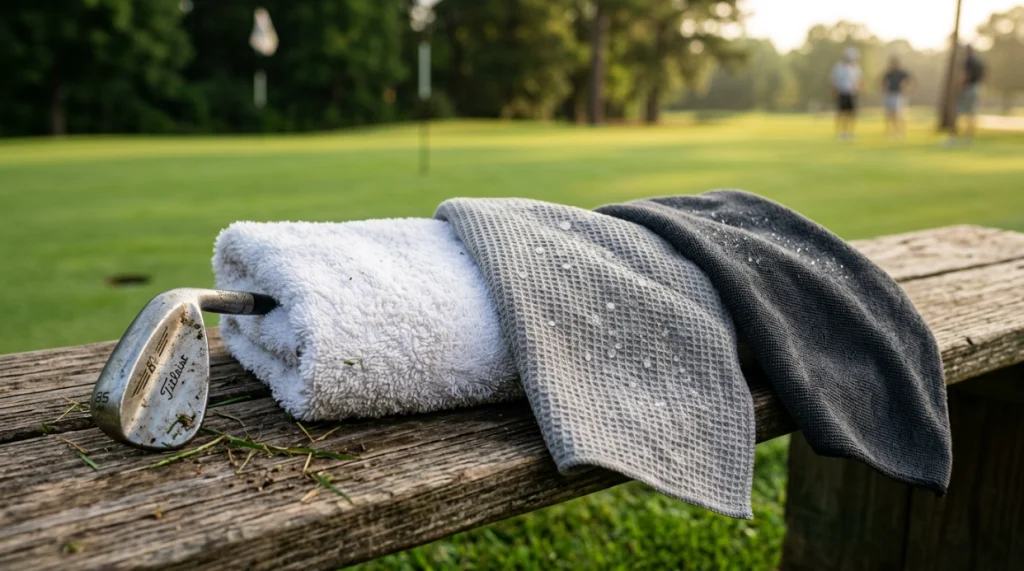
Microfiber is the best all-around golf towel material for most players because it combines absorbency with relatively fast drying. Cotton remains a strong option when softness and a traditional feel matter more.
Microfiber golf towels
Microfiber uses very fine synthetic fibers that create a large working surface. The texture can pick up moisture and small particles without requiring a heavy towel.
That’s useful after a bunker shot or a wet approach. I can dampen one corner for clubface cleaning and leave most of the towel dry.
- Best for: Everyday golf, humid conditions, travel, and golfers who clean clubs frequently.
- Main advantage: Strong balance between cleaning and drying speed.
- Possible drawback: Some microfiber can hold grass, lint, or debris until washed.
Cotton golf towels
Cotton has a familiar soft feel and can absorb plenty of moisture. Traditional terry and woven golf towels also tend to feel substantial in the hand.
The trade-off is drying time. A large cotton towel can become heavier after repeated exposure to rain or a wet cleaning section.
- Best for: Dry-weather rounds, cart bags, and golfers who like a plush towel.
- Main advantage: Soft feel and good water absorption.
- Possible drawback: Usually slower drying than lightweight microfiber.
| Towel Type | Absorbency | Drying Speed | Cleaning Texture | Best Use |
|---|---|---|---|---|
| Microfiber | High | Fast | Fine, effective texture | All-around club and moisture care |
| Terry cotton | High | Moderate to slow | Soft loops | Dry conditions and general wiping |
| Waffle microfiber | High | Fast | Raised waffle pattern | Mud, grass, and groove cleaning |
Material alone doesn’t determine quality. Stitching, fabric density, edge construction, and attachment hardware also affect how long a towel lasts.
Section Takeaway: Microfiber is the safest all-purpose choice, while cotton suits golfers who value softness and don’t mind a slower-drying towel.
What Size and Attachment Style Work Best?
A useful golf towel should be large enough for wet and dry sections but compact enough to stay clear of the wheels, ground, and clubs. Your bag style should influence the final size.
Small towels work well near the green. Larger towels make more sense when you regularly clean multiple clubs throughout an 18-hole round.
Bag towels versus greenside towels
- Full-size bag towel: Better for repeated club cleaning and wet-weather play.
- Tri-fold towel: Compact and easy to hang from a bag.
- Small greenside towel: Easy to carry with a putter and wedge around the green.
Attachment style matters almost as much as size. A towel that constantly falls off the bag won’t stay useful for long.
- Carabiner or clip: Simple, secure, and easy to move between bags.
- Grommet: Reinforces the attachment point and works well with clips.
- Center slit: Lets the towel hang over a club or bag hardware without extra metal.
- Magnetic attachment: Offers fast removal for golfers who frequently carry the towel toward the green.
A magnet is convenient, but attachment strength matters. I’d rather use a basic clip than spend half the round checking whether my towel disappeared.
For equipment standards and broader golf-equipment information, both the USGA and The R&A provide official resources for golfers.
Section Takeaway: Match the towel to your bag and routine. Secure access matters more than choosing the largest possible towel.


How Should You Use a Golf Towel During a Round?
The easiest method is to create separate wet and dry zones. Use the damp area for cleaning dirt, then finish with a dry area when necessary.
That simple system prevents the entire towel from becoming soaked and muddy.
Use one section for clubfaces
After a shot from damp turf or sand, wipe visible debris from the clubface before returning the club to your bag. Pay particular attention to wedges and short irons.
Dried soil becomes harder to remove later. A quick wipe takes only a few seconds.
Keep another section dry for grips
Grip moisture creates a different problem, so I avoid using the muddy section on my hands or grips. A dry corner becomes much more valuable when rain starts.
On especially wet days, carrying two towels works even better. One can handle clubs while the second stays protected for grips and hands.
Be careful when cleaning your golf ball
Golfers can’t automatically lift and clean a ball whenever they want. The circumstances depend on the Rules of Golf.
Check the official USGA or The R&A guidance when you’re unsure whether lifting and cleaning is permitted in a particular situation.
Section Takeaway: Divide your towel into jobs. Keeping a clean, dry section available makes the towel far more useful late in the round.
How Do You Keep a Golf Towel Clean?
Wash your golf towel before dirt, moisture, and odor become deeply embedded. A towel used in mud or heavy rain should usually be cleaned sooner than one used on a dry range session.
Always check the manufacturer’s care label first. Fabric blends and printed decorations may require different treatment.
- Shake off loose debris: Remove dried grass, sand, and soil before washing.
- Separate heavily dirty towels: Avoid transferring golf-course dirt onto delicate clothing.
- Follow the care label: Use the recommended temperature and detergent instructions.
- Dry completely: Don’t leave a damp towel folded inside a golf-bag pocket.
- Inspect the attachment: Check clips, magnets, stitching, and grommets before the next round.
Microfiber deserves special attention because residues can change how the fabric feels or absorbs water. Follow its product-specific washing instructions rather than assuming every towel should be washed identically.
I also remove my towel from the bag after a rainy round. Leaving a wet towel buried beside gloves and clothing creates an avoidable mess.
Replace a towel when it stops cleaning effectively, develops permanent odor, tears around the attachment, or becomes too worn for regular use.
Section Takeaway: Proper drying is just as important as washing. Don’t store a damp golf towel inside your bag between rounds.
How Do You Choose the Right Golf Towel?
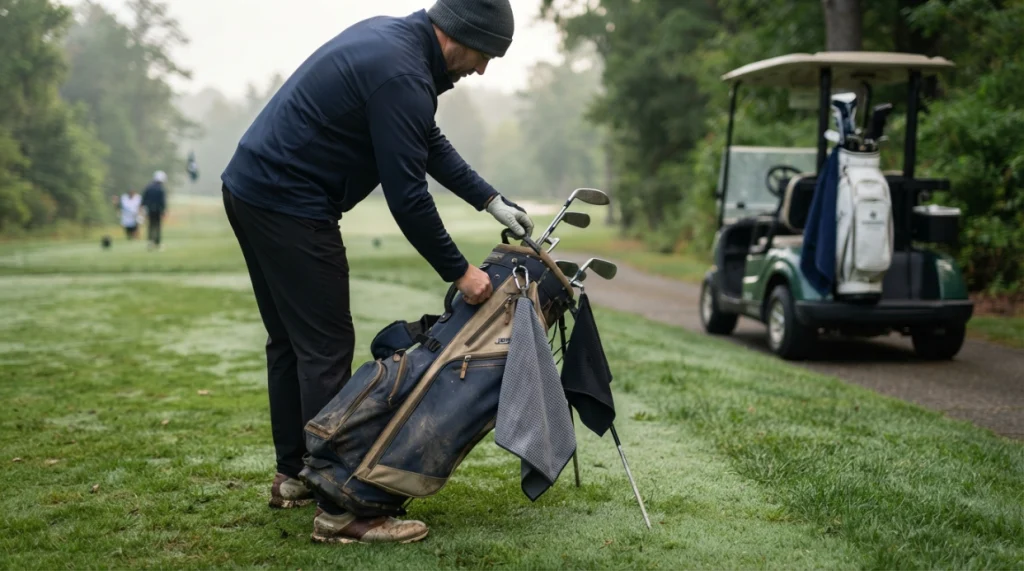
Choose according to how and where you play. A golfer walking in humid conditions needs something different from a player using a cart in a dry climate.
Start with your most common problem instead of shopping by appearance.
- Frequent rain: Prioritize fast drying and enough surface area to protect a dry section.
- Muddy courses: Choose textured microfiber that releases soil when washed.
- Hot conditions: Look for lightweight fabric that won’t remain saturated.
- Cart golf: A larger towel is easier to manage because weight matters less.
- Walking golf: Keep size and overall bag weight under control.
- Greenside use: Consider a compact towel with a strong magnet or easy-carry design.
Color can also have a practical role. A lighter cleaning towel makes dirt easy to see, while darker colors hide stains better.
Don’t let branding override function. Titleist, Callaway, TaylorMade, Ping, Cobra, Mizuno, Srixon, and many accessory brands offer golf towels, but the logo doesn’t tell you whether the towel fits your routine.
Look at material, dimensions, attachment design, wash instructions, and construction quality. Those details determine whether you’ll still want the towel after dozens of rounds.
For broader gear education and equipment coverage, Golf Digest is another established golf resource worth checking.
My simple rule is this: if I can clean a muddy wedge, dry my hands, and find the towel instantly without thinking about it, the design is doing its job.
Section Takeaway: Buy for your playing conditions first. The best golf towel is the one that solves your most common on-course cleaning and moisture problems.
Frequently Asked Questions
Is microfiber or cotton better for a golf towel?
Microfiber is usually better for all-around golf because it cleans well and tends to dry faster. Cotton is a good alternative if you prefer a softer, traditional towel and don’t mind carrying more moisture after wet conditions.
Should a golf towel be wet or dry?
Ideally, it should provide both. Dampen one section for removing dirt from clubs while keeping another section dry for grips, hands, and final wiping.
How many golf towels should I carry?
One towel is enough for many dry-weather rounds. In rain or heavy morning dew, two towels are useful because you can dedicate one to dirty clubs and protect the other for grips and hands.
What size golf towel is best?
There isn’t one perfect size. Choose enough surface area to create separate wet and dry zones, but make sure the towel doesn’t drag on the ground or interfere with your bag.
Do I need a magnetic golf towel?
No. Magnetic towels are convenient because you can remove and reattach them quickly, especially near the green. A secure carabiner, grommet, or center-slit design can work just as well.
How often should I wash my golf towel?
Wash it whenever accumulated mud, grass, moisture, or odor starts affecting its usefulness. Towels used during wet or muddy rounds generally need cleaning sooner than towels used in dry conditions.
Can I use a normal household towel for golf?
Yes, provided it’s absorbent, durable, and easy to secure. Golf-specific towels mainly add useful features such as clips, grommets, magnets, compact shapes, or fabric textures designed for equipment cleaning.
The bottom line: A good golf towel should absorb water, clean dirt effectively, dry without becoming a burden, and stay within easy reach.
For most golfers, a durable microfiber towel with a secure attachment is the easiest starting point. Keep one section damp, one section dry, wash it regularly, and you’ll have an accessory that earns its place on the bag every round.
Before your next tee time, check the towel hanging from your bag. If it’s clean, dry, secure, and ready for the first muddy clubface, you’re set.