
What Is the Best Material for a Golf Towel?

Quick Answer
Microfiber is the best golf towel material for most golfers because it cleans clubfaces well, absorbs moisture without excessive bulk, and dries faster than thick cotton. A waffle-weave microfiber towel is especially useful for mud, grass, and dirty grooves, while cotton remains an excellent choice for golfers who value softness and moisture absorption. For broader golf equipment guidance, the PGA of America is a useful resource.
Best Material by Priority
- Best overall: Waffle-weave microfiber balances cleaning ability, low weight, and drying speed.
- Best for moisture: Thick cotton terry works well when you need plenty of absorbent fabric.
- Best for walking: Lightweight microfiber reduces bulk on a stand or carry bag.
- Best for mud: Textured microfiber helps loosen soil and grass from clubfaces.
- Best traditional feel: Cotton provides the familiar softness of a quality terry towel.
A golf towel seems like a simple accessory until your wedge comes out of wet rough covered in grass and soil. I’ve found that towel material matters most when you need to clean a club quickly without turning half your golf bag into a wet mess.
This guide explains microfiber, cotton, polyester blends, waffle weaves, and other common options. You’ll also see which material works best for different weather, bags, and cleaning jobs.
In This Guide
Definition: A golf towel is a reusable cloth carried with your golf equipment to remove dirt, grass, sand, and moisture from clubs, balls, grips, and hands during a round.
What Material Is Best for a Golf Towel?
For most golfers, microfiber is the best all-around golf towel material. It combines useful cleaning texture, relatively low weight, good moisture handling, and quick drying.
Microfiber is made from extremely fine synthetic fibers. Golf towels commonly use polyester-based microfiber, sometimes blended with polyamide to change softness and absorbency.
Why Microfiber Works So Well on the Golf Course
The biggest advantage is versatility. A single microfiber towel can handle damp clubheads, dirty golf balls, grass-covered wedges, and light moisture on grips.
- Low bulk: Microfiber can provide a large cleaning surface without the thickness of heavy cotton.
- Fast drying: It generally dries faster than a thick terry towel after becoming damp.
- Useful texture: Waffle and textured versions help lift dirt instead of only spreading it.
- Easy storage: The fabric folds into relatively little space inside a golf bag.
- Good for walking: Lower weight becomes noticeable when you carry your bag for 18 holes.
I particularly like microfiber on damp morning rounds. I’ll wet one corner before the first tee and leave the opposite side dry.
The damp section handles clubfaces. The dry area stays available for hands and grips.
When Cotton May Be the Better Choice
Cotton is still one of the best materials for golfers who want a soft, substantial towel. Terry cotton uses raised loops that give the fabric plenty of surface area for moisture.
- Soft feel: Cotton feels comfortable on hands and grips.
- Good absorption: A substantial cotton towel can hold plenty of water.
- Traditional construction: Many caddie-style towels use familiar cotton or cotton-rich fabrics.
- Useful wet zone: A damp cotton section works well for loosening dried dirt.
The tradeoff is weight. Once a thick cotton towel becomes saturated, it can feel noticeably heavier on a carry bag.
It may also remain damp longer after the round. That matters if you regularly play several days in a row.
Section Takeaway: Microfiber is my first choice for an all-purpose golf towel. Cotton is better when softness and heavy moisture absorption matter more than low weight and drying speed.
How Do Microfiber, Cotton, and Blends Compare?
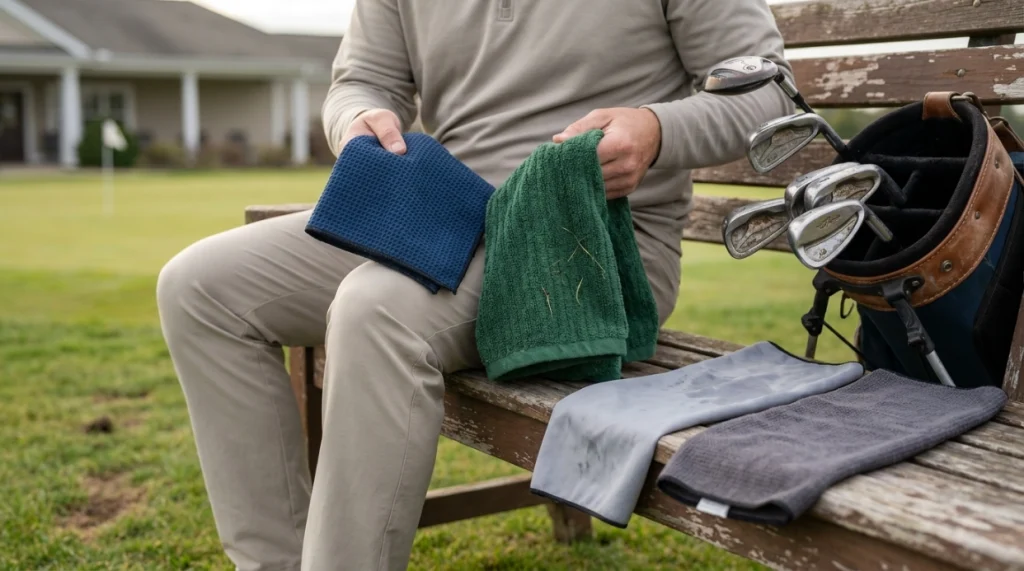
Microfiber, cotton, and blended golf towels can all work well. The best choice depends on what you expect the towel to do most often.
| Material | Typical Construction | Drying Tendency | Best Use | Main Tradeoff |
|---|---|---|---|---|
| Microfiber | Fine synthetic fibers, often polyester-based and sometimes polyester/polyamide blends | Generally fast | Clubfaces, balls, walking golf, everyday cleaning | Fine debris can cling to some weaves |
| Cotton Terry | Natural cotton fibers with raised loops | Slower when thick | Hands, grips, wet conditions, caddie towels | Can become heavy when saturated |
| Polyester Fabric | Synthetic polyester yarn | Usually fast | Light wiping, compact towels, printed designs | Performance depends heavily on weave and texture |
| Blended Fabric | Two or more fiber types combined | Varies by blend | Golfers wanting a balance of feel and drying speed | Quality varies considerably by construction |
Microfiber vs. Cotton
Microfiber wins for portability and drying speed. Cotton wins for a plush feel and the familiar absorption of a traditional towel.
Neither material automatically cleans better in every design. Weave and texture matter almost as much as fiber type.
What About Polyester?
Polyester is common in golf accessories because it is lightweight and durable. Many microfiber towels are themselves made primarily from polyester.
The key distinction is fiber structure. A basic smooth polyester cloth and a fine waffle microfiber towel can behave quite differently.
Are Bamboo or Specialty Blends Better?
Some towels use bamboo-derived viscose, recycled fibers, or specialty blends. These can offer a pleasant feel, but the material name alone doesn’t guarantee better golf performance.
Check construction instead. Size, weave, washing instructions, attachment method, and usable cleaning surface are more practical buying criteria.
For wider information about equipment standards and golf gear, you can also review the USGA.
Section Takeaway: Fiber type gives you a useful starting point, but texture and construction determine how the towel behaves during a round.
Does Golf Towel Texture Matter?
Yes. Texture can make as much difference as the material itself. A structured surface gives dirt somewhere to move as you wipe a clubface.
Waffle-Weave Microfiber
Waffle weave has a grid of raised and recessed areas. This creates edges that help loosen damp grass, sand, and soil.
- Works well on iron and wedge faces.
- Provides cleaning texture without thick terry loops.
- Usually folds fairly flat.
- Pairs well with lightweight microfiber construction.
If I had to carry one towel for a normal round, this is the construction I’d choose. It handles the widest range of jobs without adding much bulk.
Terry Cloth
Terry cloth uses loops that create a thick, absorbent surface. It is excellent for moisture and feels comfortable against hands.
However, grass and small debris can lodge between the loops. Shake or rinse a dirty towel instead of repeatedly rubbing trapped grit across your equipment.
Smooth Microfiber
Smooth microfiber works well for light wiping and moisture. It may not scrub packed mud as effectively as a more pronounced waffle texture.
A two-towel setup can solve that problem. Use textured microfiber for clubs and a softer towel for grips, hands, and general drying.


Which Material Works Best in Different Playing Conditions?
The best towel material changes with weather and course conditions. A dry desert round creates different cleaning needs than a wet morning on soft turf.
Wet and Muddy Courses
Choose a larger waffle microfiber or substantial cotton towel when fairways are soft. You need enough fabric to create separate wet and dry areas.
- Damp section: Use it to loosen mud and grass from clubfaces.
- Dry section: Reserve it for grips, hands, and final drying.
- Extra towel: Carry a second clean towel during persistent rain.
Hot and Humid Conditions
Microfiber is convenient when towels struggle to dry between uses. A lightweight design also avoids hanging a heavy, waterlogged cloth from your bag.
Humidity can make grip management important too. Keep the section used on your hands separate from the muddy club-cleaning area.
Dry and Dusty Courses
You usually need less absorbency in dry conditions. A compact microfiber towel can remove dust, loose grass, and light dirt without taking much space.
For general rules and governance information around golf equipment and the game, the R&A provides an authoritative reference.
Which Material Should You Choose for Your Bag Setup?
Walking golfers usually benefit most from lightweight microfiber. Cart golfers have more freedom to carry larger cotton or caddie-style towels.
For a Carry or Stand Bag
- Choose lightweight microfiber.
- Look for a compact or medium size.
- Use a secure carabiner, loop, or grommet.
- Make sure the towel hangs above the ground.
A towel that looks harmless in the pro shop can become annoying after several miles of walking. Thick wet cotton swings, adds weight, and takes up more room.
For a Push Cart
You can comfortably use a larger towel because the weight stays on the cart. A medium or oversized waffle microfiber towel gives you plenty of working surface.
Cotton also makes sense here. Its added wet weight is less important when you aren’t carrying the bag.
For a Riding Cart
Large towels become practical on a riding cart. You can keep one towel for dirty clubs and another clean towel for hands and grips.
That separation is useful after bunker shots or wet approach shots. I’d rather dirty one dedicated club towel than smear sand across the towel used on my hands.
Golfers comparing broader equipment choices can also browse Golf Digest’s equipment coverage.
How Should You Wash a Golf Towel?
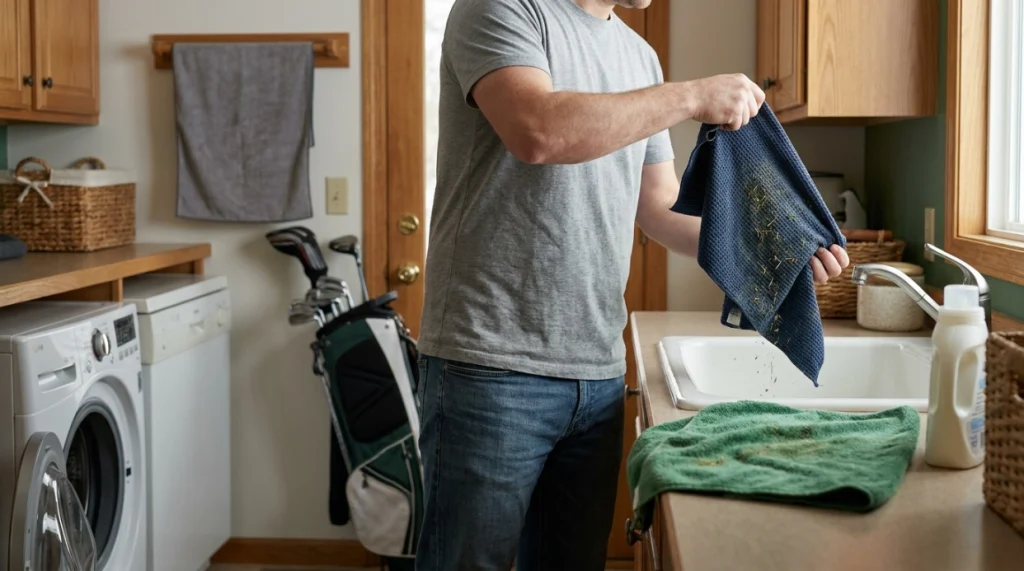
Wash golf towels regularly and follow the manufacturer’s care label. Dirt, grass, sunscreen, and other residue can reduce how well a towel cleans and absorbs moisture.
Cleaning Microfiber
Microfiber benefits from simple washing. Avoid treatments that leave heavy coatings on the fibers if the care label warns against them.
- Shake loose grass and sand from the towel.
- Wash it according to the manufacturer’s temperature instructions.
- Use an appropriate detergent in a normal amount.
- Dry it according to the care label.
- Make sure it is completely dry before returning it to your golf bag.
Cleaning Cotton Towels
Cotton is generally easy to wash, but individual products can have different instructions because of dyes, embroidery, printed logos, or blended fibers.
Check the label first. A clean towel is far more useful than one carrying several rounds of packed soil and grass.
When Should You Replace a Golf Towel?
You don’t need to replace a towel because it looks slightly faded. Replace it when the fabric stops doing its job.
- The towel no longer absorbs moisture effectively.
- The fabric has become permanently stiff or matted.
- The attachment point is tearing away.
- The towel holds persistent odors after proper washing.
- The cleaning texture has become badly worn.
Golf Towel Material FAQs
Is microfiber or cotton better for a golf towel?
Microfiber is better for most golfers because it is lightweight, cleans clubs effectively, and generally dries faster. Cotton is a strong alternative when you prefer a softer, thicker towel with a traditional feel and plenty of absorbent material.
Is waffle microfiber good for golf clubs?
Yes. Waffle microfiber is one of the most useful golf towel constructions for club cleaning. The textured grid helps lift grass, soil, and moisture from clubfaces while keeping the towel relatively lightweight and compact.
Can I use a normal cotton towel for golf?
Yes. A clean cotton hand towel can handle many golf-cleaning jobs. Purpose-built golf towels mainly add convenient sizing, attachment points, specialized textures, and designs that are easier to manage on a golf bag.
What material dries fastest?
Lightweight synthetic towels, especially microfiber, generally dry faster than thick cotton terry towels. Actual drying time depends on towel thickness, weave, airflow, humidity, and how saturated the material becomes.
What golf towel material is best for rain?
Microfiber is a practical wet-weather option because it provides useful cleaning performance without becoming as bulky as thick cotton. During sustained rain, carrying two towels is often better than expecting one saturated towel to handle every job.
What material is best for cleaning golf club grooves?
Textured or waffle-weave microfiber is my preferred towel material for routine groove cleaning. Its structured surface helps remove loose grass and soil, though packed debris may still require water and an appropriate club brush.
Do expensive golf towel materials work better?
Not automatically. Material quality matters, but price can also reflect branding, embroidery, magnets, clips, or decorative features. Focus first on fiber construction, texture, size, attachment, washability, and how you plan to use the towel.
Final Takeaway: For most golfers in 2026, a waffle-weave microfiber towel is the strongest all-around choice. It offers a useful mix of cleaning ability, low bulk, moisture handling, and quick drying.
If you prefer a plush towel and don’t mind extra wet weight, cotton remains an excellent alternative. Match the material to your course conditions and bag setup, and your towel will become one of the most-used pieces of gear you carry.