
How Do You Sanitize a Golf Towel? A Safe Cleaning Guide

Quick Answer
To sanitize a golf towel, first remove mud and grass, then machine-wash it with detergent using the warmest water allowed by its care label. Use a fabric-safe laundry sanitizer only when needed, and dry the towel completely before putting it back in your golf bag. Microfiber needs gentler treatment than most cotton towels, so avoid chlorine bleach and excessive heat unless the manufacturer specifically allows them. Keeping a clean, dry towel also supports the wet-weather habits commonly discussed in PGA of America golf guidance.
Quick sanitizing steps
- Shake off debris: Remove loose sand, grass, mud, and dirt before washing.
- Check the label: Confirm the permitted wash temperature, bleach instructions, and drying method.
- Wash with detergent: Use the warmest water that is safe for the towel’s material.
- Sanitize when necessary: Use a compatible laundry sanitizer according to its label rather than guessing the concentration.
- Dry completely: Don’t return a damp towel to a closed golf bag.
A golf towel gets dirtier than it looks. During one round it can collect wet grass, bunker sand, soil, sweat, sunscreen, club residue, and whatever was sitting on the cart or bag.
I treat cleaning and sanitizing as two different jobs. Normal washing handles most routine rounds, while sanitizing is the extra step I reserve for a towel that stayed wet, smells questionable, was shared, or needs a more thorough reset.
In This Guide
- What Does Sanitizing a Golf Towel Actually Mean?
- How Do You Sanitize a Golf Towel Step by Step?
- What Water Temperature and Cleaning Products Should You Use?
- Can You Use Bleach, Vinegar, or Laundry Sanitizer?
- How Should You Sanitize Microfiber vs. Cotton Golf Towels?
- How Often Should You Sanitize a Golf Towel?
- Frequently Asked Questions
What Does Sanitizing a Golf Towel Actually Mean?
Cleaning removes visible dirt, oils, grass, and other residue from the towel. Sanitizing goes a step further by reducing microorganisms through an appropriate laundry process or sanitizer.
Golf towel sanitation: Cleaning the towel thoroughly and, when needed, using a fabric-safe sanitizing method before drying it completely and storing it clean.
For an ordinary towel used to wipe dirt from irons, balls, and clubheads, a proper detergent wash is usually the starting point. Sanitizing should not become an excuse to pour stronger chemicals onto the fabric.
That matters because the towel still has a job to perform. A damaged microfiber towel may lose some of the texture and water-management qualities that made it useful around club grooves.
- Cleaning: Removes soil, mud, oils, grass, and visible residue.
- Sanitizing: Adds a germ-reduction step when circumstances justify it.
- Drying: Prevents you from immediately storing a damp towel in an enclosed bag.
- Storage: Keeps the clean towel away from dirty shoes, gloves, and used towels.
Golf Digest has long emphasized keeping a towel available for clubface cleaning. That regular exposure to club dirt is exactly why I prefer washing mine frequently instead of waiting until it looks terrible.
Section takeaway: Cleaning comes first. Sanitize only with a method that is compatible with the towel’s fabric and care instructions.
How Do You Sanitize a Golf Towel Step by Step?

The safest approach starts with the care label rather than the strongest chemical in your laundry room. Golf towels vary enough that one universal high-heat or bleach routine can ruin some of them.
1. Remove loose golf-course debris
Take the towel outside and shake away dried grass, dirt, and sand. Brush or rinse off heavy mud before putting the towel into your washing machine.
This is particularly useful after bunker-heavy or rainy rounds. I don’t want grit circulating with the rest of my laundry when I can remove most of it in thirty seconds.
2. Separate heavily soiled towels
A towel covered with mud and club residue doesn’t need to share a load with shirts or delicate golf apparel. I prefer washing golf towels with other suitable utility towels.
- Separate light and dark colors if dye transfer is possible.
- Keep microfiber away from lint-heavy cotton when possible.
- Remove detachable clips or accessories if the manufacturer recommends it.
- Don’t overload the washing machine.
3. Add detergent and choose a safe temperature
Use normal laundry detergent in the amount recommended for your machine. More detergent isn’t automatically cleaner, and excess product can remain in the fabric.
Choose the warmest setting permitted by the towel manufacturer. Don’t automatically select the hottest cycle, especially for synthetic microfiber.
4. Add a sanitizer only when needed
If you want an additional sanitizing step, choose a laundry sanitizer that says it is suitable for the towel’s material. Follow its dosage and required cycle instructions exactly.
A product that requires a particular rinse stage or contact time won’t necessarily work as intended if you simply pour it into the drum.
5. Dry the towel completely
Complete drying is one of the most important parts of my routine. A freshly washed towel that stays damp in a closed bag quickly becomes an unpleasant piece of golf equipment.
Use the drying temperature listed on the care label. Microfiber commonly benefits from lower heat, while some cotton towels tolerate warmer drying.
Section takeaway: Remove debris, wash properly, use a compatible sanitizer only when needed, and finish by drying the towel completely.
What Water Temperature and Cleaning Products Should You Use?
There isn’t one correct temperature for every golf towel. The correct setting is the warmest temperature that the towel’s own care instructions permit.
That’s especially important with microfiber. High heat can be much harder on fine synthetic fibers than on a basic cotton terry towel.
| Method | Cotton towel | Microfiber towel | Main caution |
|---|---|---|---|
| Laundry detergent | Usually suitable | Usually suitable | Use the recommended amount |
| Warm water | Often appropriate | Often appropriate if label allows | Check care instructions first |
| Chlorine bleach | Only if label permits | Generally avoid | Can damage fibers, dyes, and graphics |
| Laundry sanitizer | Check product label | Check material compatibility | Correct dosage and cycle matter |
| Fabric softener | Usually unnecessary | Best avoided | Residue can reduce microfiber performance |
As of 2026, microfiber remains common in golf towels because textured synthetic fabric can pick up moisture and debris efficiently. That performance is a good reason not to attack it with unnecessarily harsh laundry treatment.
I also skip fabric softener on microfiber. I want the fibers exposed and working against moisture and dirt, rather than coated with unnecessary laundry residue.


Can You Use Bleach, Vinegar, or Laundry Sanitizer?
You can use some sanitizing products, but compatibility matters more than the product name. Chlorine bleach that is acceptable for one white cotton towel could damage another towel’s microfiber, embroidery, dye, or printed design.
Chlorine bleach
I wouldn’t use chlorine bleach on a microfiber golf towel unless its manufacturer explicitly says it is safe. Microfiber-care guidance commonly advises against chlorine bleach because it can degrade the fine synthetic fibers.
Even with cotton, check the label first. Colored towels and embroidered logos may react differently from plain white cotton.
Laundry sanitizer
A commercial laundry sanitizer can be a more practical option when you specifically want a sanitizing step. Make sure it lists compatibility with your fabric and follow the product’s exact directions.
Don’t shorten a required rinse or soaking stage. Sanitizing instructions exist for a reason.
White vinegar
I wouldn’t treat household vinegar as a dependable substitute for a laundry sanitizer. It may be used in some laundry routines for odor or residue management, but that isn’t the same thing as following a tested sanitizing product’s instructions.
Fabric softener
Fabric softener isn’t a sanitizer, and I avoid it entirely on microfiber golf towels. A towel that feels softer but cleans club grooves less effectively isn’t an improvement.
PGA TOUR equipment coverage often shows how important dry towels become during wet conditions. Protecting that absorbency is another reason I prefer gentle towel care over aggressive chemical treatment.
Section takeaway: Don’t assume bleach or vinegar is automatically the best disinfecting solution. Match the method to the fabric and follow the product label.
How Should You Sanitize Microfiber vs. Cotton Golf Towels?
Microfiber and cotton can both make excellent golf towels, but I don’t launder them exactly the same way. Their fibers respond differently to heat, bleach, lint, and laundry additives.
Microfiber golf towels
Use mild detergent, cold or warm water permitted by the label, and low-heat or air drying when recommended. Avoid chlorine bleach and fabric softener unless the manufacturer says otherwise.
- Wash separately when practical: Lint from cotton can cling to microfiber.
- Skip softener: Residue can interfere with the fabric’s cleaning properties.
- Control heat: Don’t assume hotter drying is better.
- Protect texture: The fine fibers and waffle structure are part of the towel’s cleaning ability.
Cotton and terry golf towels
Cotton is often more tolerant of conventional laundering, although the care label still controls the process. A white cotton towel may permit treatments that a colored or embroidered caddie towel doesn’t.
Large terry towels also hold considerable moisture. Give them enough drying time before folding or returning them to the bag.
I especially watch oversized caddie towels after wet rounds. Their center can still feel damp even when the outside seems dry.
The USGA treats a towel as ordinary equipment golfers can carry and use during a round. From a practical standpoint, however, I still keep the section touching dirty clubheads away from the area I use on my hands.
Section takeaway: Treat microfiber gently and keep cotton’s color, embroidery, and care label in mind. Completely dry either material before storage.
How Often Should You Sanitize a Golf Towel?
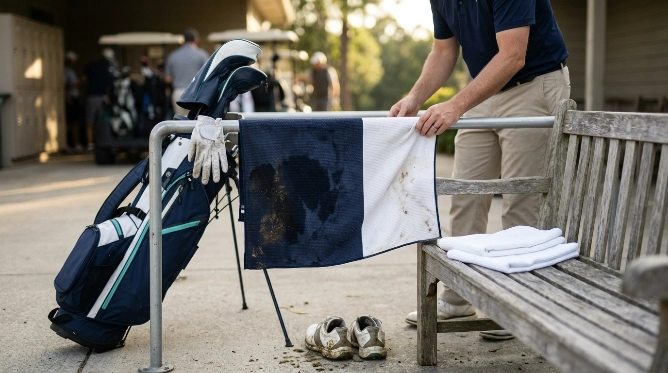
You don’t need an aggressive sanitizing cycle after every nine holes. What matters is how dirty the towel became, how it was stored, and what it contacted.
For normal golf use, I focus first on regular washing. I add a sanitizing step when the towel has a stronger reason to need one.
Consider a deeper cleaning when the towel:
- Stayed damp inside a golf bag or vehicle.
- Developed a persistent musty or unpleasant odor.
- Was heavily exposed to mud, standing water, or organic debris.
- Was shared extensively with other players.
- Was used for both dirty equipment and sweaty hands or face.
- Has been sitting unwashed through several rounds.
Prevent the problem during the round
I divide my towel into working zones. One section handles clubheads and dirt, while another stays as clean and dry as possible.
This also makes sense for performance. Golf Digest equipment and instruction coverage regularly stresses cleaning clubfaces and keeping grips usable during play.
- Damp zone: Loosen grass, mud, and soil from clubfaces.
- Dirty zone: Wipe soles and heavily soiled clubheads.
- Dry zone: Finish drying clubs and equipment.
- Clean zone: Reserve for cleaner jobs instead of wiping bunker sand everywhere.
Air the towel out after golf
This is the habit that makes the biggest difference in my routine. After a wet round, I take the towel off the bag rather than leaving it folded inside a pocket.
If I can’t wash it immediately, I hang it somewhere with airflow until laundry time. A wet towel trapped beside damp gloves and shoes is an easy way to create an odor problem.
Rotating two or three towels also helps. You can start every round with a clean towel instead of rushing to reuse yesterday’s damp one.
Section takeaway: Wash based on use rather than an arbitrary calendar. Drying the towel promptly and separating dirty and clean zones can reduce how often you need a deeper reset.
Frequently Asked Questions
Can I put a golf towel in the washing machine?
Most washable golf towels can go in a washing machine, but check the care label first. Remove detachable accessories when required, use appropriate detergent, and select a temperature that is safe for the towel’s material.
Can I sanitize a microfiber golf towel with bleach?
Chlorine bleach is generally a poor choice for microfiber because it can damage fine synthetic fibers. Unless the towel manufacturer specifically permits chlorine bleach, use a gentler compatible washing or sanitizing method.
Does hot water sanitize a golf towel?
Heat can contribute to hygienic laundering, but you shouldn’t exceed the towel manufacturer’s safe temperature. Microfiber, prints, dyes, and attachments may not tolerate the temperatures used in specialized commercial laundry processes.
Can I use vinegar to disinfect a golf towel?
I wouldn’t rely on household vinegar as the primary sanitizer. If genuine sanitizing is your goal, use a laundry product designed for that purpose and follow its instructions while checking compatibility with the towel.
Why does my golf towel still smell after washing?
Lingering odor can come from trapped soil, oils, excessive detergent residue, incomplete drying, or leaving the towel damp too long. Rewash it according to the care label and make sure it dries completely before storage.
Should I wash my golf towel after every round?
Wash it whenever it becomes muddy, sweaty, heavily soiled, or wet enough that storing it would be unpleasant. A lightly used dry towel may not need washing after every round, but letting several dirty rounds accumulate isn’t a habit I recommend.
Final takeaway: The safest way to sanitize a golf towel is to clean it thoroughly, respect its care label, use a compatible sanitizing product only when necessary, and dry it completely.
That routine keeps the process simple. Start each round with a clean towel, give dirty clubheads their own working area, and don’t let a wet towel spend the week forgotten inside your golf bag.