
Are Golf Towels Worth It? Here’s When You Really Need One

Quick Answer
Yes, golf towels are worth it for most golfers because they keep clubfaces, golf balls, grips, and hands cleaner during a round. They become especially useful in rain, morning dew, mud, sand, or humid weather. You do not need an expensive towel, though; a practical towel that stays accessible on your bag is enough for most players. The PGA of America is also a useful resource for broader golf guidance.
A golf towel is most worth buying when:
- You clean clubs often: A damp section removes grass, soil, and sand before they build up on clubfaces.
- You play wet courses: A dry section helps manage moisture on grips, hands, and equipment.
- You walk frequently: A lightweight microfiber towel gives useful cleaning capacity without much bulk.
- You use wedges often: Keeping dirt out of grooves makes routine club care much easier during a round.
- You value convenience: Clips, grommets, magnets, and center slits keep a towel within easy reach.
Simple buying rule
- Start with a medium towel around 16 × 24 inches. Choose a larger size only if rain, mud, or frequent cleaning gives you a reason.
Golf towels can look like one more accessory manufacturers want you to hang from an already crowded golf bag. After a few wet or muddy holes, their purpose becomes much easier to understand.
I treat a towel as simple working equipment rather than a fashion accessory. This guide explains when a golf towel earns its place on your bag, when a regular towel works, and which features are worth paying for in 2026.
In This Guide
Are Golf Towels Actually Worth It?
Golf towels are worth it if you want a simple way to manage dirt and moisture without leaving the course or digging through your bag. Their biggest advantage is convenience rather than technology.
Definition: A golf towel is a reusable cloth carried on or attached to a golf bag for cleaning and drying clubs, balls, grips, hands, and other equipment during a round.
Think about a normal approach shot from damp grass. The sole and face of an iron can collect grass, soil, or moisture before you put it back into the bag.
A towel gives you an immediate place to wipe that material away. You can also keep a second part of the towel cleaner for drying.
- Clubfaces: Remove loose dirt, wet grass, and sand before returning the club to your bag.
- Grooves: Wipe away surface debris before it dries and becomes harder to remove.
- Golf balls: Clean your ball when the Rules of Golf permit cleaning.
- Grips: Keep moisture under control during rain, dew, or humid conditions.
- Hands: Dry your hands before gripping the club when necessary.
The value rises when course conditions get messy. Early-morning dew, soft fairways, wet rough, and bunker sand all give a towel more work.
On a dry summer afternoon, you might use it only occasionally. That does not make the towel pointless; it means its value changes with conditions.
Cost matters too. I would not pay a large premium just because a towel carries the same logo as my clubs.
Fabric, size, texture, and attachment matter more. If those basics work, an inexpensive towel can do the job.
Section Takeaway: A golf towel earns its value through frequent, convenient cleaning. You do not need a premium model to get the main benefits.
What Does a Golf Towel Do During a Round?
A golf towel handles two basic jobs: removing debris and controlling moisture. Both matter because golf equipment constantly contacts grass, sand, soil, water, and your hands.
It keeps clubfaces easier to maintain
I prefer wiping an iron or wedge soon after a dirty shot instead of allowing mud to dry on the face. The job takes only a few seconds when the towel is already hanging from the bag.
A textured surface can help lift loose material around grooves. Packed debris may still require water and an appropriate club-cleaning brush.
- Dampen one section for mud and grass.
- Wipe the sole and clubface after dirty shots.
- Check the grooves for remaining debris.
- Use a cleaner section for the final wipe.
It helps manage wet grips and hands
A soaked grip is a different problem from a muddy wedge. That is why I avoid using every inch of the towel for dirty clubheads.
Reserve a cleaner area for hands and grips. In heavy rain, a second towel stored under the rain hood can be even more useful.
The R&A publishes the Rules of Golf and equipment guidance. Check the applicable Rules when lifting or cleaning a golf ball during play.
It protects the inside of your bag from unnecessary mess
Putting muddy clubs straight back into the bag transfers dirt and moisture around other equipment. A quick wipe reduces how much of that mess travels with you.
This does not replace proper club cleaning after the round. It simply keeps routine maintenance from becoming a bigger job later.
Is a Golf Towel Better Than a Regular Towel?
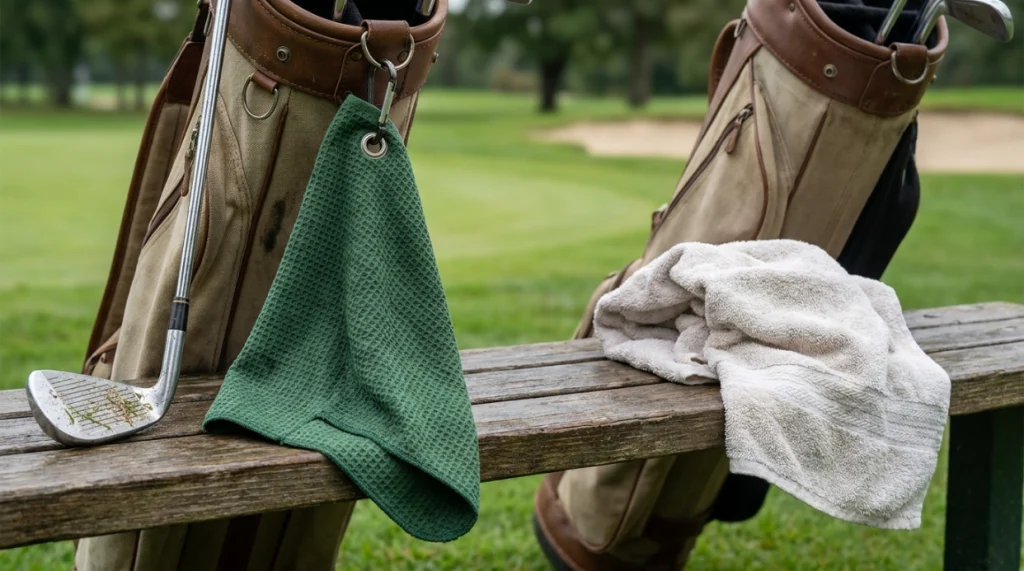
A regular towel can clean golf equipment, so you do not need golf-specific fabric to wipe a club. Purpose-built golf towels become more convenient because their size, texture, and attachment usually suit a golf bag better.
The useful difference is design. A good golf towel is easier to carry, reach, remove, wash, and keep away from the ground.
| Towel Setup | Practical Size | Best Use | Main Tradeoff |
|---|---|---|---|
| Compact golf towel | Around 12 × 18 in. | Range sessions and light walking bags | Limited clean surface |
| Standard golf towel | Around 16 × 24 in. | Most recreational rounds | Can become saturated in prolonged rain |
| Player-size towel | Around 16 × 32 in. | Frequent club cleaning and wet conditions | More bag bulk |
| Large caddie-style towel | Around 20 × 40 in. or larger | Carts, caddies, rain, and heavy cleaning | Bulky for walking bags |
A household towel can still be a sensible choice if you already own one that fits your bag. Fold it securely and make sure it does not drag against the ground.
The biggest drawback is attachment. Many ordinary towels lack a grommet, carabiner, center slit, or magnetic connection.
A golf-specific towel starts making more sense when you want one-handed access after shots. The convenience becomes noticeable over 18 holes.
Material also changes the experience. Waffle microfiber usually packs smaller and dries faster than thick cotton terry, while cotton offers a softer, traditional feel.
For broader golf-equipment research, the Golf Digest equipment section covers current golf gear and buying considerations.


Who Gets the Most Value From a Golf Towel?
Almost any golfer can use a towel, but some players get much more value from one. Weather, course conditions, and how you carry your bag matter most.
Golfers who play early in the morning
Morning dew can leave clubheads, balls, shoes, and the lower part of your bag wet. A towel becomes useful before rain ever enters the forecast.
I like having a dry section available during these rounds. Using the entire towel for wet grass too early defeats that advantage.
Golfers who play soft or muddy courses
Soft turf can stick to irons and wedges after ordinary shots. Players who regularly face those conditions may use a towel several times per hole.
A medium or larger textured towel works well here. More fabric lets you separate the dirty working area from cleaner sections.
Walking golfers
Walkers should care about bulk as much as cleaning area. A huge wet cotton towel can become an annoying addition to a light stand bag.
- Best approach: Choose lightweight microfiber or a compact waffle towel.
- Attachment: Use a secure clip, grommet, or center slit.
- Bag position: Hang it where it stays clear of your legs and the turf.
Golfers who regularly ride in carts
Cart golfers can carry a larger towel without worrying as much about swinging weight. That makes bigger wet-and-dry zones easier to manage.
A large towel is not automatically better, though. Extra fabric only helps if you use the additional surface.
Occasional and beginner golfers
Beginners do not need an expensive branded towel. One inexpensive washable towel is enough to learn what size and texture fit your habits.
If you play only a few dry rounds each year, a regular towel from home may be perfectly adequate. Upgrade when attachment or convenience starts bothering you.
What Makes a Golf Towel Worth Buying?
A golf towel is worth paying for when its features make cleaning easier. I would prioritize material, useful size, texture, and attachment before branding.
Choose a practical size
For many golfers, roughly 16 × 24 inches is a useful starting point. It provides enough working area without feeling like a full-size bath towel on the bag.
- 12 × 18 inches: Good for light use and compact bags.
- 16 × 24 inches: A practical all-around size.
- 16 × 32 inches: Better when you clean clubs frequently.
- 20 × 40 inches or larger: Better suited to carts, caddies, or wet conditions.
Match the material to your priorities
Microfiber suits golfers who want low bulk and quick drying. Cotton terry suits players who prefer a softer, more substantial towel.
Neither material wins every situation. Construction and texture matter alongside the fiber itself.
Look for useful texture
Waffle construction creates raised and recessed areas that work well around dirty clubfaces. Terry loops provide a softer, more absorbent surface.
Smooth microfiber works for moisture and lighter wiping. I prefer more texture when mud and grass are the main problem.
Do not overlook the attachment
A towel that constantly falls off your bag becomes irritating quickly. The attachment should match how you carry and use your equipment.
- Carabiner: Secure, simple, and easy to remove for washing.
- Grommet: Reinforces the attachment point in the towel.
- Center slit: Lets a towel hang without a separate metal clip.
- Magnet: Offers fast removal when paired with a compatible attachment surface.
Official golf shops also show how common purpose-built towel attachments have become. The PGA Championship accessories collection includes golf-specific towel designs among its equipment accessories.
Section Takeaway: Buy the towel for its useful fabric, size, texture, and attachment. A logo should be a preference, not the reason the towel works.
How Do You Get the Most Value From a Golf Towel?
You get more value from a golf towel by dividing its jobs instead of wiping everything with the same dirty section. A simple wet-and-dry system works well for most rounds.
- Dampen one corner: Use a small amount of water before the round for routine clubface cleaning.
- Keep one section dry: Reserve it for final drying, grips, or hands.
- Clean after dirty shots: Do not wait until mud has dried across several clubs.
- Keep sand separate: Avoid rubbing gritty sections across cleaner equipment.
- Wash the towel regularly: Remove accumulated dirt before the next round.
Placement matters too. Hang the towel somewhere accessible without letting it brush the ground when your bag is standing normally.
Check the position on a push cart as well. Loose fabric should stay away from wheels and moving parts.
Should you carry one golf towel or two?
One medium towel is enough for many dry rounds. Two towels become more useful when one will likely become soaked or covered in mud.
- Cleaning towel: Keep partly damp for clubfaces, soles, and permitted ball cleaning.
- Dry towel: Keep protected for hands, grips, and final drying.
I prefer the two-towel approach in persistent rain because a dry backup solves a problem one saturated towel cannot. In normal weather, I would rather keep the bag simple.
How often should you wash a golf towel?
Wash it whenever visible dirt, odor, or accumulated debris makes it less pleasant to use. A heavily soiled towel should not remain clipped to the bag between rounds.
Follow the manufacturer’s care label. Fabric blends, magnets, clips, and decorative embroidery may have different washing requirements.
Golf Towel FAQ
Do beginner golfers need a golf towel?
A beginner does not strictly need a golf-specific towel, but carrying some type of towel is useful. Start with an inexpensive washable towel for clubs, balls, and moisture, then decide later whether a golf-specific attachment or material would improve convenience.
Can I use a normal towel for golf?
Yes. A normal towel can clean clubs and handle moisture effectively. A golf towel mainly adds bag-friendly sizing, textured materials, and convenient attachment methods such as carabiners, grommets, center slits, or magnets.
Is microfiber better than cotton for golf?
Microfiber is often better for golfers who want low weight, compact storage, and faster drying. Cotton terry feels softer and can handle plenty of moisture, but thick cotton may become heavier and stay damp longer once soaked.
What size golf towel should I buy?
For most golfers, around 16 × 24 inches is a practical starting size. Choose something smaller for a lightweight walking bag or larger if you regularly play in mud, rain, or heavy morning dew.
Do I need two golf towels?
No. One towel is enough for many rounds. Two become useful in wet conditions because you can dedicate one to muddy equipment while keeping another protected for grips, hands, and final drying.
Are expensive golf towels worth it?
Only when the higher price gives you better fabric, useful size, stronger attachment, durability, or another feature you will use. Paying more for branding alone does not automatically improve how well the towel cleans your equipment.
Where should I attach a golf towel?
Attach it to an accessible bag ring, towel loop, carabiner point, or compatible magnetic location. The towel should remain clear of the ground, bag legs, straps, push-cart wheels, and other moving parts.
Bottom line: Golf towels are worth it for most golfers because they solve a simple problem repeatedly throughout a round. They keep cleaning and moisture control within arm’s reach without adding complicated equipment.
If you already own a suitable towel, start there. If you want better attachment, lower bulk, faster drying, or more useful texture, a purpose-built golf towel is an inexpensive upgrade that can earn its place on your bag.