
Are Golf Towels Different From Regular Towels?

Quick Answer
Yes, golf towels are different from regular towels mainly in their design, material, size, and how easily they attach to a golf bag. A normal household towel can still clean clubs and balls, but a purpose-made golf towel is usually easier to carry and manage during a round. There is no special requirement that forces you to use one, so you can also check the USGA Rules of Golf resources when you have an equipment question.
The biggest differences
- Bag-friendly design: Many golf towels are shaped or equipped so they can hang conveniently from a golf bag.
- Cleaning-focused material: Microfiber, waffle-style fabrics, and absorbent cotton are common choices for removing moisture and debris.
- Useful dimensions: Golf towels are often long enough to create separate wet and dry cleaning areas.
- Course durability: They are intended to deal with grass, sand, soil, water, and repeated club cleaning.
- Easy access: You can usually reach a golf towel without opening a pocket or digging through your bag.
Simple buying rule
- Use a regular towel if you already own one that fits your bag. Buy a golf towel when attachment, compact carrying, or easier club cleaning matters to you.
Are golf towels different from regular towels, or are golfers simply paying extra for another accessory? The difference is real, but it is more practical than technical.
I think of a golf towel as a regular towel redesigned around what happens during a round. It needs to handle wet grass, dirty grooves, damp golf balls, and quick cleaning without becoming awkward to carry.
In This Guide
- What Makes a Golf Towel Different From a Regular Towel?
- Are Golf Towels Better for Cleaning Clubs and Golf Balls?
- Microfiber vs. Cotton Golf Towels: Which Is Better?
- Can You Use a Regular Towel for Golf?
- What Size and Features Should a Golf Towel Have?
- How Should You Use and Wash a Golf Towel?
- Frequently Asked Questions About Golf Towels
What Makes a Golf Towel Different From a Regular Towel?
A golf towel is a towel designed around cleaning golf equipment while remaining convenient to carry during play. The main differences are usually its shape, material, attachment method, and intended use.
Definition: A golf towel is an absorbent or cleaning-focused cloth intended for wiping golf clubs, golf balls, grips, hands, and other equipment during a round.
A bath towel is built to dry a person. A kitchen towel is built around household spills and dishes.
A golf towel has a different working environment. It may spend several hours hanging outside a bag while contacting water, grass, sand, soil, and clubheads.
Golf towels are easier to carry on the course
One major difference is access. Golf towels are often designed to hang from the outside of a golf bag instead of being folded inside a compartment.
- Grommets: A reinforced opening can connect to a clip or carabiner.
- Built-in loops: Some towels hang directly over a bag handle or attachment point.
- Long designs: Larger towels can be draped over clubs or bag sections.
- Compact designs: Smaller towels reduce bulk on walking bags.
A regular hand towel may do the same cleaning job, but it often lacks a convenient attachment point. That small difference becomes noticeable after several holes.
Golf towels are designed for repeated dirty jobs
The towel is not there only for rain. I want it available whenever a clubface comes back with damp soil or grass stuck between the grooves.
You can also use it for a wet golf ball, sweaty hands, or moisture on a grip. Keeping those jobs in mind explains why golf-specific shapes and fabrics exist.
| Feature | Golf Towel | Regular Towel |
|---|---|---|
| Main purpose | Cleaning and drying golf equipment | Bathing, hands, kitchens, or general household use |
| Attachment | May include a loop, grommet, clip, or bag-friendly shape | Usually no golf-bag attachment |
| Common materials | Microfiber, textured synthetic fabric, or cotton | Often cotton, microfiber, or blended fabric depending on use |
| Current size examples | 16 × 32 inches, 15.75 × 24 inches, and 22 × 44 inches are current golf-towel examples | Varies widely by hand, kitchen, bath, and cleaning-towel category |
| On-course convenience | Designed to remain accessible throughout the round | May need folding, clipping, or storage inside the bag |
Are Golf Towels Better for Cleaning Clubs and Golf Balls?
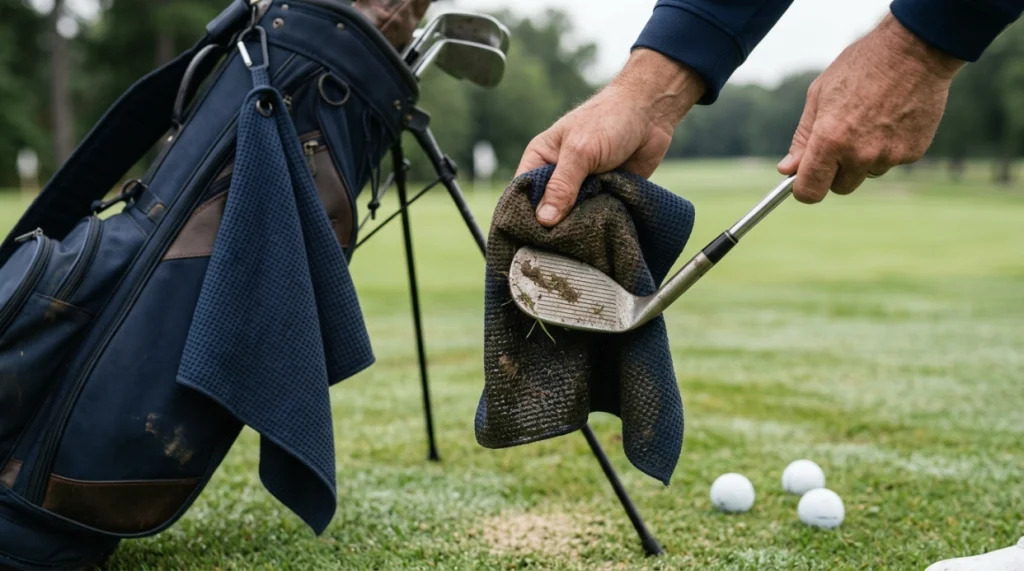
A golf towel can be better for cleaning clubs and golf balls because its material and format are chosen for repeated on-course cleaning. That does not mean every golf towel cleans better than every household towel.
The biggest advantage is consistency. You have one towel ready whenever your equipment picks up dirt or moisture.
Why clean clubfaces during a round?
Club grooves can collect grass, soil, and moisture after a shot. A quick wipe prevents that material from building up from hole to hole.
For heavier dirt, a damp section of the towel works better than rubbing the clubhead with a completely dry cloth. You can then use another section for drying.
- Irons: Wipe soil and grass from the face after approach shots.
- Wedges: Pay attention to dirt packed into the grooves.
- Putters: Remove sand, moisture, or grass before returning the putter to the bag.
- Golf balls: Use a clean area when the Rules allow the ball to be lifted and cleaned.
I prefer separating the towel mentally into a dirty side and a cleaner side. That stops me from wiping a grip with the same muddy patch I just used on a wedge.
Texture can matter more than the golf label
A useful towel needs enough texture to lift dirt without becoming difficult to handle. Microfiber and textured weaves are popular because their surface structure gives them plenty of contact with the object being wiped.
A soft cotton towel can still perform well. The practical question is whether it absorbs moisture, handles dirt, and remains convenient throughout the round.
Section Takeaway: The word “golf” does not magically make a towel clean better. Material, texture, moisture control, and accessibility are the features that create the advantage.
Microfiber vs. Cotton Golf Towels: Which Is Better?
Neither microfiber nor cotton is automatically best for every golfer. Microfiber usually makes sense when you want a lighter, cleaning-focused towel, while cotton is attractive when you prefer a traditional soft and absorbent feel.
Why golfers choose microfiber
Microfiber uses very fine synthetic fibers. The resulting fabric can provide a large textured cleaning surface without requiring a thick, heavy towel.
- Low bulk: It can be convenient on carry and stand bags.
- Textured cleaning: Many designs help lift dirt from club surfaces.
- Moisture management: It works well for damp-and-dry cleaning routines.
- Easy storage: A relatively thin towel takes up less bag space.
A real equipment example is the Titleist Players Microfiber Towel. Titleist currently specifies performance microfiber material and dimensions of 16 by 32 inches.
Why golfers still choose cotton
Cotton remains common because it feels familiar and absorbs water well. Larger caddy-style towels are also available in cotton.
The tradeoff is that a thick cotton towel can feel heavier when it becomes soaked. That matters more to a golfer carrying the bag than someone riding in a cart.
Which material would I choose?
For a lightweight walking setup, I lean toward microfiber. For wet conditions or a cart bag with plenty of room, a larger cotton towel can be convenient.
The better choice depends on how much material you want hanging from the bag. Do not choose based on fabric name alone.
- Choose microfiber for lower bulk and frequent club cleaning.
- Choose cotton for a traditional feel and generous absorbent surface.
- Carry two towels if you often play in rain or muddy conditions.


Can You Use a Regular Towel for Golf?
Yes. You can use a regular towel for golf if it cleans your equipment and fits conveniently on or inside your bag.
You do not need to replace a useful household towel simply because it lacks golf branding. Beginners can save money by using something they already own.
When a regular towel works perfectly well
A small hand towel or microfiber cleaning cloth can handle most casual rounds. The important part is keeping it accessible and clean enough for the jobs you give it.
- You mainly play in dry weather.
- You use a riding cart with easy storage.
- You already own an absorbent microfiber towel.
- You do not mind storing the towel in a bag pocket.
- You only need occasional club or ball cleaning.
When a golf towel becomes worth buying
A dedicated golf towel starts making sense when your ordinary towel becomes inconvenient. Constantly opening a bag pocket after muddy iron shots gets old quickly.
Attachment is one of the simplest upgrades. A towel that stays outside the bag is ready before dirt has time to dry onto the clubface.
- Walking golfers: A secure attachment keeps the towel from disappearing during the round.
- Wet-weather golfers: More surface area helps separate wet and dry sections.
- Frequent players: A dedicated towel keeps golf dirt away from household towels.
- Practice-heavy golfers: Easy access helps when cleaning clubs repeatedly during a range session.
As of 2026, this remains a convenience purchase rather than a required piece of specialized performance equipment. Spend according to how often that convenience will help you.
What Size and Features Should a Golf Towel Have?
A useful golf towel should be large enough for repeated cleaning but small enough that it does not interfere with your bag. Material, attachment, texture, and washability matter more than logos.
There is no single correct golf-towel size. Current commercial examples show just how much the format can vary.
Golf towel sizes can vary considerably
Titleist lists its Players Microfiber Towel at 16 by 32 inches. The USGA Shop towel selection also includes examples around 15.75 by 24 inches, 16 by 32 inches, and 22 by 44 inches.
A larger towel gives you more working area. A smaller towel adds less weight and clutter to the bag.
Features worth checking before you buy
- Secure attachment: Look for a loop, clip, grommet, or shape that works with your bag.
- Useful texture: The surface should help lift grass and soil without being awkward to wipe across equipment.
- Enough surface area: You should be able to keep at least one relatively clean section available.
- Washable construction: Golf towels get dirty quickly, so simple care matters.
- Low unnecessary bulk: Carry golfers should avoid more towel than they need.
- Practical color: Light colors show dirt quickly, while darker colors can hide stains between washes.
Do you need an expensive golf towel?
No. A golf towel performs a basic job, and price does not guarantee that it suits your bag better.
I would spend first on the correct size, fabric, and attachment method. Branding comes after those basics.
New golfers should take the same practical approach to other accessories. The PGA of America also provides broader golf learning and coaching resources when you are building your setup and game.
How Should You Use and Wash a Golf Towel?
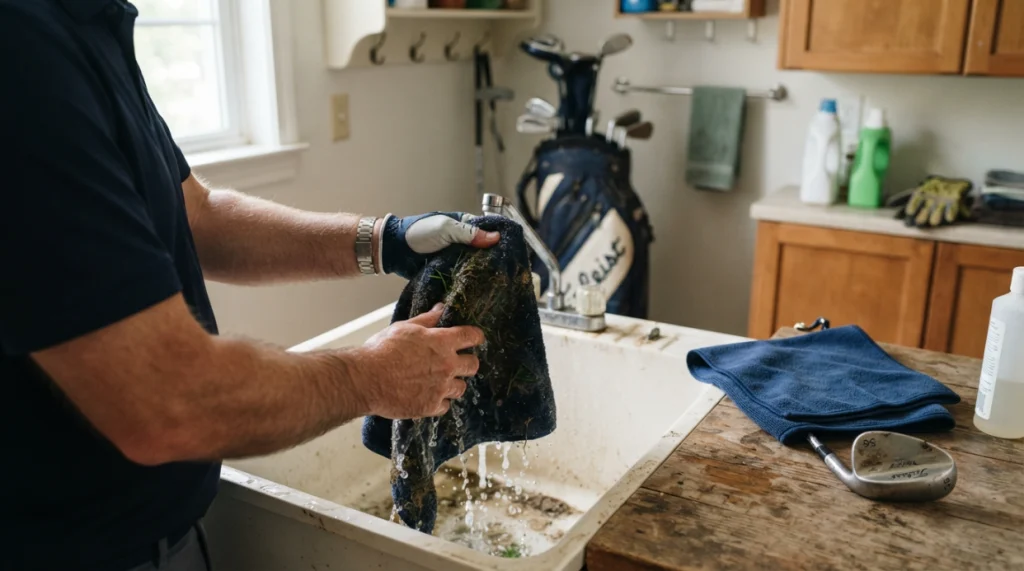
The simplest method is to keep part of your golf towel damp for cleaning and another part relatively dry for finishing. This gives one towel two clear jobs.
How to use a golf towel during a round
- Dampen one section before playing: You only need enough moisture to loosen dirt.
- Keep another section dry: Use it for finishing clubheads, grips, or hands.
- Wipe clubs after dirty shots: Fresh dirt is usually easier to remove than dried dirt.
- Separate muddy and clean areas: Avoid transferring grime onto grips or hands.
- Let the towel air out afterward: Do not leave a wet, dirty towel sealed inside the bag.
This routine is especially useful after rain or early-morning dew. A single damp wedge shot can transfer surprising amounts of soil and grass to a towel.
How to wash a golf towel
Start with the care label because fabric blends and finishes vary. Shake or rinse away loose sand and soil before putting a heavily dirty towel into the wash.
- Separate excessive dirt: Pre-rinse mud rather than sending large amounts into the washing machine.
- Follow temperature guidance: Use the manufacturer’s recommended wash setting.
- Be careful with microfiber: Avoid products the care label warns against, including fabric treatments that may coat the fibers.
- Dry completely: Store the towel only after it has dried.
- Wash regularly: Do not wait until the towel develops persistent odor or heavy staining.
A clean towel also makes it easier to keep club grips away from sand and greasy residue. That is one reason I prefer treating the towel as actual equipment instead of leaving it forgotten on the bag for months.
Section Takeaway: Divide the towel into wet and dry working areas, clean equipment before debris dries, and wash the towel often enough that it remains useful rather than becoming another source of dirt.
Frequently Asked Questions About Golf Towels
Are golf towels really necessary?
No, a golf-specific towel is not necessary for most golfers. Any suitable towel can clean clubs and golf balls, but a purpose-made golf towel is often more convenient because it may attach easily to the bag and provide an appropriate size for repeated cleaning.
What is the difference between a golf towel and a microfiber towel?
Microfiber describes a type of material, while golf towel describes the towel’s intended use. Many golf towels use microfiber, but microfiber towels are also sold for cars, kitchens, electronics, and general cleaning.
Can I use a kitchen towel as a golf towel?
Yes, provided it is absorbent, durable, and easy to carry. A kitchen towel may lack a clip or grommet, so you might need to store it in a pocket or secure it separately.
Should a golf towel be wet or dry?
Both can be useful. Keep one section damp for loosening grass, mud, and other debris, then use a dry area to remove remaining moisture before returning the club to your bag.
How many golf towels should I carry?
One towel is enough for many normal rounds. Two can be useful in wet or muddy conditions because you can dedicate one to dirty clubheads and keep the other cleaner for grips, hands, or drying.
Are there special golf rules about towels?
A towel is ordinary golf equipment rather than a club with detailed construction specifications. If you have a competition-specific question about using equipment, consult the current official guidance from the R&A or USGA before the round.
Is a golf towel worth buying for a beginner?
It can be, but it should not be a priority over essential equipment. Start with any suitable towel you already have, then upgrade if you want easier bag attachment, more cleaning area, or a dedicated towel for golf.
Final takeaway: Golf towels are different from regular towels, but the difference is mostly practical. They are shaped, sized, and equipped for quick access and repeated cleaning on the course.
If your regular towel already handles those jobs, keep using it. If you are constantly fighting with storage, mud, or wet equipment, a dedicated golf towel is a simple upgrade that can make every round a little easier.