
Hybrid Club Explained: What It Is, How to Use It, and Who Needs One

Long irons can be difficult to launch, especially from rough or an uneven lie. Fairway woods may feel easier, but their longer shafts can make accurate contact challenging. That leaves many golfers wondering which club belongs between their irons and woods.
This Hybrid Club Explained guide covers how hybrids work, which irons they can replace, how to hit them, and what to consider before buying one. You will also learn where hybrids perform well, where they struggle, and when professional fitting is worthwhile.
Quick Answer
A hybrid golf club combines the forgiving head shape of a fairway wood with the shorter shaft and control of an iron. It is commonly used to replace difficult long irons. Hybrids can help golfers launch the ball higher from fairways, light rough, tee boxes, and other challenging lies.
What Is a Hybrid Golf Club?
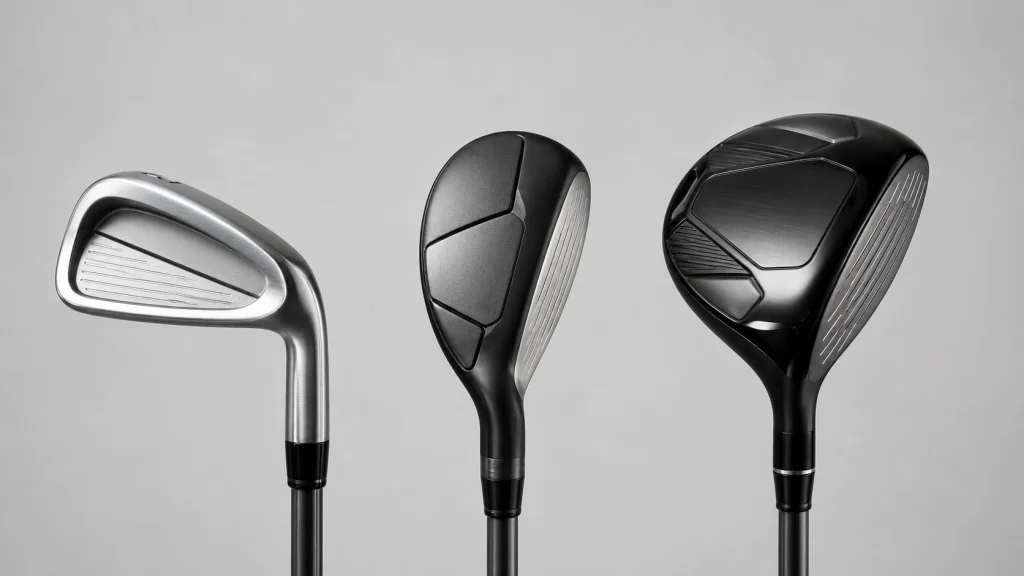
A hybrid is a club designed to blend useful features from irons and fairway woods. Its head is deeper and wider than an iron head but generally smaller than a fairway wood head.
Most hybrids have a graphite shaft and a hollow metal head. Weight is usually positioned low and toward the back of the head. This design can help the ball launch more easily while reducing the distance lost on slightly off-center strikes.
The Callaway hybrid club buying guide describes hybrids as combining the control of an iron with some of the distance, power, and forgiveness associated with a fairway wood.
You may also see hybrids called:
- Rescue clubs
- Utility clubs
- Hybrid irons
- Iron replacements
“Rescue” is commonly used as an informal name because the club can help golfers escape difficult lies. However, hybrid is the more general equipment term.
How a Hybrid Club Is Designed
Several design features make a hybrid easier to use than a traditional long iron.
Wider Sole
The sole is the bottom of the clubhead. A hybrid’s sole is wider than an iron’s, helping the head move through grass instead of digging sharply into the ground.
Sole shape can affect turf interaction. For example, TaylorMade’s explanation of its V Steel hybrid sole design shows how manufacturers shape and weight hybrid soles to improve forgiveness and performance from different lies.
Low Center of Gravity
The center of gravity is the point where the clubhead’s weight is balanced. Positioning it low and back can help produce a higher launch.
This is useful for golfers who struggle to get a 3-, 4-, or 5-iron airborne.
Hollow Clubhead
Most hybrids have hollow heads similar to small fairway woods. The face can flex at impact, helping maintain ball speed when contact is slightly low or away from the center.
Shorter Shaft Than a Fairway Wood
A hybrid shaft is normally shorter than the shaft of a comparable fairway wood. The shorter length can make it easier to control the swing and find the center of the face.
However, it is usually longer than the shaft of the equivalent numbered iron.


Hybrid Numbers and Lofts Explained
Hybrids are usually identified by a number, such as 3H, 4H, or 5H. The “H” means hybrid.
The number does not guarantee a specific loft. One company’s 4-hybrid may have a different loft, shaft length, or launch profile from another company’s 4-hybrid.
Typical loft ranges are:
| Hybrid | Approximate loft | Common replacement | General use |
|---|---|---|---|
| 2-hybrid | 16–19 degrees | 2-iron or strong 3-iron | Low tee shots and long approaches |
| 3-hybrid | 18–21 degrees | 3-iron | Long fairway and tee shots |
| 4-hybrid | 21–24 degrees | 4-iron | Long approaches and light rough |
| 5-hybrid | 24–27 degrees | 5-iron | Higher approaches and rough |
| 6-hybrid | 27–31 degrees | 6-iron | Easier launch and controlled carry |
| 7-hybrid | 30–34 degrees | 7-iron | Maximum launch and iron replacement |
These ranges are only starting points. Choose a hybrid by measured distance and ball flight, not by the number printed on its sole.
A 4-hybrid can travel farther than a 4-iron because it may have a longer shaft, a faster face, and a different center of gravity. Test both before deciding which club to remove.
Hybrid vs. Long Iron vs. Fairway Wood
Each club has a different strength.
Hybrid vs. Long Iron
A long iron usually has a thinner head and shorter shaft. Skilled ball-strikers may prefer its lower, more controlled flight.
A hybrid normally offers:
- Easier launch
- More forgiveness
- Better performance from light rough
- More confidence at address
- Less distance loss on minor mishits
A long iron may offer:
- A lower flight in windy conditions
- More precise trajectory control
- Better feedback from the strike
- Easier shot shaping for experienced golfers
Hybrid vs. Fairway Wood
A fairway wood usually has a larger head, longer shaft, and lower loft than a similarly positioned hybrid. It may produce more distance when struck well.
A hybrid is generally easier to control because of its shorter shaft. It can also perform better when the ball is sitting down slightly in the rough.
Do not assume a hybrid is automatically shorter than every fairway wood. Loft, shaft length, swing speed, strike quality, and club design all influence distance.
When Should You Use a Hybrid?
A hybrid is one of the most versatile clubs in the bag.
Long Approach Shots
Use a hybrid when you need more distance than your mid-irons provide but want better control than a fairway wood offers.
For example, a golfer who carries a 6-iron 145 yards and a 5-wood 180 yards may use a hybrid for the distance between them.
Tee Shots on Tight Holes
A hybrid can be a sensible alternative to a driver when accuracy matters more than maximum distance. Tee the ball very low so the club can contact it close to the bottom of its normal swing arc.
Shots From Light or Moderate Rough
The rounded head and wider sole can move through grass more effectively than a long iron. A hybrid will not solve every rough lie, however.
If thick grass is wrapped around the ball, use a more lofted club and return the ball safely to the fairway. Trying to force a low-lofted hybrid through deep rough can produce a short, twisted shot.
Low Running Shots
Some golfers use a hybrid around the green. The club can produce a putting-like motion while its loft lifts the ball over the fringe.
This shot is useful when there is plenty of green between the ball and hole. It is less suitable when the ball must stop quickly.
Uneven or Imperfect Lies
A hybrid may help from bare areas, shallow divots, or gentle slopes. Success still depends on making solid contact and choosing a realistic target.
How to Hit a Hybrid Club
A hybrid may look like a small wood, but most golfers should not try to lift the ball with an upward scooping motion. Let the loft create the height.
1. Position the Ball Slightly Forward of Center
For a typical hybrid shot from the ground, place the ball slightly forward of the center of your stance. Longer, lower-lofted hybrids may sit a little farther forward.
Avoid moving the ball as far forward as you would for a driver.
2. Use a Comfortable Stance
Set your feet slightly wider than shoulder width or similar to your normal mid-iron stance. Keep your weight balanced and bend naturally from the hips.
3. Make an Iron-Like Swing
Swing through the ball with a level or slightly descending strike. The goal is to contact the ball before the lowest point of the swing.
A small brushing mark after the ball is acceptable. You do not need the deep divot associated with some iron shots.
Titleist’s guidance on hitting hybrids and fairway metals from the turf also emphasizes setup and ball position rather than trying to scoop the ball into the air.
4. Keep Your Tempo Smooth
A hybrid’s design already helps create ball speed and launch. Swinging harder than normal often causes poor balance or contact.
Start with controlled three-quarter swings. Add speed only when the strike becomes reliable.
5. Finish Toward the Target
Rotate through the shot and allow your chest to face the target. Stopping the body while flipping the hands can produce hooks, thin shots, and inconsistent contact.
Expert Tip: Place a towel about four inches behind the ball during practice. Hit the ball without touching the towel. This encourages ball-first contact and discourages the scooping motion that causes thin or topped hybrid shots.
Who Should Carry a Hybrid?
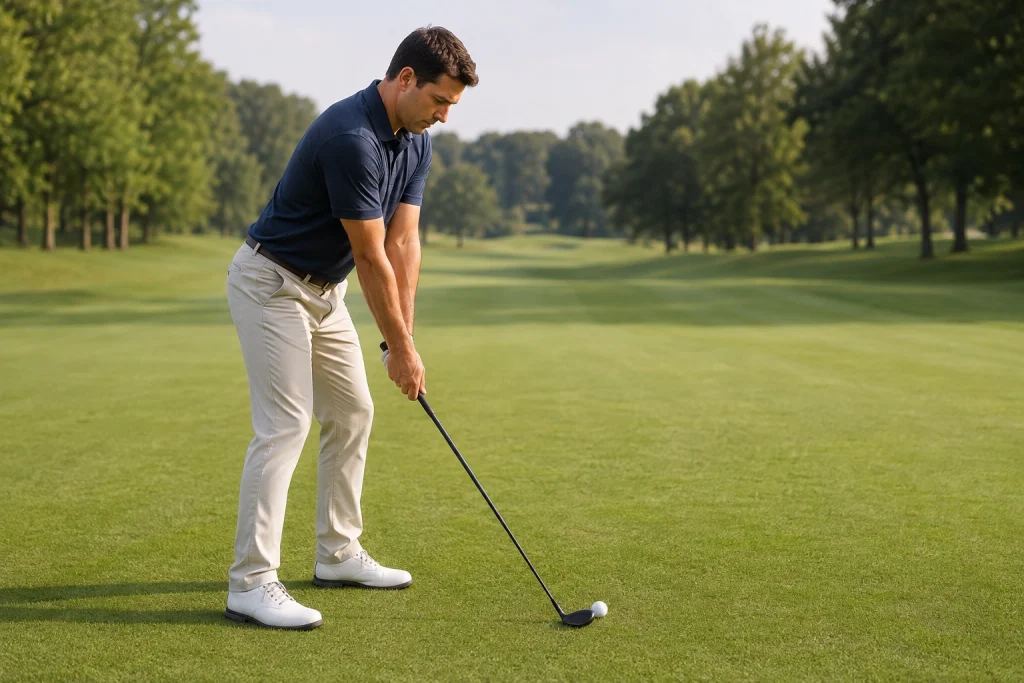
Hybrids can help many golfers, but they are especially useful for:
- Beginners who struggle with long irons
- Golfers with moderate or slower swing speeds
- Players who need more height on long approaches
- Seniors seeking easier launch without forcing the swing
- Golfers who frequently play courses with long par 3s
- Players who feel more confident looking down at a wider clubhead
Intermediate and advanced golfers may also carry hybrids. The decision should be based on performance rather than handicap.
Some strong players prefer utility irons because they produce a more penetrating flight. Others choose compact hybrids for their versatility from rough and difficult lies.
How to Choose the Right Hybrid
Start With Your Distance Gap
Measure the normal carry distance of your longest reliable iron and shortest fairway wood. The hybrid should fit between them without creating unnecessary overlap.
For example:
- 6-iron carry: 150 yards
- 5-wood carry: 185 yards
- Desired hybrid carry: approximately 165–175 yards
Use average carry distance, not the longest shot you have ever hit.
Compare Loft, Not Just Club Number
Check the actual loft of every club. A strongly lofted 5-iron and a 5-hybrid may travel similar distances even though their designs are different.
Ideally, test hybrids on a launch monitor and outdoors. Launch-monitor numbers show carry and spin, while outdoor testing reveals turf interaction and visual confidence.
Match the Shaft to Your Swing
Consider:
- Shaft flex
- Shaft weight
- Club length
- Launch profile
- Overall balance
A shaft that is too stiff or heavy may feel difficult to launch. One that is too light or flexible may reduce control for a faster or more aggressive swing.
Consider Head Shape and Bias
Larger hybrid heads usually provide more forgiveness and inspire confidence. Compact heads may offer more control and a less wood-like appearance.
Some hybrids have draw bias, meaning their design can help reduce a right-curving shot for a right-handed golfer. However, a golfer who already hooks the ball may find that design difficult to control.
Evaluate Cost, Quality, and Durability
New hybrids commonly range from roughly $120 to more than $350. Previous-generation and used models often cost less.
Pay for performance that solves a real problem, not simply the newest technology. A well-fitted older hybrid can outperform an expensive current model with the wrong loft or shaft.
Before buying used, inspect:
- The crown for cracks or dents
- The face for unusual damage
- The shaft for splits or deep scratches
- The hosel for looseness
- The grip for hard, slick, or worn areas
- Adjustable components for missing or damaged parts
Do not play with a cracked graphite shaft. It can fail without warning and should be checked by a qualified repair technician.
How Many Hybrids Should You Carry?
Many golfers carry one to three hybrids. A common setup replaces the 3- and 4-irons with a 3- and 4-hybrid. Golfers who dislike several long or mid-irons may use hybrids through the 5-, 6-, or even 7-hybrid.
Every hybrid occupies one place in the bag. The USGA club rules allow up to 14 clubs during a round, provided the clubs conform. Check for duplicated distances before adding another hybrid.
Also remember that an adjustable hybrid must not be deliberately changed during a competitive round. Confirm its loft and lie setting before teeing off.
Common Mistakes Golfers Should Avoid
- Buying by club number alone: Loft and distance vary between manufacturers.
- Trying to scoop the ball: The club’s loft creates height; focus on solid contact.
- Using driver ball position: Placing the ball too far forward can cause thin shots.
- Swinging too hard: Extra effort often reduces balance and center contact.
- Replacing an iron without testing distance: This can create two clubs that perform the same job.
- Using a low-lofted hybrid from deep rough: Thick grass can close or twist the clubface.
- Ignoring a strong hook pattern: Some hybrid designs may increase a left miss for right-handed golfers.
- Choosing shaft flex only by age or gender: Actual swing speed, tempo, strength, and delivery matter more.
- Expecting equipment to correct every swing fault: Forgiveness helps with small misses, not severe contact or face-control problems.
When to Get Help From a Golf Pro or Fitter
Schedule a lesson with a golf professional if you repeatedly top, hook, or strike behind the ball with several clubs. That pattern may come from setup or swing movement rather than the hybrid itself.
A club fitting is worthwhile when:
- You do not know which iron to replace
- Two clubs carry nearly the same distance
- Your hybrid launches too low or too high
- You consistently miss left or right
- You are unsure about shaft weight or flex
- Standard club length feels uncomfortable
- You are building the top end of a new set
A fitter can compare carry distance, launch, spin, landing angle, and shot pattern. A golf pro can determine whether the main problem is equipment, technique, or both.
FAQs
Is a hybrid easier to hit than a long iron?
For many golfers, yes. The wider sole, lower center of gravity, and more forgiving head can make launching the ball easier. Individual results still depend on the swing and lie.
What iron does a 4-hybrid replace?
A 4-hybrid is commonly intended to replace a 4-iron. However, it may travel farther. Compare actual loft and carry distance before removing the iron.
Can I use a hybrid from the tee?
Yes. A hybrid is useful on narrow par 4s and long par 3s. Use a very low tee and make your normal balanced swing.
Can a beginner use more than one hybrid?
Yes. A beginner may replace several difficult irons with hybrids. Each club should produce a useful distance gap rather than duplicate another club.
Should I take a divot with a hybrid?
A small, shallow divot after the ball is fine. Focus on contacting the ball first instead of deliberately digging into the ground.
Why do I keep hooking my hybrid?
Possible causes include a closed clubface, excessive hand action, poor alignment, or a draw-biased head. A fitter or golf pro can identify whether the issue comes from the club or swing.
Can I chip with a hybrid around the green?
Yes. Use a putting-style stroke when the ball must travel over a small amount of fringe and then roll. Choose a wedge when you need more height or stopping power.
Conclusion
A hybrid fills the space between irons and fairway woods by offering easier launch, useful distance, and forgiveness from several lies. It can replace a difficult long iron, provide a controlled tee option, or help you advance the ball from light rough.
The most important lesson from this Hybrid Club Explained guide is to choose by performance rather than the number on the club. Measure your carry distances, test different lofts and shafts, and avoid adding clubs that duplicate the same yardage.
Start by comparing your longest reliable iron with your shortest fairway wood. Then test a hybrid that fills the gap and gives you the confidence to make a smooth, committed swing.