
What Golf Towel Material Dries Fastest?

Quick Answer
Lightweight microfiber is generally the fastest-drying golf towel material, especially when it uses a thin waffle weave. It releases moisture faster than thick cotton terry and stays less bulky when damp, which makes it useful during humid, rainy, or walking rounds. For broader golf equipment guidance, the PGA of America is also a useful resource.
Fastest-Drying Options
- Fastest overall: Thin polyester-rich microfiber sheds moisture quickly and carries little bulk.
- Best golf texture: Waffle microfiber adds useful cleaning texture while remaining relatively thin.
- Best absorber: Cotton terry can hold plenty of water, but usually takes longer to dry afterward.
- Best compromise: Synthetic blends can balance absorbency, durability, and drying speed.
- Biggest factor: A thin towel normally dries faster than a heavy, dense towel made from similar fibers.
Simple Choice
- Choose waffle microfiber if quick drying, low bag weight, and club cleaning are your main priorities.
If you keep ending a round with a heavy, soaked towel hanging from your bag, material matters. Some fabrics release moisture far faster than others.
My usual recommendation is a lightweight waffle microfiber golf towel. It offers the best mix of drying speed, cleaning texture, compact size, and repeated use during a round.
In This Guide
- Which Golf Towel Material Dries Fastest?
- Why Does Microfiber Dry Faster Than Cotton?
- How Do Microfiber, Cotton, and Blends Compare?
- Does Weave and Towel Thickness Affect Drying Time?
- Which Fast-Drying Towel Works Best in Different Conditions?
- How Can You Make a Golf Towel Dry Faster?
- Golf Towel Drying FAQs
Which Golf Towel Material Dries Fastest?
Lightweight synthetic microfiber normally dries fastest among common golf towel materials. Thin polyester-rich microfiber is particularly effective when rapid drying is the main goal.
Microfiber describes extremely fine synthetic fibers rather than one specific weave. Golf towels commonly use polyester, nylon or polyamide, or combinations of these materials.
Definition: A microfiber golf towel is a synthetic cleaning towel made from very fine fibers and designed to remove moisture, grass, sand, and dirt from golf equipment.
Drying speed matters because a towel rarely stays completely dry during a round. Golfers use it on damp clubfaces, muddy wedges, golf balls, hands, grips, and sometimes wet cart seats.
A quick-drying towel releases that moisture sooner. This gives you more usable dry fabric later in the round.
- Polyester microfiber: Usually light and quick to release moisture.
- Polyester-polyamide microfiber: Often combines quick drying with stronger moisture absorption.
- Cotton terry: Absorbs well but can remain damp much longer.
- Cotton-polyester blends: Usually dry faster than heavy pure cotton but slower than lightweight microfiber.
- Viscose or bamboo blends: Can feel soft and absorbent but are rarely my first choice when drying speed matters most.
There is one important catch. Fiber type is only part of the answer.
A thick, oversized microfiber towel may dry slower than a thin synthetic towel because it contains more material and can retain more water. Size, fabric weight, weave, airflow, and humidity all matter.
For most golf bags, I would start with a medium-size waffle microfiber towel. It gives you enough surface area without creating a heavy wet bundle beside the bag.
Why Does Microfiber Dry Faster Than Cotton?
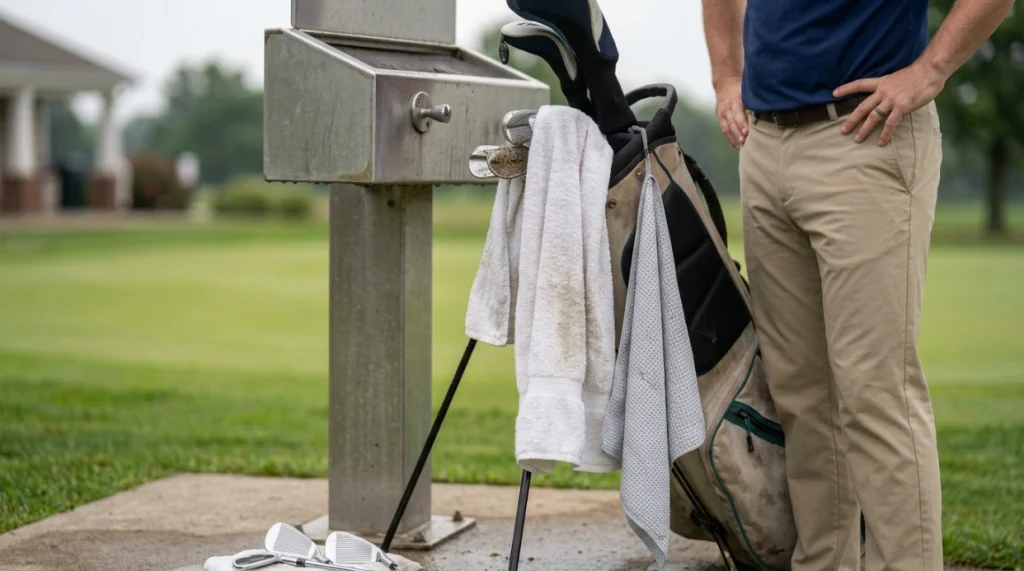
Microfiber generally dries quickly because synthetic fibers absorb less water into the fiber itself than cotton does. Moisture can instead sit between fine fibers and spread across a large surface area.
That large exposed area helps water evaporate. A thin towel also allows air to move through and around the fabric more easily.
What happens when cotton gets wet?
Cotton is a natural fiber known for strong moisture absorption. That is useful when your main goal is soaking up rain or drying a wet surface.
The downside appears afterward. A thick cotton towel may hold substantial moisture and stay noticeably wet between holes.
- Cotton can absorb plenty of water.
- Thick terry loops add fabric volume.
- More retained water means more moisture must evaporate.
- A folded cotton towel can trap damp sections inside.
Why does microfiber feel ready again sooner?
Lightweight microfiber spreads moisture through many fine fibers without needing a thick towel body. That makes it easier for exposed moisture to evaporate.
The difference becomes especially useful when walking. I prefer less wet fabric hanging from a carry bag because every unnecessary bit of bulk becomes more noticeable late in the round.
Waffle microfiber adds another advantage. Its raised and recessed grid creates texture without requiring the deep pile of a plush terry towel.
That texture is useful on irons and wedges. Dirt, wet grass, and bunker residue have more textured fabric to contact during a wipe.
Microfiber is not automatically superior in every category. Golfers who prioritize a plush feel or maximum water absorption may still prefer cotton.
For pure drying speed, though, a thinner synthetic construction has the advantage.
How Do Microfiber, Cotton, and Blends Compare?
Microfiber wins on drying speed, while cotton usually wins on traditional softness and high-volume moisture absorption. Blended fabrics sit between those two extremes.
Here is the practical comparison I use when choosing a towel for a golf bag.
| Material | Typical Construction | Relative Drying Speed | Wet Bulk | Best Golf Use |
|---|---|---|---|---|
| Polyester microfiber | Thin smooth or waffle weave | Fast | Low | Walking, humid weather, everyday club cleaning |
| Polyester/polyamide microfiber | Often textured or waffle woven | Fast | Low to medium | Damp-and-dry club cleaning |
| Cotton terry | Thicker looped pile | Slow | High | Rain, hands, grips, high moisture absorption |
| Cotton/polyester blend | Terry, flat, or mixed weave | Medium | Medium | Golfers wanting softness with easier drying |
| Viscose/bamboo blend | Soft woven or terry-style fabric | Medium to slow | Medium | Softness-focused towel setups |
These categories describe typical behavior rather than a guaranteed drying time. Two towels using the same fiber can perform differently because their thickness and weave differ.
That is why I would not buy based on the word “microfiber” alone. Check the towel’s size, texture, density, and overall construction too.


Does Weave and Towel Thickness Affect Drying Time?
Yes. Weave, thickness, and fabric density can change drying speed almost as much as fiber choice. A thin towel exposes moisture to air more efficiently than a dense folded towel.
Golf towels commonly use waffle, terry, or flatter woven surfaces. Each construction behaves differently once wet.
Waffle weave
Waffle weave uses a grid of raised areas and small recesses. The pattern creates useful texture while keeping the towel relatively compact.
That combination suits golf well. You get cleaning edges for clubfaces without carrying a thick bath-towel-style pile.
Terry construction
Terry fabric uses loops that create a soft, absorbent surface. Many traditional cotton towels use this construction.
The loops can hold substantial moisture. However, all that wet fabric may require more time and airflow to dry.
Fabric weight and size
A large caddie towel gives you more clean surface during a round. It also contains more fabric that can become wet.
- Thin towel: Faster drying and easier packing.
- Thick towel: Greater moisture capacity but slower drying.
- Small towel: Less material to dry but limited clean surface.
- Large towel: More usable sections but more wet weight.
Think about where the towel hangs too. A towel spread openly from a bag strap gets more airflow than one folded tightly inside a pocket.
For a fast-drying setup, I like a textured towel that hangs freely. Keeping most of the towel unfolded makes a noticeable practical difference during a humid round.
Which Fast-Drying Towel Works Best in Different Conditions?
Waffle microfiber is the strongest all-around option, but weather and bag setup should influence your choice. A towel for a dry walking round has a different job from one used in steady rain.
Hot and humid rounds
Choose lightweight microfiber when humidity makes evaporation difficult. Lower wet bulk becomes valuable when the air is already holding plenty of moisture.
A darker towel can also hide soil and grass staining better. Color does not meaningfully solve drying time, so choose it for appearance and maintenance.
Rainy golf
Rain changes the equation because you may need both absorption and fast reuse. One microfiber towel can work, but two separate towel zones are even more practical.
- Keep one section slightly damp for clubfaces.
- Reserve another section for the final dry wipe.
- Protect the driest section under a rain hood or bag cover.
- Avoid soaking the entire towel before the round.
If grips become wet, keeping a dedicated dry towel becomes important. A towel already loaded with mud and water is a poor grip-drying tool.
Walking and carrying
For a carry bag, microfiber makes the most sense to me. A lighter towel creates less hanging bulk and is easier to position away from your legs.
Magnetic, clipped, and looped attachments can all work. The best design is the one that lets the towel hang openly rather than remain stuffed in a pocket.
Dry, dusty courses
Dry conditions reduce the need for maximum absorbency. Texture becomes more important because you may spend more time removing dust, sand, and dried soil.
Waffle microfiber fits that job well. A small damp section can loosen dirt before a dry section finishes the wipe.
Before cleaning a ball during competitive play, make sure you understand the current USGA guidance on golf balls. Golfers outside the United States can also consult The R&A for current Rules of Golf resources.
How Can You Make a Golf Towel Dry Faster?
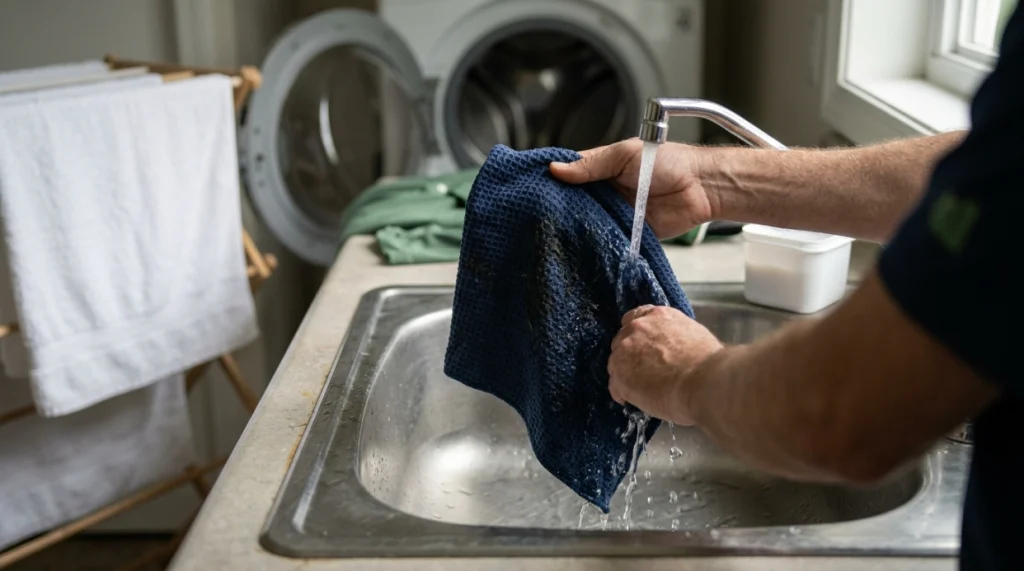
Give the towel airflow, avoid oversaturating it, and wash it without leaving residue on the fibers. Even the fastest material will stay wet if it remains folded into a tight bundle.
I use the towel in zones rather than soaking the whole thing. One damp area handles dirt while the rest stays available for drying.
- Dampen only one section. You rarely need to saturate the entire towel to clean a wedge or iron.
- Hang it fully exposed. Spread the towel across a strap, ring, clip, or attachment point where air can reach it.
- Unfold wet sections. Moisture trapped between layers takes longer to escape.
- Shake off excess water. Removing free water gives evaporation less work to do.
- Rotate the towel. Put the wetter area toward open air instead of leaving it pressed against the bag.
- Follow the care label. Different microfiber blends and towel hardware can require different washing instructions.
Be cautious with fabric softener on microfiber. Residue can coat fine fibers and reduce the towel’s ability to manage moisture effectively.
Wash muddy towels regularly instead of allowing dirt and oils to build up. Club-cleaning performance depends on clean fabric as much as towel material.
Remove detachable clips, magnets, or other hardware when the manufacturer tells you to do so. This protects both the towel and your washing machine.
I also avoid leaving a damp towel crumpled inside the car or golf bag after a round. Hang it openly until it is completely dry before storing it.
For more general equipment ideas and maintenance coverage, Golf Digest provides broad golf gear resources.
Golf Towel Drying FAQs
Is microfiber the fastest-drying golf towel material?
For common golf towels, lightweight microfiber is usually the fastest-drying choice. Thin polyester-rich microfiber and waffle microfiber tend to dry sooner than thick cotton terry because they carry less wet bulk and expose moisture efficiently to air.
Does cotton or microfiber dry faster?
Microfiber normally dries faster than cotton when the towels have similar dimensions. Cotton is highly absorbent, but thick cotton fibers and terry constructions can retain more water and stay damp longer.
Is waffle microfiber faster drying than normal microfiber?
Not automatically. Waffle weave can provide useful airflow and cleaning texture, but towel thickness and density still matter.
A thin waffle towel will normally be a strong quick-drying choice. A dense or oversized version may take longer.
What is the best golf towel for humid weather?
A lightweight waffle microfiber towel is my first choice for humid conditions. It limits wet bulk, offers textured club cleaning, and usually becomes usable again faster than a heavy cotton towel.
What is the best golf towel for rain?
Microfiber works well in rain because it combines moisture handling with relatively fast drying. Keep separate wet and dry sections, or carry a second protected towel for hands and grips during sustained rain.
Should you wet a golf towel before playing?
Dampening one corner can make cleaning mud and dried dirt easier. Leave most of the towel dry so you still have clean fabric for drying clubfaces, golf balls, hands, or grips.
Why does my microfiber golf towel stay wet?
The towel may be too thick, oversaturated, folded tightly, or hanging where airflow is limited. Unfold it, expose the wet surface, shake out excess water, and avoid soaking more fabric than you need.
The takeaway is simple: if drying speed is your priority, choose a lightweight microfiber golf towel rather than thick cotton terry.
For most golfers in 2026, waffle microfiber is the practical sweet spot. It dries quickly, stays compact, and gives clubfaces enough texture for everyday cleaning from the first tee through the final green.