
What Is the Best Golf Towel to Buy for Players?

Quick Answer
For most players, I’d choose the Club Glove Microfiber Caddie Towel for its waffle texture, 17-by-40-inch size, and center slit. Frogger’s Amphibian suits players wanting separate wet and dry layers, while Titleist’s Players Terry suits those who prefer terry cloth.
What matters when buying
- Useful fabric: Choose a texture you’ll comfortably use for routine club cleaning.
- Practical size: Leave enough space for cleaning without letting the towel drag.
- Secure attachment: Match the fastening to your golf bag and access habits.
- Dry backup: Keep a separate towel protected when rain is likely.
A good golf towel should make cleaning easy between shots. I’d start with how the towel hangs on your bag, then consider fabric and price.
This guide compares published specifications checked in September 2026 and explains how I’d choose for different playing conditions. These are buying recommendations based on product features, rather than results from a hands-on comparison.
In This Guide
- Which golf towels are worth buying?
- Is microfiber or cotton better for a golf towel?
- What size and attachment should you choose?
- Which towel setup suits your playing conditions?
- How should you use and wash a golf towel?
- Frequently asked questions about golf towels
- Choose the towel you’ll use every hole
Which golf towels are worth buying?
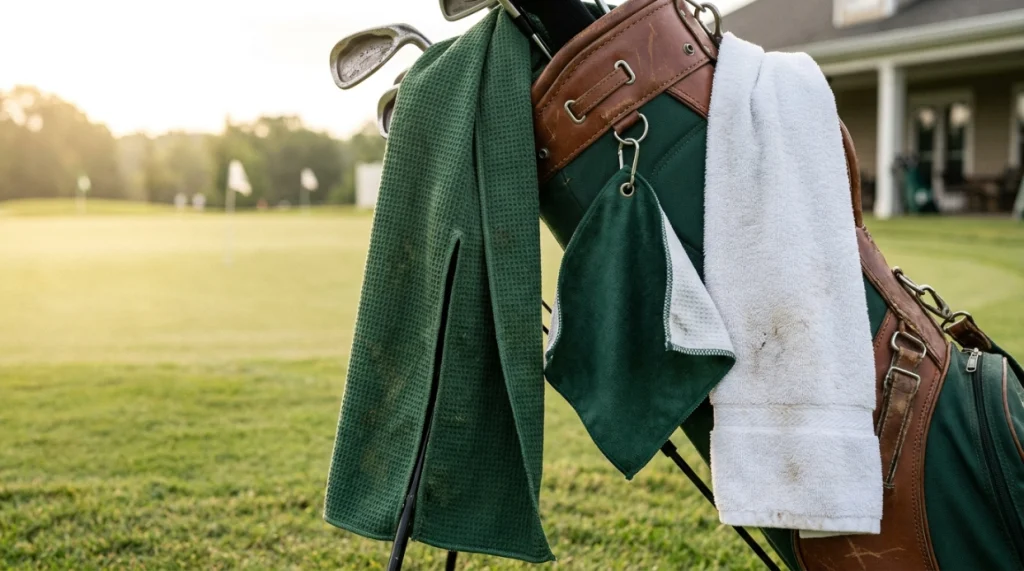
My shortlist starts with Club Glove for everyday cleaning, Frogger for moisture separation, and Titleist for a large terry towel. The right choice depends on which feature solves your main inconvenience.
A golf towel is a reusable cloth carried during golf to clean equipment or dry hands and grips. Golf-specific designs often add attachment hardware, extra length, or separate cleaning surfaces.
Compare the main specifications
The table lists manufacturer specifications and displayed prices checked in September 2026. Prices are in US dollars, before any applicable tax or shipping.
| Towel | Published size | Key feature | Listed price |
|---|---|---|---|
| Club Glove Microfiber Caddie Towel | 17 × 40 inches | Waffle-textured microfiber; center slit | $22 |
| Frogger Amphibian Golf Towel | 14 × 14 inches | Two layers with a waterproof membrane; D-clip | $29.95 |
| Titleist Players Terry | 20 × 40 inches | Terry cloth construction | $35 |
Frogger’s layered construction differs from the two long towels, so dimensions alone don’t describe usable cleaning surfaces. Compare how each design opens and hangs before ordering.
Which model would I choose?
- Best starting point: Club Glove gives you a long cleaning surface and a straightforward attachment arrangement. I’d choose it if routine club cleaning is the main job.
- Best for separate moisture zones: The Frogger Amphibian’s layered design places a waterproof membrane between its cleaning surfaces. That feature matters more than decorative extras when you want wet and dry areas together.
- Best for terry preference: The Titleist Players Terry specifications list a generous 20-by-40-inch format. I’d choose it for someone who already likes the feel of traditional terry cloth.
- Best budget approach: Start with a clean hand towel you already own and a secure hanging method. Upgrade when you can identify a specific problem with that setup.
These category choices are editorial judgments, not measured performance rankings. I wouldn’t claim that one removes a fixed percentage more dirt or saves strokes without controlled evidence.
How much should you spend?
The three listed towels cost approximately $22–$35 at the time checked. Paying more only makes sense if you value the different fabric, construction, or layout.
- Check the delivered price, including shipping.
- Confirm whether the listing includes one towel or a set.
- Look for clear washing instructions and usable attachment details.
- Compare replacement cost if you regularly leave towels behind.
Is microfiber or cotton better for a golf towel?
I’d choose textured microfiber primarily for club cleaning and cotton terry when a familiar hand-towel feel matters most. Fabric construction and care can matter as much as the material name.
Microfiber for equipment cleaning
Microfiber describes very fine synthetic fibers, commonly used in cleaning cloths. A waffle weave creates a grid-like texture rather than a flat surface.
For a golf bag towel, I’d look for fabric that folds easily around an iron head. The cloth should reach the face without requiring a bulky handful.
- Check the edges: Rough trim or loose stitching deserves closer inspection.
- Feel the texture: Choose something comfortable enough that you’ll use it regularly.
- Inspect trapped debris: Remove grit before wiping equipment.
A soft towel containing sand is still a poor cleaning tool. Shake out loose particles and rinse dirty sections before using them again.
Cotton terry for a familiar feel
Cotton terry uses loops that create the familiar surface of many bathroom towels. Some golfers prefer that texture for drying their hands.
However, “terry” describes construction and doesn’t guarantee a particular fiber composition. Check the product label if buying cotton specifically matters to you.
- Consider how much space the folded towel occupies.
- Check how it hangs after you dampen one end.
- Read the care label before choosing a drying method.
Why I wouldn’t choose by absorbency claims alone
Absorbency claims don’t answer whether a towel will remain useful throughout your round. A saturated towel cannot provide the same dry wiping surface as a protected spare.
My buying priority would be keeping clean, dry fabric available when needed. That practical detail deserves more attention than a large absorbency number.
- Club cleaning: Keep one section damp.
- Grip drying: Reserve a clean, dry surface.
- Personal use: Carry a separate cloth for your face.
What size and attachment should you choose?
Choose the largest towel that stays accessible without touching the ground or obstructing your bag. Attachment position determines whether that size works in practice.
Check hanging length before buying
A towel’s advertised length isn’t always its hanging length. Folding a 40-inch towel evenly over a support creates roughly a 20-inch drop.
A corner-mounted towel hangs differently, especially when it swings. Measure from your intended attachment point with the bag standing normally.
- Set your bag down with its legs extended, if applicable.
- Measure the clearance below the towel attachment point.
- Allow extra room for swinging fabric and uneven ground.
- Check access to pockets, straps, and club openings.
I’d give this check priority over matching the towel to the bag’s color. A towel dragging through wet grass creates another cleaning job.
Clip, center slit, or magnet?
The best attachment is one you can reach easily and trust during movement. Each approach has a different trade-off.
- Clip or carabiner: Provides a defined attachment point, but the towel can twist or hang low.
- Center slit: Fits over a club or suitable support, although placement can affect club access.
- Magnet: Can make removal convenient, but requires a compatible attachment surface or matching hardware.
Don’t assume a magnetic towel will attach to every clubhead or cart surface. Check the actual materials and the product’s intended mounting method.
Inspect the small construction details
Strong attachment points matter because wet fabric pulls on stitching and hardware. Product photos should show how those parts connect.
- Look for reinforcement around a grommet or hanging loop.
- Check whether a clip opens comfortably with one hand.
- Keep metal hardware away from exposed clubheads.
- Make sure large embroidery leaves enough flexible cleaning fabric.


Which towel setup suits your playing conditions?
Choose your towel setup around weather and bag access before considering handicap. Beginners and experienced players both need convenient cleaning and a usable dry surface.
For walking rounds
I’d favor secure attachment and manageable hanging length on a carry bag. Check the towel with the bag on your shoulder, as well as standing.
- Keep wet fabric away from clothing.
- Avoid placement that catches the stand mechanism.
- Leave the ball pocket easy to open.
Consider a damp morning approach shot followed by a walk across a muddy path. The useful towel is the one you can reach without putting the bag down twice.
For riding or using a push cart
A larger towel can work well when the bag stays mounted. Place its cleaning section where you can reach it without unstrapping anything.
- Check that the towel clears push-cart wheels.
- Keep the attachment visible when unloading.
- Store your dry spare away from the exposed cleaning towel.
For rain and morning dew
Rain makes a protected dry towel more valuable than extra exposed fabric. An ordinary towel hanging outside can eventually become wet across its entire surface.
Frogger’s design supports keeping its interior dry in rain while using the exterior for cleaning. I’d still carry a dry spare for prolonged wet weather.
- Store the backup inside a waterproof pouch or protected compartment.
- Open that storage only when you need the towel.
- Replace the exposed towel when it becomes dirty or saturated.
For hot weather and travel
In warm conditions, check the cleaning section during the round and dampen it again when needed. Avoid using your dirty equipment towel to wipe your face.
For a golf trip, I’d pack a spare and plan where both towels can dry overnight. A towel sealed damp inside a travel cover won’t be ready for the next morning.
- Dry courses: Carry enough water to refresh the cleaning section.
- Humid rounds: Keep a separate personal towel handy.
- Consecutive rounds: Rotate towels so each has time to dry.
How should you use and wash a golf towel?
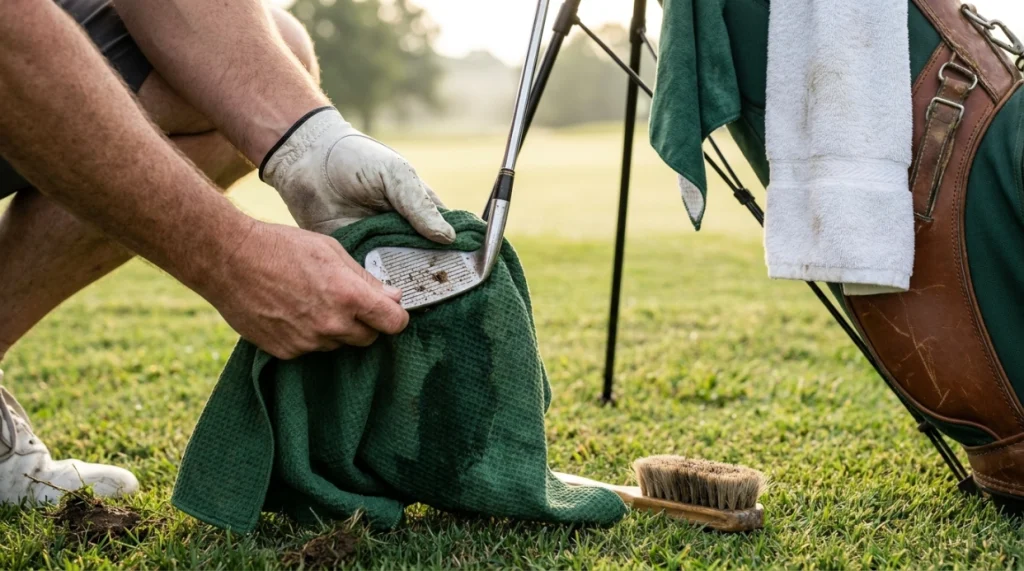
Use damp fabric to loosen ordinary dirt, then finish with a clean section. Wash the towel before accumulated grit turns it into something that spreads dirt around.
Build a simple between-shot routine
I’d dampen only the cleaning area before teeing off. Keeping part of an ordinary towel dry works initially, although moisture can spread through the fabric.
- Check the towel for loose sand or grit.
- Wipe the clubface and sole with the damp section.
- Use a suitable soft brush if dirt remains in the grooves.
- Wipe away the loosened debris with clean fabric.
- Dry the club before returning it to the bag.
Grooves are the channels across an iron or wedge face. A towel handles surface dirt, but packed debris may need a brush approved for your club’s finish.
Don’t promise yourself extra spin or lower scores simply from buying a towel. Its immediate job is to help keep equipment clean and ready.
Know when you can clean your golf ball
A towel’s convenience doesn’t change the Rules of Golf. Under The R&A’s Rule 14 guidance, a ball lifted from the putting green may always be cleaned.
Elsewhere, cleaning restrictions depend on why you lifted the ball. For example, identification permits only the cleaning necessary to identify it.
- Mark the spot before lifting a ball that must be replaced.
- Check the applicable rule before cleaning away from the green.
- Consult the actual local rule when preferred lies are in effect.
Wash according to the label
Follow the instructions for your particular towel, especially when it contains a membrane or removable hardware. Club Glove specifies cold water and mild detergent for hand or machine washing.
- Shake off loose dirt before washing.
- Remove detachable accessories when the instructions require it.
- Avoid fabric softener on microfiber unless the manufacturer permits it.
- Use the drying method and temperature stated on the care label.
- Let the towel dry fully before storing it.
Replace a towel when damaged fabric or attachment points make it awkward to use. Persistent embedded grit is another reason to retire it from equipment cleaning.
Frequently asked questions about golf towels
Can I use a regular hand towel for golf?
Yes, a clean hand towel can handle basic equipment cleaning and hand drying. A golf-specific towel becomes worthwhile when its attachment, shape, or separate surfaces make your routine easier, provided the towel hangs securely and stays clear of the ground.
Are expensive golf towels worth the money?
A higher price can be worthwhile when it buys a feature you’ll use, such as separated wet and dry layers. Compare construction and bag compatibility first, because a logo or premium price alone doesn’t establish better cleaning performance.
Should a golf towel be wet or dry?
Keep a damp area for cleaning clubs and a clean, dry area for drying hands or grips. Two separate towels make that arrangement easier to maintain, especially when rain or spreading moisture would otherwise leave the entire cleaning towel wet.
How many golf towels should I carry?
Two towels are a practical starting point: one for equipment cleaning and one protected for drying. Add a separate personal towel if you expect to wipe sweat from your face, so the cloth used on muddy clubs stays separate.
Does a magnetic golf towel work with every putter?
No, magnetic compatibility depends on the putter’s materials and the towel’s attachment design. Check the exact product instructions and try the intended contact point before relying on it, since a metal-looking surface doesn’t necessarily provide a secure magnetic connection.
How often should I wash my golf towel?
Wash the towel after a muddy round or whenever it contains visible grit or smells unpleasant. After lighter use, inspect it and let it dry completely, following the manufacturer’s care instructions instead of applying one washing method to every fabric.
Choose the towel you’ll use every hole
My default recommendation is the Club Glove Microfiber Caddie Towel if its length suits your bag. Its published features cover the main needs of everyday equipment cleaning.
- Choose Frogger Amphibian when separate wet and dry layers are your priority.
- Choose Titleist Players Terry when you prefer a large terry cloth towel.
- Keep your current hand towel if it already works comfortably and stays secure.
Before buying, measure your bag’s hanging clearance and decide where your dry backup will live. Those two checks will make the purchase more useful from the first round.