
Why Do Golf Towels Have Different Textures?

Quick Answer
Golf towels have different textures because each surface handles a different job. Waffle patterns help loosen mud and grass, plush terry absorbs plenty of moisture, and microfiber grabs fine dirt while drying quickly. That versatility is why a golf towel is such a useful piece of golf gear.
What Each Texture Does Best
- Waffle weave: The raised grid helps scrub grass, soil, and damp debris from clubfaces.
- Terry loops: Soft loops soak up moisture from clubs, balls, grips, and hands.
- Microfiber: Fine synthetic fibers pick up smaller particles and usually dry quickly.
- Smooth surfaces: These work well for lighter wiping and polishing jobs.
- Dual textures: Two-sided towels let golfers scrub with one side and dry with the other.
Simple Choice
- For an all-purpose bag towel, I prefer a textured microfiber or waffle towel with enough surface area for wet and dry sections.
Why do golf towels have different textures when they all seem designed to clean the same equipment? The answer becomes obvious after one muddy approach shot or wet morning round.
I treat texture as a functional feature, not decoration. Different weaves deal with water, grass, sand, dirt, and club grooves in different ways.
In This Guide
- Why Does Golf Towel Texture Matter?
- What Are the Most Common Golf Towel Textures?
- Which Golf Towel Texture Is Best for Each Job?
- Is Microfiber or Cotton Better for Golf Towels?
- How Should You Choose a Golf Towel Texture?
- How Do You Keep Different Golf Towel Textures Working?
- Frequently Asked Questions
Why Does Golf Towel Texture Matter?
Golf towel texture matters because the surface determines how the towel contacts dirt and moisture. A flat cloth and a raised waffle weave do not clean a muddy wedge the same way.
Golf towel texture is the surface structure created by the towel’s fibers, loops, pile, or weave. That structure affects scrubbing ability, absorbency, drying speed, softness, and how easily debris releases during washing.
Think about what lands on a club during 18 holes. You may deal with wet turf, clay, bunker sand, grass clippings, morning dew, and plain dust.
No single surface handles every one of those equally well. That is the main reason golf towels appear in several textures.
Texture creates mechanical cleaning action
A waffle weave has raised and recessed areas. Those edges create more contact with dried or sticky debris as you rub the clubface.
Terry cloth works differently. Its loops provide a soft pile that holds moisture and loose material.
Fine microfiber relies on much smaller synthetic fibers. They can pick up fine particles while remaining relatively light.
Texture also changes drying behavior
A golf towel needs to do more than become wet. It needs to remain useful after repeated cleaning during the round.
- Open waffle structures allow more air around the fabric and often dry faster.
- Thick terry towels can hold plenty of water but may remain damp longer.
- Light microfiber towels tend to dry quickly because they carry less bulky cotton pile.
- Dense plush towels feel comfortable but can become heavy when saturated.
That difference matters on humid or rainy days. A towel that stays soaked eventually becomes less useful for drying a grip or clubface.
Section Takeaway: Texture controls how a golf towel scrubs, absorbs, holds debris, and dries. Choose the surface based on the mess you expect to clean.
What Are the Most Common Golf Towel Textures?
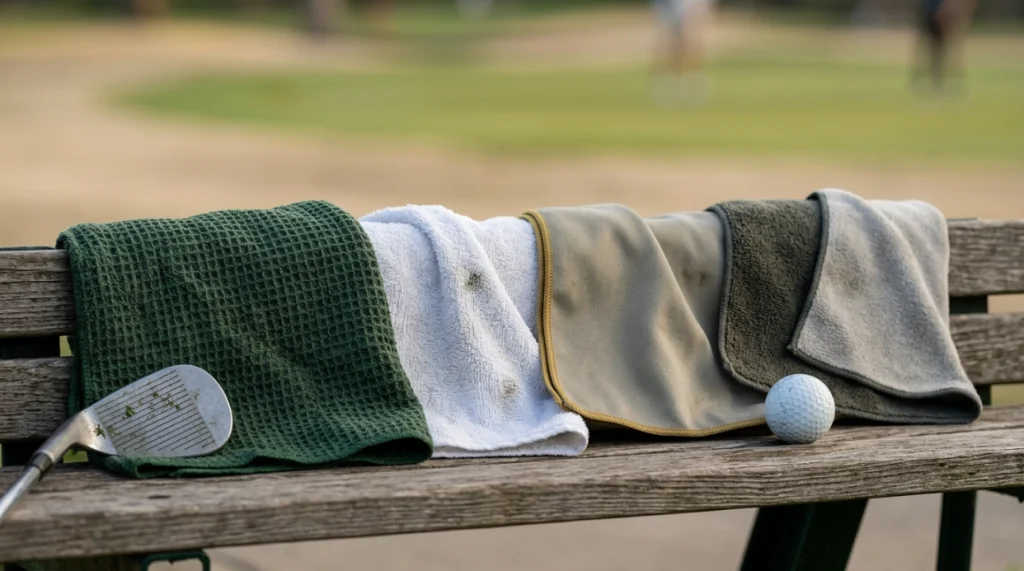
The most common golf towel textures are waffle, terry, smooth microfiber, and dual-sided constructions. Each gives the golfer a different balance of scrubbing power and moisture control.
Waffle weave
Waffle towels have a noticeable square or honeycomb-style surface. The recessed pattern creates a textured face without requiring a thick, fluffy pile.
I like waffle texture around irons and wedges because the fabric feels easy to work across grooves. It also tends to shake free of loose grass better than a deep, plush towel.
Terry cloth
Terry is the familiar looped texture found on many bath towels. Golf versions range from relatively thin bag towels to thick cotton models.
The main strength is moisture handling. Terry works especially well when I want to wipe wet grips, hands, golf balls, or rain-covered equipment.
Smooth microfiber
Microfiber describes the fiber construction rather than one specific weave. A microfiber towel can therefore feel smooth, plush, suede-like, or waffle-textured.
That distinction causes plenty of confusion. A waffle golf towel can also be a microfiber golf towel.
Dual-sided and mixed textures
Some towels use different surfaces on opposite sides. This approach gives the golfer a rougher cleaning area and a softer drying area.
- Textured side: Use it for mud, grass, and dirty clubfaces.
- Softer side: Use it for drying or finishing the cleaned surface.
- Separate wet area: Keep one section damp for stubborn dirt.
- Separate dry area: Protect another section for grips, hands, and final wiping.
This wet-side, dry-side approach is one of the most useful towel habits I know. It gives one towel two clear jobs.
Which Golf Towel Texture Is Best for Each Job?
Waffle texture is a strong choice for club cleaning, while terry works well for absorbing water. Fine microfiber suits lighter dirt, moisture, and general cleaning.
The best texture therefore depends on where you use the towel. Here is the practical comparison I use.
| Texture | Surface Feel | Best Golf Job | Drying Tendency | Main Trade-Off |
|---|---|---|---|---|
| Waffle microfiber | Raised grid | Clubfaces, grooves, grass, mud | Fast | Less plush than thick cotton |
| Cotton terry | Soft looped pile | Water, grips, hands, general wiping | Moderate to slow | Gets heavier when soaked |
| Smooth microfiber | Fine and relatively flat | Light dirt, balls, polished surfaces | Fast | Less aggressive on packed mud |
| Dual texture | Two different faces | Scrubbing plus drying | Varies | Can be bulkier |
For wedges and irons
I would start with waffle microfiber when club cleaning is the priority. Wedges collect plenty of turf and sand because their grooves spend so much time near the ground.
Remove heavy debris before rubbing aggressively. Sand trapped against a club’s finish is something I prefer to brush or rinse away first.
For grips and wet weather
A clean, dry towel section matters more than aggressive texture here. Water or mud on a grip can make the club harder to control comfortably.
Keep the grip section separate from the muddy side. A larger terry or absorbent microfiber towel works well for this purpose.
For golf balls
A soft microfiber or clean waffle section handles most golf-ball dirt. On the putting green, follow the applicable USGA Rules of Golf before lifting or cleaning your ball during play.
The R&A Rules of Golf provide the corresponding official rules resource outside the United States and Mexico.
Section Takeaway: Use textured material for stubborn debris and reserve a cleaner surface for drying. Keeping those functions separate makes one towel much more useful.


Is Microfiber or Cotton Better for Golf Towels?
Neither material is automatically better. Microfiber usually wins for low weight and fast drying, while cotton offers a traditional, plush feel and strong moisture absorption.
The important point is that material and texture are separate decisions. Cotton can be woven into waffle fabric, and microfiber can also have a waffle surface.
Why golfers choose microfiber
- Quick drying: Lightweight microfiber usually releases moisture faster than thick terry cotton.
- Low bulk: It takes less space when hanging from a crowded golf bag.
- Fine cleaning: Small synthetic fibers handle light dust and moisture well.
- Texture options: Manufacturers can produce smooth, plush, or waffle microfiber surfaces.
For a walking round, that low bulk is useful. I do not want a large soaked towel swinging against the side of my bag for the back nine.
Why golfers still choose cotton
- Familiar feel: Terry cotton feels soft and substantial in the hand.
- Water absorption: Thick cotton gives you plenty of material for wet conditions.
- Comfort: It works nicely for hands and other general wiping duties.
- Classic appearance: Cotton towels fit the traditional look many clubs prefer.
Neither option needs to be expensive. Like other golf accessories, function should come before branding or appearance.
If you are comparing broader equipment choices in 2026, the Golf Digest equipment guide is also a useful reference for understanding how equipment features should match a player’s needs.
How Should You Choose a Golf Towel Texture?
Choose the texture by thinking about course conditions, how you travel around the course, and what you clean most often. Do not choose on softness alone.
I would use this simple process.
- Identify your dirtiest equipment. Wedge players on soft courses need more scrubbing ability than golfers playing firm, dry turf.
- Consider your weather. Frequent rain increases the value of absorbency and a dedicated dry section.
- Think about drying speed. Humid climates make quick-drying construction more useful.
- Check the towel size. You need enough clean surface to avoid wiping grips with the muddy section.
- Choose an attachment. A loop, clip, slit, or magnet should keep the towel easy to reach.
For wet or muddy courses
Choose a towel with noticeable texture and enough size to divide into wet and dry areas. Waffle microfiber is an easy all-purpose option.
I often dampen only one end before playing. That damp section loosens mud while the other end remains available for drying.
For dry courses
You may not need a thick towel. Fine microfiber can handle dust, light grass, and normal ball cleaning without adding much weight.
For cart golfers
A larger towel becomes easier to carry because weight is less important. You can prioritize surface area and absorbency.
For walking golfers
Compact, quick-drying material makes more sense. Every wet accessory feels heavier after several holes.
Do not overlook attachment design either. The best fabric becomes frustrating if the towel constantly falls from your bag.
Section Takeaway: Match the towel to your course and playing habits. Waffle microfiber is versatile, but different golfers can reasonably prefer different textures.
How Do You Keep Different Golf Towel Textures Working?
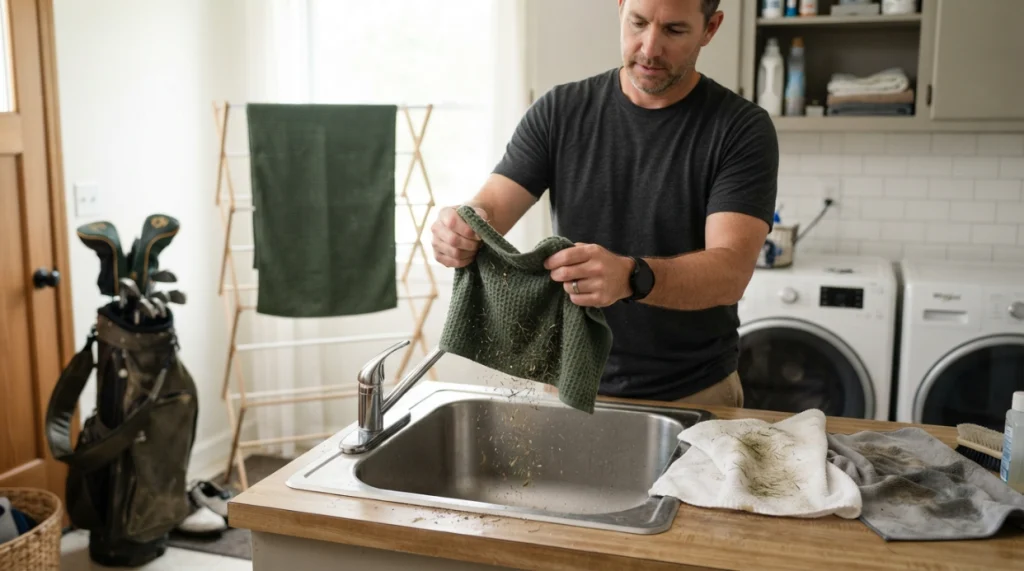
Wash golf towels often enough to remove dirt, sand, oils, and grass residue. Proper cleaning helps preserve the texture that makes the towel useful.
A dirty towel eventually starts moving debris around instead of removing it. That defeats its purpose.
Shake out grit before washing
Start by removing loose grass and sand outdoors. I especially do this after bunker practice or a muddy round.
Heavy grit should not stay buried in the towel. Removing it also keeps that material away from other laundry.
Be careful with microfiber
Microfiber needs its fine fiber structure to perform properly. Heavy coatings left by some fabric-care products can reduce how effectively those fibers interact with water and dirt.
- Check the manufacturer’s care label first.
- Wash heavily soiled towels separately when practical.
- Avoid excessive heat unless the care instructions permit it.
- Skip fabric softener when the microfiber manufacturer tells you to avoid it.
- Let the towel dry completely before storing it inside your bag.
Do not leave a wet towel in the bag
This is one of the easiest habits to fix. Remove the towel after the round instead of leaving a damp bundle in a closed pocket or car trunk.
Dry storage also makes the towel ready for your next tee time. Nothing is more annoying than finding yesterday’s muddy towel five minutes before leaving home.
Frequently Asked Questions
Why are golf towels waffle-textured?
Waffle golf towels use raised and recessed sections that create a more textured cleaning surface. The grid gives the fabric useful edges for wiping grass, soil, and mud while maintaining a relatively lightweight construction.
Is a waffle golf towel better than a smooth towel?
A waffle towel is usually more useful when scrubbing dirty clubfaces. A smooth towel can be better for light wiping, polishing, or removing moisture when aggressive texture is unnecessary.
Why do some golf towels have two different sides?
Two-sided towels can perform separate jobs. One side may provide extra texture for cleaning, while the softer side handles drying or finishing without spreading the same dirt across the equipment.
Is microfiber good for cleaning golf clubs?
Yes. Microfiber works well for general golf-club cleaning because its fine fibers pick up moisture and loose debris, and the material usually dries quickly. A waffle microfiber surface adds extra texture for mud and grass.
Is cotton or microfiber more absorbent for golf?
Both can handle moisture well, but their behavior differs by fabric weight and construction. Thick cotton terry provides a large absorbent pile, while lighter microfiber tends to offer a useful balance between moisture pickup and faster drying.
Should you wet a golf towel before playing?
Wet only part of the towel if you expect dried mud or dirty wedges. Keep another section dry for grips and final wiping, since a completely soaked towel gives you no clean, dry surface later.
How many golf towels should you carry?
One large towel is enough for many golfers if it has separate wet and dry areas. Carrying two can be useful in rainy conditions because one towel can handle dirty clubs while the other stays clean for grips and hands.
The bottom line: Golf towels have different textures because cleaning mud, absorbing rain, drying grips, and wiping golf balls are different jobs.
For most golfers, I would start with a waffle microfiber towel or another textured design with enough room for wet and dry sections. Once you pay attention to how you use it, texture stops looking cosmetic and starts feeling like useful golf equipment.