
Penalty Strokes Explained: Golf Rules, Common Penalties, and Scoring

Quick Answer
A penalty stroke in golf is an extra stroke added to your score when a Rule requires it or when you choose certain forms of penalty relief. Common examples include lost balls, out-of-bounds shots, penalty-area relief, and unplayable balls. Under the current Rules, some breaches instead bring the general penalty, which is two strokes in stroke play or loss of hole in match play. The USGA Rules of Golf resources provide the official ruling when a situation is unclear.
Common Penalties at a Glance
- Penalty area relief: Usually one penalty stroke when you take relief outside the area.
- Lost ball: One penalty stroke plus returning to where your previous stroke was made.
- Out of bounds: Standard relief is one penalty stroke plus stroke and distance.
- Unplayable ball: Most standard relief options cost one penalty stroke.
- General penalty: Two strokes in stroke play or loss of hole in match play.
Best On-Course Habit
- Before dropping or playing another ball, identify which Rule applies and count the penalty before making your next stroke.
Penalty strokes can make golf scoring feel harder than it needs to be. The confusion usually comes from mixing up the penalty itself with the stroke you must play next.
I use one simple approach: identify what happened, find the correct relief procedure, then count the strokes in order. This guide explains that process in plain language.
In This Guide
What Is a Penalty Stroke in Golf?
A penalty stroke is a stroke added to your score under the Rules of Golf. It may result from taking penalty relief or from committing a Rules breach.
Definition: A penalty stroke increases your score without requiring you to physically swing the club for that added stroke.
The official Rules use several penalty levels. The R&A’s Rule 1 explains the overall penalty structure.
- One-stroke penalty: Used for certain minor breaches and many penalty-relief procedures.
- General penalty: Two strokes in stroke play or loss of hole in match play.
- Disqualification: Reserved for certain serious breaches or situations where a valid competition score cannot stand.
Penalty strokes are different from normal strokes
A normal stroke is the forward movement of the club made to strike the ball. A penalty stroke gets added to your score because a Rule says it must.
Suppose your tee shot goes out of bounds. Your swing counts as stroke one, and stroke-and-distance relief adds one penalty stroke.
Your next swing from the tee is therefore stroke three. This is why golfers often describe an out-of-bounds drive as costly.
Why do golf penalties exist?
Penalties protect the fairness of the game. They remove or offset an advantage that could result from using relief or breaking a Rule.
That does not mean every awkward situation deserves a penalty. Many Rules provide free relief from conditions such as certain abnormal course conditions.
Section Takeaway: A penalty stroke is added to your score, while a general penalty is normally two strokes in stroke play or loss of hole in match play.
How Many Penalty Strokes Do Common Golf Rules Add?

The most common penalties are easier to remember when you connect each one with its required procedure. The table below covers situations golfers regularly encounter.
| Situation | Typical Penalty | What Happens Next |
|---|---|---|
| Penalty-area relief | 1 stroke | Use an allowed Rule 17 relief option |
| Lost ball | 1 stroke | Take stroke-and-distance relief |
| Ball out of bounds | 1 stroke | Take stroke-and-distance relief under the standard Rule |
| Unplayable ball | Usually 1 stroke | Choose an available Rule 19 relief option |
| Unplayable ball, back-on-line outside bunker | 2 strokes total | Drop outside the bunker using back-on-the-line relief |
| General penalty breach | 2 strokes in stroke play | Loss of hole instead in match play |
The exact Rule still matters. Some procedures change depending on where the ball lies and which form of play you are using.
Local Rules can also create approved alternatives. Check the scorecard or competition notice before assuming an alternative procedure is available.
Section Takeaway: Most everyday penalty relief costs one stroke, while a general penalty costs two strokes in stroke play.
When Do You Get a One-Stroke Penalty?
One-stroke penalties commonly appear when you take penalty relief from a difficult situation. Lost balls, out-of-bounds balls, penalty areas, and unplayable balls are major examples.
Taking relief from a penalty area
Rule 17 covers penalty areas. These areas may contain water, but water is not required.
You may play the ball as it lies without adding a penalty. If you take relief outside the area, the normal cost is one penalty stroke.
The official Rule 17 penalty-area guidance distinguishes red and yellow areas.
- Yellow penalty area: Stroke-and-distance and back-on-the-line relief are available for one penalty stroke.
- Red penalty area: The same options apply, plus lateral relief.
- Lateral relief: The relief area extends two club-lengths from the reference point and cannot be nearer the hole.
For penalty-area relief, the reference point normally depends on where the ball last crossed the edge. It is not simply where the ball finally stopped.
Declaring a ball unplayable
You may decide your ball is unplayable anywhere on the course except in a penalty area. You do not need another player to agree.
Under the R&A’s unplayable-ball Rule, the standard options normally cost one penalty stroke.
- Stroke and distance: Play again from where the previous stroke was made.
- Back on the line: Keep the original ball position between the hole and your selected point behind it.
- Lateral relief: Drop within two club-lengths of the original ball position, no nearer the hole.
A bunker changes part of the procedure. Back-on-the-line and lateral relief for one stroke must keep the dropped ball in the bunker.
There is also an extra option outside the bunker. Back-on-the-line relief outside the bunker costs two penalty strokes in total.
Section Takeaway: A one-stroke penalty often buys you an approved relief option, but you must still drop or replay from the correct area.

When Do You Get Two Penalty Strokes?
In regular stroke play, the general penalty means two penalty strokes. In match play, that same penalty normally means loss of the hole.
Playing a wrong ball
Playing a wrong ball is a classic general-penalty situation. In stroke play, you receive two penalty strokes and normally must correct the mistake.
The strokes made at the wrong ball do not simply become your score for the hole. The correction requirements matter, especially in competition.
Playing from a wrong place
Another common general-penalty situation involves playing from a wrong place. This can happen after an incorrect drop or relief procedure.
A serious breach in stroke play can require correction before the player continues too far. Failure to correct certain serious mistakes can lead to disqualification.
Two strokes can also be a relief cost
Not every two-stroke addition comes from misconduct. An unplayable ball in a bunker has an outside-the-bunker back-on-the-line option for two penalty strokes.
That can still be the smart choice. Two certain penalty strokes may beat several failed bunker shots under a steep lip.
Section Takeaway: Two-stroke penalties usually reflect the general penalty in stroke play, but some Rules also offer optional relief costing two strokes.
How Are Penalty Areas, Lost Balls, and Out of Bounds Different?
These situations often look similar from the tee, but their relief procedures are not interchangeable. Correctly identifying the situation is the first step.
Penalty area
A penalty area is a defined area normally marked red or yellow. You can play the ball from inside it without penalty when that is practical.
Otherwise, you may take the relief allowed by Rule 17 for one penalty stroke. Red areas give you an additional lateral-relief option.
Lost ball
A ball is lost when it is not found and identified within the allowed three-minute search period. The standard result is stroke-and-distance relief with one penalty stroke.
That means going back to where you played the previous stroke. A provisional ball can prevent a long walk back.
Out of bounds
A ball is out of bounds when the entire ball lies beyond the course boundary. White stakes, boundary lines, fences, or other defined objects may indicate that boundary.
Under the standard Rule, an out-of-bounds ball requires stroke and distance. Add one penalty stroke and play again from the previous location.
What does “known or virtually certain” mean?
This standard becomes important when a ball disappears near a penalty area. There must be enough evidence to conclude it is in that area rather than merely lost elsewhere.
If that standard is not met and you cannot find the ball, the lost-ball procedure applies. You cannot simply assume the ball entered the penalty area because that option gives easier relief.
Section Takeaway: Penalty areas offer specific relief near the area, while lost and out-of-bounds balls normally send you back under stroke and distance.
How Do You Count Penalty Strokes on Your Scorecard?
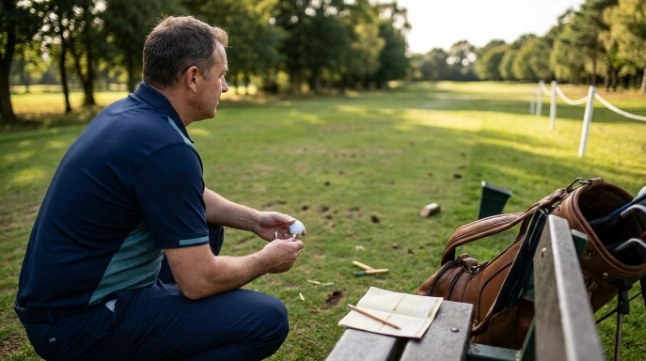
Count every physical stroke that counts under the Rules, then include every penalty stroke that applies. Write the final total for the hole on the scorecard.
Example: tee shot goes out of bounds
- Stroke 1: You hit the original tee shot.
- Stroke 2: Add one penalty stroke for stroke-and-distance relief.
- Stroke 3: You play another ball from the teeing area.
If the replacement finishes in the fairway, you are lying three. Your next swing will be stroke four.
Example: ball enters a red penalty area
- Stroke 1: Your approach enters a red penalty area.
- Stroke 2: Add one penalty stroke when taking lateral relief.
- Stroke 3: Play the dropped ball from the proper relief area.
If that third stroke reaches the green, you have taken three strokes so far. The penalty is already included in that count.
Example: provisional ball
A provisional itself does not automatically create a second penalty. Its status depends on what happens to the original ball.
If the original is found in bounds within the search time, you abandon the provisional. Strokes made with that provisional do not count.
If the original is lost outside a penalty area or found out of bounds, the provisional can become the ball in play. Stroke and distance then applies.
A simple scorekeeping habit
I find it easier to say the number aloud before the next shot. “One out, penalty makes two, hitting three” removes most scorecard confusion.
Beginners should also learn the basic Rules before competitive rounds. The PGA’s beginner golf guidance highlights common Rules situations new players should understand.
Section Takeaway: Count the original stroke, add the penalty, then count the next physical stroke. Following that order prevents most scoring mistakes.
Penalty Strokes FAQ
Is hitting into a penalty area automatically a penalty stroke?
No. You may play a ball from a penalty area as it lies without adding a penalty stroke. You add one penalty stroke when you choose penalty relief under Rule 17.
How many penalty strokes do you get for a lost golf ball?
A lost ball normally requires stroke-and-distance relief for one penalty stroke. You return to where the previous stroke was made and play another ball, so the lost distance also makes the mistake costly.
How many penalty strokes is out of bounds?
The standard out-of-bounds procedure adds one penalty stroke and requires stroke-and-distance relief. If your tee shot is out of bounds, your next counted shot from the tee is normally stroke three.
Is a water ball a one-stroke or two-stroke penalty?
A ball in a marked penalty area normally costs one penalty stroke when you take relief. The available dropping options depend on whether the penalty area is marked yellow or red.
What is the two-stroke penalty in golf?
The general penalty is two strokes in stroke play. Examples include certain breaches such as playing a wrong ball or playing from a wrong place, although correction requirements can also apply.
Can I declare a ball unplayable in a penalty area?
No. Rule 19 unplayable-ball relief is not available when the ball is in a penalty area. Your choices come from the penalty-area Rule instead.
Does a provisional ball add a penalty stroke?
Not merely because you played one. If your original ball is found in bounds within three minutes, you abandon the provisional and its strokes do not count. If the provisional becomes the ball in play after the original is lost or out of bounds, stroke and distance applies.
Section Takeaway: The easiest way to avoid penalty mistakes is to identify the situation before touching, dropping, substituting, or playing another ball.
Penalty strokes become much easier once you stop thinking of them as random punishments. Each one connects to a specific Rule and procedure.
When you are unsure during a serious round, check the current Rules or ask a rules official before playing. Getting the procedure right can save more than a stroke.