
Chicken Wing Fix: How to Stop the Bent Lead Elbow in Your Golf Swing

Quick Answer
To fix a golf chicken wing, stop trying to force your lead arm straight. Improve body rotation, maintain space through impact, and let both arms extend naturally after the ball. If the problem persists, a lesson with a qualified PGA of America professional can identify whether your swing path, clubface, setup, or mobility is creating the fault.
Start With These Checks
- Keep rotating: Your chest should continue turning through impact instead of stopping at the ball.
- Create arm space: Avoid standing so close that your lead elbow must fold to avoid your body.
- Check your path: A steep, outside-in downswing often encourages the lead elbow to pull away.
- Extend after impact: Feel both arms becoming longer toward the target after contact, not before it.
- Start slowly: Use waist-high practice swings before trying to change the motion at full speed.
Quick Verification
- Film your swing from face-on and check whether the lead elbow separates sharply from your torso immediately after impact.
I see golfers attack a chicken wing by trying to lock the lead elbow straight. That usually treats the appearance of the fault instead of its cause.
A better chicken wing fix starts with understanding why the arm bends. Then you can change the movement that forces the elbow to escape.
In This Guide
What Is a Chicken Wing in Golf?
A golf chicken wing happens when the lead elbow bends and moves away from the body through or shortly after impact. For a right-handed golfer, that’s the left elbow.
Definition: A chicken wing is a follow-through pattern where the lead elbow folds outward instead of allowing the arms to extend naturally as the body rotates through the shot.
A bent elbow by itself isn’t automatically a problem. Both elbows eventually fold during a normal follow-through.
The warning sign is timing. The lead elbow begins collapsing too early and often points behind the golfer instead of folding naturally around the rib cage.
What does it look like?
Video makes the fault easier to spot than ball flight alone. Record a face-on swing in good light and watch the first few feet after impact.
- Lead elbow: It moves away from the side of your torso quickly.
- Lead arm: It appears shortened through the strike.
- Chest: It may stop rotating while the arms continue independently.
- Club: The handle can move abruptly left for a right-handed golfer.
- Finish: The follow-through may look cramped rather than flowing around the body.
Don’t judge the motion from one frozen frame. Look at the sequence from just before impact through the first half of the follow-through.
Does a chicken wing always cause bad shots?
No. Skilled players can produce unusual-looking arm positions and still control the clubface and low point.
For many recreational golfers, though, an early chicken wing accompanies inconsistent contact. It can appear with thin shots, weak fades, pulls, or a loss of compression.
The important point is cause and effect. Fix the motion only when it contributes to a ball-flight or contact problem you can identify.
Why Does a Chicken Wing Happen?
A chicken wing usually develops because the golfer runs out of room or rotation through impact. The elbow bends to help the club keep moving.
Several swing patterns can create that situation. Your job is to find which one appears in your swing.
1. Your chest stops rotating
This is one of the first things I check. When the torso stalls, the arms often have to pass the body without enough space.
The lead elbow may then fold outward. Keeping the chest moving can give the arms a cleaner route into the follow-through.
2. Your downswing gets too steep
A steep shaft approaches the ball on a more vertical angle. Many golfers react by pulling the handle inward to avoid hitting behind the ball.
That rescue move can produce the classic chicken-wing appearance. It often appears alongside an outside-to-in swing path.
3. You’re standing too close to the ball
Setup can create the problem before the club moves. Too little space between your hands and thighs makes extension difficult.
- Check whether your arms hang naturally at address.
- Make sure the handle isn’t crowded against your legs.
- Confirm that your weight feels balanced through the middle of your feet.
Don’t respond by reaching excessively. The goal is comfortable space, not maximum distance from the ball.
4. You’re trying to lift the ball
Golfers sometimes pull the lead arm upward because they want to help the ball into the air. Irons don’t need that assistance.
Club loft provides launch. With an iron, your priority is a solid strike and predictable low point.
The USGA and The R&A govern equipment and the Rules of Golf, including club specifications. Your swing still needs to deliver that loft consistently.
5. The clubface is open and you’re compensating
An open face can make a golfer manipulate the club late in the downswing. The body may stall while the arms attempt to square the face.
Before changing your follow-through, check grip and clubface control. Sometimes the elbow position improves once the face becomes easier to manage.
How Do You Fix a Chicken Wing?
The best chicken wing fix is to change the movement that causes the elbow to collapse. Don’t simply force your lead arm straight.
I prefer working from slower swings toward normal speed. That makes the new movement easier to feel and easier to verify.
Step 1: Check your setup first
Make normal posture your starting point. Let your arms hang before placing your hands on the club.
- Set your feet around shoulder width for a mid-iron.
- Hinge forward from the hips while keeping your balance.
- Let both arms hang comfortably below your shoulders.
- Grip the club without reaching or pulling the handle inward.
- Make several relaxed rehearsal swings.
If your elbows immediately feel trapped against your torso, adjust your distance from the ball before changing anything else.
Step 2: Keep turning through the strike
Your chest shouldn’t freeze at impact. Feel your belt buckle and chest continuing toward the target as the club travels through the ball.
This isn’t a violent spin. You want continuous rotation with balance.
- Make half-swings without a ball.
- Pause briefly at an imaginary impact position.
- Continue turning until your chest faces left of the target for a right-handed golfer.
- Notice whether the lead elbow can stay closer to your side.
A common mistake is concentrating only on the arms. Give the arms somewhere to go by moving the torso.
Step 3: Feel extension after the ball
Extension should happen as a result of good sequencing. It shouldn’t feel like you’re locking the elbow before impact.
Make short swings and imagine both hands traveling toward a point several feet in front of the ball. Let the elbows soften naturally after that extension.
Step 4: Add speed gradually
A new motion can disappear when you jump straight to a driver. Build speed in stages.
- Start with rehearsal swings.
- Hit 30-to-50-yard wedge shots.
- Move to half-swings with a short iron.
- Progress to three-quarter swings.
- Finish with normal shots only when contact remains stable.
I like this progression because the ball gives immediate feedback. If contact becomes worse as speed rises, reduce the speed again.
Section Takeaway: Fix the reason your elbow collapses, not the elbow alone. Better spacing, rotation, and post-impact extension usually create a more useful change than forcing the lead arm straight.
Pro tip: If a movement causes wrist, elbow, shoulder, or back discomfort, stop the drill and work with a certified golf instructor or qualified medical professional before continuing.


What Are the Best Chicken Wing Drills?
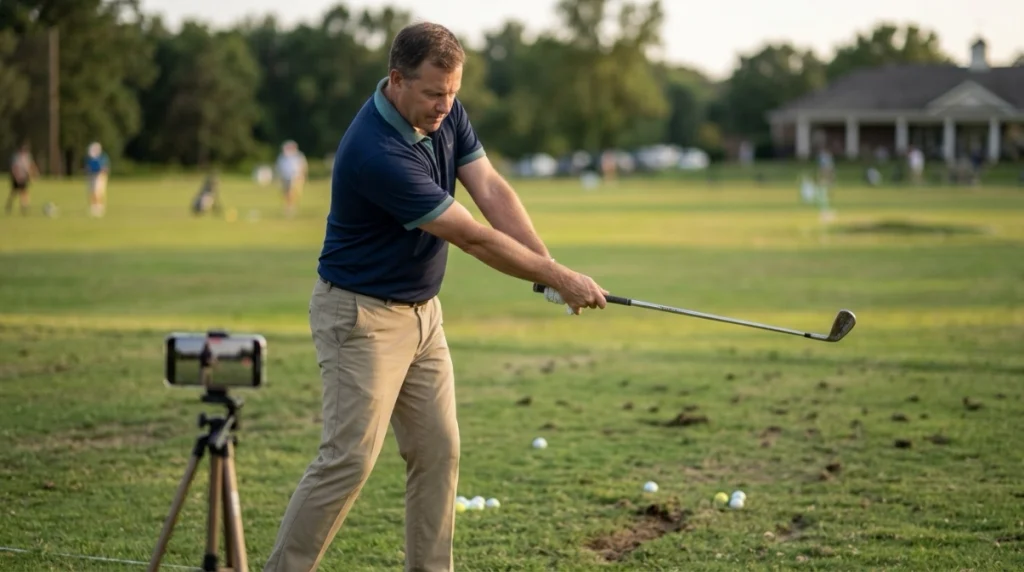
The best drill depends on your actual cause. Use one drill at a time so you know which change affects your contact.
Lead-arm extension drill
This is my starting drill for golfers who pull the lead elbow sharply around the body. Use a wedge or short iron and make slow waist-to-waist swings.
- Address the ball normally.
- Swing back until the club is roughly waist high.
- Turn through while keeping the lead arm comfortably long.
- Feel both hands moving toward the target after impact.
- Allow the lead elbow to fold only as the club continues around you.
Use a soft practice ball or no ball at first. The goal is motion quality, not distance.
Split-hand drill
Move your trail hand several inches down the grip. That separation exaggerates how the arms and club rotate through the follow-through.
Make slow swings without hitting a ball initially. You should feel the arms extending while your body keeps turning.
Chest-to-target rehearsal
This drill helps when the upper body stalls. Make a normal backswing, then rehearse a slow downswing without a ball.
- Turn your hips through.
- Let your chest continue rotating.
- Keep your balance on the lead side.
- Finish with your chest facing the target area.
The exact finish varies between golfers. Don’t force a pose that your mobility can’t support.
Punch-shot drill
A controlled punch shot can reduce the urge to scoop the ball upward. Start with a short iron and a small swing.
Keep the finish abbreviated while maintaining chest rotation. Your hands should finish in front of your body rather than immediately disappearing behind you.
Use video as feedback
Feel can be misleading. A swing that feels dramatically different may look only slightly different on camera.
Record several repetitions from the same angle. Compare elbow position, chest rotation, balance, and ball contact rather than judging one frame.
Instruction libraries such as Golf Digest can also help you compare swing concepts, but avoid copying a drill simply because it works for another golfer.
Section Takeaway: Pick the drill that matches your cause, practice it slowly, and verify the change on video. One targeted drill is usually more useful than rotating through five different swing thoughts.
Is a Chicken Wing the Same as Other Swing Faults?
No. A chicken wing can appear alongside other faults, but the terms don’t describe the same movement.
This comparison helps separate what you see from what may be causing it.
| Swing Pattern | What You See | Common Ball-Flight Clue | First Thing to Check |
|---|---|---|---|
| Chicken wing | Lead elbow folds outward early after impact | Weak fade, pull, thin strike, or inconsistent contact | Rotation and arm space |
| Casting | Wrist angles release early in the downswing | Fat, thin, or high weak shots | Transition sequence and low point |
| Over-the-top | Club moves outward early in the downswing | Pull or pull-slice | Downswing path |
| Early extension | Hips move toward the ball during the downswing | Heel strikes, blocks, hooks, or inconsistent contact | Pelvis position and balance |
These faults can overlap. For example, an over-the-top downswing may leave so little room that the golfer chicken-wings after impact.
That’s why changing the follow-through alone can fail. The visible elbow motion may be the final compensation in a longer chain.
When Should You Get Professional Help?
Get professional help when the chicken wing keeps returning despite structured practice. It’s especially useful when you can’t identify whether the problem starts at setup, transition, impact, or follow-through.
A coach can compare ball flight with video instead of relying on appearance alone. That distinction matters because two golfers can show similar elbow positions for different reasons.
- You have practiced one correction for several sessions with no improvement.
- Your strike pattern is becoming less predictable.
- You feel pain while trying to hold the lead arm straight.
- Your clubface control changes dramatically from shot to shot.
- You aren’t sure whether the elbow bend is a cause or compensation.
A club fitting can also help when equipment fit contributes to poor posture or delivery. It shouldn’t replace swing instruction, but unsuitable specifications can make consistent setup harder.
As of 2026, I still prefer simple diagnosis before adding training aids. Start with ball flight, contact location, and two camera angles before buying a device to fix one position.
Pro tip: A certified instructor can check the movement in context and help you avoid forcing your elbow, wrist, or shoulder into an uncomfortable position.
Chicken Wing Fix FAQs
Can a strong grip cause a chicken wing?
A strong grip doesn’t automatically cause a chicken wing. However, any grip that makes clubface control difficult can trigger compensations. Check whether you can return the face consistently before changing your follow-through solely because the elbow looks unusual.
Does a chicken wing cause a slice?
It can appear with a slice, but it isn’t the only cause. A slice depends heavily on clubface direction relative to swing path. The chicken wing may be part of the compensation rather than the original reason the ball curves right.
Should my lead arm stay completely straight after impact?
No. Your lead arm can extend through impact and then fold naturally as the club moves around your body. Trying to keep it rigid for too long can restrict your finish and create unnecessary tension.
Can poor body rotation cause a chicken wing?
Yes. When the chest stops rotating, the arms can run out of room. The lead elbow may bend outward so the club can continue moving. Improving continuous rotation is therefore one of the first changes worth testing.
Can standing too close to the golf ball create a chicken wing?
Yes. If you’re crowded at address, your hands may have too little room through impact. Check posture and arm hang first. Move only enough to create comfortable clearance without reaching excessively for the ball.
How long does it take to fix a chicken wing?
There isn’t a universal timeline. A simple setup problem may improve quickly, while a movement tied to path, face control, or body rotation can require longer practice. Judge progress by contact and ball flight, not by calendar days.
Can I practice a chicken wing fix at home?
Yes. Slow-motion rehearsals, split-hand swings, and chest-rotation drills require little space if you use a short club or practice stick safely. Video feedback can help confirm whether your lead elbow and torso are moving differently.
The main takeaway is simple: don’t chase a perfectly straight lead arm. Find out why your elbow needs to bend early, then improve the space, rotation, path, or clubface control creating that reaction.
Start with slow swings and one drill. Once the new motion produces reliable contact, build speed gradually and take it to the course.