
How Much Does Golf Cost? A Complete 2026 Price Guide
Quick Answer
Golf can cost less than $100 to try or $1,000 to $3,000 per year for regular public-course play. A beginner can save money by renting clubs, walking nine holes, buying used gear, and joining an affordable group program through the PGA coach directory.
Typical Golf Costs
- Trying golf: About $40–$100 for rentals, range balls, or a beginner clinic.
- Starter clubs: Around $150–$500 used or $300–$800 for a new package set.
- Public-course round: Commonly $25–$100, before optional cart and rental fees.
- Golf lesson: Usually $50–$150 per hour for private instruction.
- Regular annual play: Roughly $1,000–$3,000 for many recreational golfers.
- Private membership: Several thousand dollars per year, often plus an initiation fee.
Best Budget Tip
- Try golf with borrowed or rental clubs before buying a complete set.
How much does golf cost? The honest answer depends on where, when, and how often you play.
I have played golf with borrowed clubs and bargain tee times. I have also watched golfers spend thousands before learning whether they enjoyed the game.
This guide breaks down both starting costs and ongoing expenses. All price ranges are U.S. budgeting estimates current as of 2026.
In This Guide
What Does Golf Cost in 2026?
Golf costs anywhere from about $40 for a simple trial session to several thousand dollars per year. Most beginners do not need a large upfront investment.
The biggest expenses are equipment, practice, lessons, green fees, and transportation. How you approach these categories determines your total.
Golf cost defined
The cost of golf is the combined amount spent on equipment, course access, practice, instruction, accessories, and travel. It includes one-time purchases and recurring playing expenses.
Clubs are mainly a starting cost. Green fees, balls, range visits, and cart fees continue throughout the year.
| Expense | Budget Range | Higher-Cost Range | How Often You Pay |
|---|---|---|---|
| Golf clubs and bag | $150–$500 | $1,500–$3,000+ | Usually every 5–10 years |
| Shoes and clothing | $50–$150 | $300–$600+ | As items wear out |
| Driving range | $10–$25 | $30–$60+ | Per visit |
| Private lesson | $50–$100 | $150–$300+ | Per hour |
| Public-course round | $25–$70 | $100–$500+ | Per round |
| Golf balls | $15–$30 per dozen | $45–$60+ per dozen | When needed |
These ranges are broad because golf markets differ. A municipal course in a small town may cost far less than a famous resort.
How much does it cost to try golf once?
You can try golf for about $40–$100 without owning equipment. Start with a range session, rental clubs, or a group clinic.
- Club rental: About $10–$30 at a practice facility.
- Range balls: Around $10–$25 per bucket.
- Group clinic: Commonly $25–$75 per person.
- Nine-hole round: Often $20–$60 at a public course.
I recommend the practice-range route first. It gives you time to learn without worrying about pace or score.
How much does a beginner spend during the first year?
A careful beginner may spend $700–$1,500 during the first year. A golfer playing twice each month may spend $1,500–$3,000.
Here is one realistic first-year budget:
- Used starter clubs: $300
- Shoes, glove, and accessories: $125
- Two private lessons: $180
- Ten range sessions: $180
- Six public-course rounds: $300
- Balls and tees: $100
- Estimated total: $1,185
This example is not a required spending plan. Borrowing clubs or attending group clinics could reduce it further.
Section Takeaway: Golf can be inexpensive to try. Frequency and course choice matter more than buying an impressive first set.
How Much Does Golf Equipment Cost?
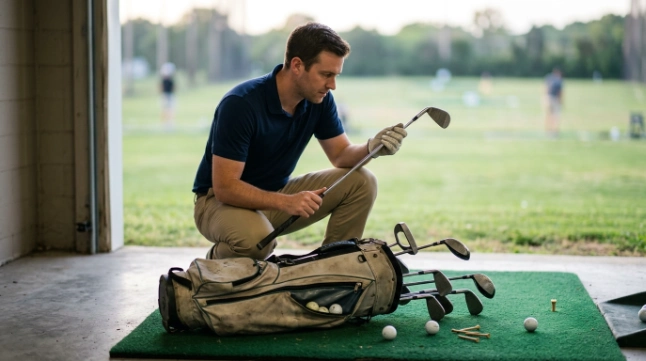
A functional beginner setup can cost $150–$800. Premium clubs, custom fitting, and specialized accessories can push the total beyond $3,000.
You do not need 14 clubs immediately. The USGA Rules of Golf permit up to 14 clubs, but that number is a maximum.
Beginner golf club prices
Most new golfers should consider rentals, used clubs, or a complete package set. Each option offers a different balance of cost and convenience.
| Club Option | Typical Cost | Best For | Main Limitation |
|---|---|---|---|
| Borrowed clubs | Free | First practice session | May not fit your height or strength |
| Used half-set | $150–$350 | Budget beginners | Condition varies |
| New package set | $300–$800 | Committed beginners | Limited fitting choices |
| Mixed individual clubs | $800–$2,000 | Improving regular players | Higher initial cost |
| Premium fitted set | $2,000–$3,500+ | Established golfers | Unnecessary for most beginners |
A useful half-set may include a fairway wood, hybrid, three irons, wedge, and putter. Fewer clubs also make early decisions easier.
Forgiveness matters more than brand prestige. Look for cavity-back irons, wider soles, higher loft, and comfortable shaft weight.
What should you check when buying used clubs?
Used equipment often provides the best beginner value. However, badly worn or poorly fitted clubs can create extra costs.
- Grips: Check for hard, smooth, split, or crumbling rubber.
- Shafts: Look for dents, cracks, rust, or loose clubheads.
- Grooves: Avoid clubfaces with severe wear or deep damage.
- Length: Confirm that your posture feels natural at address.
- Set makeup: Make sure a putter, wedge, and useful long club are included.
- Playing side: Verify whether the clubs are right-handed or left-handed.
New grips can add $8–$15 per club before labor. Regripping a complete set can erase part of the used-price advantage.
How much do golf balls and accessories cost?
Small purchases can quietly raise your annual golf budget. Balls create the largest recurring equipment cost for many beginners.
- Value golf balls: $15–$30 per dozen.
- Premium golf balls: $45–$60 or more per dozen.
- Golf glove: $10–$30.
- Tees and markers: $5–$20.
- Golf towel: $10–$30.
- Divot tool: $5–$20.
- Rangefinder or GPS device: $100–$500.
Beginners often lose balls in water, trees, and deep rough. Used balls or affordable two-piece balls make better financial sense.
Do you need golf shoes and special clothing?
You may not need golf shoes for your first range session. Stable athletic shoes are often enough when the facility allows them.
Golf shoes become more useful on wet slopes and uneven ground. Entry-level pairs generally cost $50–$120.
Dress rules vary by facility. Public courses may accept athletic clothing, while private clubs can require collared shirts and tailored shorts.
Pro tip: Ask a certified fitter to check club length, grip size, shaft weight, loft, and lie angle before buying an expensive set.
Section Takeaway: Start with simple, forgiving equipment. Spend more only after your swing and playing habits reveal what you need.
How Much Do Practice and Golf Lessons Cost?
A practice session normally costs $10–$30. Private lessons commonly cost $50–$150 per hour, while group clinics cost less.
Instruction can feel expensive, but one useful lesson may prevent months of poor practice. I have found early feedback especially valuable for grip and setup.
Driving-range costs
Most facilities charge by bucket size, time, or hitting bay. Covered and technology-equipped ranges often cost more.
- Small bucket: About $8–$15.
- Medium bucket: Around $12–$22.
- Large bucket: Roughly $18–$30.
- Timed practice bay: About $20–$60 per hour.
- Monthly range plan: Often $40–$150, where available.
More balls do not always create better practice. Fifty focused shots can teach more than 150 rushed swings.
Golf lesson prices
Instructor experience, location, technology, and lesson length affect the price. Resort and metropolitan instructors usually charge more.
| Lesson Type | Typical Price | Good Choice For |
|---|---|---|
| Group beginner clinic | $25–$75 per session | Affordable introduction |
| 30-minute private lesson | $30–$75 | One clear swing problem |
| One-hour private lesson | $50–$150 | Personal instruction |
| Premium coach or advanced analysis | $150–$300+ | Competitive or established players |
| Playing lesson | $150–$500+ | Course strategy and decision-making |
A lesson package may reduce the per-session price. Do not purchase a large package before confirming that the coach communicates well with you.
How many lessons does a beginner need?
Many beginners can build a foundation with two to five lessons. Practice between sessions matters more than booking lessons too close together.
A practical sequence covers:
- Setup and safety: Grip, posture, alignment, and safe practice habits.
- Basic contact: Controlled swings with a wedge or short iron.
- Short game: Putting, chipping, and simple bunker technique.
- Longer clubs: Hybrid, fairway wood, and driver basics.
- Course skills: Club selection, etiquette, pace, and strategy.
Leave enough time to practice each lesson. Otherwise, the next session may repeat the same corrections.
Pro tip: Work with a PGA or LPGA professional when a swing causes pain or repeated loss of balance.
Section Takeaway: Lessons are optional, but early instruction can make practice safer and more productive. Group clinics offer the lowest-cost guided start.

How Much Does a Round of Golf Cost?
An 18-hole public-course round commonly costs $25–$100. Premium resorts and famous destinations can charge several hundred dollars.
The advertised green fee may not represent the final total. Cart, booking, rental, and food charges can increase it.
What is a green fee?
A green fee is the charge for access to a golf course during a booked round. Despite the name, it covers the course rather than only the putting greens.
Green fees change by location, season, day, and starting time. Many courses use dynamic pricing based on demand.
- Nine-hole municipal course: About $15–$45.
- Standard public 18-hole course: Around $25–$100.
- Higher-end daily-fee course: Roughly $80–$200.
- Destination or resort course: About $150–$500 or more.
What extra fees should you expect?
Review the booking page before paying. Some facilities bundle a cart into the rate, while others list it separately.
- Riding cart: About $15–$35 per player.
- Push-cart rental: Around $5–$15.
- Club rental: Roughly $20–$80 per round.
- Booking fee: Commonly $2–$10.
- Range balls: About $8–$20 when not included.
- Forecaddie or caddie: Facility-specific fee plus gratuity.
Caddie costs vary too widely for one useful national estimate. Ask whether the quoted rate includes gratuity.
Why do tee-time prices change?
Saturday morning usually costs more than a weekday afternoon. Demand, daylight, weather, and course condition all influence pricing.
You can compare available public tee times through an established booking service such as GolfNow. Always compare the final price and cancellation rules.
Lower rates often appear during:
- Weekday afternoons
- Twilight hours
- Hot or cold seasons
- Course maintenance periods
- Last-minute openings
- Nine-hole booking windows
Twilight golf may not provide enough daylight for 18 holes. Treat it as a discounted playing window, not a completion guarantee.
Walking versus riding
Walking can save $15–$35 per round. It also removes the need to follow cart-path restrictions.
However, not every course allows walking. Long distances between holes or steep terrain may make carts mandatory.
When I am comparing two similar public courses, I check the walking policy first. A lower green fee can become more expensive after a required cart.
Section Takeaway: Compare the complete round price, not only the green fee. Walking, weekday play, and nine-hole rounds offer dependable savings.
Is a Golf Membership Worth the Cost?
A membership may save money if you play frequently at the same facility. It rarely makes financial sense for an occasional golfer.
Membership can mean a public-course pass, practice plan, league, or private-club agreement. These options have different costs and obligations.
Public-course passes
Municipal and public facilities may offer discount cards or annual passes. Prices can range from a few hundred dollars to several thousand.
Benefits may include:
- Reduced or included green fees
- Discounted cart fees
- Earlier booking access
- Range-ball discounts
- League or tournament entry
- Shop and food discounts
Read the exclusions carefully. Weekend restrictions, booking limits, and separate cart charges can reduce the value.
Private-club costs
Private clubs may charge initiation fees, monthly dues, food minimums, assessments, and cart fees. Initiation fees can range from modest amounts to six figures.
Common private-club charges include:
- Initiation fee: A joining charge, which may be refundable or nonrefundable.
- Monthly dues: The recurring membership payment.
- Food minimum: Required clubhouse spending during a set period.
- Capital assessment: A charge for major projects or repairs.
- Cart program: A per-round fee or annual cart plan.
- Guest fee: The cost of bringing a nonmember.
Ask for a full written fee schedule. A low initiation price does not always mean low yearly ownership costs.
How can you calculate membership value?
Divide the membership’s total annual cost by the number of rounds you expect to play. Add charges that remain payable after joining.
For example, a $2,400 annual pass used for 40 rounds costs $60 per round. A separate $20 cart fee raises the effective cost to $80.
Compare that figure with the course’s normal public rate. Also consider booking access, practice facilities, social benefits, and course variety.
Do you need a handicap membership?
You do not need a Handicap Index for casual practice or most recreational rounds. It becomes useful for competitions and fair games between different skill levels.
The USGA explains that you must join an authorized golf club to establish and maintain an official Handicap Index. Prices depend on the authorized club or association.
Section Takeaway: Calculate a membership’s effective per-round cost before joining. Include dues, carts, assessments, and required spending.
How Can You Play Golf for Less?
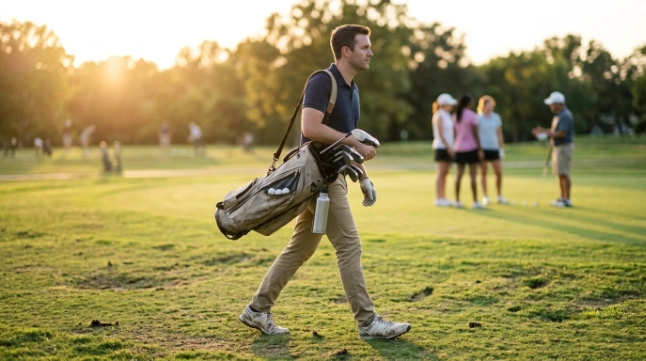
The cheapest way to play golf is to own simple used equipment and choose affordable public facilities. Walking and off-peak bookings reduce recurring costs further.
You should save money without using unsafe equipment or ignoring course rules. A sensible budget still includes comfortable footwear, water, and weather protection.
Ten practical ways to reduce golf costs
- Borrow before buying: Test the game before purchasing a complete set.
- Buy used clubs: Choose forgiving models in sound condition.
- Carry fewer clubs: A half-set can cover early practice and short courses.
- Walk when permitted: Skip the riding-cart charge.
- Book off-peak: Compare weekday, afternoon, and twilight rates.
- Play nine holes: Spend less money and reduce the time commitment.
- Use affordable balls: Save premium balls until losses become less frequent.
- Join group lessons: Share instruction costs with other learners.
- Practice the short game: Many public putting and chipping areas are free.
- Bring food and water: Avoid unnecessary clubhouse purchases when permitted.
Three sample golf budgets
| Budget Style | Typical Activity | Estimated First-Year Cost |
|---|---|---|
| Trying golf | Rental clubs, two range visits, one clinic | $75–$200 |
| Casual beginner | Used clubs, monthly practice, six to ten rounds | $700–$1,500 |
| Regular public golfer | Two rounds monthly, lessons, regular practice | $1,500–$3,500 |
| Frequent premium golfer | Premium equipment, weekly rounds, travel, coaching | $5,000–$15,000+ |
These examples include equipment and playing costs. Travel, tournament entry, and golf vacations can raise the total sharply.
Where should a beginner spend more?
Spend first on comfort, safe equipment, and useful instruction. Do not make appearance or brand prestige your first priority.
A sensible spending order is:
- Comfortable shoes and weather protection
- Forgiving clubs that fit reasonably well
- A beginner lesson or clinic
- Affordable practice and short-course play
- Equipment upgrades after consistent use
I would rather see a beginner take one helpful lesson than buy a premium driver. Technique affects every club in the bag.
Section Takeaway: Golf becomes expensive through frequency, premium choices, and convenience fees. A planned public-course budget keeps the game accessible.
Frequently Asked Questions
Is golf an expensive hobby?
Golf can be expensive, but it does not have to be. Borrowed clubs, public practice facilities, nine-hole courses, and off-peak tee times can keep a beginner’s first-year spending below $1,000.
How much money do I need to start playing golf?
You can try golf with about $40–$100 using rental clubs and range balls. Buying a used set, basic accessories, and several practice sessions may require $300–$700.
How much does golf cost per month?
A casual public-course golfer may spend $50–$200 monthly. A frequent golfer using carts, lessons, and premium courses may spend $300–$1,000 or more.
Can I play golf without buying clubs?
Yes. Many driving ranges and courses rent clubs, while some beginner programs provide loaner sets. Call ahead because rental availability, quality, and prices vary.
How much does it cost to play 18 holes?
A public 18-hole round commonly costs $25–$100 before optional fees. A cart can add $15–$35 per player, while destination courses may charge several hundred dollars.
Are used golf clubs worth buying?
Used clubs are often the best value for beginners. Check the shaft, grip, clubface, length, playing side, and set composition before paying.
Do I need expensive clubs to play well?
No. Expensive clubs cannot replace sound contact, distance control, and course strategy. Suitable fit and forgiveness usually matter more than price or brand.
Golf can fit many budgets. Start small, learn what you enjoy, and let your playing frequency guide future purchases.
Your next step is simple: set a trial budget, borrow or rent clubs, and book one affordable practice session before investing in a complete setup.